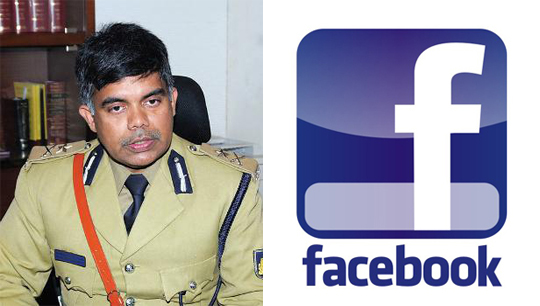
Mangaluru police ready for legal battle against Facebook

[email protected] (CD Network)
September 15, 2016

Mangaluru, Sep 15: Frustrated over the non-cooperation by the Facebook in cases of derogatory posts, Mangaluru city police chief has hinted at waging a legal battle against the social media giant.

Untitled-1

The city police have sent three notices to Facebook authorities, including in the recent case of derogatory Facebook post on?goddess Durgaparameshwari, the presiding deity of a temple in Kateel on the outskirts of Mangaluru.

However, the Facebook authorities have neither shared the required information with the police in investigating the cases, nor responded to the notices.

M Chandra Sekhar, the commissioner of Mangaluru city police, told media persons here that in such cases it will be the responsibility of the social networking sites to provide the IP addresses from which the posts were sent.

“The Facebook might be a big company, but, when the safety, security, unity and integrity of the nation is concerned, it is small,” he said adding that the police will explore the legal means to take them head on.

He also said that the police would send yet another reminder to the Facebook seeking its co-operation in the derogatory post cases and if it still refused to respond, they would have no other option but to approach the court.

Comments

Chandrashekar
 - 
Thursday, 15 Sep 2016

his hand should be chopped off again he should not use any social media. after chopping his hand he can sit and beg outside the temple.

karan
 - 
Thursday, 15 Sep 2016

the one who did this shameful act must be punished soon, otherwise this will go on continue.

Saleem Khan
 - 
Thursday, 15 Sep 2016

its really wrong being responsible social media company they have to atleast responds to police investigation.

Swathi S K
 - 
Thursday, 15 Sep 2016

Facebook should be banned from india.

Add new comment

  • Coastaldigest.com reserves the right to delete or block any comments.
  • Coastaldigset.com is not responsible for its readers’ comments.
  • Comments that are abusive, incendiary or irrelevant are strictly prohibited.
  • Please use a genuine email ID and provide your name to avoid reject.
Agencies
May 8,2020

Washington D.C., May 8: The prime time for brain development in a child's life is the first year, where the infant spends most of the time asleep. It is the time when neural connections form and sensory memories are encoded.

However, when sleep is disrupted, as occurs more often among children with autism, brain development may be affected, too.

New research led by the University of Washington finds that sleep problems in a baby's first 12 months may not only precede an autism diagnosis but also may be associated with altered growth trajectory in a key part of the brain, the hippocampus.

The study, which was published in the American Journal of Psychiatry, researchers report that in a sample of more than 400 taken of 6- to 12-month-old infants, those who were later diagnosed with autism were more likely to have had difficulty falling asleep.

It also states that this sleep difficulty was associated with altered growth trajectories in the hippocampus.

"The hippocampus is critical for learning and memory, and changes in the size of the hippocampus have been associated with poor sleep in adults and older children.

As many as 80 per cent of the children with autism spectrum disorder have sleep problems," said Annette Estes, director of the UW Autism Center and senior author of the study.

"In our clinical experience, parents have a lot of concerns about their children's sleep, and in our work on early autism intervention, we observed that sleep problems were holding children and families back," added Estes, who is also a UW professor of speech and hearing sciences.

"It could be that altered sleep is part-and-parcel of autism for some children. One clue is that behavioural interventions to improve sleep don't work for all children with autism, even when their parents are doing everything just right. This suggests that there may be a biological component to sleep problems for some children with autism," said Estes.

To consider links among sleep, brain development, and autism, researchers at the IBIS Network looked at MRI scans of 432 infants, surveyed parents about sleep patterns, and measured cognitive functioning using a standardized assessment.

At the outset of the study, infants were classified according to their risk for developing autism: Those who were at higher risk of developing autism -- about two-thirds of the study sample -- had an older sibling who had already been diagnosed.

Infant siblings of children with autism have a 20 per cent chance of developing autism spectrum disorder -- a much higher risk than children in the general population.

In the current study, 127 of the 432 infants were identified as "low risk" at the time the MRI scans were taken because they had no family history of autism.

They later evaluated all the participants at 24 months of age to determine whether they had developed autism. Of the roughly 300 children originally considered "high familial risk," 71 were diagnosed with autism spectrum disorder at that age.

Problems with sleep were more common among the infants later diagnosed with an autism spectrum disorder, as were larger hippocampi. No other subcortical brain structures were affected, including the amygdala, which is responsible for certain emotions and aspects of memory, or the thalamus, a signal transmitter from the spinal cord to the cerebral cortex.

The authors note that while parents reported more sleep difficulties among infants who developed autism compared to those who did not, the differences were very subtle and only observed when looking at group averages across hundreds of infants.

Sleep patterns in the first years of life change rapidly as infants transition from sleeping around the clock to a more adult-like sleep/wake cycle. Until further research is completed, Estes said, it is not possible to interpret challenges with sleep as an early sign of increased risk for autism.


Comments

Add new comment

  • Coastaldigest.com reserves the right to delete or block any comments.
  • Coastaldigset.com is not responsible for its readers’ comments.
  • Comments that are abusive, incendiary or irrelevant are strictly prohibited.
  • Please use a genuine email ID and provide your name to avoid reject.
News Network
January 10,2020

Mangaluru, Jan 10: Two members of a notorious honey-trap gang that used to lure rich men using women and then extort money from them by staging fake police raid have been arrested by the Dakshina Kannada district police.

Lohith, a resident of Kushalnagara, and Sharif from Vittal, were arrested in connection with a honey-trap case registered in Uppinangady police station. Jamal, Jeevan and Naushad, who were also involved in the case, are absconding.

Police said they received information that a few people under the guise of being Kerala police, were planning to raid a resort near Uppinangady where two couples were staying.

They were informed that they would threaten and try to extort money from them. The police were tipped off about the same by their counterparts in Kerala.

Police said the accused are experts in setting honeytraps, and were involved in similar crimes since a long time. Their modus operandi was to use two women from Mangaluru to lure their intended targets.

Once they trap their target, the woman and victim are sent to resorts. They then raid the resort posing as police officials, and click pictures in compromising positions of the victim with the woman.

They threaten to release the pictures on social media or TV channels, if they fail to pay up.

Police said the accused demanded Rs 10 lakh from each victim, but they denied to pay up. Irked by this, the accused took away the victims’ belongings such as phone, money and car.

The victims who believed that the accused were police personnel, asked them to take them to the police station. Instead of taking them to the police, the accused took them to a secluded place, where they claimed that they were putting the victims under house arrest. Police have seized an SUV from the accused.

Comments

Add new comment

  • Coastaldigest.com reserves the right to delete or block any comments.
  • Coastaldigset.com is not responsible for its readers’ comments.
  • Comments that are abusive, incendiary or irrelevant are strictly prohibited.
  • Please use a genuine email ID and provide your name to avoid reject.
News Network
May 24,2020

Bengaluru, May 24: In an effort to protect passengers and staff from the risk of COVID-19 transmission, the Bangalore International Airport Limited (BIAL) has introduced a parking-to-boarding contactless journey at the airport.

With a greater emphasis on minimum touch and minimum exposure between passengers and airport personnel, BIAL aims to minimise all physical contact at the airport. The technology will continue to enable a seamless airport journey, with greater emphasis on health and safety.

"As the gateway to a new India, BLR Airport has a key role to play in helping passengers through this global health crisis by reassuring them that their safety is our top priority. We have introduced innovative contactless procedures to minimise exposure at the airport," said Hari Marar, MD and CEO, BIAL.

"These enhancements demonstrate our continued commitment to keep our passengers safe in this environment. We believe our new measures will boost confidence among passengers," continued Marar.

"BLR Airport is all geared up to welcome our passengers back and - working with various government departments - we're committed to offering them a safe experience by implementing the best-in-class standards, procedures and practices," Marar added.

Earlier, Civil Aviation Minister Hardeep Singh Puri said that domestic flight operations will resume from May 25 noting that all airlines and airports were ready but it is not viable to keep the middle seat vacant as it will lead to hike in the ticket price and prescribed social distancing norms would still not be met. 

Comments

Add new comment

  • Coastaldigest.com reserves the right to delete or block any comments.
  • Coastaldigset.com is not responsible for its readers’ comments.
  • Comments that are abusive, incendiary or irrelevant are strictly prohibited.
  • Please use a genuine email ID and provide your name to avoid reject.