Mangaluru: Two officials get 1 year jail for accepting Rs 3,000 bribe

News Network
February 2, 2018

Mangaluru, Feb 2: A retired Panchayat Development Officer and a Panchayat Secretary in Mangaluru taluk were on Thursday sentenced to one year imprisonment in a bribery case.  

The III Additional District and Sessions Judge B. Muralidhar Pai also imposed a fine of Rs 10,000 on finding the two guilty of accepting bribe of Rs. 3,000.

According to the chargesheet, Konaje Panchayat Development Officer Savithri and secretary Aboobacker P.J had demanded Rs. 3,000 from Sarika, a local resident, for giving door number.

The Lokayukta police arrested the two were while they were accepting bribe of Rs. 3,000 on March 28, 2012.

The judge sentenced the two to one year imprisonment and imposed fine of Rs. 5,000 each for the offences under Section 13 (1) (D) and Section 7 of the Prevention of Corruption Act. The two sentences will run concurrently, the judge said.

Comments

Sandesh
 - 
Friday, 2 Feb 2018

Poor people. They might have some urgency. for small amount of money they have done the deal

Babu Gowda
 - 
Friday, 2 Feb 2018

Only just 300 rupees..! he could have try for bigger amount.

True.. Vijay Mallya still free even after big fraudulent activity, and some modi followers also free

Sukesh
 - 
Friday, 2 Feb 2018

From the bottom, panchayat corruption starting and it goes up. But big fishes wont be trapped in those nets. Only small bribery

Mohan
 - 
Friday, 2 Feb 2018

Corruption is like cancer. Its spreads all over once get affected in system

Ganesh
 - 
Friday, 2 Feb 2018

Wow.. great job.. all corrupted should be removed

Add new comment

  • Coastaldigest.com reserves the right to delete or block any comments.
  • Coastaldigset.com is not responsible for its readers’ comments.
  • Comments that are abusive, incendiary or irrelevant are strictly prohibited.
  • Please use a genuine email ID and provide your name to avoid reject.
News Network
May 26,2020

Bengaluru, May 26: Unknown miscreants have set ablaze 30-40 migrant labourers hutments in Bengaluru east, prompting police to take suo motu cognizance, an official said on Tuesday.

"As many as 30-40 migrant labourers' hutments have been set ablaze by unknown miscreants at Kacharakanahallin in KG Halli, we have taken suo motu cognizance of the crime," said a police official to media.

Police are investigating the arson invoking IPC Sections 143, 147, 188, 436, 123, 504, 506 and others.

"There was no loss of life in the arson as the migrant labourers were away at their hometowns because of COVID lockdown," said the official.

The labourers came from different parts of Karnataka to eke out a living and were living in those huts near the Rama Temple in KG Halli.

Comments

Add new comment

  • Coastaldigest.com reserves the right to delete or block any comments.
  • Coastaldigset.com is not responsible for its readers’ comments.
  • Comments that are abusive, incendiary or irrelevant are strictly prohibited.
  • Please use a genuine email ID and provide your name to avoid reject.
News Network
July 28,2020

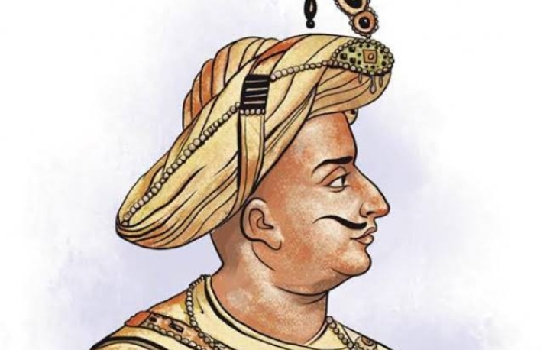
Bengaluru, Jul 28: After the Central Board of Secondary Education (CBSE) reduced the syllabi for Classes 9 to 12 due to COVID-19 pandemic, the Karnataka government has followed the suit. The Department of Public Instruction has omitted the chapters on legendary south Indian rulers Hyder Ali and Tipu Sultan from the textbooks of Class 7 in their attempt to reduce syllabus for state board schools by 30 per cent. 

The department, however, has decided to retain similar chapters on Tipu Sultan in 6th and 10th Classes, though the syllabus in text books for all classes from 1 to 10th has been trimmed. 

The trimmed textbooks uploaded on the website of the Department of State Education Research and Training (DSERT) by Karnataka state Textbook Society revealed removal of chapters on Tipu Sultan for the seventh grade.

Justifying the decision, officials said, "students study similar chapters in Class 6 and more in the 10th grade." Yet another senior official from the Text Book Society said, "Trimming does not mean we have removed half of the syllabus from textbooks. It is only keeping in mind the repetition we have condensed the chapters. In case students study about a particular dynasty in higher grades, then the same had been removed from lower grades."

A few months ago, there was an uproar over dropping of content on Tipu Sultan and MLAs from the ruling BJP also demanded the same and petitioned to the Chief Minister. Even an expert committee led by Prof Baraguru Ramachandrappa suggested to not drop any content on the historic figure. However, the department still decided to drop lessons from one of the classes while keeping the syllabus short for the next 120 active academic days.

Earlier this month, a controversy had erupted over the CBSE's decision to omit topics like federalism, secularism, citizenship, etc while reducing the syllabus for Classes 9 to 12. The education board had issued a detailed clarification later, stating that topics claimed to be dropped "are either being covered by the rationalised syllabus or in the Alternative Academic Calendar of NCERT".

"The rationalisation of syllabus up to 30 per cent has been undertaken by the Board for nearly 190 subjects of class 9 to 12 for the academic session 2020-21 as a one-time measure only. The objective is to reduce the exam stress of students due to the prevailing health emergency situation and prevent learning gaps," it said.

Last week, the Congress in Uttar Pradesh expressed its concern over 'deliberate and systematic' deletions of chapters related to the freedom struggle and the party's role in it from the Class 10-12 syllabi of the Secondary Education Board.


Comments

Add new comment

  • Coastaldigest.com reserves the right to delete or block any comments.
  • Coastaldigset.com is not responsible for its readers’ comments.
  • Comments that are abusive, incendiary or irrelevant are strictly prohibited.
  • Please use a genuine email ID and provide your name to avoid reject.
News Network
February 28,2020

Bengaluru, Feb 28: Historian S. Shettar, 85, breathed his last early on February 28 in Bengaluru. He was suffering from respiratory problems and was hospitalised for over a week.

Shettar was known for his multi-disciplinary work, encompassing linguistics, epigraphy, anthropology, the study of religions and art history. He had extensively worked on the Jain practice of ritual death in Karnataka and Asoka edicts. He had studied and compiled early edicts in Kannada and worked extensively on the growth of Kannada language down the ages.

Born in 1935 at Hampasagara, Ballari district, he went on to study at Cambridge University and started his career as a Professor of History at Karnatak University, Dharwad, his alma mater. He later headed the National Museum Institute of the History of Art, Conservation and Museology in 1978 and Indian Council for Historical Research in 1996. He was also a visiting professor at the National Institute of Advanced Studies, Bengaluru.

He was a bilingual historian who wrote in English for most of his career, but started writing in Kannada in later years. In the last two decades, he developed a keen interest in linguistics and wrote multiple books on classical Kannada and Prakrit. His 2007 book “Shangam Tamilagam” is considered a seminal work in the study of the early period of Dravidian languages. It won him Bhasha Samman from Central Sahitya Akademi. He later wrote two works on Halegannada, classical Kannada. His most recent work was “Prakrita Jagadvalaya” in 2018.

Comments

Add new comment

  • Coastaldigest.com reserves the right to delete or block any comments.
  • Coastaldigset.com is not responsible for its readers’ comments.
  • Comments that are abusive, incendiary or irrelevant are strictly prohibited.
  • Please use a genuine email ID and provide your name to avoid reject.

