Mangaluru's first theme-based mall 'Transit One' set for launch

[email protected] (Business Desk)
March 5, 2016

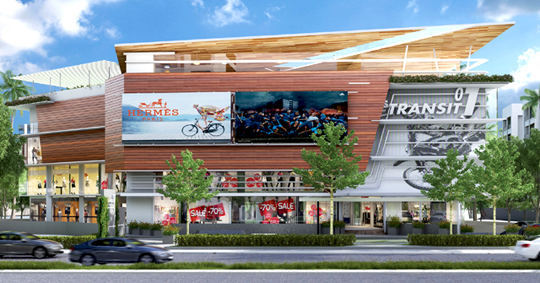
Mangaluru: Ecologic Habitats is all set to launch Transit One, first of the Transit series of innovative theme-based malls, with the foundation stone laying ceremony on Friday November 20 at 5.30 pm in Thokkkottu.

transitone1

This was revealed by P S Mohammed, managing director, Ecologic Habitats at a press meet here on Thursday November 19.

The Mangaluru-based real estate development firm 'Ecologic Habitats' is all set to revolutionize the idea of traveling on the Indian highways with the concept of transit oriented development. Transit- one is strategically located on NH-66, Thokottu, the southern gateway to Mangaluru city.

Addressing the press meet, P S Mohammed said, "The idea is to maximize the shopping access to public and private transport along this busy freeway that connects Kerala to Mangaluru, Goa, Mumbai and so on. Transit One also caters to the Thokottu region, a fast growing suburb with numerous educational institutes and IT firms. The tagline 'Stop. Recharge. Restart' sums up the transit situated on 40 cents of land with 50,000 sq ft area of plush shopping experience. It addresses the need of the hour for towns like Thokottu, which otherwise would have to depend on nearby Mangaluru city to meet their routine shopping and recreational requirements.

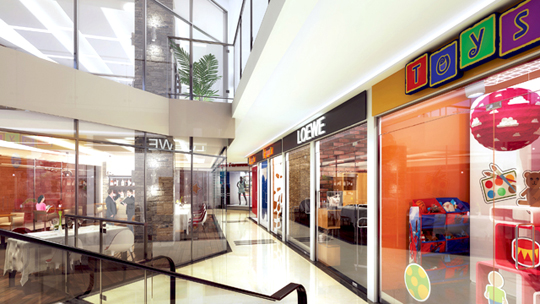
"Transit One offers a wide range of products right from affordable mini boutique stores to large drive in supermarkets, restaurants, food courts, social clubs, thus catering to all sections of the society. The external facade also has a large electronic display screen where one can showcase their ideas and brands. Promoters of the project envision Transit One to be a 'Small world of large happiness'," he added.

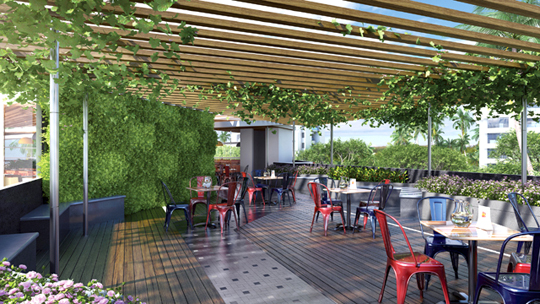
"The visitors step into the level 1 by strolling across the external landscaped plaza, where they are welcomed by their favourite branded stores. Level 2 is the urban fashionista's delight where a wide range of trendy apparel accessories catch your eye. Level 3 is what the Ecologic says is the modem version of the 'Old Indian Bazaar', where the local entrepreneurial spirit is at full display at the smaller boutique stores. Level 4 offers an extensive variety of culinary options with the perfect ambience," he explained.

"Ecologic Habitats boasts of raking in the services of the best in industry to design and implement the project. Well-landscaped environs is what we believe is at the core of our product portfolio. Services of a leading Bengaluru-based landscape architect has been sought to breathe in green into the entire shopping experience. At Ecologic Habitats it is our commitment to add value to all our buildings by breathing green into them. We aspire to partner with a like-minded set of discernible clientele, so that it can add value to their investments by consistently delivering products that inspire," P S Mohammed said.

Kareem, director and Pradeep Hegde, associate, Ecologic Habitats were present at the press meet.

transitone2

transitone3

Comments

priyanka
 - 
Sunday, 6 Mar 2016

this will be a different mall comparing to others. all the best ecological habitats.

aharkul
 - 
Saturday, 5 Mar 2016

I think this is the first one in Mangaluru. Lucky Mangalureans. I am very far from Mangaluru. In Sha Allah When I come to Mangaluru I will visit there and taste the things in every level.

Madhu
 - 
Saturday, 5 Mar 2016

wow wonderful looking very nice.

Add new comment

  • Coastaldigest.com reserves the right to delete or block any comments.
  • Coastaldigset.com is not responsible for its readers’ comments.
  • Comments that are abusive, incendiary or irrelevant are strictly prohibited.
  • Please use a genuine email ID and provide your name to avoid reject.
Ram Puniyani
February 10,2020

Noam Chomsky is one of the leading peace workers in the world. In the wake of America’s attack on Vietnam, he brought out his classic formulation, ‘manufacturing consent’. The phrase explains the state manipulating public opinion to have the public approve of it policies—in this case, the attack of the American state on Vietnam, which was then struggling to free itself from French colonial rule.

In India, we are witness to manufactured hate against religious minorities. This hatred serves to enhance polarisation in society, which undermines India’s democracy and Constitution and promotes support for a Hindu nation. Hate is being manufactured through multiple mechanisms. For example, it manifests in violence against religious minorities. Some recent ghastly expressions of this manufactured hate was the massive communal violence witnessed in Mumbai (1992-93), Gujarat (2002), Kandhamal (2008) and Muzaffarnagar (2013). Its other manifestation was in the form of lynching of those accused of having killed a cow or consumed beef. A parallel phenomenon is the brutal flogging, often to death, of Dalits who deal with animal carcasses or leather.

Yet another form of this was seen when Shambhulal Regar, indoctrinated by the propaganda of Hindu nationalists, burned alive Afrazul Khan and shot the video of the heinous act. For his brutality, he was praised by many. Regar was incited into the act by the propaganda around love jihad. Lately, we have the same phenomenon of manufactured hate taking on even more dastardly proportions as youth related to Hindu nationalist organisations have been caught using pistols, while police authorities look on.

Anurag Thakur, a BJP minster in the central government recently incited a crowd in Delhi to complete his chant of what should happen to ‘traitors of the country...” with a “they should be shot”. Just two days later, a youth brought a pistol to the site of a protest at Jamia Millia Islamia university and shouted “take Azaadi!” and fired it. One bullet hit a student of Jamia. This happened on 30 January, the day Nathuram Godse had shot Mahatma Gandhi in 1948. A few days later, another youth fired near the site of protests against the CAA and NRC at Shaheen Bagh. Soon after, he said that in India, “only Hindus will rule”.

What is very obvious is that the shootings by those associated with Hindu nationalist organisations are the culmination of a long campaign of spreading hate against religious minorities in India in general and against Muslims in particular. The present phase is the outcome of a long and sustained hate campaign, the beginning of which lies in nationalism in the name of religion; Muslim nationalism and Hindu nationalism. This sectarian nationalism picked up the communal view of history and the communal historiography which the British introduced in order to pursue their ‘divide and rule’ policy.

In India what became part of “social common sense” was that Muslim kings had destroyed Hindu temples, that Islam was spread by force, and that it is a foreign religion, and so on. Campaigns, such as the one for a temple dedicated to the Hindu god Rama to be built at the site where the Babri masjid once stood, further deepened the idea of a Muslim as a “temple-destroyer”. Aurangzeb, Tipu Sultan and other Muslim kings were tarnished as the ones who spread Islam by force in the subcontinent. The tragic Partition, which was primarily due to British policies, and was well-supported by communal streams also, was entirely attributed to Muslims. The Kashmir conflict, which is the outcome of regional, ethnic and other historical issues, coupled with the American policy of supporting Pakistan’s ambitions of regional hegemony, (which also fostered the birth of Al-Qaeda), was also attributed to the Muslims.

With recurring incidents of communal violence, these falsehoods went on going deeper into the social thinking. Violence itself led to ghettoisation of Muslims and further broke inter-community social bonds. On the one hand, a ghettoised community is cut off from others and on the other hand the victims come to be presented as culprits. The percolation of this hate through word-of-mouth propaganda, media and re-writing of school curricula, had a strong impact on social attitudes towards the minorities.

In the last couple of decades, the process of manufacturing hate has been intensified by the social media platforms which are being cleverly used by the communal forces. Swati Chaturvedi’s book, I Am a Troll: Inside the Secret World of the BJP’s Digital Army, tells us how the BJP used social media to spread hate. Whatapp University became the source of understanding for large sections of society and hate for the ‘Other’, went up by leaps and bounds. To add on to this process, the phenomenon of fake news was shrewdly deployed to intensify divisiveness.

Currently, the Shaheen Bagh movement is a big uniting force for the country; but it is being demonised as a gathering of ‘anti-nationals’. Another BJP leader has said that these protesters will indulge in crimes like rape. This has intensified the prevalent hate.

While there is a general dominance of hate, the likes of Shambhulal Regar and the Jamia shooter do get taken in by the incitement and act out the violence that is constantly hinted at. The deeper issue involved is the prevalence of hate, misconceptions and biases, which have become the part of social thinking.

These misconceptions are undoing the amity between different religious communities which was built during the freedom movement. They are undoing the fraternity which emerged with the process of India as a nation in the making. The processes which brought these communities together broadly drew from Gandhi, Bhagat Singh and Ambedkar. It is these values which need to be rooted again in the society. The communal forces have resorted to false propaganda against the minorities, and that needs to be undone with sincerity.

Combating those foundational misconceptions which create hatred is a massive task which needs to be taken up by the social organisations and political parties which have faith in the Indian Constitution and values of freedom movement. It needs to be done right away as a priority issue in with a focus on cultivating Indian fraternity yet again.


Comments

Add new comment

  • Coastaldigest.com reserves the right to delete or block any comments.
  • Coastaldigset.com is not responsible for its readers’ comments.
  • Comments that are abusive, incendiary or irrelevant are strictly prohibited.
  • Please use a genuine email ID and provide your name to avoid reject.
coastaldigest.com news network
May 4,2020

Mangaluru, May 4: No major crowds were seen in the coastal city of Mangaluru today except in front of the liquor shops after the district administration relaxed the lockdown norms for 12 hours a day (between 7am and 7pm).

There was no mad rush of vehicles either on city roads when the relaxed lockdown began. There were fewer people to buy essentials in front of grocery and vegetable shops as they had time till late evening.

There was no let down in the number of police pickets as well as curbs on vehicular movement across the city either. 

The government has allowed sale of liquor in CL2 (standalone wine shops) and CL 11 (MSIL outlets) to mop up revenues when Lockdown-3 commenced from Monday. Compared the other parts of Karnataka, the size of queues in front of liquor shops in Mangaluru were smaller. 

Like other parts of the country, the lockdown was imposed in the coastal district on March 24 to prevent the spread of Covid-19. Prior to that, a curfew was imposed in the district from March 22 midnight. The lockdown did not apply to essential services such as sale of food, groceries, milk, vegetables, fruits, and meat and fish. Gradually the district administration had to intensify the lockdown and allow those shops to remain open only between 7 a.m. and 12 noon. 

With the lockdown relaxation extending till 7 p.m., Mangaluru today witnessed people and private vehicles moving freely in the afternoon for the first time in more than a month. However, only those who had to go for work and do other essential activities were seen on roads. After 7 p.m. movements of all kinds of vehicles will be prohibited. 

The relaxation was to facilitate economic activities that had come to a standstill during the first two phases of lockdown. Mangaluru City Police Commissioner Dr P S Harsha, meanwhile, warned the people against misusing lockdown relaxation and venturing out without any genuine reason.

Comments

Add new comment

  • Coastaldigest.com reserves the right to delete or block any comments.
  • Coastaldigset.com is not responsible for its readers’ comments.
  • Comments that are abusive, incendiary or irrelevant are strictly prohibited.
  • Please use a genuine email ID and provide your name to avoid reject.
News Network
June 24,2020

Bengaluru, Jun 24: The Karnataka government on Tuesday announced that fever clinics would be established at all district-level and taluk-level hospitals, wherein fever cases would be screened in a separate area.

"Fever clinics to be established at all district hospitals/district-level hospitals and taluk-level hospitals, wherein all fever cases should be screened 24x7 in a separate area and for Influenza-Like Illness (ILI) and Severe Acute Respiratory Illness (SARI) cases to be subjected for swab testing," read a circular from the Department of Health and Family Welfare dated June 22.

The circular said that private institutions in the corporation areas should also be designated as fever clinics.

"100 per cent of Community Health Centres (CHC), 50 per cent of Primary Health Centres and Urban Primary Health Centres (UPHC) to be converted as exclusive fever clinics to screen ILI/SARI during working hours. The remaining PHC/UPHC to cater to non-COVID-19 cases. All health institutions need to have a separate entry for COVID and non-COVID services," the circular further said.

Karnataka on Tuesday reported 322 fresh COVID-19 positive cases and eight deaths.
According to the state health department, the total number of positive cases has mounted to 9,721 and 150 deaths. So far, 6,004 people have been discharged.

Comments

Add new comment

  • Coastaldigest.com reserves the right to delete or block any comments.
  • Coastaldigset.com is not responsible for its readers’ comments.
  • Comments that are abusive, incendiary or irrelevant are strictly prohibited.
  • Please use a genuine email ID and provide your name to avoid reject.