Meet Sammilan Shetty, the butterfly-man of Karnataka

Sandhya D'Souza | coastaldigest.com
June 24, 2018

It was a regular Zoology assignment in 2004 that triggered the sudden interest of then student Sammilan Shetty towards butterflies. Fourteen-years since, having quit his fulltime-lectureship post, this 32-year-old has been successfully running Karnataka’s first private butterfly park in coastal district of Dakshina Kannada since 2011.

At the foothills of Western Ghats in Belvai village of Moodbidri taluk, a host of ordinary-looking plants and trees welcome the guests to 'Sammilan Shetty's Butterfly Park'. While walking through the 200 metre stretch of trees like coconut, mango, cashew or curry leaf plants, visitors are asked to delicately examine the top and bottom of these leaves, some of which are nature’s bed for butterfly eggs, larvae, caterpillar, dried shells and so on.

"You don’t need exotic plantation to host butterflies. Regular saplings or even wild plants that you can find in your home backyard would do. But unfortunately, most people uproot them terming it as a weed (unwanted plants). Even my family, was initially reluctant of my passion because I planted them," Shetty says.

Prior to the walk around the butterfly park, the visitors are familiarized with a few names and behaviour-pattern of the butterflies through audio-visual material, so that they can relate the same during their actual encounter with the species in the wild. A 30-minute walk-through this park gives a unique opportunity for the visitors to see the transformation from egg to caterpillar-pupa and the adult butterfly emerging out of it.

While the 'host-plant' is where the butterflies lay their eggs, the male milkweed butterflies suck alkaloid from alkaloid rich plants. "Alkaloids are essential for male milkweed butterflies to attract their female counterparts. Lower the alkaloid, the male butterflies might fail to impress their prospective female-mates," he says.

At this ancestral property spreading over 7.35 acres of semi-forest land, interesting species like, Autumn Leaf (Doleschallia bisaltide), Clipper (Parthenos sylvia),  Tawny Rajah (Charaxes psaphon), Black Rajah (Charaxes solon), Paris Peacock (Papilio paris), Redspot Duke (Dophla evelina), Blue Oakleaf(Kallima horsfieldii), Colour Sergeant (Athyma inara), which are otherwise uncommon, frequent at this open-private conservatory.

For the purpose of the identification of butterflies, Shetty uses The Book of Indian Butterflies by Isaac Kehimkar, whom he considers as his inspiration. Incidentally, the park was also publically opened in 2013 by Isaac - popularly known as the 'Butterfly man of India'.

"Rare butterflies like Blue Nawab (Polyura Schreiber), Orchid Tit (Chliaria othona), Great Evening Brown (Melanitis zitenius), Aberrant Oakblue (Arhopala abseus), Banded Royal (Rachana jalindra) Tamil Oakblue (Arhopala bazaloides) have also been recorded here," Shetty says.  Besides, we have species endemic to Western Ghats like Southern Duffer (Discophora lepida),  Tamil lacewing (Cethosia Nietneri), Malabar Banded Swallowtail( Papilio liomedon), Malabar Banded Peacock (Papilio buddha), a common sight during the season.

Back in 2004, while pursuing his graduation studies for Zoology, Sammilan documented 30 butterflies in the region for his project on the 'Study of local butterflies'. At present the open-house conservatory houses nearly 148 butterflies including rare and indigenous species. This is close to 50 per cent (339) of the species that is found in Western-Ghats. Shetty is particular of keeping the park without closed dome or enclosures, which he says traps them. "We have developed the park by propagating natural greenery with 'native host plants' and nectar plants which attracts butterflies to these parks. We have only created a conducive condition for them and respect the butterfly's freedom to stay or to go," he says.

London based World Book of Records has proposed to honour Shetty in recognition for his conservation of butterflies. Halpe Porus is the latest addition as the 148th butterfly at this park, which incidentally was spotted during course of this interview-walk.

Altogether there are 1,200 species of butterflies in the country, and approximately 320 in Karnataka. "Though the pollination by the butterflies is essential for food chain, no much study is gathered in India over it. Although Indian Foundation for Butterflies (IFB) is leading the way, it may take another 10 years for us to asses if we are truly accommodating the butterflies in our eco system," he says.

While the massive urbanisation and real-estate ventures targeting the secondary-forests, Shetty says, it has led to the decline of wildlife including butterflies due to their habitat loss.

While Maharashtra has taken ‘Blue Mormon’ as its state butterfly in 2015 and Karnataka has declared 'Southern Bird Wing' as its state butterfly in 2017, the butterfly enthusiasts are now batting to have recognition for a national butterfly. Butterfly-conservators feel that the move would not only help in creation of awareness of Butterfly in general, but also in conservation of their population.

The park which is completely funded by the family of Shetty, attracts approximately 800 visitors during the season between June and December. In the process of documenting the butterflies, Shetty has also taken to photography of which he plans to turn into a documentary. "A lot of people have changed the way they look at butterfly, after the educational tour. The idea is to take the message of butterfly conservation and its contribution for crop-cultivation (pollination) to as many people as possible in simple language" he says.

Comments

MK Lobo, Dubai
 - 
Sunday, 24 Jun 2018

Beautiful. Great job by Mr Shetty. Will visit during my next India visit

Add new comment

  • Coastaldigest.com reserves the right to delete or block any comments.
  • Coastaldigset.com is not responsible for its readers’ comments.
  • Comments that are abusive, incendiary or irrelevant are strictly prohibited.
  • Please use a genuine email ID and provide your name to avoid reject.
coastaldigest.com news network
August 3,2020

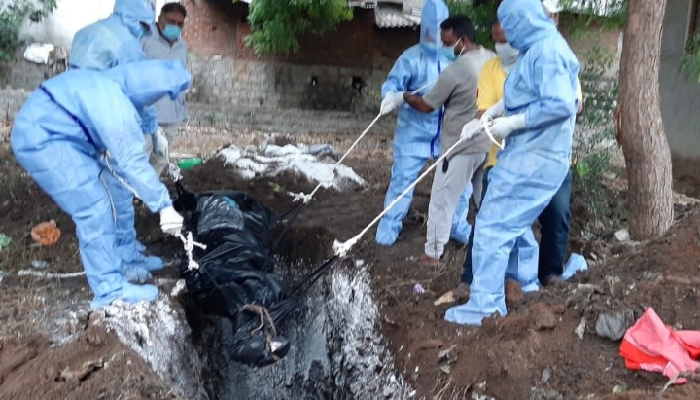
Koppal, Aug 3: The activists of Popular Front of India (PFI) have won the heart of the people by performing the last rites of a local leader of Bharatiya Janata Party in Koppla district of Karnataka. 

Somashekhara Gowda, a senior BJP leader in Koppal’s Gangavathi died of covid-19. His family members were reportedly quarantined. His own party activists also were not ready to participate in the last rite due to the fear of coronavirus infection.

Following requests, a team of PFI comprised of district secretary Fayaz, and members Yaseen, Abdul Aalam, Shamid Razi and Husain Azarauddin performed the last rites as per Veerashaiva Lingayat traditions. 

Speaking to media persons PFI district president Zaheer Abbas lamented that people still have plenty of misconceptions about covid-19. “Due to the misconceptions, performing the last rites of those who die of covid-19 has become a challenge,” he said.

He said that PFI activists followed all the health guidelines and took necessary precautions while performing the last rites. “Under the guidance of district health officials and with the consent of the family members of the deceased, the last rites were performed as per Veerashaiva Lingayat traditions,” he said.

Comments

Add new comment

  • Coastaldigest.com reserves the right to delete or block any comments.
  • Coastaldigset.com is not responsible for its readers’ comments.
  • Comments that are abusive, incendiary or irrelevant are strictly prohibited.
  • Please use a genuine email ID and provide your name to avoid reject.
coastaldigest.com news network
June 27,2020

Bengaluru, June 27: In the wake of mounting covid-19 cases across Karnataka, the state government has decided to extend the night curfew hours and to re-impose Sunday lockdown. 

Chief Minister BS Yediyurappa held an emergency meeting on Saturday with the state's top officials to discuss measures to further contain the spread of the novel coronavirus. 

During the meeting, it was decided that a state-wide lockdown will be imposed on each Sunday starting July 5. Only essential services and supplies will be allowed on Sundays.

Timings of the night curfew have also been revised to 8 PM - 5 AM from the earlier 9 PM - 5 AM. “We have decided to impose a curfew starting Monday, June 29, from 8 pm to 5 am every day. Right now, the curfew timing is 9 pm to 5 am, but it’ll be advanced by an hour to 8 pm,” said Home Minister Basavaraj Bommai

Commissioner of Bengaluru's civic body, BBMP has been directed to set up more wholesale vegetable markets to deter large crowds.

Meanwhile, government offices in Karnataka will open only five days a week and the weekend will be off for government employees.

It was also decided during the meeting on Saturday that a centralized bed-allocation system for Covid-19 patients will be taken up to ensure that each patient gets a bed without overwhelming the healthcare infrastructure.

Yediyurappa has also instructed officials to increase the number of ambulances for Covid-19 patients to 250 apart from arranging separate vehicles to carry mortal remains of victims. The police control room will aid officials in identifying the location and easing the movement of ambulances.

Information about nodal officers working for COVID management will be published. Joint Commissioners of 8 regions will be given additional responsibilities and KAS officers will be appointed to assist them.

The services of 180 ESI doctors appointed by the Labour Department will also be relied on by the state government. CM Yediyurappa has also asked officials to reserve wedding halls, hostels and other institutions in Bengaluru as COVID Care Centres.

Bengaluru Urban DC, on the other hand, was instructed to identify more places for the last rites of patients and also to form more teams for this purpose. 

The BBMP Commissioner has been told to notify reservation of 50 per cent beds in medical colleges and private hospitals.

Comments

Add new comment

  • Coastaldigest.com reserves the right to delete or block any comments.
  • Coastaldigset.com is not responsible for its readers’ comments.
  • Comments that are abusive, incendiary or irrelevant are strictly prohibited.
  • Please use a genuine email ID and provide your name to avoid reject.
News Network
May 19,2020

Bengaluru, May 19: Containment zones in Karnataka will be much smaller in size under the latest lockdown norms. However, rules and loopholes will be tightened and action against violators will be stringent in order to check the spread of the disease.

Revised guidelines issued by the Centre to the state, reveal containment zones are delineated based on mapping of cases and contacts. Intensive action will be carried out in these areas with the aim of breaking the chain of transmission. Therefore, the area of a containment zone should be appropriately defined by the district administration/local urban bodies with technical inputs at local level.

The health department is considering shrinking the size of containment zones from the existing 100 metres to open up more space for economic activities. Medical education minister K Sudhakar, also a member of the Covid taskforce, said additional chief secretary (health department) Javed Akthar will issue a new definition of a containment zone after the Covid-19 taskforce holds its next meeting.

“We are planning to further shrink it and restrict containment zones to an apartment complex, independent house or even a lane where the Covid-19 patient resides,” Sudhakar said. He went on to say bigger containment zones will impede businesses and normal activities in the vicinity, something which the government wants to avoid.

The minister said Karnataka will also do away with colour-coding districts. “With restrictions being relaxed for almost all activities, it does not make sense to pursue with colour codes. It is either containment zone or outside containment zone,” he said.

In rural areas, the minister said containment zones will be identified by the taluk heads. Government sources say it is difficult to restrict activities to certain areas or smaller location in rural areas as farmers and people will have to travel to the outskirts of their villages for their livelihood.

An official said, a containment operation (large outbreak or cluster) is deemed successful when no case is reported in 28 days from the containment zone.

Comments

Add new comment

  • Coastaldigest.com reserves the right to delete or block any comments.
  • Coastaldigset.com is not responsible for its readers’ comments.
  • Comments that are abusive, incendiary or irrelevant are strictly prohibited.
  • Please use a genuine email ID and provide your name to avoid reject.