Mercury dips as pre-monsoon rain finally lashes Mangaluru; will it continue?

[email protected] (By Pavithra Prakash | CD Network)
May 11, 2016

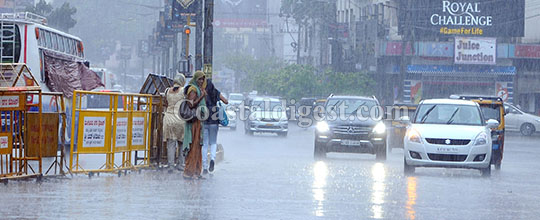
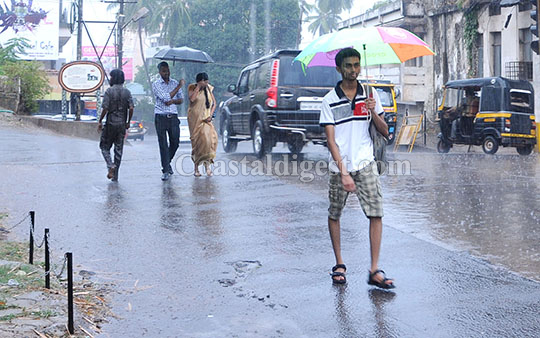
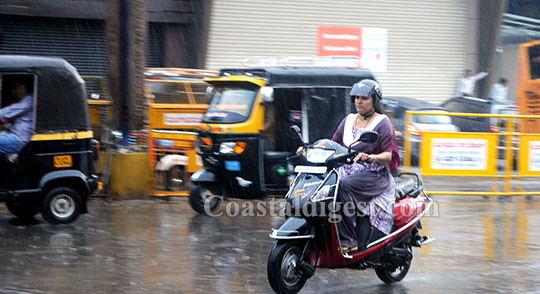
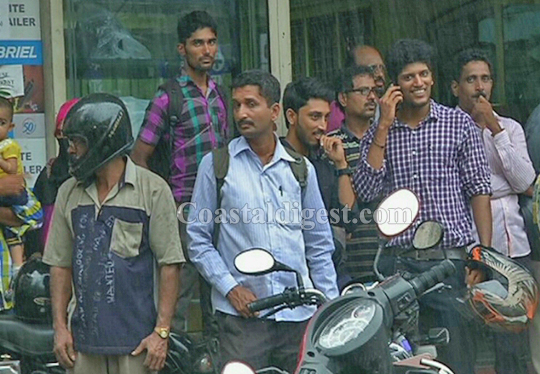
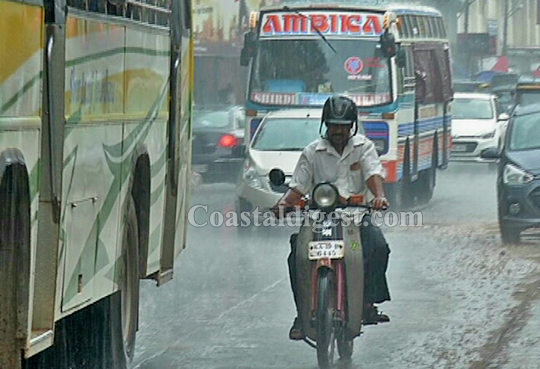
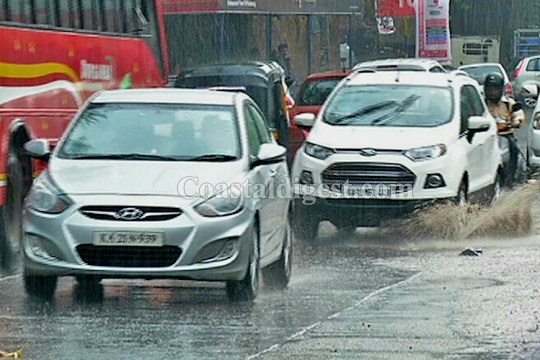
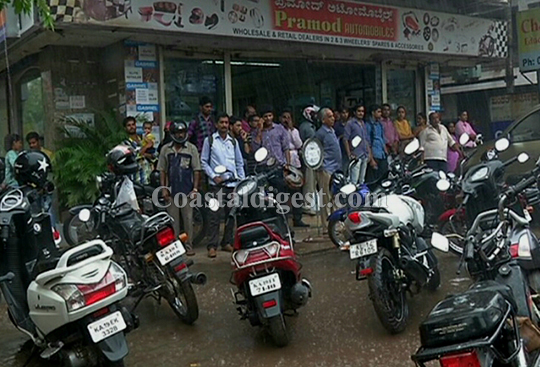
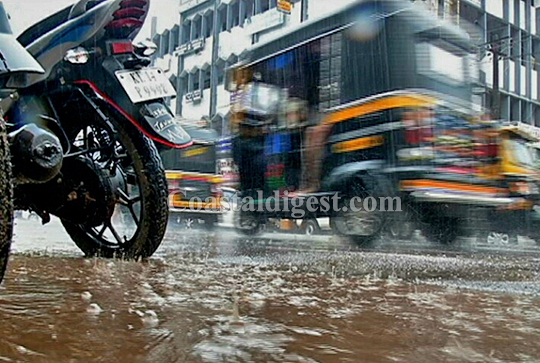
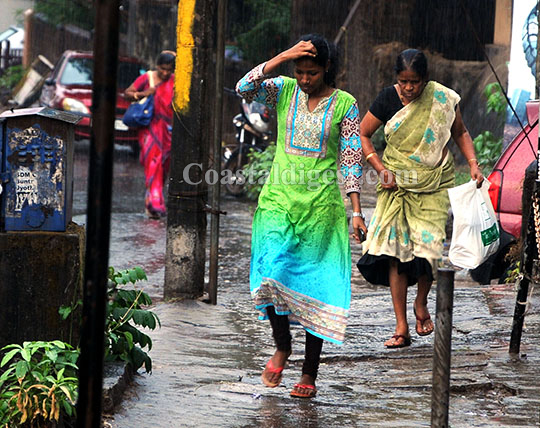
Mangaluru, May 11: Giving respite to people from summer heat, the pre-monsoon rains lashed the coastal city of Mangaluru and other parts of Dakshina Kannada district on Wednesday evening.
Rain 1

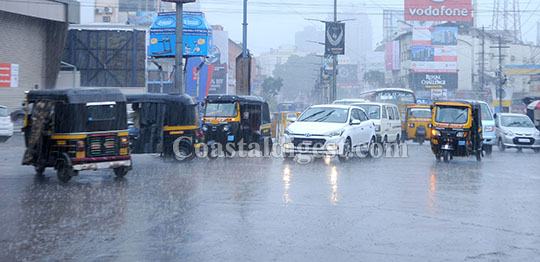
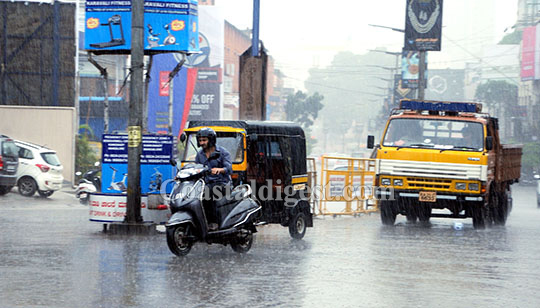
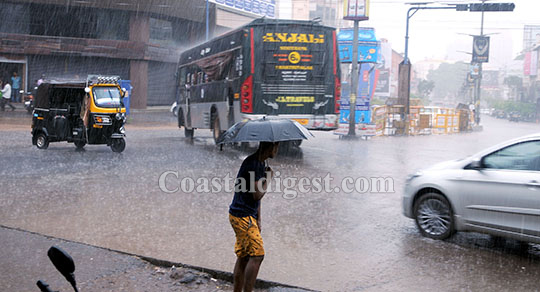
It was relatively a cloudy day since morning and moderate to heavy rains occurred after 5 p.m. in the city. The entire city was drenched by 6.30 p.m.

Roads in low lying areas including Derebail, Yeyyadi, Jeppinamogaru were flooded for some time. Mercury plummeted by more than five degree C during day hours giving respite from the heat.

However, this rain is not likely to address the water scarcity of Mangaluru immediately unless it continues to pour and increases the water level at Thumbe vented dam.

Due to lack of pre-monsoon rains most of the rivers in Dakshina Kannada and Udupi districts including Nethravati, Phalguni (Gurupura), Nandini, Swarna, Varahi, Sharavati, Aghanashini, and Kali, have almost dried up and groundwater level depleted considerably.

The region used to get normal pre-monsoon showers of up to 60 mm between January and April, but this year it got just 8 mm rainfall — a deficit of 87 per cent.

While groundwater has considerably depleted in the coastal region, farmers, with no other recourse, have become hapless to witness dying crops, including arecanut and coconut plantations.
Rain 2

Rain 3

Rain 4

Rain 5

Rain 6

rainS 1

rainS 2

rainS 3

rainS 4

rainS 5

Rain 7

Comments

UMMAR
 - 
Thursday, 12 May 2016

NICE TO SEE RAIN IN MANGALORE

Rikaz
 - 
Wednesday, 11 May 2016

Keep praying Allah....he is merciful and beneficent....

Add new comment

  • Coastaldigest.com reserves the right to delete or block any comments.
  • Coastaldigset.com is not responsible for its readers’ comments.
  • Comments that are abusive, incendiary or irrelevant are strictly prohibited.
  • Please use a genuine email ID and provide your name to avoid reject.
News Network
January 17,2020

New Delhi, Jan 17: The Supreme Court on Friday closed the monitoring of the killing of rationalist M M Kalburgi in 2015 in Dharwad.

A bench of Justices R F Nariman and S Ravindra Bhat noted that the charge sheet has already been filed and the matter was assigned to the sessions court. The court, however, noted two accused had absconded and could not be arrested till date, according to reports.

Senior advocate Devadatt Kamat, appearing for the Karnataka government, submitted that the High Court had also stopped monitoring of the matter.

The top court had in early last year directed that the Karnataka High Court's Dharwad bench to monitor the probe. The Karnataka police SIT, which investigated Gauri Lankesh case and filed the charge sheet, was allowed to take over the Kalburgi case.

Umadevi, in her 2017 plea, drew a parallel between Kalburgi's murder and killings of Narendra Dabholkar and Comrade Govind Pansare in Maharashtra and sought an SIT probe by a retired Supreme Court or a High Court judge. She urged the top court to monitor the probe till it reached its logical conclusion as there was no progress in the investigation conducted so far by the Karnataka police.

The court had earlier sought to know if there was a "common thread" in murder cases of Communist leader Pansare and rationalist Dabholkar in Maharashtra, and Kannada writer Kalburgi and journalist-activist Gauri Lankesh in Karnataka.

Comments

Add new comment

  • Coastaldigest.com reserves the right to delete or block any comments.
  • Coastaldigset.com is not responsible for its readers’ comments.
  • Comments that are abusive, incendiary or irrelevant are strictly prohibited.
  • Please use a genuine email ID and provide your name to avoid reject.
News Network
April 2,2020

The current physical distancing guidelines provided by the World Health Organisation (WHO) and by the US Centers for Disease Control and Prevention (CDC) may not be adequate to curb the coronavirus spread, according to a research which says the gas cloud from a cough or sneeze may help virus particles travel up to 8 metres. The research, published in the Journal of the American Medical Association, noted that the the current guidelines issued by the WHO and CDC are based on outdated models from the 1930s of how gas clouds from a cough, sneeze, or exhalation spread.

Study author, MIT associate professor Lydia Bourouiba, warned that droplets of all sizes can travel 23 to 27 feet, or 7-8 metres, carrying the pathogen.

According to Bourouiba, the current guidelines are based on "arbitrary" assumptions of droplet size, "overly simplified", and "may limit the effectiveness of the proposed interventions" against the deadly pandemic.

 She explained that the old guidelines assume droplets to be one of two categories, small or large, taking short-range semi-ballistic trajectories when a person exhales, coughs, or sneezes.

However based on more recent discoveries, the MIT scientist said, sneezes and coughs are made of a puff cloud that carries ambient air, transporting within it clusters of droplets of a wide range of sizes.

Bourouiba warned that this puff cloud, with ambient air entrapped in it, can offer the droplets moisture and warmth that can prevent it from evaporation in the outer environment.

"The locally moist and warm atmosphere within the turbulent gas cloud allows the contained droplets to evade evaporation for much longer than occurs with isolated droplets," she said.

"Under these conditions, the lifetime of a droplet could be considerably extended by a factor of up to 1000, from a fraction of a second to minutes," the researcher explained in the study.

The MIT scientist, who has researched the dynamics of coughs and sneezes for years, added that these droplets settle along the trajectory of a cough or sneeze contaminating surfaces, with their residues staying suspended in the air for hours.

"Even when maximum containment policies were enforced, the rapid international spread of COVID-19 suggests that using arbitrary droplet size cutoffs may not accurately reflect what actually occurs with respiratory emissions, possibly contributing to the ineffectiveness of some procedures used to limit the spread of respiratory disease," Bourouiba wrote in the study

Comments

Add new comment

  • Coastaldigest.com reserves the right to delete or block any comments.
  • Coastaldigset.com is not responsible for its readers’ comments.
  • Comments that are abusive, incendiary or irrelevant are strictly prohibited.
  • Please use a genuine email ID and provide your name to avoid reject.
News Network
April 22,2020

Mangaluru, Apr 22: Iftar parties, Taraweeh and weekly Friday prayers in mosques have been banned in the district during Ramadan amid Coronavirus theat, Dakshina Kannada Deputy Commissioner Sindhu B Rupesh said here on Wednesday.

In a release issued here, she said, “As per the guidelines issued by the State government and Wakf Board, arranging Iftar gathering, and offering Taraveeh Namaz and Friday Namaz at mosques or dargas during the month of Ramadan has been prohibited as a precaution measure to prevent the spread of coronavirus. Therefore, offer prayers at homes instead of going to mosques," the DC said.

“No one can perform Namaz in the mosques except the muezzin and the Pesh imam and the staff of the mosque. Also, gathering neighbors and offering collective prayers at anybody's home is also not allowed. Masjid administration committees must follow the directives of the government, Wakf Board and the District Administration”, the DC urged.

Comments

Add new comment

  • Coastaldigest.com reserves the right to delete or block any comments.
  • Coastaldigset.com is not responsible for its readers’ comments.
  • Comments that are abusive, incendiary or irrelevant are strictly prohibited.
  • Please use a genuine email ID and provide your name to avoid reject.