Mercury dips as pre-monsoon rain finally lashes Mangaluru; will it continue?

[email protected] (By Pavithra Prakash | CD Network)
May 11, 2016

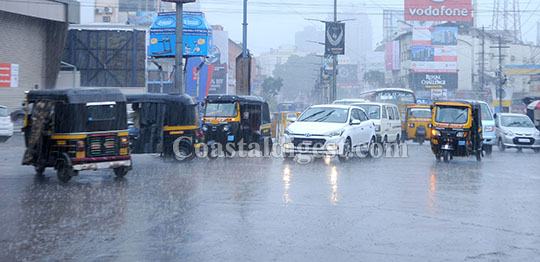
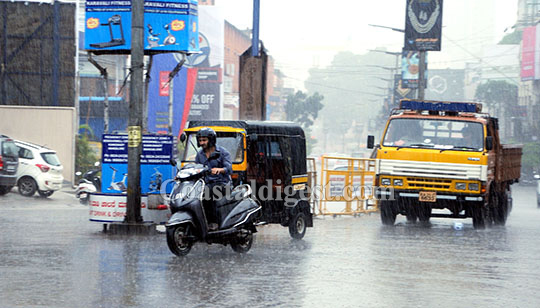
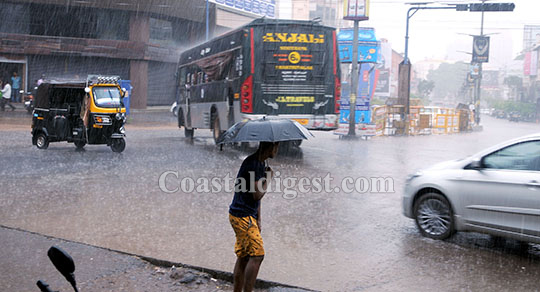
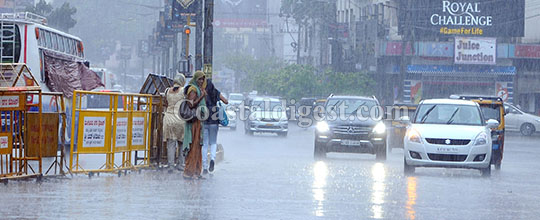
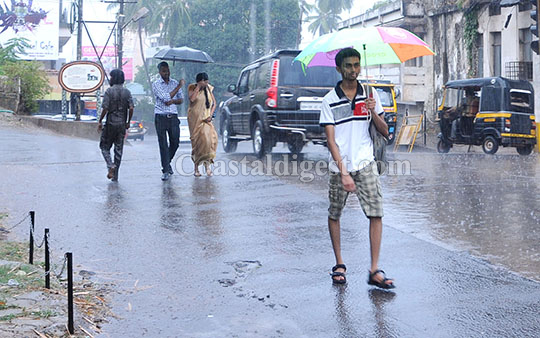
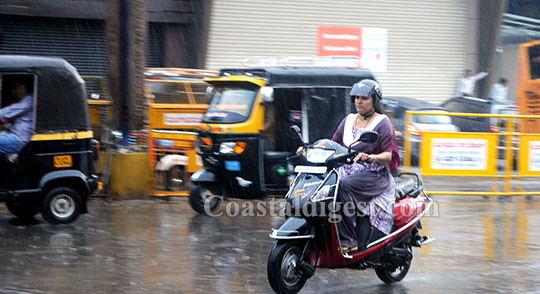
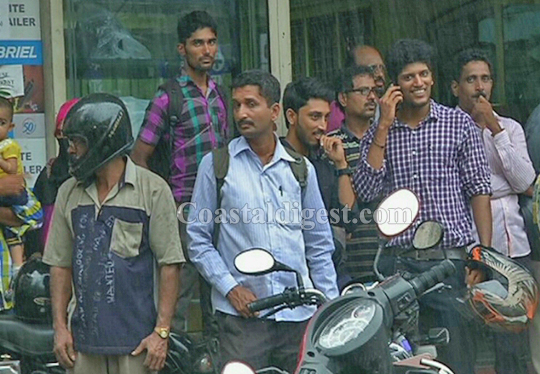
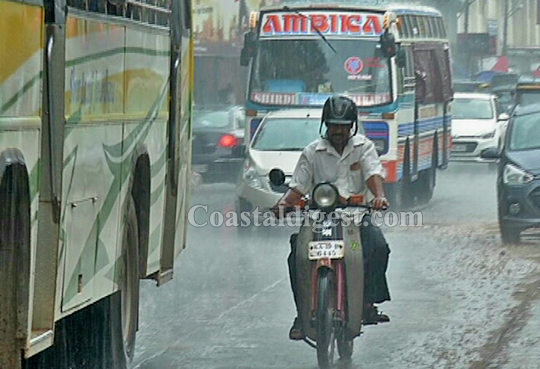
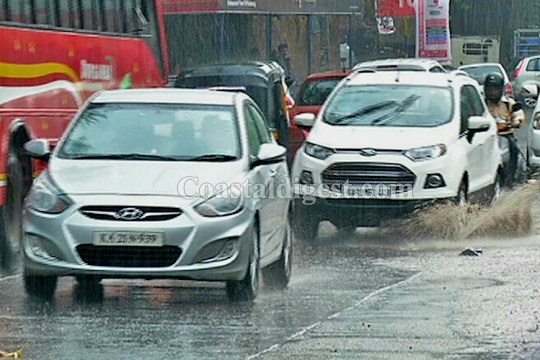
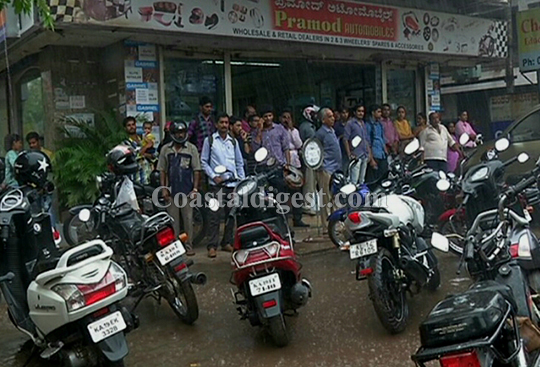
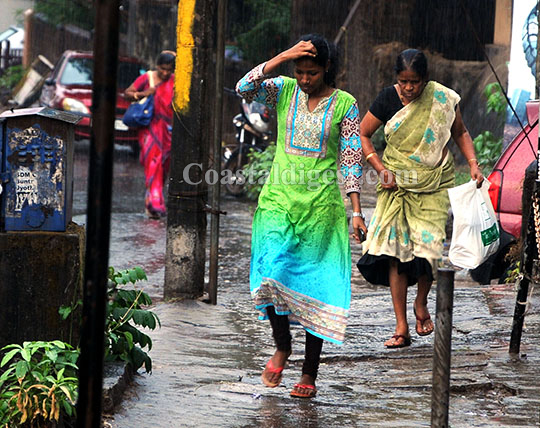
Mangaluru, May 11: Giving respite to people from summer heat, the pre-monsoon rains lashed the coastal city of Mangaluru and other parts of Dakshina Kannada district on Wednesday evening.

Rain 1

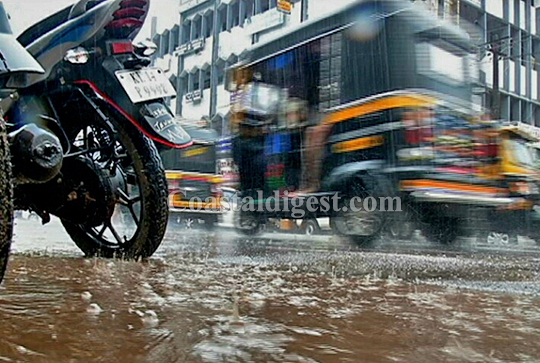
It was relatively a cloudy day since morning and moderate to heavy rains occurred after 5 p.m. in the city. The entire city was drenched by 6.30 p.m.

Roads in low lying areas including Derebail, Yeyyadi, Jeppinamogaru were flooded for some time. Mercury plummeted by more than five degree C during day hours giving respite from the heat.

However, this rain is not likely to address the water scarcity of Mangaluru immediately unless it continues to pour and increases the water level at Thumbe vented dam.

Due to lack of pre-monsoon rains most of the rivers in Dakshina Kannada and Udupi districts including Nethravati, Phalguni (Gurupura), Nandini, Swarna, Varahi, Sharavati, Aghanashini, and Kali, have almost dried up and groundwater level depleted considerably.

The region used to get normal pre-monsoon showers of up to 60 mm between January and April, but this year it got just 8 mm rainfall — a deficit of 87 per cent.

While groundwater has considerably depleted in the coastal region, farmers, with no other recourse, have become hapless to witness dying crops, including arecanut and coconut plantations.

Rain 2

Rain 3

Rain 4

Rain 5

Rain 6

rainS 1

rainS 2

rainS 3

rainS 4

rainS 5

Rain 7

Comments

UMMAR
 - 
Thursday, 12 May 2016

NICE TO SEE RAIN IN MANGALORE

Rikaz
 - 
Wednesday, 11 May 2016

Keep praying Allah....he is merciful and beneficent....

Add new comment

  • Coastaldigest.com reserves the right to delete or block any comments.
  • Coastaldigset.com is not responsible for its readers’ comments.
  • Comments that are abusive, incendiary or irrelevant are strictly prohibited.
  • Please use a genuine email ID and provide your name to avoid reject.
Agencies
July 8,2020

The Central Board of Secondary Education (CBSE) has rationalised by up to 30 per cent the syllabus for classes 9 to 12 for the academic year 2020-21 to reduce course load on students amid the COVID-19 crisis, Union HRD Minister Ramesh Pokhriyal 'Nishank' announced on Tuesday.

The curriculum has been rationalised while retaining the core elements, the Human Resource Development said.

Among the chapters dropped after the rationalisation exercise are lessons on democracy and diversity, demonetisation, nationalism, secularism, India's relations with its neighbours and growth of local governments in India, among others.

"Looking at the extraordinary situation prevailing in the country and the world, CBSE was advised to revise the curriculum and reduce course load for the students of classes 9 to 12.

"To aid the decision, a few weeks back I also invited suggestions from all educationists on the reduction of syllabus for students and I am glad to share that we received more than 1.5K suggestions. Thank you, everyone, for the overwhelming response," Nishank tweeted.

"Considering the importance of learning achievement, it has been decided to rationalise syllabus up to 30 per cent by retaining the core concepts," he added.

The Union minister said the changes made in the syllabi have been finalised by the respective course committees with the approval of the curriculum committee and the Governing Body of the Board.

"The heads of schools and teachers have been advised by the board to ensure that the topics that have been reduced are also explained to the students to the extent required to connect different topics. However, the reduced syllabus will not be part of the topics for internal assessment and year-end board examination.

"Alternative academic calendar and inputs from the NCERT on transacting the curriculum using different strategies shall also be part of the teaching pedagogy in the affiliated schools," a senior official of the HRD ministry said.

For classes 1 to 8, the National Council of Education Research and Training (NCERT) has already notified an alternative calendar and learning outcomes.

According to the updated curriculum, among the chapters deleted from class 10 syllabus are-- democracy and diversity, gender, religion and caste, popular struggles and movement, challenges to democracy

For class 11, the deleted portions included chapters on federalism, citizenship, nationalism, secularism, growth of local governments in India.

Similarly, class 12 students will not be required to study chapters on India's relations with its neighbours, changing nature of India's economic development, social movements in India and demonetisation, among others.

Universities and schools across the country have been closed since March 16 when the central government announced a nationwide classroom shutdown as one of the measures to contain the COVID-19 outbreak.

A nationwide lockdown was announced on March 24, which came into effect the next day. While the government has eased several restrictions, schools and colleges continue to remain closed.


Comments

Add new comment

  • Coastaldigest.com reserves the right to delete or block any comments.
  • Coastaldigset.com is not responsible for its readers’ comments.
  • Comments that are abusive, incendiary or irrelevant are strictly prohibited.
  • Please use a genuine email ID and provide your name to avoid reject.
News Network
July 8,2020

Bengaluru, Jul 8: The expert committee constituted by the Karnataka government to look into imparting online education in the wake of the COVID-19 lockdown submitted its report on Tuesday to the Minister for Primary and Secondary Education, S Suresh Kumar.

Amid growing pressure by educational institutions to allow them to run online classes for the students, the government set up the committee headed by noted educationist M K Sridhar.

The Minister told reporters that some schools wanted to run online classes, including for LKG and UKG students. It had also come to the government's notice that schools were reportedly charging hefty fees in the name of online teaching, he added.

"To address the concerns of parents, schools, and the future of the children, the committee was formed,"Kumar said. He further said that the government would study the recommendations and hold discussions with officials and various stakeholders before arriving at a decision.

The Education Department said that the committee, in its report, titled "Continuation of Learning in School Education of Karnataka: Guidelines During COVID-19 Pandemic for Technology Enabled Education and Beyond", has recommended teaching online or by using printed material. The committee suggested that children in the age group of three to six be taught online by way of story-telling, rhymes and games strictly in the presence of parents thrice a week just for one session a day For students from class one to three, it advised two periods a day and three days a week for online teaching.

Students from class three to five would have classes five days a week and two classes for 30 minutes a day. For students from class six to eight, there could be three classes a day for a duration of 30 minutes to 45 minutes each, while for students of class nine and 10 there would be four sessions a day between 30 and 45 minutes each.

The committee also suggested usage of Doordarshan and Akashwani for the government school children. Suresh Kumar said there were a few petitions filed in the Karnataka High Court regarding online teaching to the children.

Comments

Add new comment

  • Coastaldigest.com reserves the right to delete or block any comments.
  • Coastaldigset.com is not responsible for its readers’ comments.
  • Comments that are abusive, incendiary or irrelevant are strictly prohibited.
  • Please use a genuine email ID and provide your name to avoid reject.
coastaldigest.com web desk
July 2,2020

When the black and white photos of the ‘London to Calcutta (Kolkata) bus service’ went viral on social media recently, the response of some of the netizens was “stop spreading fake news!” But, it isn’t a fake news. The late 1950s indeed offered people a lavish bus trip from London to Kolkata. 

While one of the viral images shows passengers at the Victoria Coach Station, London, boarding 'Albert', the other image show the same bus travelling through a valley. In another image the bus is stationed at a tourist spot. All these photos were captured during the bus’ maiden international journey in 1957.  

An image of the bus ticket is also making rounds on social media, that shows the route of the bus — London, Belgium, West Germany, Austria,Yugoslavia, Bulgaria, Turkey, Iran, Afghanistan, West Pakistan, India. The route in India followed Delhi, Agra, Allahabad, Banaras and finally Calcutta.

The ticket shows that a one side travel cost 145 pounds (13,644 Rupees at the present day) back then, and it was inclusive of all the luxury provided during the run.

The luxurious bus provided the facilities of reading, individual sleeping bunks, radio/taped music for parties and pleasure and fan heaters, among other things. The brochure reads, "Your complete home while you travel."

Some of the tour highlights included Banaras on the Ganges, The Taj Mahal, The Raj Path, The Rhine Valley and The Peacock Throne. Passengers reportedly got free shopping days in New Delhi, Tehran, Salzburg, Kabul, Istanbul and Vienna.

Comments

Add new comment

  • Coastaldigest.com reserves the right to delete or block any comments.
  • Coastaldigset.com is not responsible for its readers’ comments.
  • Comments that are abusive, incendiary or irrelevant are strictly prohibited.
  • Please use a genuine email ID and provide your name to avoid reject.