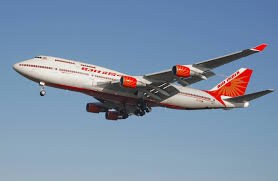
Mid-air medical emergencies forces Air India to divert 2 international flights

[email protected] (CD Network)
September 17, 2016

New Delhi, Sep 17: Mid-air medical emergencies forced diversion of national carrier Air India's two international flights to airports in Norway and Finland. A flight from New Delhi to Chicago was yesterday diverted to the Bod International Airport in Bode, Norway, due to a medical emergency. Another coming into the city from San Francisco made an unscheduled landing at Finland's Helsinki Airport today, Air India said in a statement today.

air"Air India, yet again, demonstrated its care and concern for passenger safety and wellbeing when the Chicago-bound flight AI 127 of September 16 landed midway at Norway, while flight AI 174 (SFO-Delhi) for today was diverted to the Helsinki airport in Finland to address medical emergencies of the (sick) passengers," it said.

The airline said a passenger on board AI 127 complained of giddiness and was provided all possible medical help. When the passenger's condition did not improve, the pilot decided to seek an emergency landing at the BOD airport in Norway. Upon landing, the passenger was rushed to a hospital.

In another case, AI 174 SFO-Delhi landed at the Helsinki airport when a two-and-a-half years old child accompanied by parents complained of health problem during the flight, it said.

"In close to 24 hours, Air India managed two medical emergencies effectively, giving top most priority to our passengers' wellbeing. I would like to appreciate our crew for managing these situations," airline's Chairman and Managing Director Ashwani Lohani said.

Comments

Zubair Katipalla
 - 
Sunday, 18 Sep 2016

This is the ever best behavior by AI at its history.. Hope keep up in future in case of such incident. Hats off CAPTAIN & CREW members..

Add new comment

  • Coastaldigest.com reserves the right to delete or block any comments.
  • Coastaldigset.com is not responsible for its readers’ comments.
  • Comments that are abusive, incendiary or irrelevant are strictly prohibited.
  • Please use a genuine email ID and provide your name to avoid reject.
News Network
June 25,2020

Belagavi, Jun 25: Union Minister of State for Railways Suresh Angadi on Wednesday said that coronavirus was created to "scare us" and to create tensions on the border, in an apparent reference to China.

He said that everyone should learn to live with the virus and follow all norms needed to combat the disease.

"We all know who created the coronavirus. It was created to scare us and to create tensions on the border, we know who did it. We have to learn to live with the coronavirus. We do not need to be scared of it. We must maintain social distancing and follow all the sanitation norms," Angadi told reporters here.

Karnataka on Wednesday reported 397 new COVID-19 positive cases, taking the total count in the state to 10,118.

According to the state health department, the state's death toll has reached 164 after 14 fatalities were reported. As many as 6,151 people have been discharged so far.

Comments

Add new comment

  • Coastaldigest.com reserves the right to delete or block any comments.
  • Coastaldigset.com is not responsible for its readers’ comments.
  • Comments that are abusive, incendiary or irrelevant are strictly prohibited.
  • Please use a genuine email ID and provide your name to avoid reject.
Agencies
May 8,2020

Washington D.C., May 8: The prime time for brain development in a child's life is the first year, where the infant spends most of the time asleep. It is the time when neural connections form and sensory memories are encoded.

However, when sleep is disrupted, as occurs more often among children with autism, brain development may be affected, too.

New research led by the University of Washington finds that sleep problems in a baby's first 12 months may not only precede an autism diagnosis but also may be associated with altered growth trajectory in a key part of the brain, the hippocampus.

The study, which was published in the American Journal of Psychiatry, researchers report that in a sample of more than 400 taken of 6- to 12-month-old infants, those who were later diagnosed with autism were more likely to have had difficulty falling asleep.

It also states that this sleep difficulty was associated with altered growth trajectories in the hippocampus.

"The hippocampus is critical for learning and memory, and changes in the size of the hippocampus have been associated with poor sleep in adults and older children.

As many as 80 per cent of the children with autism spectrum disorder have sleep problems," said Annette Estes, director of the UW Autism Center and senior author of the study.

"In our clinical experience, parents have a lot of concerns about their children's sleep, and in our work on early autism intervention, we observed that sleep problems were holding children and families back," added Estes, who is also a UW professor of speech and hearing sciences.

"It could be that altered sleep is part-and-parcel of autism for some children. One clue is that behavioural interventions to improve sleep don't work for all children with autism, even when their parents are doing everything just right. This suggests that there may be a biological component to sleep problems for some children with autism," said Estes.

To consider links among sleep, brain development, and autism, researchers at the IBIS Network looked at MRI scans of 432 infants, surveyed parents about sleep patterns, and measured cognitive functioning using a standardized assessment.

At the outset of the study, infants were classified according to their risk for developing autism: Those who were at higher risk of developing autism -- about two-thirds of the study sample -- had an older sibling who had already been diagnosed.

Infant siblings of children with autism have a 20 per cent chance of developing autism spectrum disorder -- a much higher risk than children in the general population.

In the current study, 127 of the 432 infants were identified as "low risk" at the time the MRI scans were taken because they had no family history of autism.

They later evaluated all the participants at 24 months of age to determine whether they had developed autism. Of the roughly 300 children originally considered "high familial risk," 71 were diagnosed with autism spectrum disorder at that age.

Problems with sleep were more common among the infants later diagnosed with an autism spectrum disorder, as were larger hippocampi. No other subcortical brain structures were affected, including the amygdala, which is responsible for certain emotions and aspects of memory, or the thalamus, a signal transmitter from the spinal cord to the cerebral cortex.

The authors note that while parents reported more sleep difficulties among infants who developed autism compared to those who did not, the differences were very subtle and only observed when looking at group averages across hundreds of infants.

Sleep patterns in the first years of life change rapidly as infants transition from sleeping around the clock to a more adult-like sleep/wake cycle. Until further research is completed, Estes said, it is not possible to interpret challenges with sleep as an early sign of increased risk for autism.


Comments

Add new comment

  • Coastaldigest.com reserves the right to delete or block any comments.
  • Coastaldigset.com is not responsible for its readers’ comments.
  • Comments that are abusive, incendiary or irrelevant are strictly prohibited.
  • Please use a genuine email ID and provide your name to avoid reject.
News Network
July 10,2020

Bengaluru, Jul 10: The Karnataka cabinet gave its approval for "The Karnataka Contingency Fund (Amendment) Bill, 2020" to enhance the contingency fund limit to Rs 500 crore in the wake of the COVID-19 pandemic.

This will be an ordinance making one time enhancement in the limit as the government needs money to make payments immediately, Law and Parliamentary Affairs Minister JC Madhuswamy told reporters after a cabinet meeting.

Under the contingency fund, the government had room to spend up to Rs 80 crore without budget provision.

"...but this time due to COVID-19 as we had to give money to some sections that were in distress like barbers, flower and vegetable growers, taxi drivers, among others, we have decided to increase the limit to Rs 500 crore," Mr Madhuswamy said.

"As assembly was not in session and as we had to make payments to those in distress immediately, this decision has been taken," he added.

The cabinet today ratified the administrative approval given to carry out civil and electrical works to install medical gas pipeline with high flow oxygen system at district hospitals, taluk and community health centres coming under Health and Family welfare department in view of COVID-19.

The minister said about Rs 207 crore is being approved for this purpose.

It also ratified procurement of medical equipment and furniture for public healthcare institutions of the health and family welfare department worth Rs 81.99 crore.

According to the minister, the cabinet has decided to bring in an amendment to section 9 of the Lokayukta act, which mandates that the preliminary inquiry contemplated by Lokayukta or Upalokayuta should be completed in 90 days and charge sheeting should be completed within six months.

Noting that at the Agricultural Produce Market Committee (APMC) cess was being collected, he said as the government had brought in an amendment to the APMC act, there was demand to reduce the market cess. "So we have reduced it from 1.5 per cent to one per cent."

Approval has also been given by the cabinet to bring Karnataka Vidyuth Kharkane (KAVIKA) and Mysore Electrical Industries (MEI), which are presently under the control of Commerce and Industries department, under administrative control of the energy department.

Other decisions taken by the cabibinet include deployment and implementation of "e-procurement 2.0" project on PPP at a cost of Rs 184.37 crore and ratification of the action taken to issue orders on March 24 to release interest free loan of Rs 2,500 crore to ESCOMs for payment of outstanding power purchase dues to generating companies.

The cabinet also gave administrative approval for setting up of an Indian Institute of Information technology at Raichur.

"Under this, we are committed to provide Rs 44.8 crore in four years for infrastructure," the minister added.

Comments

Add new comment

  • Coastaldigest.com reserves the right to delete or block any comments.
  • Coastaldigset.com is not responsible for its readers’ comments.
  • Comments that are abusive, incendiary or irrelevant are strictly prohibited.
  • Please use a genuine email ID and provide your name to avoid reject.