Mild tremors felt in parts of Karnataka, Goa

[email protected] (News Network)
June 4, 2017

Bengaluru, Jun 4: Mild tremors were experienced in Hubballi and Dharwad districts of Karnataka around Saturday midnight.

EarthquakePeople residing in apartments and multi-storey buildings said they felt tremors for more than five seconds around 11:45 pm on Saturday.

When they realised that it was an earthquake, many people ran out of their houses. Strong tremors were felt in various localities in Dharwad. But, there was no damage anywhere.

Officials stated that an earthquake of a magnitude of 4.8 on the Richter scale occurred at a depth of 10 kms with Koyna Dam in Satara district of Maharashtra as the epicenter.

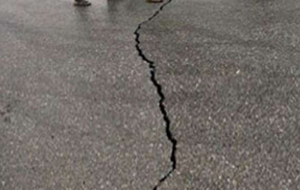
But, senior geologists said that there is no authentic report on the magnitude of the earthquake and denied rumours that houses have developed cracks.

Mild tremors were experienced for a few seconds in several parts of Belagavi too.

In Goa

Earthquake of magnitude 4.8 on Richter scale at Koyana dam at 11.44pm sent mild tremors across Goa. The tremors were felt at Porvorim, Old Goa and Margao.

The centre of the earthquake is Koyana area of Satara district. The tremors were also felt in Sangli and Kolhapur.

Comments

Add new comment

  • Coastaldigest.com reserves the right to delete or block any comments.
  • Coastaldigset.com is not responsible for its readers’ comments.
  • Comments that are abusive, incendiary or irrelevant are strictly prohibited.
  • Please use a genuine email ID and provide your name to avoid reject.
Agencies
May 8,2020

Washington D.C., May 8: The prime time for brain development in a child's life is the first year, where the infant spends most of the time asleep. It is the time when neural connections form and sensory memories are encoded.

However, when sleep is disrupted, as occurs more often among children with autism, brain development may be affected, too.

New research led by the University of Washington finds that sleep problems in a baby's first 12 months may not only precede an autism diagnosis but also may be associated with altered growth trajectory in a key part of the brain, the hippocampus.

The study, which was published in the American Journal of Psychiatry, researchers report that in a sample of more than 400 taken of 6- to 12-month-old infants, those who were later diagnosed with autism were more likely to have had difficulty falling asleep.

It also states that this sleep difficulty was associated with altered growth trajectories in the hippocampus.

"The hippocampus is critical for learning and memory, and changes in the size of the hippocampus have been associated with poor sleep in adults and older children.

As many as 80 per cent of the children with autism spectrum disorder have sleep problems," said Annette Estes, director of the UW Autism Center and senior author of the study.

"In our clinical experience, parents have a lot of concerns about their children's sleep, and in our work on early autism intervention, we observed that sleep problems were holding children and families back," added Estes, who is also a UW professor of speech and hearing sciences.

"It could be that altered sleep is part-and-parcel of autism for some children. One clue is that behavioural interventions to improve sleep don't work for all children with autism, even when their parents are doing everything just right. This suggests that there may be a biological component to sleep problems for some children with autism," said Estes.

To consider links among sleep, brain development, and autism, researchers at the IBIS Network looked at MRI scans of 432 infants, surveyed parents about sleep patterns, and measured cognitive functioning using a standardized assessment.

At the outset of the study, infants were classified according to their risk for developing autism: Those who were at higher risk of developing autism -- about two-thirds of the study sample -- had an older sibling who had already been diagnosed.

Infant siblings of children with autism have a 20 per cent chance of developing autism spectrum disorder -- a much higher risk than children in the general population.

In the current study, 127 of the 432 infants were identified as "low risk" at the time the MRI scans were taken because they had no family history of autism.

They later evaluated all the participants at 24 months of age to determine whether they had developed autism. Of the roughly 300 children originally considered "high familial risk," 71 were diagnosed with autism spectrum disorder at that age.

Problems with sleep were more common among the infants later diagnosed with an autism spectrum disorder, as were larger hippocampi. No other subcortical brain structures were affected, including the amygdala, which is responsible for certain emotions and aspects of memory, or the thalamus, a signal transmitter from the spinal cord to the cerebral cortex.

The authors note that while parents reported more sleep difficulties among infants who developed autism compared to those who did not, the differences were very subtle and only observed when looking at group averages across hundreds of infants.

Sleep patterns in the first years of life change rapidly as infants transition from sleeping around the clock to a more adult-like sleep/wake cycle. Until further research is completed, Estes said, it is not possible to interpret challenges with sleep as an early sign of increased risk for autism.


Comments

Add new comment

  • Coastaldigest.com reserves the right to delete or block any comments.
  • Coastaldigset.com is not responsible for its readers’ comments.
  • Comments that are abusive, incendiary or irrelevant are strictly prohibited.
  • Please use a genuine email ID and provide your name to avoid reject.
News Network
April 30,2020

Bengaluru, Apr 30: Karnataka has decided to allow all industries located outside COVID-19 containment zones to operate from May 4, Chief Minister BS Yediyurappa said Thursday, even as he cautioned that the coronavirus crisis may last another couple of months.

“We feel that the COVID-19 menace is reducing and coming under control in the state. In Bengaluru, not many cases have been reported in the last 3-4 days. If this continues, it’ll help us open up industries in and around Bengaluru also. We’ll wait for another 2-3 days,” Yediyurappa told reporters after chairing a meeting of the Cabinet.

Yediyurappa and Industries Minister Jagadish Shettar are scheduled to meet industry captains on Thursday evening to discuss resuming operations from May 4.

"It won't be a surprise if the corona continues for another 2-3 months. However, based on Prime Minister Narendra Modi's directions, stringent lockdown measures (at red zones) and reviving economic activity will go hand in hand," Yediyurappa said.

The Cabinet decided to allow one-time inter-state or inter-district movement of people and labourers stranded due to the Covid-19 lockdown. The move will also benefit students and others who want to return to their native states or districts.

The government will also allow people from Karnataka residing in other states to return only if they are tested negative for Covid-19, Law Minister JC Madhuswamy said. An official order for this will be issued by evening today.

"Expenses should be covered by those wishing to travel. The government is willing to arrange buses for their benefit," Madhuswamy said. The government will provide a license to anyone who wishes to go, he said.

Having relaxed norms for industries outside red zones to resume operations, Madhuswamy said that inter-district passes will be issued to the top management of these units to travel from their homes to workplaces.

Liquor outlets, saloons and restaurants will remain closed till May 3, after which the government will take a call based on directions issued by the Centre.

“Opening of malls and hotels is not an option before us right now. But all hotels can give parcels,” Yediyurappa said. “I’m confident that the PM will allow the resumption of all activities.

He has already said that corona (containment) and economic activities will have to go hand in hand. So, I’m expecting the Centre to make some favourable decisions,” he added.

Comments

Add new comment

  • Coastaldigest.com reserves the right to delete or block any comments.
  • Coastaldigset.com is not responsible for its readers’ comments.
  • Comments that are abusive, incendiary or irrelevant are strictly prohibited.
  • Please use a genuine email ID and provide your name to avoid reject.
News Network
January 11,2020

Mangaluru, Jan 11: CISF officials detained a passenger at Mangaluru International Airport here and seized from him currencies of foreign countries worth about Rs five lakh here on Saturday.

Official sources said that the passenger, identified as Shahul Hameed Theruvath, was supposed to take the Spice jet flight SG 059 for Dubai.

During the X BIS screening process, CISF officials noticed some suspicious image in Shahul’s hand baggage.

The thorough check of bag revealed foreign currencies of various countries worth Rs 5.48 lakh. The seized currencies were 76 US dollars of 100 denomination, Chinese Yuan, Malaysian Ringgits and Turkish Lira of smaller denomination. The currencies that were in his possession did not have any legal permission.

The personnel handed over the foreign currency recovered and the passenger to Customs officials for further inquiry.

Comments

Add new comment

  • Coastaldigest.com reserves the right to delete or block any comments.
  • Coastaldigset.com is not responsible for its readers’ comments.
  • Comments that are abusive, incendiary or irrelevant are strictly prohibited.
  • Please use a genuine email ID and provide your name to avoid reject.