Minorities feel safe under PM Narendra Modi, will vote for him: Shahnawaz Hussain

Agencies
January 20, 2019

Panaji, Jan 20: Senior BJP leader Syed Shahnawaz Hussain Saturday claimed minorities felt safe under the Narendra Modi-led Union government as it never distinguished between people on the basis of caste or religion.

Addressing a press conference here, the BJP national spokesperson also hit out at the Congress for creating a "fear psychosis" among minorities.

"Minority communities were falsely told by the opposition parties that they will be finished if Modi comes to power. Congress thinks they will be able to win votes of minorities by creating a fear psychosis. But the Congress has gone absolutely wrong as minorities will now vote for Modi for the development of the country," he said.

"The minorities feel safest under Modi-led government. The number of riots have decreased under the Modi government. Schemes are launched for the poor without asking them their religion or caste. People have benefited immensely under PM Modi," Hussain claimed.

Speaking about fugitive businessmen Vijay Mallya and diamantaires Nirav Modi and Mehul Choksi, the BJP leader said they had to flee the country as the Modi government had adopted stringent measures against loan defaulters.

He added such loan defaulters were living "fear free" during the previous Congress rule.

He claimed from Independence till 2008, the total loan amount disbursed by financial institutions was Rs 18 lakh crore, which rose to 52 lakh crore between 2008-14 (under the Congress-led UPA rule).

"The Congress should explain why it gave out such massive loans. It was giving loans to businessmen who had gone bankrupt," he alleged.

Hussain said, "thieves" were afraid because the country's "chowkidar" (a term PM Modi often uses to describe himself) was awake.

He added the government would bring back fugitive businessmen to the country to face the law.

Comments

Abdul Gaffa
 - 
Monday, 21 Jan 2019

Dog is far better than him.

Puresanghi
 - 
Sunday, 20 Jan 2019

After Independence India experienced first communal mind ruling party in the central.

Nushu
 - 
Sunday, 20 Jan 2019

 Mr....Sha ....


you have no moral right to say so on minorities as at the same time u r contineously targetting minorities in the form of lynching no body spare you in loksabha election...Iss bar congress sarkar....Rahul ji Jai..

Add new comment

  • Coastaldigest.com reserves the right to delete or block any comments.
  • Coastaldigset.com is not responsible for its readers’ comments.
  • Comments that are abusive, incendiary or irrelevant are strictly prohibited.
  • Please use a genuine email ID and provide your name to avoid reject.
Agencies
July 30,2020

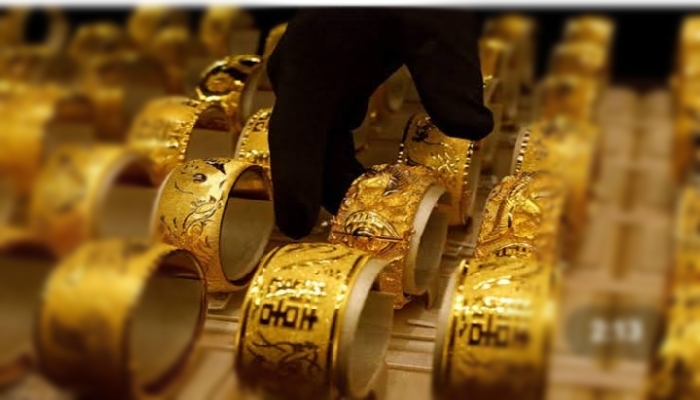
New Delhi, Jul 30: India's gold demand in 2020 is expected to fall to the lowest level in 26 years with domestic bullion prices hitting a record high and as falling disposable incomes could curtail retail purchases, the World Gold Council (WGC) said on Thursday.

Lower demand by the world's second-biggest bullion consumer could limit a rally in global prices, which hit a record high earlier this month, although it could also reduce India's trade deficit and support the ailing rupee.

"Fast rising gold prices could act as headwinds," said Somasundaram PR, the managing director of WGC's Indian operations.

Local gold futures have jumped 35% so far this year after rising a quarter in 2019.

India's gold consumption in the first half of 2020 plunged 56% on-year to 165.6 tonnes. Meanwhile, the coronavirus-triggered lockdown also slashed demand by 70% in the June quarter to 63.7 tonnes, the lowest in more than a decade, the WGC said in a report published on Thursday.

Millions of Indians have lost their jobs or taken a pay cut after the country imposed a lockdown on its 1.3 billion people to curb the spread of the virus that has infected more than 1.5 million Indians.

Consumption is generally high during the June quarter due to weddings and key festivals such as Akshaya Tritiya, but lockdown restrictions kept shoppers indoors this year.

The weak demand in the first half could drag down India's gold consumption in 2020 to the lowest since 1994, when demand stood at 415 tonnes, Somasundaram said, adding that it is still difficult to provide an estimate for full-year demand as the coronavirus crisis is still unfolding.

"Indian demand has previously jumped as much as 300 tonnes in a quarter. Latent demand could come out in the second half," Somasundaram said.

Comments

Add new comment

  • Coastaldigest.com reserves the right to delete or block any comments.
  • Coastaldigset.com is not responsible for its readers’ comments.
  • Comments that are abusive, incendiary or irrelevant are strictly prohibited.
  • Please use a genuine email ID and provide your name to avoid reject.
News Network
July 26,2020

New Delhi, Jul 26: Nidan Singh Sachdeva, the Afghan Sikh who was kidnapped a month ago and released recently, arrived here earlier in the day and narrated the ordeals that he faced at the hands of abductors and also thanked the Indian government for bringing him back to his 'motherland'.

Facing threats from Pakistan-backed Taliban, eleven members of Sikh community from Afghanistan, who were granted short-term visas by Indian Embassy in Kabul, including Sachdeva, who was abducted from a gurudwara in Paktia province last month, touched down in New Delhi on Sunday afternoon.

Speaking to news agency on his return, an emotional Sachdeva, said, "I don't know what to call Hindustan -- whether it is my mother or my father -- Hindustan is Hindustan."

"I was abducted from the gurudwara and 20 hours later, I was covered with blood. I was tied to a tree as well. They used to beat me and ask me to convert into a Muslim. I repeatedly told them that why should I convert, I have my own religion," he said while describing
Nidan Singh thanked Government of India for bringing him here.

"I am more than thankful to the Indian government for bringing us here to our motherland. I have no words to describe my feelings here. I arrived here after much struggle. The atmosphere of fear prevails there.

Gurudwara is where we can be safe but a step outside the Gurdwara is fearful," he said.
"They used to beat me every day and every night," he said further and added, "It is because of sheer happiness, I am speechless. I am very grateful to them."

Ministry of External Affairs recently announced that India has decided to facilitate the return of Afghan Hindu and Sikh community members facing security threats in Afghanistan to India.
The decision comes four months after a terror attack at a gurdwara in Kabul's Shor Bazaar killed at least 25 members of the community.

India has condemned the "targeting and persecution" of minority community members by terrorists in Afghanistan at the behest of their external supporters remains a matter of grave concern.

Leaders of the Afghan Sikh community have appealed to the Indian government to accommodate the Sikhs and Hindus from Afghanistan and grant them legal entry with long term residency multiple entry visas.

Once a community of nearly 250,000 people, the Sikh and Hindu community in Afghanistan has endured years of discrimination and violence from extremists, and the community is now estimated to comprise fewer than 100 families across the country.

Comments

Add new comment

  • Coastaldigest.com reserves the right to delete or block any comments.
  • Coastaldigset.com is not responsible for its readers’ comments.
  • Comments that are abusive, incendiary or irrelevant are strictly prohibited.
  • Please use a genuine email ID and provide your name to avoid reject.
News Network
May 17,2020

New Delhi, May 17: Spelling out the government’s fourth tranche of initiatives towards achieving Prime Minister Narendra Modi’s vision of ‘Atmanirbhar Bharat’, Union Finance Minister Nirmala Sitharaman on Saturday announced significant structural reforms in eight sectors of the economy — coal, minerals, defense production, aviation, power distribution in Union territories, space and atomic energy.

Addressing her fourth and the second-last press conference, Sitharaman said crucial sectors such as coal production and exploration, defence production and space would see an increased participation from private entities.

Coal sector:

In the realm of coal exploration, the government has decided to liberalise the entry norms for private entities, which would mean that any interested party could bid for a coal block and sell it in the open market. The minister said that the government would do away with all the eligibility conditions at the time of bidding for a coal block, except requiring an “upfront payment with a ceiling.”

Nearly 50 coal blocks would be offered to private players immediately, revealed Sitharaman.

She further said that Rs 50,000 crore would be spent by Centre in creating ‘coal evacuation’ infrastructure, which would expedite the transport of mined product to the destination.

Defence sector:

In defence production, Sitharaman revealed that the government would raise the foreign direct investment (FDI) limit in the sector from current 49 per cent to 74 per cent. Further, the government would also work towards corporatising the ordnance factory boards. “Corporatising doesn’t amount to privatization,” added Sitharaman.

In a bid to boost indigenous production of defence products and gave an impetus to Make in India, Sitharaman said that the government was in a process of notifying a list of weapons/platforms for an import ban with year-wise timelines.

These decisions would also help in reducing huge import bills, the finance minister said.

Privatisation of electricity:

In another announcement that could have an effect on electricity charges in the union territories, Union Finance Minister Nirmala Sitharaman announced on Saturday that power departments and utilities in all the centrally administered territories would be privatised.

Sitharaman said that the proposed move would lead to better service to consumers and improvement in operational and financial efficiency in distribution.

The finance minister said that decision was guided by 'sub-optimal' utilisation of performance of power distribution and supply'.

She said that the move to that effect would provide a model for emulation by other utilities across the country, in what could be an indicator of what's in the pipeline for utilities in other states as well.

Sitharaman said that the privation reform was in line with the tariff policy reforms and would help in enhancing consumer rights, promote industry and improve the overall sustainability of the sector.

Space sector:

Sitharaman also announced the opening up of the space exploration sector for private players. Till date, the government-run Indian Space Research Organisation (ISRO) has held a monopoly on all activities concerning space exploration and satellite launches.

The Indian private sector will be a co-traveller in India's space sector journey, said Sitharaman, while announcing a series of structural reforms in eight crucial areas of the economy. The Union Finance Minister was addressing her fourth press conference in as many days, as a follow-up towards realising Prime Minister Narendra Modi's vision of 'atmanirbhar Bharat', which was spelled out in his video address on May 12.

Sitharaman said that the reforms in the space sector will provide a level-playing field for private companies in satellite launches and space-based services.

She said that the private sector would be allowed to use ISRO facilities and other assets to improve their capacities. Stating that the government would provide predictable policy and regulatory environment to private players, Sitharaman also disclosed that future projects for planetary exploration and outer space travel among others would be opened up for private entities.


Comments

Add new comment

  • Coastaldigest.com reserves the right to delete or block any comments.
  • Coastaldigset.com is not responsible for its readers’ comments.
  • Comments that are abusive, incendiary or irrelevant are strictly prohibited.
  • Please use a genuine email ID and provide your name to avoid reject.