



Missing Malaysian flight MH 370: Computer sent plane off flight path

March 18, 2014

Flight_MH_370Washington, Mar 18: The first turn to the west that diverted the missing Malaysia Airlines plane from its planned flight path from Kuala Lumpur to Beijing was carried out through a computer system that was most likely programmed by someone in the plane's cockpit who was knowledgeable about airplane systems, according to senior US officials.

Instead of manually operating the plane's controls, whoever altered flight 370's path typed seven or eight keystrokes into a computer on a knee-high pedestal between the captain and the first officer, according to officials. The Flight Management System, as the computer is known, directs the plane from point to point specified in the flight plan submitted before each flight. It is not clear whether the plane's path was reprogrammed before or after it took off.

The fact that the turn away from Beijing was programmed into the computer has reinforced the belief of investigators — first voiced by Malaysian officials — that the plane was deliberately diverted and that foul play was involved. It has also increased their focus on the plane's captain and first officer.

Prime Minister Najib Razak of Malaysia told reporters on Saturday that his government believed the plane had been diverted, because its transponder and other communications devices had been manually turned off several minutes apart. US officials were told of the new information over the weekend.

But Malaysian authorities on Monday reversed themselves on the sequence of events they believe took place on the plane in the crucial minutes before ground controllers lost contact with it early March 8. They said it was the plane's first officer — the co-pilot — who was the last person in the cockpit to speak to ground control. And they withdrew their assertion that another automated system on the plane called Aircraft Communications Addressing and Reporting System, or ACARS, had been disabled when the co-pilot spoke.

Flight 370's Flight Management System reported its status to ACARS, which in turn transmitted information back to a maintenance base, according to a US official. This shows that the reprogramming happened before ACARS stopped working. ACARS ceased to function about the same time oral radio contact was lost and the airplane's transponder also stopped, fuelling suspicions that foul play was involved in the plane's disappearance.

Investigators are scrutinizing radar tapes from when the plane first departed Kuala Lumpur because they believe the tapes would show that after the plane first changed its course, it passed through several pre-established "waypoints," which are like virtual mile markers in the sky. That would suggest that the plane was under control of a knowledgeable pilot, because passing through those points without using the computer would have been unlikely.

According to investigators, it appears that a waypoint was added to the planned route. Pilots do that in the ordinary course of flying if air traffic controllers tell them to take a different route, to avoid weather or traffic. But in this case, the waypoint was far off the path to Beijing.

Whoever changed the plane's course would have had to be familiar with Boeing aircraft, though not necessarily the 777 — the type of plane that disappeared. US officials and aviation experts said it was far-fetched to believe that a passenger could have reprogrammed the Flight Management System.

Normal procedure is to key in a five-letter code — gibberish to non-aviators — that is the name of a waypoint. A normal flight plan consists of a series of such waypoints, ending in the destination airport. For an ordinary flight, waypoints can be entered manually or uploaded into the FMS by the airline.

One of the pilots' keys in a waypoint on a separate screen known as a scratchpad, and after confirming that it has no typographical errors, pushes another button to move it into the sequence in the flight plan. Normal practice is to orally confirm the waypoint with the other pilot, then push another button to instruct the airplane to go there. With the change in course, the plane would bank at a comfortable angle, around 20 degrees, and make the turn. Passengers would not feel anything unusual.

ABC News reported on Sunday that the programmed turn had led investigators to believe that it was being controlled by the pilot or hijackers.

One US safety expert, John Cox, a former airline union safety official, said someone taking such pains to divert the plane does not fit the pattern of past cases when pilots intentionally crashed and killed everyone on board.

"There's an inconsistency in what we've seen historically," he said, comparing the disappearance of Flight 370 with two murder-suicides, of an Egyptair flight off Nantucket Island in 1999 and a SilkAir jet in

Indonesia in 1997. In those crashes, he said, the pilot involved simply pushed the nose of the plane down and flew into the water.

The authorities searched the homes of the pilots in Kuala Lumpur on Saturday, seizing a flight simulator that one of them had in his home.

In an effort to determine whether the pilot had practiced taking down the plane, the authorities have reassembled the simulator for experts to examine. US investigators would like access to the flight simulator and any other electronic information seized from the pilots, but as of Monday night they had not been given access to those materials.

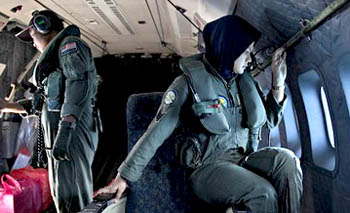
Meanwhile, as the search for the missing Boeing 777 jet stretched into a 10th day, two of the nations helping in the hunt, Australia and Indonesia, agreed to divide between them a vast area of the southeastern Indian Ocean, with Indonesia focusing on equatorial waters and Australia beginning to search farther south for traces of the aircraft. To the north, China and Kazakhstan checked their radar records and tried to figure out whether the jet could have landed somewhere on their soil.

Comments

Marisol
 - 
Sunday, 24 Jul 2016

I see your blog needs some fresh & unique content. Writing manually is time consuming, there is tool for this task.
Just search in gogle for; Fejlando's tips

Here is my homepage ... ReneeBarffed: http://twitter.com/Nila

Add new comment

  • Coastaldigest.com reserves the right to delete or block any comments.
  • Coastaldigset.com is not responsible for its readers’ comments.
  • Comments that are abusive, incendiary or irrelevant are strictly prohibited.
  • Please use a genuine email ID and provide your name to avoid reject.
News Network
June 8,2020

Wellington, Jun 8: New Zealand lifted all domestic coronavirus restrictions on Monday after its final COVID-19 patient was given the all clear, with Prime Minister Jacinda Ardern revealing she danced around her living room when told about the milestone.

While strict border controls will remain in place, Ardern said restrictions such as social distancing and limits on public gatherings were no longer needed.

"We are confident we have eliminated transmission of the virus in New Zealand for now," she said in a televised address, saying Kiwis had "united in unprecedented ways to crush the virus".

The South Pacific nation, with a population of five million, has had 1,154 confirmed COVID-19 cases and 22 deaths.

There have been no new infections for 17 days and, until Monday, just one active case for more than a week.

Details of the final patient were not released for privacy reasons but it is believed to be a woman aged in her 50s who was linked to a cluster at an Auckland nursing home.

Ardern said the sacrifices made by New Zealanders, including a drastic seven-week lockdown that helped curb infection rates, had been rewarded now that there were no active cases in the country.

Asked about her reaction upon hearing the news, she replied: "I did a little dance" with baby daughter Neve.

"She was caught a little by surprise but she joined in, having absolutely no idea why I was dancing around the lounge."

New Zealand's move down to Level 1, the lowest rating on its four-tier virus response system, means nightclubs can operate without dance floor restrictions and theatres will reopen.

It also means sporting events can proceed with crowds in the stands, a change New Zealand Rugby (NZR) said offered its Super Rugby Aotearoa competition the opportunity to achieve a world first when it kicks off this weekend.

"We're incredibly proud, and grateful, to be the first professional sports competition in the world to be in a position to have our teams play in front of their fans again," NZR chief executive Mark Robinson said.

While many other sporting competitions around the globe have announced plans to restart, the vast majority will be played either with no crowds or with numbers severely restricted.

On a broader level, Ardern said easing restrictions would help New Zealand's economy.

"We now have a head start on economic recovery because at level one we become one of the most open, if not the most open, economies in the world," she said.

The prime minister said modelling showed the economy would operate at just 3.8 percent below normal at Level 1, compared with a 37 percent impairment at Level 4 lockdown.

Comments

Add new comment

  • Coastaldigest.com reserves the right to delete or block any comments.
  • Coastaldigset.com is not responsible for its readers’ comments.
  • Comments that are abusive, incendiary or irrelevant are strictly prohibited.
  • Please use a genuine email ID and provide your name to avoid reject.
Agencies
March 15,2020

Jakarta, Mar 15: Indonesia's transport minister is in intensive care after testing positive for the novel coronavirus, an official has said, as schools and tourist attractions were ordered to close over the health threat.

Transportation Minister Budi Karya Sumadi was receiving treatment at an army hospital in Jakarta, State Secretary Pratikno said on Saturday.

A hospital spokesman said Sumadi was encountering difficulty breathing but that his condition was improving.

Pratikno said Sumadi was involved in virus mitigation efforts, particularly the evacuation of Indonesians from epicenters of the outbreak, and that President Joko Widodo had called for tests to be carried out on other ministers.

Cases of the virus in Indonesia, the world's fourth most populous country, have jumped from zero two weeks ago to 96, with five deaths, according to government spokesperson Achmad Yurianto.

He also said the virus has spread outside Greater Jakarta to Bandung in West Java, Solo in Central Java, Manado in North Sulawesi, Pontianak in West Kalimantan, as well as holiday havens Yogyakarta and Bali.

Following the increase, the government on Saturday established a task force on COVID-19 mitigation.

Jakarta's Governor Anies Baswedan announced that schools would close for two weeks starting Monday, and ordered the closure of city-owned tourist attractions, such as Ragunan Zoo and Ancol beach.

He emphasized that Jakarta would not be locked down but urged people "to be responsible" and called for social distancing when possible.

Similarly, the administration of Solo, Central Java, Friday announced that schools and tourist attractions would close after a coronavirus patient died in the region.

The World Health Organization has said it is particularly concerned about high-risk nations with weaker health systems, which who may lack the facilities to identify cases.

A day after declaring the coronavirus outbreak to be pandemic this week, WHO chief Tedros Adhanom Ghebreyesus called Indonesia's president Widodo and both agreed to "scale up cooperation."

Comments

Add new comment

  • Coastaldigest.com reserves the right to delete or block any comments.
  • Coastaldigset.com is not responsible for its readers’ comments.
  • Comments that are abusive, incendiary or irrelevant are strictly prohibited.
  • Please use a genuine email ID and provide your name to avoid reject.
News Network
May 5,2020

May 5: Global coronavirus deaths reached 250,000 on Monday after recorded infections topped 3.5 million, a news agency tally of official government data showed, although the rate of fatalities has slowed.

North America and European countries accounted for most of the new deaths and cases reported in recent days, but numbers were rising from smaller bases in Latin America, Africa and Russia.

Globally, there were 3,062 new deaths and 61,923 new cases over the past 24 hours, taking total cases to 3.58 million.

That easily exceeds the estimated 140,000 deaths worldwide in 2018 caused by measles, and compares with around 3 million to 5 million cases of severe illness caused annually by seasonal influenza, according to the World Health Organization (WHO).

While the current trajectory of COVID-19 falls far short of the 1918 Spanish flu, which infected an estimated 500 million people, killing at least 10% of patients, experts worry the available data is underplaying the true impact of the pandemic.

The concerns come as several countries begin to ease strict lockdowns that have been credited with helping contain the spread of the virus.

"We could easily have a second or a third wave because a lot of places aren't immune," Peter Collignon, an infectious diseases physician and microbiologist at Canberra Hospital, told Reuters. He noted the world was well short of herd immunity, which requires around 60% of the population to have recovered from the disease.

The first death linked to COVID-19 was reported on Jan. 10 in Wuhan, China after the coronavirus first emerged there in December. Global fatalities grew at a rate of 1-2% in recent days, down from 14% on March 21, according to the Reuters data.

DEATH RATE ANOMALIES

Mortality rates from recorded infections vary greatly from country to country.

Collignon said any country with a mortality rate of more than 2% almost certainly had underreported case numbers. Health experts fear those ratios could worsen in regions and countries less prepared to deal with the health crisis.

"If your mortality rate is higher than 2%, you've missed a lot of cases," he said, noting that countries overwhelmed by the outbreak were less likely to conduct testing in the community and record deaths outside of hospitals.

In the United States, around half the country's state governors partially reopened their economies over the weekend, while others, including New York Governor Andrew Cuomo, declared the move was premature.

In Britain, Prime Minister Boris Johnson, who battled COVID-19 last month, has said the country was over the peak but it was still too early to relax lockdown measures.

Even in countries where the suppression of the disease has been considered successful, such as Australia and New Zealand which have recorded low daily rates of new infections for weeks, officials have been cautious.

Australian Prime Minister Scott Morrison has predicated a full lifting of curbs on widespread public adoption of a mobile phone tracking app and increased testing levels.

Comments

Add new comment

  • Coastaldigest.com reserves the right to delete or block any comments.
  • Coastaldigset.com is not responsible for its readers’ comments.
  • Comments that are abusive, incendiary or irrelevant are strictly prohibited.
  • Please use a genuine email ID and provide your name to avoid reject.