Modi govt pursuing bold strategies for universal Internet access by 2022: Ajit Pai

Agencies
June 13, 2019

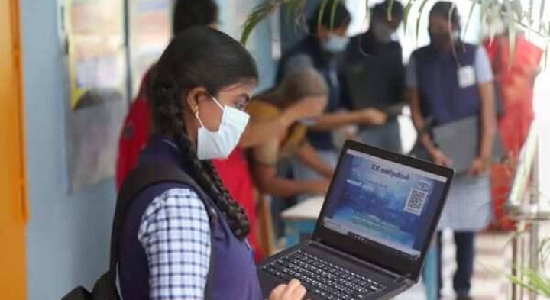
Washington, Jun 13: India is pursuing bold strategies to achieve the ambitious goal of universal Internet access by 2022, a top American official has said, highlighting the challenges in building broadband networks in rural areas.

"I commend Prime Minister Modi and the Indian government for their ambitious goals of universal Internet access by 2022 and fixed broadband access to 50 per cent of households by 2022," Federal Communications Commission Chairman Ajit Pai said at the India Ideas summit of US-India Business Council here on Wednesday.

"To meet these targets, they're pursuing bold strategies such as installing two million public Wi-Fi hotspots in rural areas and redesigning and expanding the Universal Service Obligation Fund, he said.

Pai said despite the good news, millions of Indians and Americans still live in rural areas where there is currently no case for the private sector alone to build broadband networks.

"As is the case in parts of Assam, Uttarakhand, and Karnataka, we have communities in Alaska, Utah, and Kansas that don't have access," he said.

To connect these communities, FCC's Universal Service Fund provides federal subsidies to private carriers to leverage additional investment. The US has begun allocating some of this support by using a reverse auction, which harnesses market forces and a diverse array of technologies to maximise the impact and efficiency of this investment, he said.

Just this week, FCC authorised USD167 million in universal service subsidies to connect 60,000 unserved rural homes and businesses in some of the hardest-to-connect corners of the US. "Obviously, India's connectivity challenges are significantly different in nature and scale," Pai said.

Observing that 5G could be transformative, enabling things like telemedicine and precision agriculture, automotive safety and gaming, industrial IoT and other breakthroughs that one can't even conceive today, Pai said one of their top priorities is to protect the security and integrity of the communications supply chain.

That's why the FCC has proposed to prohibit the use of the broadband funding we administer to purchase equipment or services from any company that poses a national security threat to the integrity of United States communications networks or the communications supply chain, he said.

That's why the FCC denied the application of China Mobile USA, a wireless carrier ultimately owned by the Chinese government, to provide international telecommunications services in the United States, he said.

When making decisions that impact 5G security, in particular, one needs to remember that the implications are wide-ranging. 5G will affect militaries, industries, critical infrastructure, and much more. The procurement and deployment decisions made now will have a generational impact on the country's security, economy, and society.

When it comes to 5G, we cannot afford to make risky choices and just hope for the best. We must see clearly the threats to the security of our networks and act to address them. And the more that allies like the United States and India can work together and make security decisions based on shared principles, the safer that our 5G networks will be, Pai said.

Pai said he is looking forward to working with Indian and American business communities in the days ahead to connect, to propel, and to secure the digital future of the United States and India two strong allies and two good friends.

Comments

Add new comment

  • Coastaldigest.com reserves the right to delete or block any comments.
  • Coastaldigset.com is not responsible for its readers’ comments.
  • Comments that are abusive, incendiary or irrelevant are strictly prohibited.
  • Please use a genuine email ID and provide your name to avoid reject.
News Network
August 8,2020

Kozhikode, Aug 8: A family of five, returning to their hometown at Koducalli in Kozhikode from Dubai, were aboard the fateful Air India Express flight that crash-landed at the Kozhikode airport claiming at least 18 lives on Friday.

Saifudheen, 40, is a businessman in Dubai. During the vacation when schools were closed here, his wife Fasalunnisa travelled, along with their children Muhammad Shahil, Fathima Sana and Aysha Shanza, to meet her husband.

On Friday, they were all travelling in the Air India aircraft to Kozhikode.

All five have received injuries and have been admitted to Baby Memorial Hospital Kozhikode except Sana, who is admitted to Al Shifa Hospital at Perinthalmanna in Malappuram.

"Saifudheen is my uncle. He and his family members were returning from Dubai when this unfortunate incident occurred. We were informed about the mishap at 8 pm. Now the family members have been shifted to Baby Memorial Hospital and everyone is fine now," Muhammad Salih, nephew of Saifudheen said.

The death toll in the flight crash landing incident at Kozhikode International Airport in Kerala rose to 18, including two pilots, Civil Aviation Minister Hardeep Singh Puri said on Saturday.

The minister said that he will visit the Kozhikode airport to take stock of the situation.

Two special relief flights have been arranged from Delhi and one from Mumbai for rendering humanitarian assistance to all the passengers and the family members.

Aircraft Accident Investigation Bureau (AAIB), Directorate General of Civil Aviation (DGCA) and Flight Safety Departments have reached to investigate the incident, the Air India Express stated.

Comments

Add new comment

  • Coastaldigest.com reserves the right to delete or block any comments.
  • Coastaldigset.com is not responsible for its readers’ comments.
  • Comments that are abusive, incendiary or irrelevant are strictly prohibited.
  • Please use a genuine email ID and provide your name to avoid reject.
News Network
January 15,2020

New Delhi, Jan 15: The mother of 23-year-old paramedic student, who was raped and brutally assaulted by six men in December 2012, on Tuesday said she knew that the curative petitions of the convicts will be rejected and is confident that they will be hanged on January 22.

Her remarks came after the Supreme Court on Tuesday refused to stay the execution of two of the four death row convicts in the 2012 Nirbhaya gang rape and murder case while dismissing their curative petitions against their conviction and capital punishment.

"The curative please had to be rejected. This was the third time they had gone to the Supreme Court. Whatever pleas they file, we are ready to face them and we will fight it out. We feel that they will be hanged on January 22. We want that to happen," Nirbhaya's mother told PTI over phone.

The four convicts -- Vinay Sharma (26), Mukesh Kumar (32), Akshay Kumar Singh (31) and Pawan Gupta (25) -- are to be hanged on January 22 at 7 am in Tihar jail as a Delhi court issued their death warrants on January 7.

Vinay and Mukesh had filed curative petitions on January 9.

Shortly after the apex court refused to stay the execution of two of them, Mukesh moved a mercy petition before President Ram Nath Kovind.

Mukesh also approached the Delhi High Court for quashing the death warrant. The high court is expected to take up his petition on Wednesday.

Comments

Add new comment

  • Coastaldigest.com reserves the right to delete or block any comments.
  • Coastaldigset.com is not responsible for its readers’ comments.
  • Comments that are abusive, incendiary or irrelevant are strictly prohibited.
  • Please use a genuine email ID and provide your name to avoid reject.
Agencies
July 29,2020

New Delhi, Jul 29: The new National Education Policy (NEP) approved by the Union Cabinet on Wednesday is set to usher in a slew of changes with the vision of creating an education system that contributes directly to transforming the country, providing high-quality education to all, and making India a global knowledge superpower.

The draft of the NEP by a panel headed by former Indian Space Research Organisation (ISRO) chief Kasturirangan and submitted to the Union Human Resource Development Minister Ramesh Pokhriyal when he took charge last year. The new NEP replaces the one formulated in 1986.

Some of the key highlights of the New Education Policy are:-

The policy aims to enable an individual to study one or more specialized areas of interest at a deep level, and also develop character, scientific temper, creativity, spirit of service, and 21st century capabilities across a range of disciplines including sciences, social sciences, arts, humanities, among others.

It identified the major problems facing the higher education system in the country and suggested changes such as moving towards multidisciplinary universities and colleges, with more institutions across India that offer medium of instruction in local/Indian languages, a more multidisciplinary undergraduate education, among others. 

The governance of such institutions by independent boards having academic and administrative autonomy has also been suggested.

Under the suggestions for institutional restructuring and consolidation, it has suggested that by 2040, all higher education institutions (HEIs) shall aim to become multidisciplinary institutions, each of which will aim to have 3,000 or more students, and by 2030 each or near every district in the country there will be at least one HEI.

The aim will be to increase the Gross Enrolment Ratio in HEIs including vocational education from 26.3 per cent (2018) to 50 per cent by 2035.

Single-stream HEIs will be phased out over time, and all will move towards becoming vibrant multidisciplinary institutions or parts of vibrant multidisciplinary HEI clusters.

It also pushes for more holistic and multidisciplinary education to be provided to the students.

Comments

Add new comment

  • Coastaldigest.com reserves the right to delete or block any comments.
  • Coastaldigset.com is not responsible for its readers’ comments.
  • Comments that are abusive, incendiary or irrelevant are strictly prohibited.
  • Please use a genuine email ID and provide your name to avoid reject.