


Modi govt slams UN for opposing its decision to deport helpless Rohingyas

Agencies
September 12, 2017

Geneva, Sept 12: Prime Minister Narendra Modi led-NDA government of India on Tuesday reacted strongly to remarks made by UN High Commissioner for Human Rights Zeid Ra'ad Al Hussein on the issue of deportation of Rohingya Muslims.

Ambassador Rajiv K Chander, the Permanent Representative of India to the United Nations, expressed disapproval of the remarks of Al Hussein, who had criticised New Delhi's current measures to deport Rohingyas "at a time of such violence against them".

Al Hussein had deplored India's measures to deport the Rohingya refugees, noting that "nearly 40,000 had settled in India and 16,000 of them had received refugee documentation."

"We are perplexed at some of the observations made by the High Commissioner in his oral update. There appears to be inadequate appreciation of the freedoms and rights that are guaranteed and practiced daily in a vibrant democracy that has been built under challenging conditions. Tendentious judgments made on the basis of selective and even inaccurate reports do not further the understanding of human rights in any society," Rajiv K Chander said.

Chander further said that like many other nations, India is concerned about illegal migrants, in particular, with the possibility that they could pose security challenges and added that enforcing laws should not be mistaken for lack of compassion.

Chander then pointed at the issue of Kashmir and said, "We have also noted that the issue of human rights situation in Jammu and Kashmir has been raised. It is a matter of regret that the central role of terrorism is once again being overlooked. Assessments of human rights should not be a matter of political convenience."

"India believes that achieving human rights goals calls for objective consideration, balanced judgements and verification of facts. Our government's motto of 'Sabka Saath, Sabka Vikas' is a true reflection of our commitment to achieve inclusive development in the spirit of leaving none of our citizens behind," he added.

"It is also surprising that individual incidents are being extrapolated to suggest a broader societal situation. India is proud of its independent judiciary, freedom of press, vibrant civil society and respect for rule of law and human rights. A more informed view would have not only recognized this but also noted, for example, that the Prime Minister himself publicly condemned violence in the name of cow protection. India does not condone any actions in violation of law and imputations to the contrary are not justified," he said.

Comments

shakeel gm
 - 
Wednesday, 13 Sep 2017

If a prime minister condemn on certain issues and does not take any preventive measures to stop it then it is useless.

Add new comment

  • Coastaldigest.com reserves the right to delete or block any comments.
  • Coastaldigset.com is not responsible for its readers’ comments.
  • Comments that are abusive, incendiary or irrelevant are strictly prohibited.
  • Please use a genuine email ID and provide your name to avoid reject.
News Network
May 7,2020

United Nations, May 7: An average of 80,000 COVID-19 cases were reported each day in April to the World Health Organization, the top UN health agency has said, noting that South Asian nations like India and Bangladesh are seeing a spike in the infections while the numbers are declining in regions such as Western Europe.

WHO Director-General Tedros Adhanom Ghebreyesus said on Wednesday that countries must also be able to manage any risk of the disease being imported into their territories, and communities should be fully educated to adjust to what will be a "new norm".

He said as the countries press forward in the common fight against COVID-19, they should also lay the groundwork for resilient health systems globally.

"More than 3.5 million cases of COVID-19 and almost 250,000 deaths have now been reported to the WHO. Since the beginning of April, an average of around 80,000 new cases have been reported to the WHO every day," Ghebreyesus said in Geneva yesterday.

Asserting that the virus cases were not just numbers, he said: "every single case is a mother, a father, a son, a daughter, a brother, sister or friend".

He said while the numbers are declining in Western Europe, more cases are being reported every day from Eastern Europe, Africa, South-East Asia, the Eastern Mediterranean and the Americas. Even within regions and within countries, there are divergent trends, the agency added.

While some countries are reporting an increase in COVID-19 cases over time, many have seen caseloads rise because they have ramped up testing, the WHO official said.

"We've also seen in Europe and Western Europe a fundamental decrease in the number of cases, but we have seen an associated increase in the number of cases reported in places like the Russian Federation. Southeast, the Western Pacific areas are relatively on the downward trend like Korea and others, but then we do see in South Asia, in places like Bangladesh, in India, some trends towards increase.

"So it's very difficult to say that any particular region is improving or (not improving). There are individual countries within each region that are having difficulties getting on top of this disease and I am particularly concerned about those countries that have (an) ongoing humanitarian crisis," WHO's Executive Director Michael Ryan said.

The death toll due to COVID-19 in India rose to 1,783 while the number of cases climbed to 52,952 on Thursday, registering an increase of 89 deaths and 3,561 cases in the last 24 hours, the Union Health Ministry said.

The number of active COVID-19 cases stood at 35,902 while 15,266 people have recovered, it said.

Noting that while seeing an increase in the number of cases is not good in terms of transmission, WHO's Emerging Diseases and Zoonoses Unit head Maria Van Kerkhove said: "but I don't want to equate that with something (being) wrong".

"I want to equate that with countries are working very hard to increase their ability to find the virus, to find people with the virus, to have testing in place to identify who has COVID-19, and putting into place what they need to do to care for those patients," Kerkhove said.

With more countries considering easing restrictions implemented to curb the spread of the coronavirus, the WHO has again reminded the authorities of the need to maintain vigilance.

"The risk of returning to lockdown remains very real if countries do not manage the transition extremely carefully, and in a phased approach," Ghebreyesus said.

He urged countries to consider the UN agency's six criteria for lifting stay-at-home measures.

That advice includes ensuring surveillance is strong, cases are declining and transmission is controlled. Health systems also must be able to detect, isolate, test and treat cases, and to trace all contacts.

Additionally, the risk of outbreak in settings such as health facilities and nursing homes needs to be minimised, while schools, workplaces and other public locations should have preventive measures in place.

"The COVID-19 pandemic will eventually recede, but there can be no going back to business as usual. We cannot continue to rush to fund panic but let preparedness go by the wayside," he said.

He said the crisis has highlighted the importance of strong national health systems as the foundation of global health security: not only against pandemics but also against the multitude of health threats that people across the world face every day.

"If we learn anything from COVID-19, it must be that investing in health now will save lives later," Ghebreyesus said.

While the world currently spends around USD 7.5 trillion on health annually, the WHO believes the best investments are in promoting health and preventing disease.

"Prevention is not only better than cure, it's cheaper, and the smartest thing to do," he said.

The deadly coronavirus, which originated from the Chinese city of Wuhan in December last year, has infected over 3.7 million people and killed 263,831 people globally, according to a tally by Johns Hopkins University.

Comments

Add new comment

  • Coastaldigest.com reserves the right to delete or block any comments.
  • Coastaldigset.com is not responsible for its readers’ comments.
  • Comments that are abusive, incendiary or irrelevant are strictly prohibited.
  • Please use a genuine email ID and provide your name to avoid reject.
News Network
July 27,2020

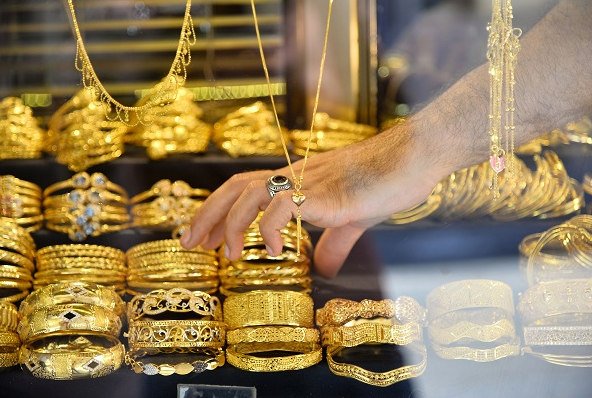
Tokyo, Jul 27: Gold hit an all-time high on Monday as tit-for-tat consulate closures in China and the United States rattled investors, boosting the allure of safe-haven assets, although sentiment was mixed with tech gains supporting some Asian stocks.

MSCI's ex-Japan Asia-Pacific index rose 1.3 percent as Taiwan's TSMC, Asia's third-largest company by market capitalisation, rose almost 10 percent.

The chipmaker's gains boosted other tech stocks in the region and came after rival Intel signalled it may give up manufacturing its own components due to delays in new 7-nanometer chip technology.

Also soothing sentiment, Chinese shares eked out gains after big falls late last week, with CSI300 index rising 0.5 percent.

S&P500 futures were last up 0.4 percent in choppy trade while Japan's Nikkei fell 0.5 percent, resuming trade after a long weekend and catching up with falls in global shares late last week.

Global shares had lost steam last week after Washington ordered China's consulate in Houston to close, prompting Beijing to react in kind by closing the US consulate in Chengdu.

US Secretary of State Mike Pompeo took fresh aim at China last week, saying Washington and its allies must use "more creative and assertive ways" to press the Chinese Communist Party to change its ways.

"US President (Donald) Trump used to say China's President Xi Jinping is a great leader. But now Pompeo's wording is becoming so aggressive that markets are starting to worry about further escalation," said Norihiro Fujito, chief investment strategist at Mitsubishi Securities.

Gold rose 1.0 percent to a record high of $1,920.9 per ounce, surpassing a peak touched in September 2011, as Sino-US tensions boosted the allure of safe-haven assets, especially those not tied to any specific country.

The yellow metal is also helped by aggressive monetary easing adopted by many central banks around the world since the pandemic plunged the global economy into a recession.

Some investors fret such an unprecedented level of money-printing could eventually lead to inflation.

MORE STIMULUS

Hopes of a quick US economic recovery are fading as coronavirus infections showed few signs of slowing.

That means the economy could capitulate without fresh support from the government, with some of earlier steps such as enhanced jobless benefits due to expire this month.

Investors hope US Congress will agree on a deal before its summer recess but there are some sticking points including the size of the stimulus and enhanced unemployment benefits.

US Treasury Secretary Steve Mnuchin said the package will contain extended unemployment benefits with 70 percent "wage replacement".

Democrats, who control the House of Representatives, want enhanced benefits of $600 per week to be extended and look to much bigger stimulus compared with the Republicans' $1 trillion plan.

Investors are looking to corporate earnings from around the world for hints on the pace of recovery in the global economy.

"It looks like rising coronavirus cases are starting to slow down recovery in many countries," said Masahiro Ichikawa, senior strategist at Sumitomo Mitsui DS Asset Management.

Concerns about the US economic outlook started to weigh on the dollar, reversing its inverse correlation with the economic well-being over the past few months.

The dollar index dropped 0.3 percent to its lowest level in nearly two years.

The euro gained 0.3 percent to $1.1693, hitting a 22-month high of $1.16590 as sentiment on the common currency improved after European leaders reached a deal on a recovery fund in a major step towards more fiscal co-operation.

Against the yen, the dollar slipped 0.5 percent to 105.605 yen, a four-month low while the British pound hit a 4 1/2-month high of $1.2832.

Oil prices dipped on worries about the worsening Sino-US relations.

Brent futures fell 0.46 percent to $43.14 per barrel while US crude futures lost 0.44 percent to $41.11.

Comments

Add new comment

  • Coastaldigest.com reserves the right to delete or block any comments.
  • Coastaldigset.com is not responsible for its readers’ comments.
  • Comments that are abusive, incendiary or irrelevant are strictly prohibited.
  • Please use a genuine email ID and provide your name to avoid reject.
News Network
January 30,2020

Mumbai, Jan 30: The Shiv Sena on Thursday endorsed Union home minister Amit Shah's view that alleged inflammatory statements made by Sharjeel Imam, an anti- Citizenship (Amendment) Act (CAA) activist, were dangerous.

No politics should be done on the issue, and such "pest" afflicting the country should be finished off, it said.

Imam was arrested on Tuesday in connection with his speeches at Jamia Millia Islamia University in Delhi and in Aligarh during anti-CAA protests.

He has been booked for sedition, among other offences.

In an editorial published in its mouthpiece `Saamana', the Sena, a former ally of the BJP, said, "We agree with union home minister's comments that Sharjeel Imam's alleged words of separation are more dangerous than that of Kanhaiya Kumar."

Kumar, former student leader from Jawaharlal Nehru University, had been arrested over alleged separatist slogans shouted during a protest on varsity campus.

The Sena, which has formed alliance with the Congress and NCP to come to power in Maharashtra, is often seen walking a tightrope to preserve its credentials as a pro-Hindutva party.

"The union home ministry, while initiating action against Imam, should not indulge in politics and try to finish off this pest that is afflicting our country," the editorial said.

"One must find out why such language of breaking up this country into pieces is being used by the educated youth of this country more and more frequently. Who is spewing such venom into the mind of Sharjeel who did his graduation from IIT-B and now pursuing PhD from JNU?" the Sena asked.

"Even people involved in Elgar Parishad at Pune are facing sedition charges and these people have been known as intellectuals and are well-known personalities," said the party.

"A conspiracy to bring about a conflict between Hindus and Muslims and ensure continuance of anarchy and civil war as in Iraq and Afghanistan exists. The boost for such activities is coming from a 'political laboratory'," the editorial said.

Comments

Add new comment

  • Coastaldigest.com reserves the right to delete or block any comments.
  • Coastaldigset.com is not responsible for its readers’ comments.
  • Comments that are abusive, incendiary or irrelevant are strictly prohibited.
  • Please use a genuine email ID and provide your name to avoid reject.