‘Modi has to go’: After witnessing Gujarat genocide, Vajpayee wanted then CM to step down

coastaldigest.com web desk
August 16, 2018

A biography of former prime minister Atal Bihari Vajpayee, who passed away on August 16, 2018, looks at the hardline roots behind his liberal image. Ullekh NP’s The Untold Vajpayee: Politician and Paradox, (published by Penguin Books India) which was released on December 25, 2016 to mark Vajpayee’s 92nd birthday, looks at his relationship with leaders of his party and his love–hate association with the RSS and its feeder organisations. 

The following paragraphs are the extracts from the same biography. 

***

On 27 February 2002, a group of people from a Muslim populated area of Godhra had set fire to a few bogies of a train — the Sabarmati Express — which carried pilgrims from Ayodhya, a town considered holy by the Hindus. Massive riots broke out, mostly targeting Muslims, for nearly a week.

All the killing and pillaging in Gujarat had given Vajpayee a bad name, the more so because Gujarat had a BJP government in place, with a chief minister who had reportedly not risen enough to the occasion to rein in the violence. Vajpayee was blamed for his failure as PM to get rid of Chief Minister Narendra Modi, who reportedly shouted back at a Muslim leader on the phone for seeking help after a mob had gathered outside his house. Some hours later, the Muslim leader was lynched, and Modi is alleged to have asked the police forces to let the violence continue. At that moment, Modi seemed to be the villain who brought a lot of shame to the central government.

Modi had also dared to publicly snub Vajpayee at a press conference where he was seated alongside the prime minister. The reporter wanted to know Vajpayee’s message for the chief minister in the wake of the riots. In controlled displeasure, Vajpayee stated that Modi should ‘follow his Rajdharma’. He explained that Rajdharma was a meaningful term, and for somebody in a position of power, it meant not discriminating among the higher and lower classes of society or people of any religion. In a bid to stop Vajpayee from saying something scathing about him, Modi turned towards Vajpayee, tried to catch his eye and said with a strong note of threatening defiance, ‘Hum bhi wahi kar rahe hain, sahib (That is what we are also doing, sir).’ Vajpayee immediately changed tack and said, ‘I am sure Narendrabhai is also doing the same.’

Three days before his foreign tour in April, when Vajpayee visited the Shah Alam camp in Ahmedabad, which housed 9,000 Muslims displaced by the riots, he was deeply touched when a woman told him that he alone could save them from the hell that their lives had become. Now, on the flight to Singapore, Vajpayee was worried he would expose himself to more humiliation while outside the country. His grouse was: why am I being paraded abroad at such a time?

Shourie suggested that the PM speak to Advani, who had by now become the deputy prime minister, about the possibilities of salvaging the situation — it could even mean replacing Modi. But even after the ‘pep talk’ with Shourie, Vajpayee appeared cheerless. He told Shourie that he would speak to Advani about it.

They reached Singapore; there were no meetings scheduled for the first day. The next day there were several engagements, including ceremonial visits to dignitaries, which included the former ruler Lee Kuan Yew. The Gujarat issue came up in an interview on the third and final day of their stay in Singapore. The journalist who interviewed Vajpayee first stated that Singaporeans were wary of communal disturbances, clearly indicating that he was referring to the recent riots in Gujarat, under the BJP rule. Then he shot off his question:

‘And in India such disturbances have happened not once, but several times. In this regard what can Singapore learn from India’s experience and what can you share?’

Vajpayee paused and rubbed his forehead... before answering, betraying a level of discomfiture in answering questions related to the Gujarat riots. Then, weighing his words, he said, ‘Whatever happened in India was very unfortunate. The riots have been brought under control. If at the Godhra station, the passengers of the Sabarmati Express had not been burnt alive, then perhaps the Gujarat tragedy could have been averted. It is clear there was some conspiracy behind this incident. It is also a matter of concern that there was no prior intelligence available on this conspiracy. Alertness is essential in a democracy. We have been cautious. And if one does not ignore even small incidents like one used to in the past, then one will certainly be successful in fighting terrorism.’ Clearly, he was on the defensive, and the issue worried him no end.

*

Before the delegation left for Cambodia that day, Shourie asked Vajpayee whether he had a chat with Advani. The prime minister looked distraught, but answered that he had not yet had a word on the matter with Advani, Modi’s mentor.

On the same day, 9 April, Vajpayee met the Cambodian prime minister, Hun Sen, and other officials. He also made ceremonial speeches at Phnom Penh. Over the next two days, the prime minister signed various pacts with his Cambodian counterpart, and announced that India would offer 10,000 tonnes of rice for distribution among the people of Cambodia, especially among the flood-hit. He also visited the famous Angkor Wat temple, where Shourie again found Vajpayee to be distracted and lost in thought. He asked Vajpayee again if he had spoken with Advani, and he answered in the negative. The Indian delegation led by Vajpayee returned on 11 April. The next day, senior BJP leaders were to attend a national executive meet in Goa.

Shourie went home and took a shower. He was reading a book when he got a call from Brajesh Mishra asking if he had booked tickets to Goa. Shourie said he had. ‘Please cancel them. You are going with the PM and the deputy PM in the PM’s aircraft,’ Mishra said, emphasising that if he didn’t go, both Vajpayee and Advani would not talk if they were left alone in a plane.

When Shourie boarded the plane, Vajpayee was already there, seated next to the window, and facing him, across a table, on a window seat was Advani. The external affairs minister, Jaswant Singh, was also there.

The plane took off and after a few minutes, Vajpayee took a newspaper from the table in front of him and opened it so widely that he didn’t have to face Advani at all. A little while later, Advani also picked up a newspaper and began to read. Shourie and Singh looked at each other and sighed.

Then Shourie surprised himself. He pulled the newspaper out of Vajpayee’s hands and interjected, ‘Vajpayeeji, newspapers can be read later also. Why don’t you tell Advaniji what you wanted to tell him?’ Vajpayee kept the newspapers away, and muttered in his usual style about what had to be done. First, Venkaiah Naidu would replace Jana Krishnamurthi as BJP president. Then he said, ‘Modi has to go.’ By the time they landed in Goa, the decision was taken: Modi would go.

*

Eight months earlier, in late September 2001, amid massive political infighting, it was decided that Modi would replace Keshubhai Patel as chief minister of Gujarat.

On 1 October, Vajpayee asked Modi to meet him in Delhi, where Modi had lived for the previous three years. Modi had put on weight from the last time they had met. Vajpayee joked about too much ‘Punjabi food’ and then got to business. Modi had to go to Gujarat as CM to prepare the state for the next elections due in 2002, Vajpayee said. Modi’s immediate answer was a ‘no’.

Vajpayee insisted, because the Keshubhai Patel administration had incurred public wrath over not doing enough for the people of the state after the 2001 earthquake. Some members of the government were in cahoots with unscrupulous builders indulging in shoddy construction. Some of them enjoyed Patel’s patronage.

Modi told Vajpayee that since he had been away in Delhi as the general secretary in charge of several states, he had been out of touch with local politics. Even so, he agreed to spend ten days a month in the state. However, a short while later, Modi agreed to accept the CM’s position after being convinced by his mentor Advani to do so. Advani knew about Modi’s lack of administrative experience, but was very fond of him. Finally, Modi was sworn in as chief minister of Gujarati on 7 October 2001.

*

At Panjim in April 2002, the national executive meet began, and a short while later, Modi took to the dais and said he would like to step down as chief minister over the riots. Immediately, people from several sides got up and said there was no need to do so. Whether it was orchestrated or not, Shourie wasn’t sure. But, according to him, Vajpayee felt that it was a coup.

Sensing that things were not going as planned, Shourie got up and described what had gone on between Advani and Vajpayee on the plane and the agreement they had reached thereafter. But shouts kept emerging from the delegates: ‘It cannot be done! Modi cannot be allowed to go!’ Vajpayee immediately understood the situation, and said, ‘Let’s decide on it later.’ ‘It can’t be decided later, it has to be decided now,’ somebody shouted. And as if on cue, it became a slogan.

Shourie observed that Advani hadn’t said anything though he knew very well that Vajpayee wanted Modi out. Seeing things take a different turn, Vajpayee kept mum, opting against a confrontational stance. Perhaps, for all his bravery, he was worried about younger leaders publicly questioning his authority. He would never forget that humiliation.

Comments

Being Pragmati…
 - 
Friday, 17 Aug 2018

And rest is history!!! Advaniji was silent in that meeting & is also now. But the two silences has a world of difference!!


Add new comment

  • Coastaldigest.com reserves the right to delete or block any comments.
  • Coastaldigset.com is not responsible for its readers’ comments.
  • Comments that are abusive, incendiary or irrelevant are strictly prohibited.
  • Please use a genuine email ID and provide your name to avoid reject.
Anusha Bhat | coastaldigest.com
July 24,2020

Mangaluru, Jul 24: Parents in Dakshina Kannada are urging the educational institutions to reduce fees at least by 75% as most of the infrastructure and resources are not being utilized due to online classes. 

“School campuses are now closed. Why we have to pay such a heavy fee when our children are not availing the facilities offered on campus?” asks a Sapna (name changed), a parent, whose two daughters study at a prestigious private school in Mangaluru.  

Even though some schools considered as small players have reduced fees, most of the “prestigious” institutions in the Mangaluru have so far refused to give any discount.

“Apart from paying school fees, now we have to invest in gadgets, internet connections and accessories required for online classes. School administration can use their infrastructure and facilities for other purposes as students are not utilizing them. Hence, they must give us maximum discount during this pandemic,” said another parent.  
 
On the other hand, many parents are facing a dire financial situation due to covid-19 lockdown – while some have suffered losses in their business some have lost their jobs.

Many parents have even approached the education department to ensure that they get a discount in fees from educational institutions, said Dakshina Kannada DDPI Malleswamy.

“We cannot do anything since a government circular has asked educational institutions not to hike fees, which they have not done, and reduce fees if possible, which will never happen. The department is acting against only those schools that forcefully collect fees,” the DDPI said.

Comments

Add new comment

  • Coastaldigest.com reserves the right to delete or block any comments.
  • Coastaldigset.com is not responsible for its readers’ comments.
  • Comments that are abusive, incendiary or irrelevant are strictly prohibited.
  • Please use a genuine email ID and provide your name to avoid reject.
coastaldigest.com news network
August 2,2020

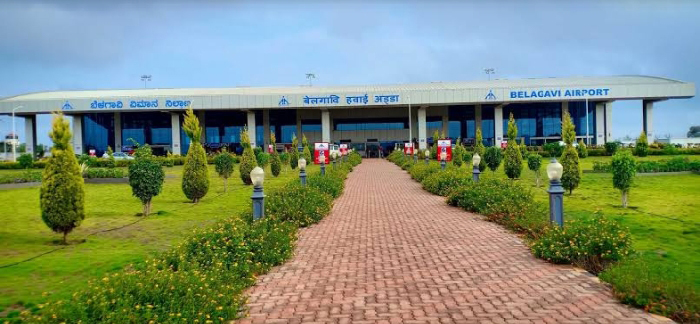
Bengaluru, Aug 2: All the seven Airports in Karnataka have seen poor traffic even after the restoration of domestic flight services post covid-19 lockdown. Interestingly, Mangaluru International Airport, the second biggest in the state, has slipped to third position in number of number of passengers and flights. 

Of all the seven airports in State-- Bengaluru, Mangaluru, Hubballi, Belagavi, Mysuru, Kalaburagi and Vijaynagara (Hosapete)-- it was the Sambra (Belagavi) airport which saw the highest number of passengers and flights after Bengaluru. 

According to Airports Authority of India report released on their website recently, the Sambra airport outperformed the Managluru international airport in June. 

As many 10,224 passengers travelled to or from Belagavi airport in June, whereas Mangaluru airport saw a footfall of only 8,608 passengers including 3,726 international and 4,882 domestic passengers. Belagavi airport handled 391 flights whereas Mangaluru airport handled 190 flights.

Even the Bengaluru international airport saw a decline in the number of passengers and flights in June. Only 3.69 lakh domestic and 10,654 international passengers arrived or departed from Kempegowda International Airport, Bengaluru in June as against 27.59 lakh total passengers in June 2019. 

Between April-June 2020 the Bengaluru airport saw only 4.54 lakh total passengers (domestic and international) as against 84.11 lakh total passenger during the same period last year. The number of flights to and from Bengaluru also saw a huge dip in June with only 731 international (2,582 in June 2019) and 4290 domestic (16,216 in June 2019) flights.

Though the Mysuru domestic airport handled a higher number of flights compared to last June, the number of passengers either arriving or departing saw a decline. Last year June 4,775 passengers travelled in 96 flights, whereas in June 2020 the airport handled 3,158 passengers and 330 flights.

Hubballi airport saw the least number of passengers or flights among the seven airports in Karnataka in June. It saw only 55 passengers either arriving or departing from the city's airport in 14 flights in the month of June. In the same month last year, Hubballi airport, which was third busiest before the pandemic, had facilitated 45,973 passengers and handled 604 flights.

Since April 2020 to June, the Hubballi airport has handled only 18 flights (as against 1,958 during the same period last year) and 122 passengers (1,50,416 between April-June 2019).

Comments

Add new comment

  • Coastaldigest.com reserves the right to delete or block any comments.
  • Coastaldigset.com is not responsible for its readers’ comments.
  • Comments that are abusive, incendiary or irrelevant are strictly prohibited.
  • Please use a genuine email ID and provide your name to avoid reject.
Ram Puniyani
March 14,2020

In the wake of Citizenship Amendment Act (CAA) UN High Commissioner, Michele Bachelet, has filed an intervention in the Supreme Court petition challenging the constitutionality of the Citizenship Amendment Act, as she is critical of CAA. Responding to her, India’s Foreign Minister S. Jai Shanker strongly rebutted her criticism, saying that the body (UNHCR) has been wrong and is blind to the problem of cross border terrorism. The issue on hand is the possibility of scores of people, mainly Muslims, being declared as stateless. The problem at hand is the massive exercise of going through the responses/documents from over 120 crore of Indian population and screening documents, which as seen in Assam, yield result which are far from truthful or necessary.

The issue of CAA has been extensively debated and despite heavy critique of the same by large number of groups and despite the biggest mass opposition ever to any move in Independent India, the Government is determined on going ahead with an exercise which is reminiscent of the dreaded regimes which are sectarian and heartless to its citizens, which have indulged in extinction of large mass of people on grounds of citizenship, race etc. The Foreign minister’s assertion is that it is a matter internal to India, where India’s sovereignty is all that matters! As far as sovereignty is concerned we should be clear that in current times any sovereign power has to consider the need to uphold the citizenship as per the principle of non-discrimination which is stipulated in Art.26 of the International Covenant on Civil and Political (ICCPR) rights.

Can such policies, which affect large number of people and are likely to affect their citizenship be purely regarded as ‘internal’? With the World turning into a global village, some global norms have been formulated during last few decades. The norms relate to Human rights and migrations have been codified. India is also signatory to many such covenants in including ICCPR, which deals with the norms for dealing with refugees from other countries. One is not talking of Chicago speech of Swami Vivekanand, which said that India’s greatness has been in giving shelter to people from different parts of the World; one is also not talking of the Tattariaya Upanishad’s ‘Atithi Devovhav’ or ‘Vasudhaiva Kutumbkam’ from Mahaupanishad today.

What are being talked about are the values and opinions of organizations which want to ensure to preserve of Human rights of all people Worldwide. In this matter India is calling United Nations body as ‘foreign party’; having no locus standi in the case as it pertains to India’s sovereignty. The truth is that since various countries are signatories to UN covenants, UN bodies have been monitoring the moves of different states and intervening at legal level as Amicus (Friend of the Court) to the courts in different countries and different global bodies. Just to mention some of these, UN and High Commissioner for Human Rights has often submitted amicus briefs in different judicial platforms. Some examples are their intervention in US Supreme Court, European Court of Human Rights, International Criminal Court, and the Inter-American Court of Human Rights. These are meant to help the Courts in areas where UN bodies have expertise.

 Expertise on this has been jointly formulated by various nations. These interventions also remind the nations as to what global norms have been evolved and what are the obligations of individual states to the values which have evolved over a period of time. Arvind Narrain draws our attention to the fact that, “commission has intervened in the European Court of Human Rights in cases involving Spain and Italy to underscore the principle of non-refoulement, which bars compulsory expulsion of illegal migrants… Similarly, the UN has intervened in the International Criminal Court in a case against the Central African Republic to explicate on the international jurisprudence on rape as a war crime.”

From time to time organizations like Amnesty International and Human Rights Watch have been monitoring the status of Human rights of different countries. This puts those countries in uncomfortable situation and is not welcome by those establishments. How should this contradiction between ‘internal matter’, ‘sovereignty’ and the norms for Human rights be resolved? This is a tough question at the time when the freedom indices and democratic ethos are sliding downwards all over the world. In India too has slid down on the scale of these norms.

In India we can look at the intervention of UN body from the angle of equality and non discrimination. Democratic spirit should encourage us to have a rethink on the matters which have been decided by the state. In the face of the greatest mass movement of Shaheen bagh, the state does need to look inwards and give a thought to international morality, the spirit of global family to state the least.

The popular perception is that when Christians were being persecuted in Kandhmal the global Christian community’s voice was not strong enough. Currently in the face of Delhi carnage many a Muslim majority countries have spoken. While Mr. Modi claims that his good relations with Muslim countries are a matter of heartburn to the parties like Congress, he needs to relook at his self gloating. Currently Iran, Malaysia, Indonesia and many Muslim majority countries have spoken against what Modi regime is unleashing in India. Bangladesh, our neighbor, has also seen various protests against the plight of Muslims in India. More than the ‘internal matter’ etc. what needs to be thought out is the moral aspect of the whole issue. We pride ourselves in treading the path of morality. What does that say in present context when while large section of local media is servile to the state, section of global media has strongly brought forward what is happening to minorities in India.   

The hope is that Indian Government wakes up to its International obligations, to the worsening of India’s image in the World due to CAA and the horrific violence witnessed in Delhi.

Comments

Add new comment

  • Coastaldigest.com reserves the right to delete or block any comments.
  • Coastaldigset.com is not responsible for its readers’ comments.
  • Comments that are abusive, incendiary or irrelevant are strictly prohibited.
  • Please use a genuine email ID and provide your name to avoid reject.