


Modi's second state visit to UAE begins

Agencies
February 10, 2018

Abu Dhabi, Feb 10: Today will mark a watershed moment for the UAE-India relations with Indian Prime Minister Narendra Modi arriving in Abu Dhabi for his second state visit.

The two countries are expected to sign as many as 14 agreements during the two-day visit starting February 10, shifting gears of the strategic partnership in a gamut of areas including space technology, skills development, finance and defence cooperation and investments.

Modi's two-day visit on February 10 and 11 will also see work starting on the construction of the first Hindu temple in Abu Dhabi, fulfilling the long-pending wish of the Hindu community in the Capital.

Modi first visited the UAE in August 2015 becoming the first Indian Prime Minister to visit the emirates in 34 years after Indira Gandhi.

Modi will arrive in Abu Dhabi today evening from Palestine. He will meet His Highness Sheikh Mohamed bin Zayed Al Nahyan, Crown Prince of Abu Dhabi and Deputy Supreme Commander of the UAE Armed Forces, and will attend a state banquet.

On Sunday morning, Modi will visit Wahat Al Karama (Martyrs' Memorial) and pay tribute to the martyred war heroes of the UAE. He will then proceed to Dubai where he will deliver a keynote address at the 6th World Government Summit, in which India is the chief guest country.

Modi will also address a 1,800-strong gathering of the Indian community at the Dubai Opera, which is expected to be a scaled down version of his public address in 2015. More than 50,000 Indians had thronged the International Cricket Stadium in Dubai to listen to their Prime Minister on his first visit.

The Opera event is significant as Modi will flag off the laying of the foundation stone of the first Hindu temple in Abu Dhabi, which will happen simultaneously and will be live-streamed into the iconic Dubai Opera auditorium.

Indian Ambassador to the UAE Navdeep Singh Suri said the latest visit by the Indian PM will mark the dawn of a new era in the India-UAE relations.

"During the year, we have seen major UAE investments into India, a significant increase in defence and security cooperation, a transformation in our energy ties from a buyer-seller relationship to a strategic partnership."

New trajectory in UAE-India ties

Since Modi's first visit, the trajectory of the India-UAE ties have hit a renewed pace with two countries forging a new era of cooperation through the signing of a comprehensive strategic partnership agreement.

During Modi's tenure, Sheikh Mohamed bin Zayed Al Nahyan visited India twice - in February 2016 and January 2017.

The two governments signed 17 bilateral agreements in January 2016, and 14 agreements in February 2017. 

The UAE targets to invest $75 billion in India's infrastructure development. UAE's investments in India is also soaring. In October last year, the Abu Dhabi Investment Authority (Adia) signed an agreement with India's National Investment and Infrastructure Fund to invest $1 billion in India. DP World has signed a Memorandum of Understanding (MoU) with India's National Infrastructure and Investment Fund (NIIF) in May 2017 to invest $1 billion in India.

The UAE is home to more than 3.5 million Indians - the biggest Indian diaspora in the world, and 1,706 flights weekly operate between the two countries.

Comments

An Indian
 - 
Saturday, 10 Feb 2018

Before commencing construction work of Hindu Temple in Abu Dhabi, the UAE government must have put condition to Modi to solve the Babri Masjid issue.

Add new comment

  • Coastaldigest.com reserves the right to delete or block any comments.
  • Coastaldigset.com is not responsible for its readers’ comments.
  • Comments that are abusive, incendiary or irrelevant are strictly prohibited.
  • Please use a genuine email ID and provide your name to avoid reject.
News Network
July 28,2020

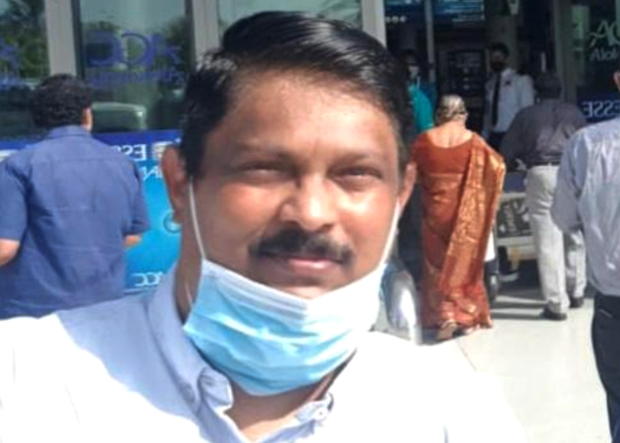
Dubai, Jul 28: A heart-broken father who lost his 19-year-old son in a tragic car accident during Christmas last year has sponsored the repatriation costs of 61 Indians stranded in the UAE.

 The special flydubai repatriation flight, chartered by the All Kerala Colleges Alumni Federation (Akcaf) volunteer group, of which he is a member of, departed from Dubai to Kochi on July 25 carrying 199 passengers.

 On this particular flight, I sponsored 55 air tickets," said TN Krishnakumar, a sales and marketing director. He had lost his son Rohit Krishnakumar in a car accident, which also claimed the life of the teen's friend, Sharat Kumar (21).

"All passengers who were registered with the Indian missions were also asked to register on the Akcaf volunteer group website. Each passenger was further vetted, after which we made home visits to ensure that all the applicants were genuinely in need of financial support and repatriation," he said.

Commenting on what inspired him to dedicate himself to community work, Krishankumar said: "When a situation like this comes up, you realise there is no meaning in money. I invested everything I made into my son, and that had crashed in front of my eyes. He was a third-year medical student at the University of Manchester in the UK and had returned home for a vacation when the accident took place. Since then, I have been involved in a lot of social activities. If I do not do this, there is no meaning to my existence."

Since the outbreak of the Covid-19 pandemic, Krishnakumar said the group has supported thousands of individuals in need of help. "We supported unemployed people with several hundred bags of grocery kits and other necessary items. We also supported Covid-19 patients by transferring them to the medical facility in Warsan, etc.," he said.

"I come from a very middle-class family. I got a scholarship to study in college, and I studied with the help of taxpayers' money. I have always wanted to give back to society. I have grown immensely in life and now is my time to give back.," he added.

Krishnakumar also sponsors the education of over 1,000 academically gifted school children in Kerala's government-aided schools. He is a life trustee at the College of Engineering Trivandrum Alumni Galaxy Charitable Trust and an active participant towards various educational causes.

Comments

Add new comment

  • Coastaldigest.com reserves the right to delete or block any comments.
  • Coastaldigset.com is not responsible for its readers’ comments.
  • Comments that are abusive, incendiary or irrelevant are strictly prohibited.
  • Please use a genuine email ID and provide your name to avoid reject.
News Network
April 5,2020

Beirut, Apr 5: The novel coronavirus has put global trade on hold, placed half of the world population in confinement and has the potential to topple governments and reshape diplomatic relations.

The United Nations has appealed for ceasefires in all the major conflicts rocking the planet, with its chief Antonio Guterres on Friday warning "the worst is yet to come". But it remains unclear what the pandemic's impact will be on the multiple wars roiling the Middle East.

Here is an overview of the impact so far on the conflicts in Syria, Yemen, Libya and Iraq:

The COVID-19 outbreak turned into a pandemic just as a ceasefire reached by the two main foreign power brokers in Syria's nine-year-old war -- Russia and Turkey -- was taking effect.

The three million people living in the ceasefire zone, in the country's northwestern region of Idlib, had little hope the deal would hold.

Yet fears the coronavirus could spread like wildfire across the devastated country appear to have given the truce an extended lease of life.

According to the Syrian Observatory for Human Rights, the month of March saw the lowest civilian death toll since the conflict started in 2011, with 103 deaths.

The ability of the multiple administrations in Syria -- the Damascus government, the autonomous Kurdish administration in the northeast and the jihadist-led alliance that runs Idlib -- to manage the coronavirus threat is key to their credibility.

"This epidemic is a way for Damascus to show that the Syrian state is efficient and all territories should be returned under its governance," analyst Fabrice Balanche said.

However the pandemic and the global mobilisation it requires could precipitate the departure of US-led troops from Syria and neighbouring Iraq.

This in turn could create a vacuum in which the Islamic State jihadist group, still reeling from the demise of its "caliphate" a year ago, could seek to step up its attacks.

The Yemeni government and the Huthi rebels initially responded positively to the UN appeal for a ceasefire, as did neighbouring Saudi Arabia, which leads a military coalition in support of the government.

That rare glimmer of hope in the five-year-old conflict was short-lived however and last week Saudi air defences intercepted ballistic missiles over Riyadh and a border city fired by the Iran-backed rebels.

The Saudi-led coalition retaliated by striking Huthi targets in the rebel-held capital Sanaa on Monday.

Talks have repeatedly faltered but the UN envoy Martin Griffiths is holding daily consultations in a bid to clinch a nationwide ceasefire.

More flare-ups in Yemen could compound a humanitarian crisis often described as the worst in the world and invite a coronavirus outbreak of catastrophic proportions.

In a country where the health infrastructure has collapsed, where water is a rare commodity and where 24 million people require humanitarian assistance, the population fears being wiped out if a ceasefire doesn't allow for adequate aid.

"People will end up dying on the streets, bodies will be rotting in the open," said Mohammed Omar, a taxi driver in the Red Sea port city of Hodeida.

Much like Yemen, the main protagonists in the Libyan conflict initially welcomed the UN ceasefire call but swiftly resumed hostilities.

Fierce fighting has rocked the south of the capital Tripoli in recent days, suggesting the risk of a major coronavirus outbreak is not enough to make guns fall silent.

Turkey has recently played a key role in the conflict, throwing its weight behind the UN-recognised Government of National Accord.

Fabrice Balanche predicted that accelerated Western disengagement from Middle East conflicts could limit Turkish support to the GNA.

That could eventually favour forces loyal to eastern-based strongman Khalifa Haftar, who launched an assault on Tripoli one year ago and has the backing of Russia, Egypt and the United Arab Emirates.

Western countries have been hit hardest by the pandemic, which could prompt them to divert both military resources and peace-brokering capacity from foreign conflicts.

A report by the International Crisis Group said European officials had reported that efforts to secure a ceasefire in Libya were no longer receiving high-level attention due to the pandemic.

Iraq is no longer gripped by fully-fledged conflict but it remains vulnerable to an IS resurgence in some regions and its two main foreign backers are at each other's throats.

Iran and the United States are two of the countries most affected by the coronavirus but there has been no sign of any let-up in their battle for influence that has largely played out on Iraqi soil.

With most non-US troops in the coalition now gone and some bases evacuated, American personnel are now regrouped in a handful of locations in Iraq.

Washington has deployed Patriot air defence missiles, prompting fears of a fresh escalation with Tehran, whose proxies it blames for a spate of rocket attacks on bases housing US troops.

Comments

Add new comment

  • Coastaldigest.com reserves the right to delete or block any comments.
  • Coastaldigset.com is not responsible for its readers’ comments.
  • Comments that are abusive, incendiary or irrelevant are strictly prohibited.
  • Please use a genuine email ID and provide your name to avoid reject.
News Network
February 17,2020

New Delhi, Feb 17: Indian officials denied entry to British lawmaker Debbie Abrahams on Monday after she landed at New Delhi's Indira Gandhi International Airport.

Debbie Abrahams, a Labour Party Member of Parliament who chairs a parliamentary group focused on the Kashmir, was unable to clear customs after her valid Indian visa was rejected, her aide, Harpreet Upal, told The Associated Press.

Abrahams and Upal arrived at the airport on an Emirates flight from Dubai at 9 am. Upal said the immigration officials did not cite any reason for denying Abrahams entry and revoking her visa, a copy of which, valid until October 2020, was shared with the AP. A spokesman for India's foreign ministry did not immediately comment.

Abrahams has been a member of Parliament since 2011 and was on a two-day personal trip to India, she said in a statement.

"I tried to establish why the visa had been revoked and if I could get a 'visa on arrival' but no one seemed to know," she said in the statement.

"Even the person who seemed to be in charge said he didn't know and was really sorry about what had happened. So now I am just waiting to be deported ... unless the Indian Government has a change of heart. I'm prepared to let the fact that I've been treated like a criminal go, and I hope they will let me visit my family and friends."

Abrahams has been an outspoken critic of the Indian government's move last August stripping Jammu and Kashmir of its semi-autonomy and bifurcating the state into two Union Territories.

Shortly after the changes to Kashmir's status were passed by Parliament, Abrahams wrote a letter to India's High Commissioner to the UK, saying the action "betrays the trust of the people" of Kashmir.

India took more than 20 foreign diplomats on a visit to Kashmir last week, the second such trips in six months.

Access to the region remains tight, with no foreign journalists allowed.

Comments

Add new comment

  • Coastaldigest.com reserves the right to delete or block any comments.
  • Coastaldigset.com is not responsible for its readers’ comments.
  • Comments that are abusive, incendiary or irrelevant are strictly prohibited.
  • Please use a genuine email ID and provide your name to avoid reject.