


Modi's second state visit to UAE begins

Agencies
February 10, 2018

Abu Dhabi, Feb 10: Today will mark a watershed moment for the UAE-India relations with Indian Prime Minister Narendra Modi arriving in Abu Dhabi for his second state visit.

The two countries are expected to sign as many as 14 agreements during the two-day visit starting February 10, shifting gears of the strategic partnership in a gamut of areas including space technology, skills development, finance and defence cooperation and investments.

Modi's two-day visit on February 10 and 11 will also see work starting on the construction of the first Hindu temple in Abu Dhabi, fulfilling the long-pending wish of the Hindu community in the Capital.

Modi first visited the UAE in August 2015 becoming the first Indian Prime Minister to visit the emirates in 34 years after Indira Gandhi.

Modi will arrive in Abu Dhabi today evening from Palestine. He will meet His Highness Sheikh Mohamed bin Zayed Al Nahyan, Crown Prince of Abu Dhabi and Deputy Supreme Commander of the UAE Armed Forces, and will attend a state banquet.

On Sunday morning, Modi will visit Wahat Al Karama (Martyrs' Memorial) and pay tribute to the martyred war heroes of the UAE. He will then proceed to Dubai where he will deliver a keynote address at the 6th World Government Summit, in which India is the chief guest country.

Modi will also address a 1,800-strong gathering of the Indian community at the Dubai Opera, which is expected to be a scaled down version of his public address in 2015. More than 50,000 Indians had thronged the International Cricket Stadium in Dubai to listen to their Prime Minister on his first visit.

The Opera event is significant as Modi will flag off the laying of the foundation stone of the first Hindu temple in Abu Dhabi, which will happen simultaneously and will be live-streamed into the iconic Dubai Opera auditorium.

Indian Ambassador to the UAE Navdeep Singh Suri said the latest visit by the Indian PM will mark the dawn of a new era in the India-UAE relations.

"During the year, we have seen major UAE investments into India, a significant increase in defence and security cooperation, a transformation in our energy ties from a buyer-seller relationship to a strategic partnership."

New trajectory in UAE-India ties

Since Modi's first visit, the trajectory of the India-UAE ties have hit a renewed pace with two countries forging a new era of cooperation through the signing of a comprehensive strategic partnership agreement.

During Modi's tenure, Sheikh Mohamed bin Zayed Al Nahyan visited India twice - in February 2016 and January 2017.

The two governments signed 17 bilateral agreements in January 2016, and 14 agreements in February 2017. 

The UAE targets to invest $75 billion in India's infrastructure development. UAE's investments in India is also soaring. In October last year, the Abu Dhabi Investment Authority (Adia) signed an agreement with India's National Investment and Infrastructure Fund to invest $1 billion in India. DP World has signed a Memorandum of Understanding (MoU) with India's National Infrastructure and Investment Fund (NIIF) in May 2017 to invest $1 billion in India.

The UAE is home to more than 3.5 million Indians - the biggest Indian diaspora in the world, and 1,706 flights weekly operate between the two countries.

Comments

An Indian
 - 
Saturday, 10 Feb 2018

Before commencing construction work of Hindu Temple in Abu Dhabi, the UAE government must have put condition to Modi to solve the Babri Masjid issue.

Add new comment

  • Coastaldigest.com reserves the right to delete or block any comments.
  • Coastaldigset.com is not responsible for its readers’ comments.
  • Comments that are abusive, incendiary or irrelevant are strictly prohibited.
  • Please use a genuine email ID and provide your name to avoid reject.
Agencies
August 2,2020

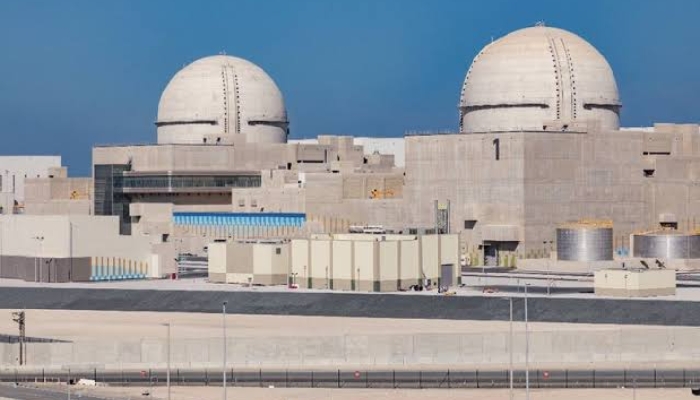
Dubai, Aug 2: The United Arab Emirates (UAE) announced on Saturday that it has started operations in the first of four reactors at the Barakah nuclear power station - the first nuclear power plant in the Arab world.

Emirates Nuclear Energy Corporation (ENEC), which is building and operating the plant with Korea Electric Power Corporation (KEPCO) said in a press release that its subsidiary Nawah Energy Company "has successfully started up Unit 1 of the Barakah Nuclear Energy Plant, located in the Al Dhafrah Region of Abu Dhabi".

That signals that Unit 1, which had fuel rods loaded in March, has achieved "criticality" - a sustained fission chain reaction.

"The start-up of Unit 1 marks the first time that the reactor safely produces heat, which is used to create steam, turning a turbine to generate electricity," said ENEC.

Barakah, which was originally scheduled to open in 2017, has been dogged by delays and is billions of dollars over budget. It has also raised myriad concerns among nuclear energy veterans who are concerned about the potential risks Barakah could visit upon the Arabian Peninsula, from an environmental catastrophe to a nuclear arms race.

Paul Dorfman, an honorary senior research fellow at the Energy Institute, University College London and founder and chair of the Nuclear Consulting Group, has criticised the Barakah reactors' "cheap and cheerful" design that he says cuts corners on safety.

Dorfman authored a report (PDF) last year detailing key safety features Barakah's reactors lack, such as a "core catcher" to literally stop the core of a reactor from breaching the containment building in the event of a meltdown. The reactors are also missing so-called Generation III Defence-In-Depth reinforcements to the containment building to shield against a radiological release resulting from a missile or fighter jet attack.

Both of these engineering features are standard on new reactors built in Europe, says Dorfman.

There have been at least 13 aerial attacks on nuclear facilities in the Middle East - more than any other region on earth.

The vulnerability of critical infrastructure in the Arabian Peninsula was further laid bare last year after Saudi Arabia's oil facilities at Abqaiq and Khurais were attacked by 18 drones and seven cruise missiles - an assault that temporarily knocked out more than half of the kingdom's oil production.

On Saturday, Dorfman reiterated his concern that there is no regional protocol in place to determine liability should an accident or incident at Barakah result in radioactive contamination spreading from the UAE to its neighbours. 

"Given Barakah has started up, because of all the well-rehearsed nuclear safety and security problems, it may be critically important that the Gulf states collectively evolve a Nuclear Accident Liability Convention, so that if anything does go wrong, victim states may have some sort of redress," Dorfman told Al Jazeera. 

The UAE has substantial oil and gas reserves, but it has made huge investments in developing alternative energy sources, including nuclear and solar.

Experts though have questioned why the UAE - which is bathed in sunlight and wind - has pushed ahead with nuclear energy - a far more expensive and riskier option than renewable energy sources.

When the UAE first announced Barakah in 2009, nuclear power was cheaper than solar and wind. But by 2012 - when the Emirates started breaking ground to build the reactors - solar and wind costs had plummeted dramatically.

Between 2009 and 2019, utility-scale average solar photovoltaic costs fell 89 percent and wind fell 43 percent, while nuclear jumped 26 percent, according to an analysis by the financial advisory and asset manager Lazard.

There are also concerns about the potential for Barakah to foment nuclear proliferation in the Middle East - a region rife with geopolitical fault lines and well-documented history of nuclear secrecy.

The UAE has sought to distance itself from the region's bad behaviour by agreeing not to enrich its own uranium or reprocess spent fuel. It has also signed up to the United Nation's nuclear watchdog's Additional Protocol, significantly enhancing inspection capabilities, and secured a 123 Agreement with the United States that allows bilateral civilian nuclear cooperation.

Comments

Add new comment

  • Coastaldigest.com reserves the right to delete or block any comments.
  • Coastaldigset.com is not responsible for its readers’ comments.
  • Comments that are abusive, incendiary or irrelevant are strictly prohibited.
  • Please use a genuine email ID and provide your name to avoid reject.
Agencies
February 18,2020

British lawmaker Debbie Abrahams' e-Business visa was revoked as she was involved in anti-India activities and the cancellation was conveyed to her on February 14, government sources said on Tuesday.

Asserting that the grant, rejection or revocation of a visa or electronic travel authorisation is the sovereign right of a country, the sources said Abrahams was issued an e-Business visa on October 7 last year which was valid till October 5, 2020 for attending business meetings.

"Her e-Business visa was revoked on February 14, 2020 on account of her indulging in activities which went against India's national interest. The rejection of the e-Business visa was intimated to her on February 14," a source said.

Abrahams, who chairs a British parliamentary group on Kashmir, was denied entry into India upon her arrival at the New Delhi airport on Monday.

Government officials had said on Monday also that she was informed in advance that her e-visa had been cancelled.

Comments

Add new comment

  • Coastaldigest.com reserves the right to delete or block any comments.
  • Coastaldigset.com is not responsible for its readers’ comments.
  • Comments that are abusive, incendiary or irrelevant are strictly prohibited.
  • Please use a genuine email ID and provide your name to avoid reject.
News Network
February 18,2020

New Delhi, Feb 18: Election strategist-turned-politician Prashant Kishor on Tuesday questioned the Nitish Kumar government's development model, even as he sneered at the chief minister for making ideological compromises to stay in an alliance with the BJP.

Kishor, who has been vocal about his opposition to the Citizenship (Amendment) Act (CAA), said Kumar needs to spell out whether he is with the ideals of Mahatma Gandhi or those who support Nathu Ram Godse.

"Nitish ji has always said that he cannot leave the ideals of Gandhi, JP and Lohiya... At the same time, how can he be with the people who support the ideology of Godse? Both cannot go together. If you want to stay with the BJP, I don't have any problem with it but you cannot be on both sides," he said.

"There has been a lot of discussion between me and Nitish-ji on this. He has his thought process and I have mine. There have been differences between him and me that the ideologies of Godse and Gandhi cannot stand together. As the leader of the party you have to say which side you are on," he added.

In a direct assault on Kumar's model of governance, Kishor said Bihar was the poorest state in 2005 and continues to be so.

"There has been development in Bihar during the last 15 years, but the pace has not been as it should have," he added.

Comments

Add new comment

  • Coastaldigest.com reserves the right to delete or block any comments.
  • Coastaldigset.com is not responsible for its readers’ comments.
  • Comments that are abusive, incendiary or irrelevant are strictly prohibited.
  • Please use a genuine email ID and provide your name to avoid reject.