Moms of Mangalore: A network for social change

[email protected] (Lyvia D'Almeida)
February 3, 2017

Mangaluru, Feb 3: At a time when social networking sites and groups are being used for frivolous activities, Moms of Mangalore (MOM) has showed the people how such facilities can be utilized for noble causes.

mom 6

Started over a year ago, Moms of Mangalore (MOM) closed Facebook group has brought around 18 thousand mothers cutting across religious and social barriers together under one platform to make a change in the lives of people in the region.

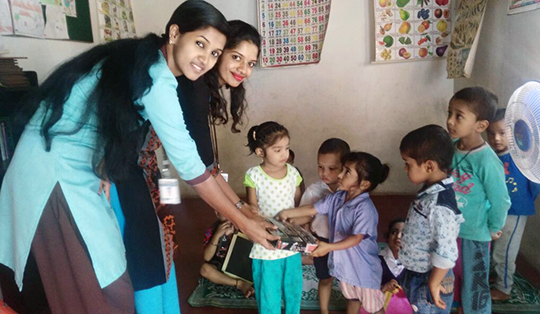
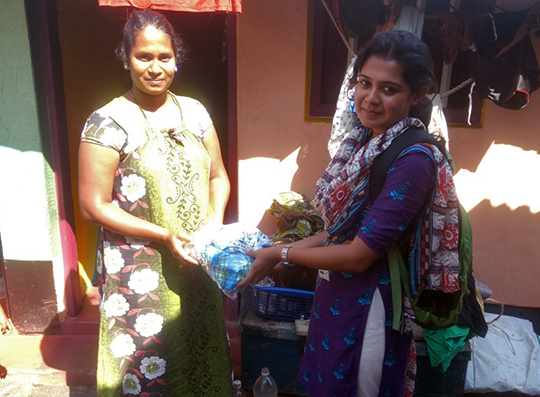
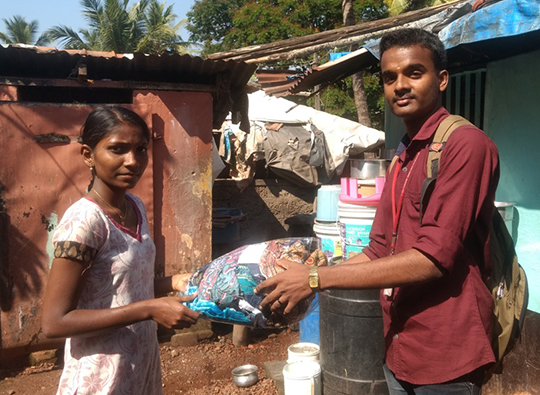
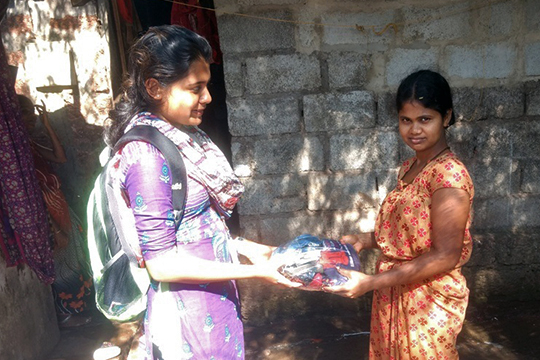
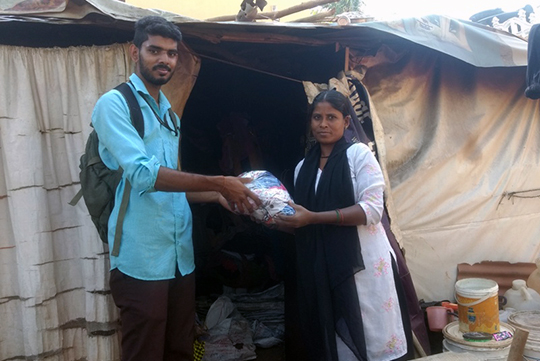
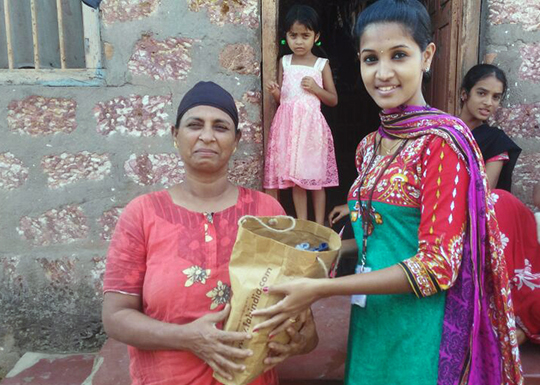
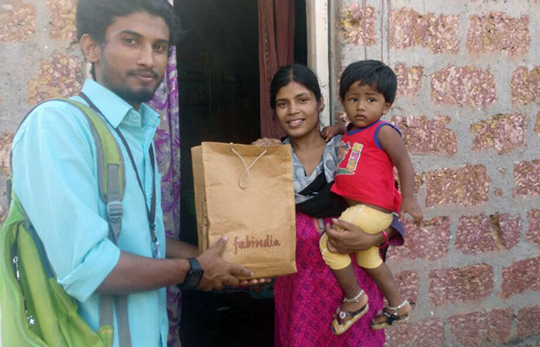
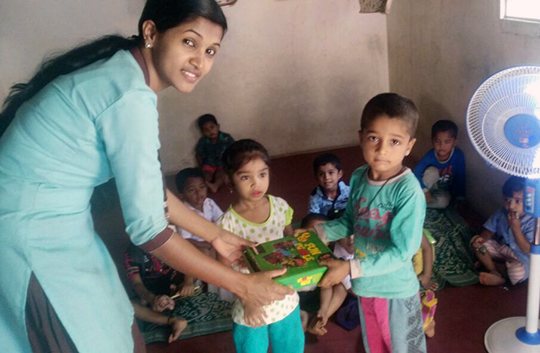
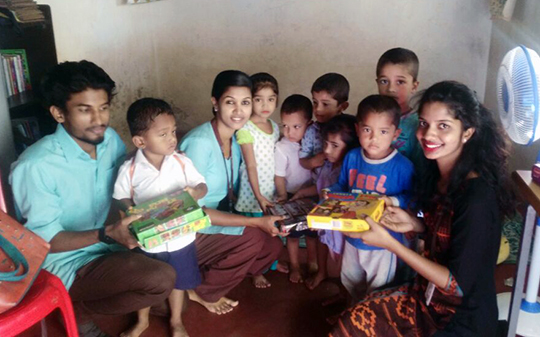
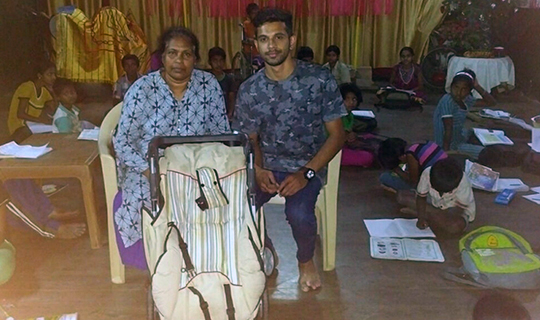
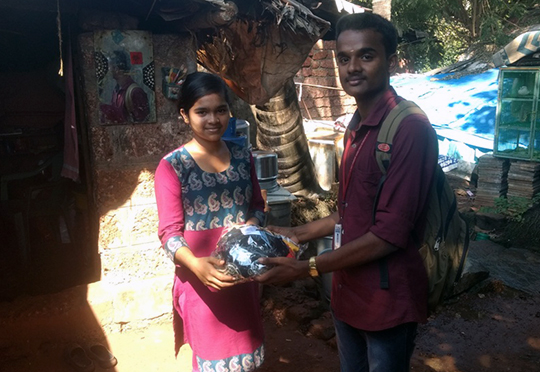
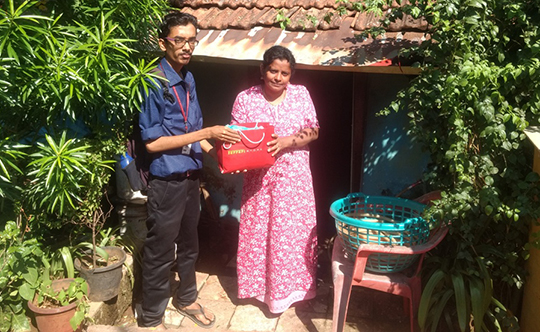
Over the last two months, the inspiring mothers of this group, in association with the PG Dept of Social Work, St Aloysious College - Mangaluru, has been extensively involved in a collection drive to provide support to the less fortunate. In the process they were able to help over 175 children and adults from the lesser privileged areas around Mangaluru, Sirsi and Shimoga with clothes and toys.

The communities included in the collection drive were from various parts of Mangaluru and Shimoga: Loyola Vikas Kendra, Mundgod, Sirsi; Prashanth Nivas; Snehasadan Centre; Ashok Nagar Community; Kasaba Bengre Community; Ullal Community; Needy Children of few of the Anganwadis; Government School Children of Bengre School; Nightingale Happy Home for the Aged, Shimoga; Samvedana Centre, Pumpwell.

This is just one of the several initiatives that the group has started. From their social get together to honour mothers, to efforts in social causes like Chennai relief fund, collection drive for the kids with special needs, collection drive for the less fortunate to name a few, this group in just over a year's time, has highlighted what the mothers in particular, of the region are capable of.

MOM is a non profit, non religious and non political group. As a part of the group's initiative, they have a panel of doctors who are selflessly responding to queries from the members. Children psychologists, counsellors, nutritionists, health support groups, advocates, lactation specialist, contests, mass child immunization reminders, parenting tips, women health tips published by doctors, Mompreneur Mondays (forum for Mothers to display their entrepreneurial skills via posts on their businesses) are some other initiatives of the group.

Also Read:

Moms of Mangalore celebrate Mother's Day; Namratha crowned Super Mommy

Facebook group brings mothers of Mangaluru together

mom 1

mom 2

mom 3

mom 4

mom 5

mom 7

mom 8

mom 9

mom 10

mom 11

mom 12

Comments

Counselor
 - 
Saturday, 4 Feb 2017

Well done MOM's more Moms will join you

Shanthi
 - 
Friday, 3 Feb 2017

Kudos to entire team of moms of Mangalore . We need more of these activities to remind everyone what mangaloreans are actually capable of doing

Add new comment

  • Coastaldigest.com reserves the right to delete or block any comments.
  • Coastaldigset.com is not responsible for its readers’ comments.
  • Comments that are abusive, incendiary or irrelevant are strictly prohibited.
  • Please use a genuine email ID and provide your name to avoid reject.
Ram Puniyani
March 14,2020

In the wake of Citizenship Amendment Act (CAA) UN High Commissioner, Michele Bachelet, has filed an intervention in the Supreme Court petition challenging the constitutionality of the Citizenship Amendment Act, as she is critical of CAA. Responding to her, India’s Foreign Minister S. Jai Shanker strongly rebutted her criticism, saying that the body (UNHCR) has been wrong and is blind to the problem of cross border terrorism. The issue on hand is the possibility of scores of people, mainly Muslims, being declared as stateless. The problem at hand is the massive exercise of going through the responses/documents from over 120 crore of Indian population and screening documents, which as seen in Assam, yield result which are far from truthful or necessary.

The issue of CAA has been extensively debated and despite heavy critique of the same by large number of groups and despite the biggest mass opposition ever to any move in Independent India, the Government is determined on going ahead with an exercise which is reminiscent of the dreaded regimes which are sectarian and heartless to its citizens, which have indulged in extinction of large mass of people on grounds of citizenship, race etc. The Foreign minister’s assertion is that it is a matter internal to India, where India’s sovereignty is all that matters! As far as sovereignty is concerned we should be clear that in current times any sovereign power has to consider the need to uphold the citizenship as per the principle of non-discrimination which is stipulated in Art.26 of the International Covenant on Civil and Political (ICCPR) rights.

Can such policies, which affect large number of people and are likely to affect their citizenship be purely regarded as ‘internal’? With the World turning into a global village, some global norms have been formulated during last few decades. The norms relate to Human rights and migrations have been codified. India is also signatory to many such covenants in including ICCPR, which deals with the norms for dealing with refugees from other countries. One is not talking of Chicago speech of Swami Vivekanand, which said that India’s greatness has been in giving shelter to people from different parts of the World; one is also not talking of the Tattariaya Upanishad’s ‘Atithi Devovhav’ or ‘Vasudhaiva Kutumbkam’ from Mahaupanishad today.

What are being talked about are the values and opinions of organizations which want to ensure to preserve of Human rights of all people Worldwide. In this matter India is calling United Nations body as ‘foreign party’; having no locus standi in the case as it pertains to India’s sovereignty. The truth is that since various countries are signatories to UN covenants, UN bodies have been monitoring the moves of different states and intervening at legal level as Amicus (Friend of the Court) to the courts in different countries and different global bodies. Just to mention some of these, UN and High Commissioner for Human Rights has often submitted amicus briefs in different judicial platforms. Some examples are their intervention in US Supreme Court, European Court of Human Rights, International Criminal Court, and the Inter-American Court of Human Rights. These are meant to help the Courts in areas where UN bodies have expertise.

 Expertise on this has been jointly formulated by various nations. These interventions also remind the nations as to what global norms have been evolved and what are the obligations of individual states to the values which have evolved over a period of time. Arvind Narrain draws our attention to the fact that, “commission has intervened in the European Court of Human Rights in cases involving Spain and Italy to underscore the principle of non-refoulement, which bars compulsory expulsion of illegal migrants… Similarly, the UN has intervened in the International Criminal Court in a case against the Central African Republic to explicate on the international jurisprudence on rape as a war crime.”

From time to time organizations like Amnesty International and Human Rights Watch have been monitoring the status of Human rights of different countries. This puts those countries in uncomfortable situation and is not welcome by those establishments. How should this contradiction between ‘internal matter’, ‘sovereignty’ and the norms for Human rights be resolved? This is a tough question at the time when the freedom indices and democratic ethos are sliding downwards all over the world. In India too has slid down on the scale of these norms.

In India we can look at the intervention of UN body from the angle of equality and non discrimination. Democratic spirit should encourage us to have a rethink on the matters which have been decided by the state. In the face of the greatest mass movement of Shaheen bagh, the state does need to look inwards and give a thought to international morality, the spirit of global family to state the least.

The popular perception is that when Christians were being persecuted in Kandhmal the global Christian community’s voice was not strong enough. Currently in the face of Delhi carnage many a Muslim majority countries have spoken. While Mr. Modi claims that his good relations with Muslim countries are a matter of heartburn to the parties like Congress, he needs to relook at his self gloating. Currently Iran, Malaysia, Indonesia and many Muslim majority countries have spoken against what Modi regime is unleashing in India. Bangladesh, our neighbor, has also seen various protests against the plight of Muslims in India. More than the ‘internal matter’ etc. what needs to be thought out is the moral aspect of the whole issue. We pride ourselves in treading the path of morality. What does that say in present context when while large section of local media is servile to the state, section of global media has strongly brought forward what is happening to minorities in India.   

The hope is that Indian Government wakes up to its International obligations, to the worsening of India’s image in the World due to CAA and the horrific violence witnessed in Delhi.

Comments

Add new comment

  • Coastaldigest.com reserves the right to delete or block any comments.
  • Coastaldigset.com is not responsible for its readers’ comments.
  • Comments that are abusive, incendiary or irrelevant are strictly prohibited.
  • Please use a genuine email ID and provide your name to avoid reject.
Ram Puniyani
February 22,2020

This January 2020, it is thirty years since the Kashmiri Pundits’ exodus from the Kashmir valley took place. They had suffered grave injustices, violence and humiliation prior to the migration away from the place of their social and cultural roots in Kashmir Valley. The phenomenon of this exodus had been due to the communalization of militancy in Kashmir in the decade of 1980s. While no ruling Government has applied itself enough to ‘solve’ this uprooting of pundits from their roots, there are communal elements who have been aggressively using ‘what about Kashmiri Pundits?’, every time liberal, human rights defenders talk about the plight of Muslim minority in India. This minority is now facing an overall erosion of their citizenship rights.

Time and over again in the aftermath of communal violence in particular, the human rights groups have been trying to put forward the demands for justice and rehabilitation of the victim minority. Instead of being listened to those particularly from Hindu nationalist combine, as a matter of routine shout back, where were you when Kashmiri Pundits were driven away from the Valley? In a way the tragedy being heaped on one minority is being justified in the name of suffering of Pundits and in the process violence is being normalized. This sounds as if two wrongs make a right, as if the suffering Muslim minority or those who are trying to talk in defense of minority rights have been responsible for the pain of Kashmiri Pundits.

During these three, many political formations have come to power, including BJP, Congress, third front and what have you. To begin with when the exodus took place Kashmir was under President’s rule and V. P. Singh Government was in power at the center. This Government had the external support of BJP at that time. Later BJP led NDA came to power for close to six years from 1998, under the leadership of Atal Bihari Vajpayee. Then from 2014 it is BJP, with Narerda Modi as PM, with BJP brute majority is in power. Other components of NDA are there to enjoy some spoils of power without any say in the policies being pursued by the Government. Modi is having absolute power with Amit Shah occasionally presenting Modi’s viewpoints.

Those blurting, ‘what about Kashmiri Pundits?’ are using it as a mere rhetoric to hide their communal color. The matters of Kashmir are very disturbing and cannot be attributed to be the making of Indian Muslims as it is being projected in an overt and subtle manner. Today, of course the steps taken by the Modi Government, that of abrogation of Article 370, abolition of clause 35 A, downgrading the status of Kashmir from a state to union territory have created a situation where the return of Kashmiri Pundits may have become more difficult, as the local atmosphere is more stifling and the leaders with democratic potential have been slapped with Public Safety Act, where they can be interned for long time without any answerability to the Courts. The internet had been suspended, communication being stifled in an atmosphere where democratic freedoms are curtailed which makes solution of any problem more difficult.

Kashmir has been a vexed issue where the suppression of the clause of autonomy, leading to alienation led to rise of militancy. This was duly supported by Pakistan. The entry of Al Qaeda elements, who having played their role against Russian army in 1980s entered into Kashmir and communalized the situation in Kashmir. The initial Kashmir militancy was on the grounds of Kashmiriyat. Kashmiriyat is not Islam, it is synthesis of teachings of Buddha, values of Vedant and preaching’s of Sufi Islam. The tormenting of Kashmiri Pundits begins with these elements entering Kashmir.

Also the pundits, who have been the integral part of Kashmir Valley, were urged upon by Goodwill mission to stay on, with local Muslims promising to counter the anti Pundit atmosphere. Jagmohan, the Governor, who later became a minister in NDA Government, instead of providing security to the Pundits thought, is fit to provide facilities for their mass migration. He could have intensified counter militancy and protected the vulnerable Pundit community. Why this was not done?

Today, ‘What about Kashmiri Pundits?’ needs to be given a serious thought away from the blame game or using it as a hammer to beat the ‘Muslims of India’ or human rights defenders? The previous NDA regime (2014) had thought of setting up enclosures of Pundits in the Valley. Is that a solution? Solution lies in giving justice to them. There is a need for judicial commission to identify the culprits and legal measures to reassure the Pundit community. Will they like to return if the high handed stifling atmosphere, with large number of military being present in the area? The cultural and religious spaces of Pundits need to be revived and Kashmiryat has to be made the base of any reconciliation process.

Surely, the Al Qaeda type elements do not represent the alienation of local Kashmiris, who need to be drawn into the process of dialogue for a peaceful Kashmir, which is the best guarantee for progress in this ex-state, now a Union territory. Communal amity, the hallmark of Kashmir cannot be brought in by changing the demographic composition by settling outsiders in the Valley. A true introspection is needed for this troubled area. Democracy is the only path for solving the emigration of Pundits and also of large numbers of Muslims, who also had to leave the valley due to the intimidating militancy and presence of armed forces in large numbers. One recalls Times of India report of 5th February 1992 which states that militants killed 1585 people from January 1990 to October 1992 out of which 982 were Muslims and 218 Hindus.

We have been taking a path where democratic norms are being stifled, and the promises of autonomy which were part of treaty of accession being ignored. Can it solve the problem of Pundits?


Comments

Add new comment

  • Coastaldigest.com reserves the right to delete or block any comments.
  • Coastaldigset.com is not responsible for its readers’ comments.
  • Comments that are abusive, incendiary or irrelevant are strictly prohibited.
  • Please use a genuine email ID and provide your name to avoid reject.
News Network
April 18,2020

Bengaluru, Apr 18: Hours after announcing that two-wheelers will be allowed to ply and that IT/BT companies can resume operations with 33 per cent strength, Chief Minister B S Yediyurappa on Saturday took a u-turn and rolled them back, citing “public opinion” as the reason. 

Earlier in the day, Yediyurappa announced that, after April 20, there will not be any restriction on the movement of two-wheelers in areas that are not COVID-19 containment zones. Yediyurappa also said that a third of IT/BT employees will be allowed to go to the office after April 20. 

“In the backdrop of public opinion and after discussions with senior officials, it has been decided that the prohibition on two-wheelers will continue throughout the lockdown period,” a statement from the Chief Minister’s Office said. “And in the IT/BT sector, only essential services will be allowed and the work-from-home policy will continue.” 

According to sources, the u-turn came following opposition from Yediyurappa’s Cabinet colleagues. “If I was in the meeting, I’d not have allowed it,” a minister said. Only Home Minister Basavaraj Bommai and Revenue Minister R Ashoka were in the meeting Yediyurappa held earlier in the day. The Opposition also stemmed from the fact that there was no need to make decisions on the lockdown when the Cabinet was scheduled to meet on April 20, sources said. 

The incoordination was apparent on Friday when Deputy Chief Minister CN Ashwath Narayan, the IT/BT minister, said 50 per cent of employees in the sector will be permitted to work while Yediyurappa said this would depend on the number of cases reported in the coming days. 

Other announcements made by Yediyurappa remain unchanged.

“Places, where COVID-19 cases are reported, will be identified as containment zones. In such containment zones, an incident commander will be appointed and given magisterial power. Teams comprising the police and health department officials will oversee the lockdown,” Yediyurappa said. “Lockdown will be much more stringent in these areas and no one will be allowed to step out. Essential supplies will be delivered home.”

According to Bommai, there were 32 containment zones in Bengaluru and ‘hotspots’ have been identified in eight districts.

With an eye on restarting economic activities, the government will allow construction work and industries. “In urban areas, construction work will be allowed to start wherever construction workers have the facility to stay on site,” Yediyurappa said. “The manufacturing sector in rural areas and industrial units located in the special economic zones (SEZ) and townships in urban areas will be allowed to function,” he said.

Stating that inter-state travel will be prohibited, Yediyurappa said the districts of Bengaluru Urban, Bengaluru Rural and Ramnagara will be considered as one only for the movement of industrial workers.

Asked about liquor sale, Yediyurappa said a decision will be taken after May 3. The government has already prohibited liquor sale till April 20 midnight.

Comments

Add new comment

  • Coastaldigest.com reserves the right to delete or block any comments.
  • Coastaldigset.com is not responsible for its readers’ comments.
  • Comments that are abusive, incendiary or irrelevant are strictly prohibited.
  • Please use a genuine email ID and provide your name to avoid reject.