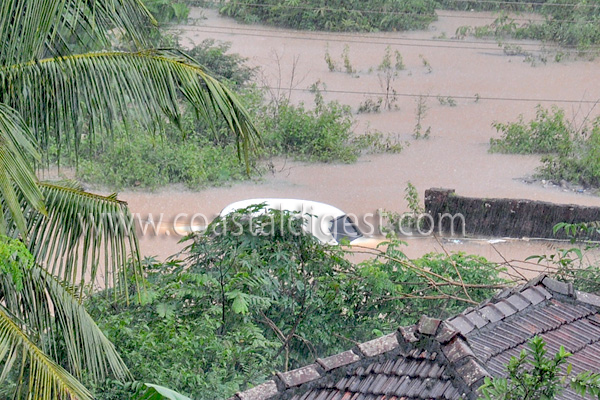
Monsoon mayhem triggers deluge in DK, Udupi

[email protected] (CD Network, Photos by Ahmed Anwar, Maunesh Vishwakarma)
August 8, 2012

Bl7Rx_6

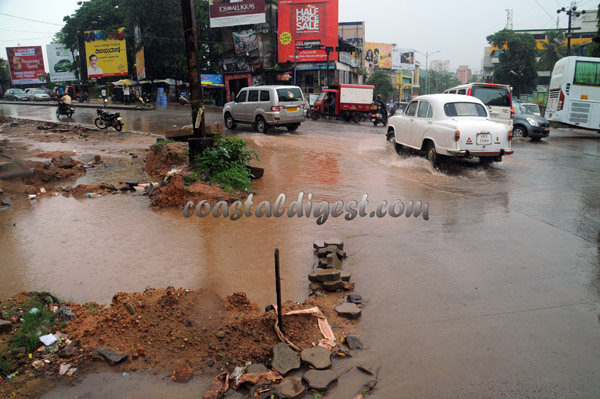
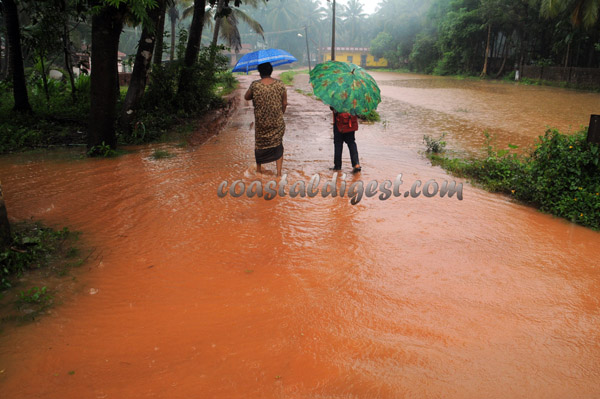
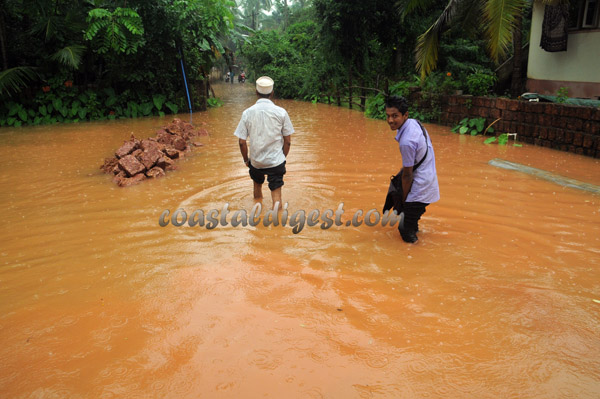
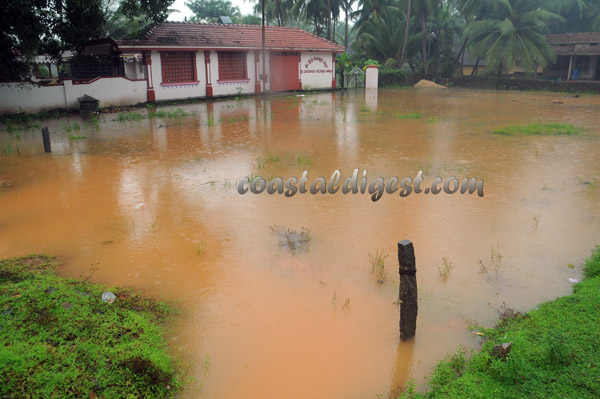
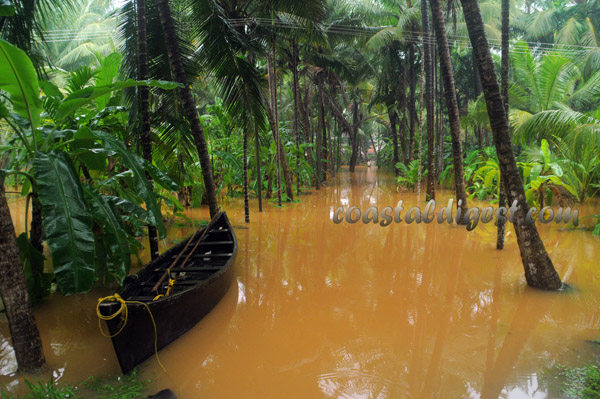
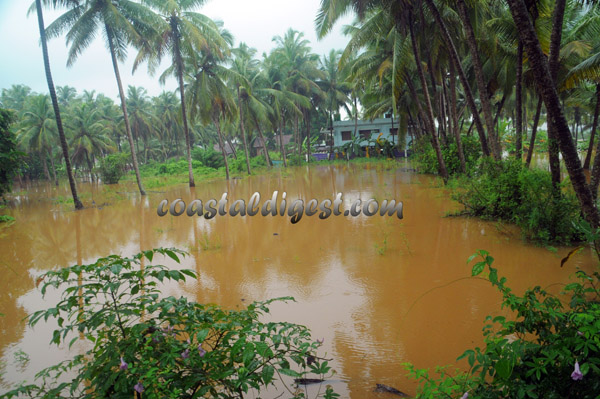
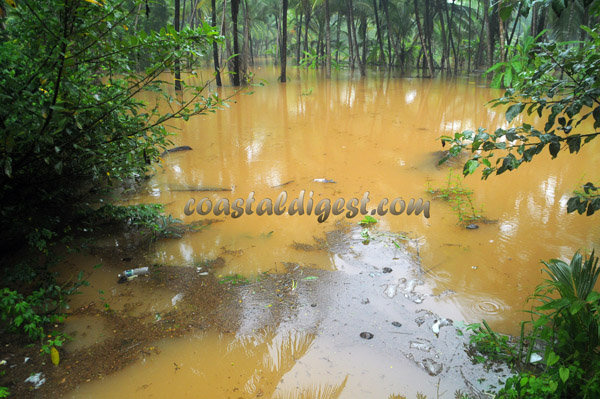
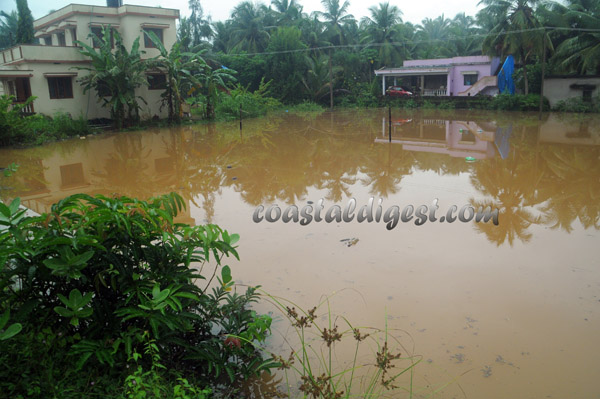
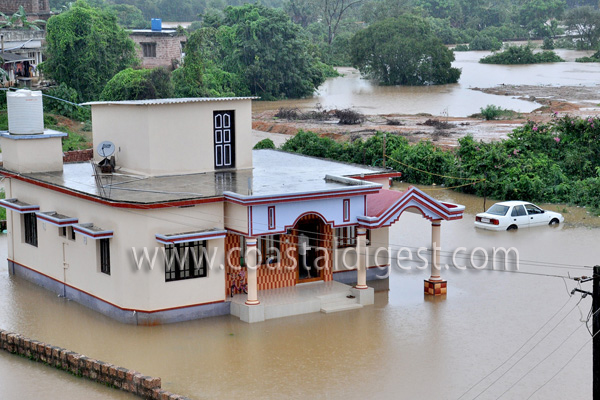
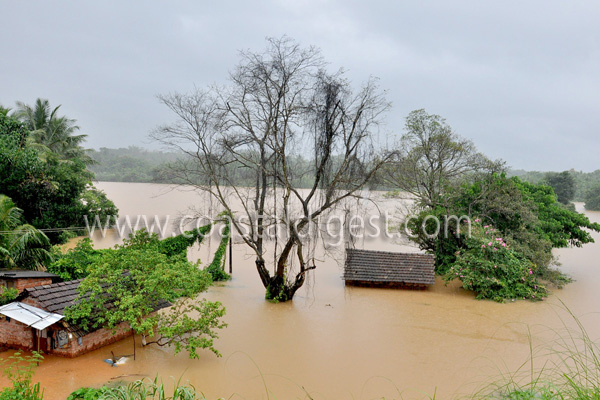
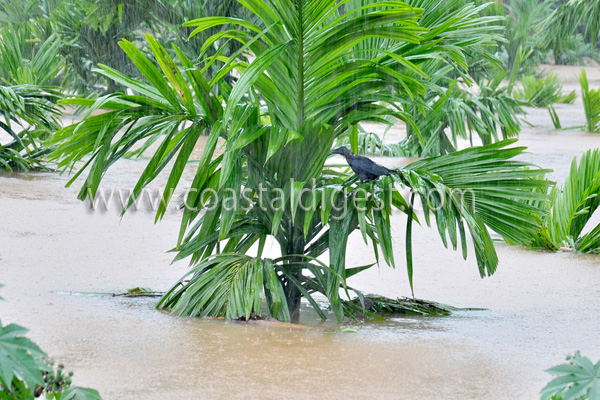
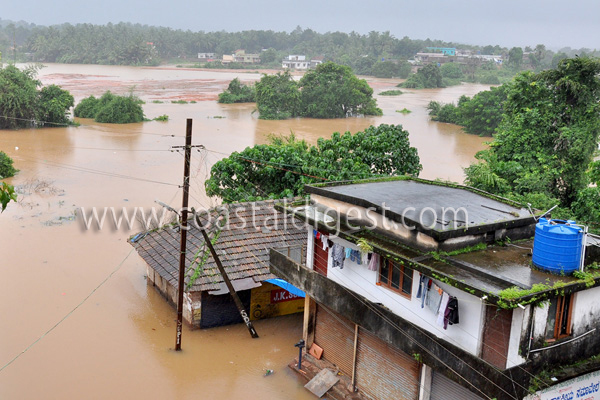
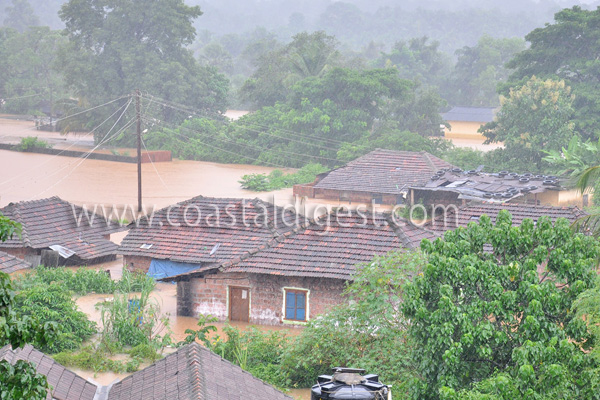
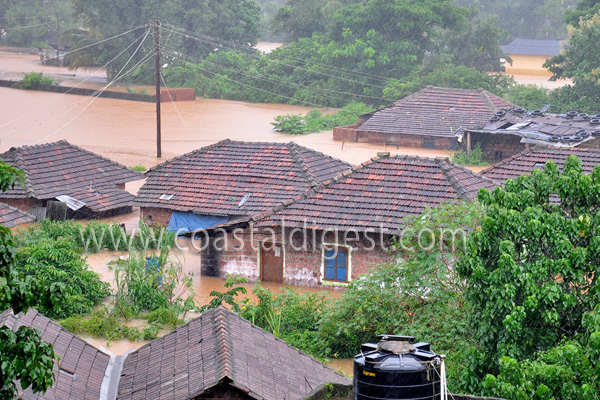
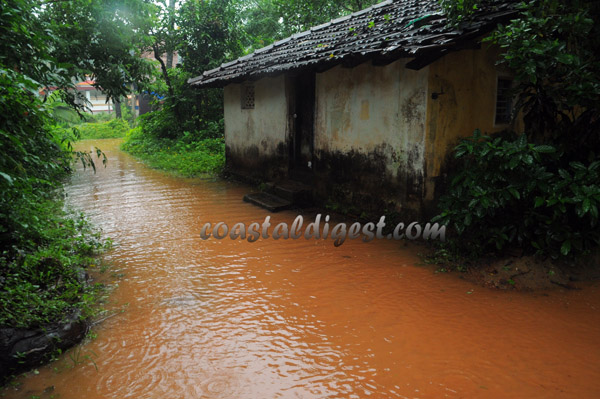
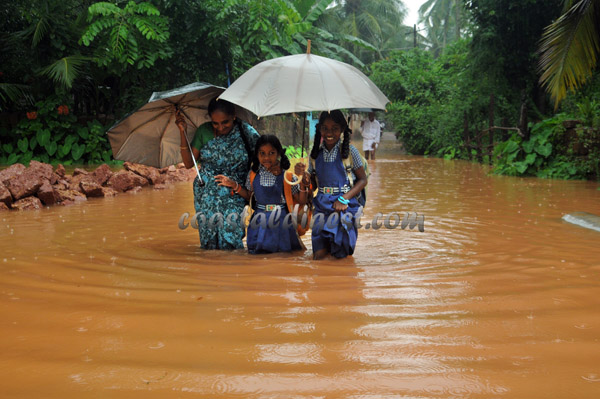
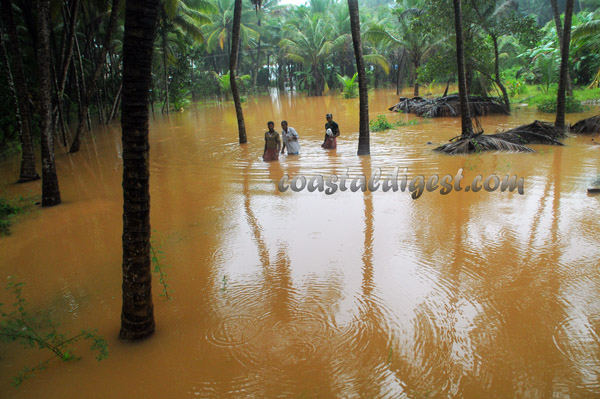
Mangalore / Udupi, August 8: The monsoon mayhem continued across the Coastal districts and some other parts of Karnataka on Wednesday. Low-lying areas were inundated on and crops were destroyed at many places following continuous rains since last few days.

As part of precautionary measures authorities on Tuesday shifted a few families to safe areas after the torrential rains inundated low-lying areas in Uppinangady, Banatwal and Subrahmanya and submerged many bridges across Dakshina Kannada.

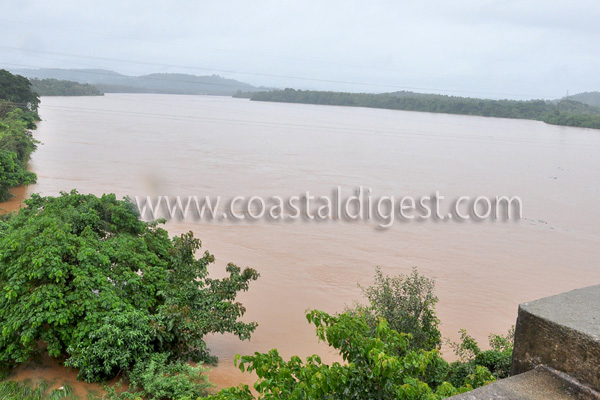
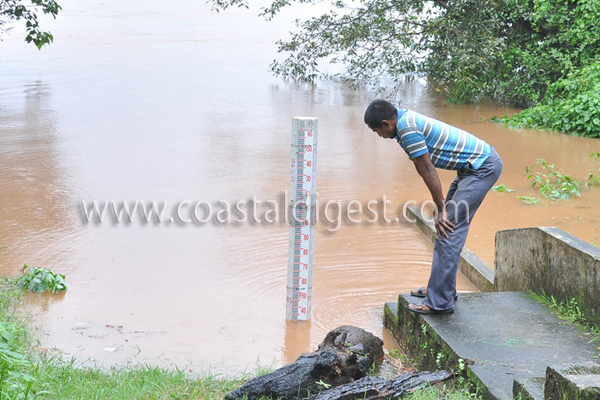
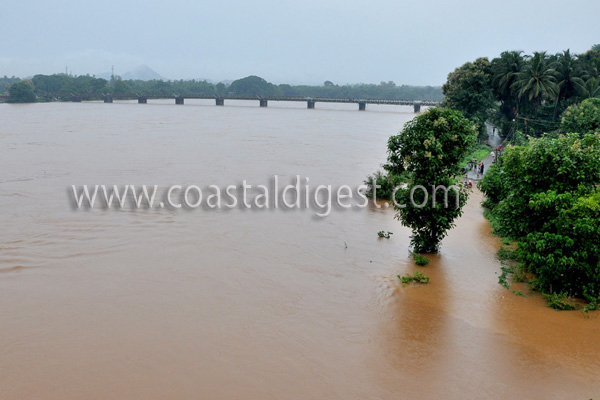
As the Nethravathi river was flowing close to the danger mark in Panemangalore, Kallapu, and Bantwal, the district administration on Tuesday placed boats in strategic locations to rush them in any emergencies while Home Guards were kept on alert.

The Nethravathi was flowing at 8.1 metres as against the danger level of 8.5 metres, said Additional Deputy Commissioner K. Dayanand. The police said areas like Bastipadpu, Madaka, Jakribettu, and Bandribettu were inundated. There had been partial damage to seven houses in Bantwal. Mr. Dayanand said a boat has been placed in Bantwal as a precaution. Water continued to flow over the bridge in Hosmat near Kadaba cutting off the road connectivity.

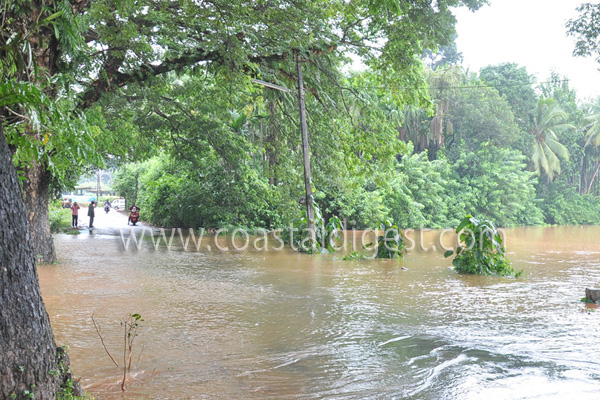
The bridge across Kumaradhara river, connecting Gundya and Subramanya, and the Hosmata bridge, connecting Uppinangady and Subramanya, were under water on Tuesday, affecting vehicular traffic.

While rivers in twin districts are overflowing, rains have flooded both the bridges linking Subramanya and Uppinangady and Subramanya and Gunday, thus cutting off the road link to the temple town. On Tuesday, Kadaba received highest rainfall of 151.3 mm followed by Belthangady—141.6 mm, Puttur—134.9 mm, Sullia—115.4 mm, Bantwal—39.6 mm, Mangalore—12.6 mm.

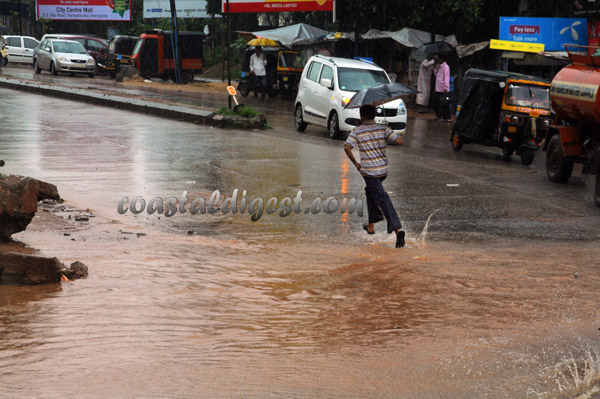
Mangalore MLA U T Khader has urged the district administration to get ready to face flood situation in the region. Meanwhile, the water-level in almost all the drains were seen reaching the danger level. In fact, owing to the lack of storm water drains, rain water was seen flowing on the road at many places in Mangalore. At the same time, sea erosion too has been intensified in Hosabettu, Chitrapura, Mukka, Sasihithlu, Ullal and Kotepura.

In Udupi

B. Abhijin, Tahsildar of Udupi, said that there were reports of sea erosion at Bada Yermal village endangering a nearby road. After assessing the situation, boulders could be placed to prevent further erosion on Wednesday, he said.

Shankara Shetty (60), a daily wage worker, was washed away at Brahmasthana in Hebri on Monday night, when he tried to cross a road which was flooded by water in River Seetha. The body was found at Nadpalu on Tuesday.

Udupi district received 34.13 mm rainfall on Tuesday. Kundapur taluk has received highest of 51 mm rain followed by Karkala—35.8 mm and Udupi—15.6 mm.

A drain at Kabbinale was washed away in Mudradi near Hebri. With this, road connectivity between Kabbinale and Muniyala was cut off and movement of vehicles were disrupted. Mudradi Gram Panchayat President Chandrashekar Bayari and ZP member Mudradi Manjunath visited the spot and said that the work on repairing the drain will be taken up at the earliest.

Sauparnika, Sumana, Edamavinahole rivers have been overflowing. Flood water had entered Heroor, Badakere, Navunda, Maravanthe, Nada, Hadavu, Senapura, Hakladi villages. At few places, roads were filled with one to four feet water.

The residents of Kelabailu, Salbudam Hadavina Athikone, Movadi, Chikkali, Thoplu were seen depending on boat to reach their destinations. Many had deserted their houses and are taking shelter in their relatives houses in the region. Flood water had entered Sri Durgaparameshwari Temple in Kamalashile in Kundapur. Two boats have been kept ready on the banks of Sauparnika river to shift the people from low lying areas, in case of increase in the water-level in rivers. Kannada kudru, Theru kudru, Kurudweepa have been inundated.

Landslides


There were landslides at five different places in Charmadi Ghat. Mr. Dayanand said steps were taken to clear the road for traffic movement at the earliest.

Due to land slips between Yedekumari and Shrivagilu stations in Mysore division Train No 16518/16517 Kannur –Yesvantpur – Kannur express Via Mangalore Central and Train no.16516 Karwar – Yesvantpur Express via Mangalore Junction is cancelled between Mangalore Junction and yesvantpur on Tuesday and Wednesday.
Rain24x7_1

Rain24x7_2

Rain24x7_3

Rain24x7_4

Rain24x7_5

Rain24x7_6

Rain24x7_8

Rain24x7_9

Rain24x7_10

Rain24x7_11

Rain24x7_12

Bl7Rx_1

Bl7Rx_2

Bl7Rx_3

Bl7Rx_4

Bl7Rx_5

Bl7Rx_9

Bl7Rx_10

Bl7Rx_11

Bl7Rx_12

Bl7Rx_13

Rain24x7_13

Rain24x7_14

Comments

Add new comment

  • Coastaldigest.com reserves the right to delete or block any comments.
  • Coastaldigset.com is not responsible for its readers’ comments.
  • Comments that are abusive, incendiary or irrelevant are strictly prohibited.
  • Please use a genuine email ID and provide your name to avoid reject.
Agencies
May 8,2020

Washington D.C., May 8: The prime time for brain development in a child's life is the first year, where the infant spends most of the time asleep. It is the time when neural connections form and sensory memories are encoded.

However, when sleep is disrupted, as occurs more often among children with autism, brain development may be affected, too.

New research led by the University of Washington finds that sleep problems in a baby's first 12 months may not only precede an autism diagnosis but also may be associated with altered growth trajectory in a key part of the brain, the hippocampus.

The study, which was published in the American Journal of Psychiatry, researchers report that in a sample of more than 400 taken of 6- to 12-month-old infants, those who were later diagnosed with autism were more likely to have had difficulty falling asleep.

It also states that this sleep difficulty was associated with altered growth trajectories in the hippocampus.

"The hippocampus is critical for learning and memory, and changes in the size of the hippocampus have been associated with poor sleep in adults and older children.

As many as 80 per cent of the children with autism spectrum disorder have sleep problems," said Annette Estes, director of the UW Autism Center and senior author of the study.

"In our clinical experience, parents have a lot of concerns about their children's sleep, and in our work on early autism intervention, we observed that sleep problems were holding children and families back," added Estes, who is also a UW professor of speech and hearing sciences.

"It could be that altered sleep is part-and-parcel of autism for some children. One clue is that behavioural interventions to improve sleep don't work for all children with autism, even when their parents are doing everything just right. This suggests that there may be a biological component to sleep problems for some children with autism," said Estes.

To consider links among sleep, brain development, and autism, researchers at the IBIS Network looked at MRI scans of 432 infants, surveyed parents about sleep patterns, and measured cognitive functioning using a standardized assessment.

At the outset of the study, infants were classified according to their risk for developing autism: Those who were at higher risk of developing autism -- about two-thirds of the study sample -- had an older sibling who had already been diagnosed.

Infant siblings of children with autism have a 20 per cent chance of developing autism spectrum disorder -- a much higher risk than children in the general population.

In the current study, 127 of the 432 infants were identified as "low risk" at the time the MRI scans were taken because they had no family history of autism.

They later evaluated all the participants at 24 months of age to determine whether they had developed autism. Of the roughly 300 children originally considered "high familial risk," 71 were diagnosed with autism spectrum disorder at that age.

Problems with sleep were more common among the infants later diagnosed with an autism spectrum disorder, as were larger hippocampi. No other subcortical brain structures were affected, including the amygdala, which is responsible for certain emotions and aspects of memory, or the thalamus, a signal transmitter from the spinal cord to the cerebral cortex.

The authors note that while parents reported more sleep difficulties among infants who developed autism compared to those who did not, the differences were very subtle and only observed when looking at group averages across hundreds of infants.

Sleep patterns in the first years of life change rapidly as infants transition from sleeping around the clock to a more adult-like sleep/wake cycle. Until further research is completed, Estes said, it is not possible to interpret challenges with sleep as an early sign of increased risk for autism.

Comments

Add new comment

  • Coastaldigest.com reserves the right to delete or block any comments.
  • Coastaldigset.com is not responsible for its readers’ comments.
  • Comments that are abusive, incendiary or irrelevant are strictly prohibited.
  • Please use a genuine email ID and provide your name to avoid reject.
Agencies
June 30,2020

Washington, Jun 30: Researchers in China have discovered a new type of swine flu that is capable of triggering a pandemic, according to a study published Monday in the US science journal PNAS.

Named G4, it is genetically descended from the H1N1 strain that caused a pandemic in 2009.

It possesses "all the essential hallmarks of being highly adapted to infect humans," say the authors, scientists at Chinese universities and China's Center for Disease Control and Prevention.

The researchers then carried out various experiments including on ferrets, which are widely used in flu studies because they experience similar symptoms to humans -- principally fever, coughing and sneezing. 

G4 was observed to be highly infectious, replicating in human cells and causing more serious symptoms in ferrets than other viruses.

Tests also showed that any immunity humans gain from exposure to seasonal flu does not provide protection from G4.

According to blood tests which showed up antibodies created by exposure to the virus, 10.4 percent of swine workers had already been infected.

The tests showed that as many as 4.4 percent of the general population also appeared to have been exposed.

The virus has therefore already passed from animals to humans but there is no evidence yet that it can be passed from human to human -- the scientists' main worry.

"It is of concern that human infection of G4 virus will further human adaptation and increase the risk of a human pandemic," the researchers wrote.

The authors called for urgent measures to monitor people working with pigs.

"The work comes as a salutary reminder that we are constantly at risk of new emergence of zoonotic pathogens and that farmed animals, with which humans have greater contact than with wildlife, may act as the source for important pandemic viruses," said James Wood, head of the department of veterinary medicine at Cambridge University.

A zoonotic infection is caused by a pathogen that has jumped from a non-human animal into a human.

Comments

Add new comment

  • Coastaldigest.com reserves the right to delete or block any comments.
  • Coastaldigset.com is not responsible for its readers’ comments.
  • Comments that are abusive, incendiary or irrelevant are strictly prohibited.
  • Please use a genuine email ID and provide your name to avoid reject.
News Network
January 4,2020

Mangalore, Jan 4: Writer-Researcher Dr Indira Heggade has been elected as the president of Mangaluru Taluk Sahitya Sammelan, which will be held on January 29 at St Agnes College in the City.

Dr Indira Heggade has brought out three stories, four novels and one poetry. She co-wrote 'Guttininda Sainika Jagattige' with SR Heggade.

Also, she translated 'Bantaru Vandu Samajo Samskrutika Adhyana' into English.

She is the recipient of various award given by literary and cultural organisations of Karnataka, including Janapada Academy Award, and Rani Abbakka Award.

Indira Heggade, along with receiving several awards in foreign nations, honoured with Sahitya Academy Award, Kamana Rangaswamy Dattinidhi Awards.

Comments

Add new comment

  • Coastaldigest.com reserves the right to delete or block any comments.
  • Coastaldigset.com is not responsible for its readers’ comments.
  • Comments that are abusive, incendiary or irrelevant are strictly prohibited.
  • Please use a genuine email ID and provide your name to avoid reject.