Monsoon mayhem triggers deluge in DK, Udupi

[email protected] (CD Network, Photos by Ahmed Anwar, Maunesh Vishwakarma)
August 8, 2012

Bl7Rx_6

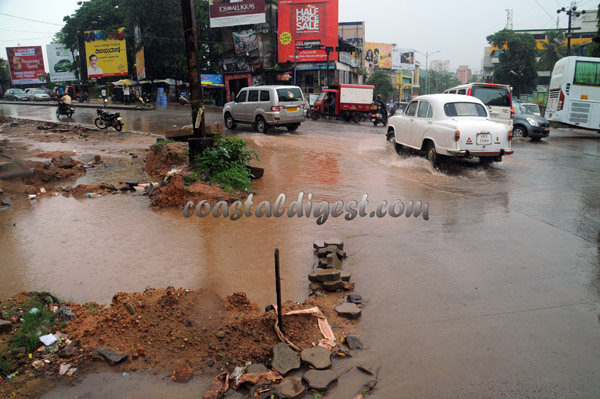
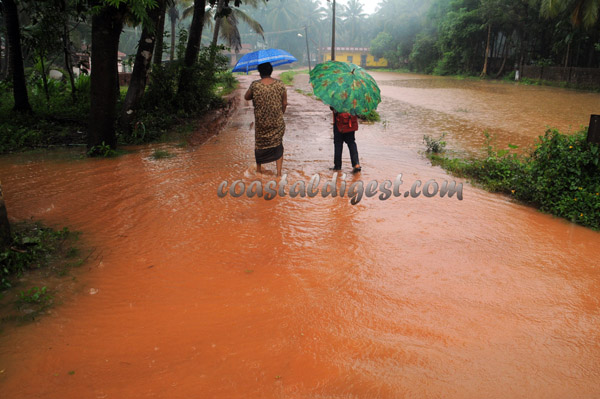
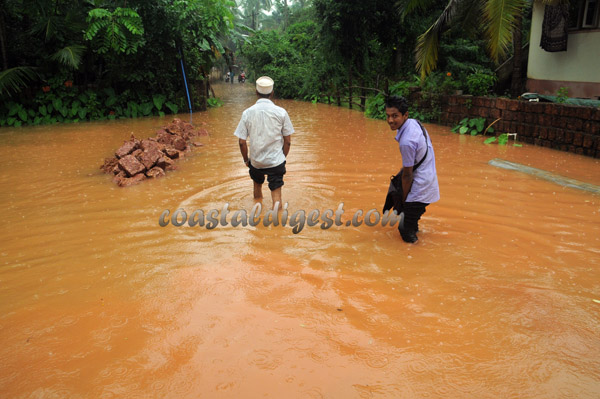
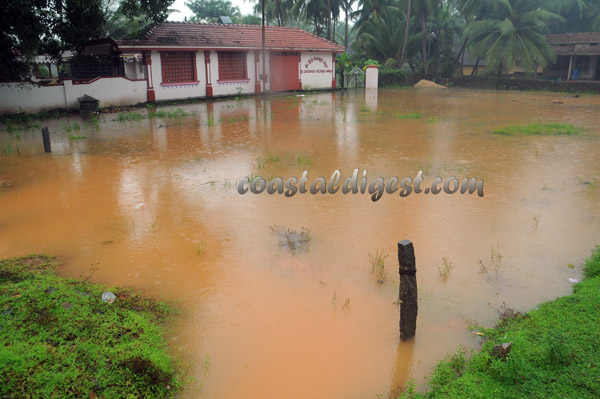
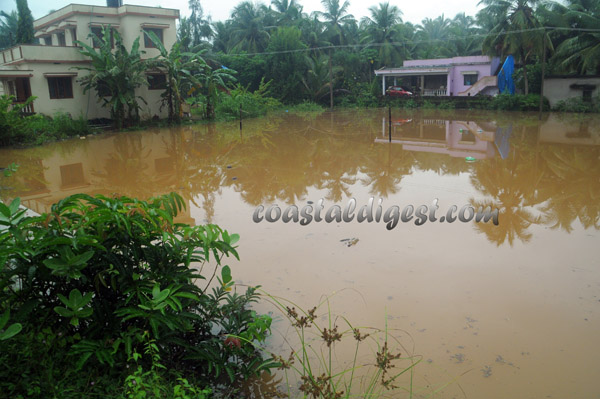
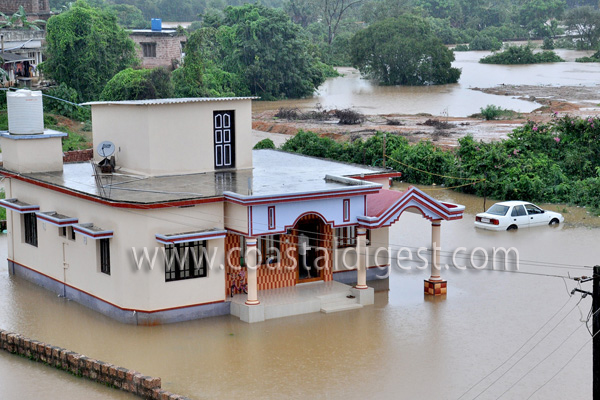
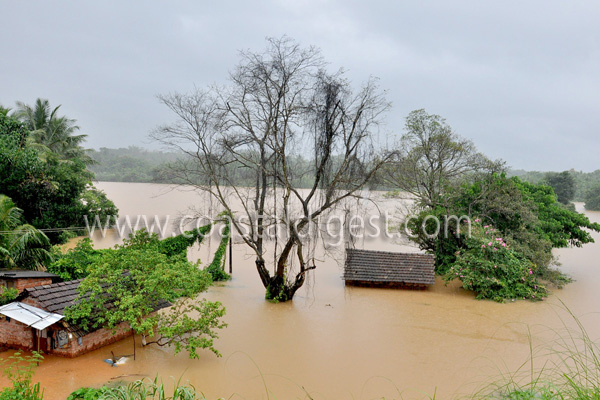
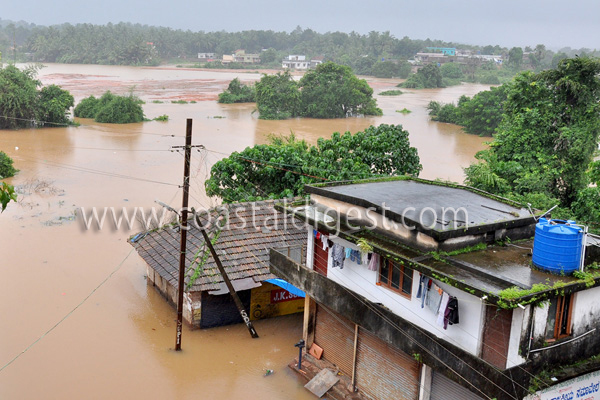
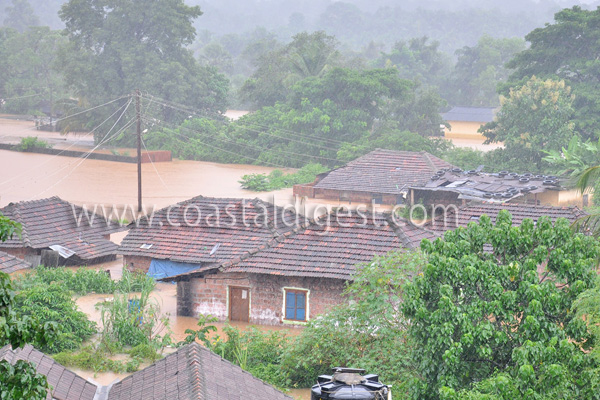
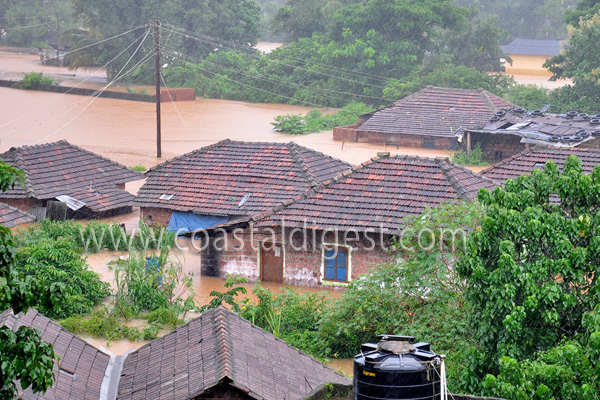
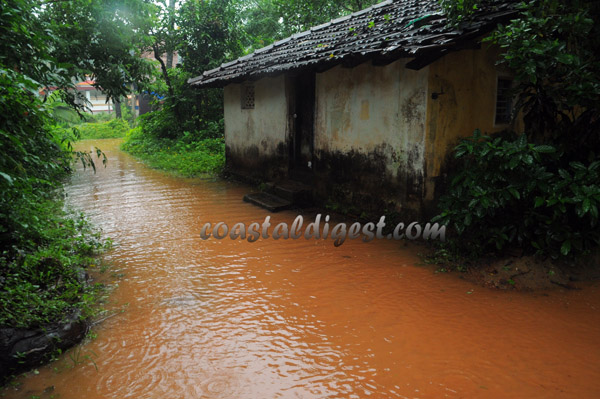
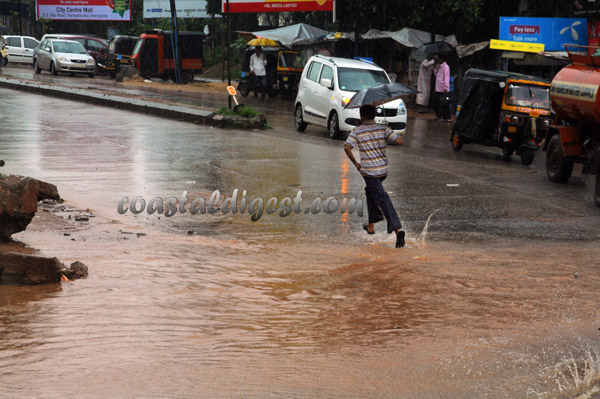
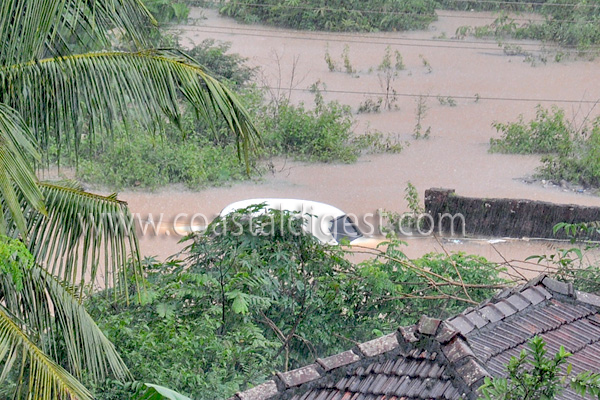
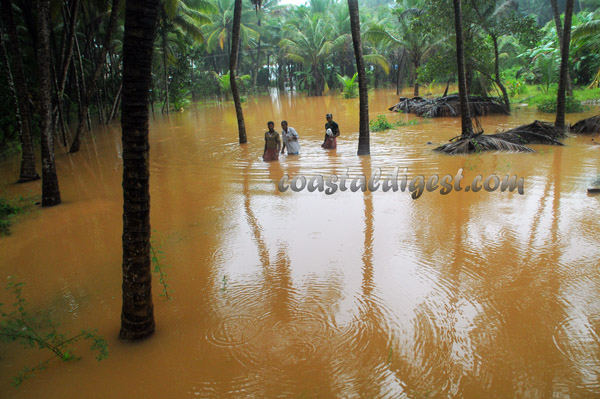
Mangalore / Udupi, August 8: The monsoon mayhem continued across the Coastal districts and some other parts of Karnataka on Wednesday. Low-lying areas were inundated on and crops were destroyed at many places following continuous rains since last few days.

As part of precautionary measures authorities on Tuesday shifted a few families to safe areas after the torrential rains inundated low-lying areas in Uppinangady, Banatwal and Subrahmanya and submerged many bridges across Dakshina Kannada.

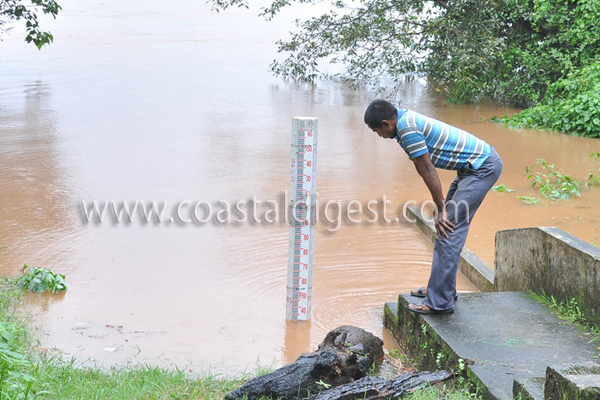
As the Nethravathi river was flowing close to the danger mark in Panemangalore, Kallapu, and Bantwal, the district administration on Tuesday placed boats in strategic locations to rush them in any emergencies while Home Guards were kept on alert.

The Nethravathi was flowing at 8.1 metres as against the danger level of 8.5 metres, said Additional Deputy Commissioner K. Dayanand. The police said areas like Bastipadpu, Madaka, Jakribettu, and Bandribettu were inundated. There had been partial damage to seven houses in Bantwal. Mr. Dayanand said a boat has been placed in Bantwal as a precaution. Water continued to flow over the bridge in Hosmat near Kadaba cutting off the road connectivity.

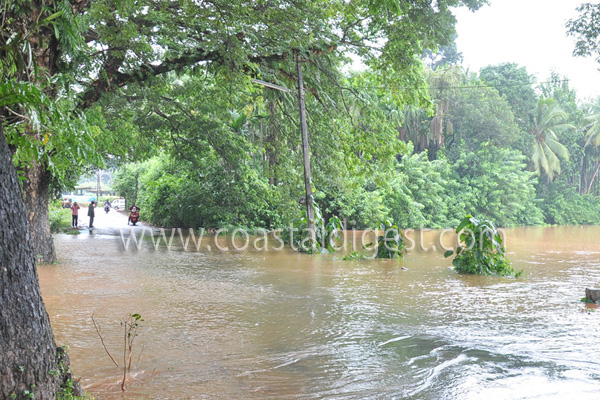
The bridge across Kumaradhara river, connecting Gundya and Subramanya, and the Hosmata bridge, connecting Uppinangady and Subramanya, were under water on Tuesday, affecting vehicular traffic.

While rivers in twin districts are overflowing, rains have flooded both the bridges linking Subramanya and Uppinangady and Subramanya and Gunday, thus cutting off the road link to the temple town. On Tuesday, Kadaba received highest rainfall of 151.3 mm followed by Belthangady—141.6 mm, Puttur—134.9 mm, Sullia—115.4 mm, Bantwal—39.6 mm, Mangalore—12.6 mm.

Mangalore MLA U T Khader has urged the district administration to get ready to face flood situation in the region. Meanwhile, the water-level in almost all the drains were seen reaching the danger level. In fact, owing to the lack of storm water drains, rain water was seen flowing on the road at many places in Mangalore. At the same time, sea erosion too has been intensified in Hosabettu, Chitrapura, Mukka, Sasihithlu, Ullal and Kotepura.

In Udupi

B. Abhijin, Tahsildar of Udupi, said that there were reports of sea erosion at Bada Yermal village endangering a nearby road. After assessing the situation, boulders could be placed to prevent further erosion on Wednesday, he said.

Shankara Shetty (60), a daily wage worker, was washed away at Brahmasthana in Hebri on Monday night, when he tried to cross a road which was flooded by water in River Seetha. The body was found at Nadpalu on Tuesday.

Udupi district received 34.13 mm rainfall on Tuesday. Kundapur taluk has received highest of 51 mm rain followed by Karkala—35.8 mm and Udupi—15.6 mm.

A drain at Kabbinale was washed away in Mudradi near Hebri. With this, road connectivity between Kabbinale and Muniyala was cut off and movement of vehicles were disrupted. Mudradi Gram Panchayat President Chandrashekar Bayari and ZP member Mudradi Manjunath visited the spot and said that the work on repairing the drain will be taken up at the earliest.

Sauparnika, Sumana, Edamavinahole rivers have been overflowing. Flood water had entered Heroor, Badakere, Navunda, Maravanthe, Nada, Hadavu, Senapura, Hakladi villages. At few places, roads were filled with one to four feet water.

The residents of Kelabailu, Salbudam Hadavina Athikone, Movadi, Chikkali, Thoplu were seen depending on boat to reach their destinations. Many had deserted their houses and are taking shelter in their relatives houses in the region. Flood water had entered Sri Durgaparameshwari Temple in Kamalashile in Kundapur. Two boats have been kept ready on the banks of Sauparnika river to shift the people from low lying areas, in case of increase in the water-level in rivers. Kannada kudru, Theru kudru, Kurudweepa have been inundated.

Landslides


There were landslides at five different places in Charmadi Ghat. Mr. Dayanand said steps were taken to clear the road for traffic movement at the earliest.

Due to land slips between Yedekumari and Shrivagilu stations in Mysore division Train No 16518/16517 Kannur –Yesvantpur – Kannur express Via Mangalore Central and Train no.16516 Karwar – Yesvantpur Express via Mangalore Junction is cancelled between Mangalore Junction and yesvantpur on Tuesday and Wednesday.

Rain24x7_1

Rain24x7_2

Rain24x7_3

Rain24x7_4

Rain24x7_5

Rain24x7_6

Rain24x7_8

Rain24x7_9

Rain24x7_10

Rain24x7_11

Rain24x7_12

Bl7Rx_1

Bl7Rx_2

Bl7Rx_3

Bl7Rx_4

Bl7Rx_5

Bl7Rx_9

Bl7Rx_10

Bl7Rx_11

Bl7Rx_12

Bl7Rx_13

Rain24x7_13

Rain24x7_14

Comments

Add new comment

  • Coastaldigest.com reserves the right to delete or block any comments.
  • Coastaldigset.com is not responsible for its readers’ comments.
  • Comments that are abusive, incendiary or irrelevant are strictly prohibited.
  • Please use a genuine email ID and provide your name to avoid reject.
News Network
February 4,2020

Bengaluru, Feb 4: The possibility of defeated MLA CP Yogeshwar being inducted into chief minister BS Yediyurappa’s cabinet is causing ripples within the ruling BJP, with many legislators, especially from Kalyana-Karnataka region, raising a banner of revolt.

Several MLAs led by Surapur legislator Narasimha Nayak, also known as Raju Gouda, held a meeting at the Legislators Home on Monday and voiced their opposition.

"When there are more than two dozen MLAs aspiring for a cabinet berth, making a former MLA a minister is beyond logic," Gouda said. "We will convey our feelings to Yediyurappa and state BJP president Nalin Kumar Kateel." Murugesh Nirani, Paranna Munavalli, Rajkumar Patil, Dattatreya Patil Revoor, Basavaraj Mattimud are among others who attended the meeting. MP Renukacharya, political secretary to the CM and Honnali MLA, was also present at the meeting. "Some more MLAs will join us when we meet again tomorrow," Gouda said.

The MLAs highlighted the issue of caste and regional imbalance in the council of ministers to further their cause. With four from Bengaluru and three from Belagavi district set to take oath on February 6, the share of MLAs from these districts in the cabinet will rise to seven and five respectively. Currently, 16 districts have no representation.

Sources say Yediyurappa and BJP’s national leadership decided to reward Yogeshwar with a cabinet berth for his "active" role in getting 17 Congress-JD(S) MLAs to resign and join the BJP, enabling the party to grab power. The party also believes he has the potential to become the Vokkaliga face of the BJP in the Old Mysuru region, where the party’s organisation is weak.

If Yogeshwar is inducted, he will be the second former MLA to make it to Yediyurappa cabinet after deputy CM Laxman Savadi, who lost the 2018 assembly polls. Several party MLAs were unhappy with Savadi’s elevation and are now upping the ante against the party leadership.

"Let Yogeshwar be made Rajya Sabha or council member. We have no problem. But making him minister is not acceptable. If they want to make defeated MLAs ministers, then why not AH Vishwanath and MTB Nagaraj, whose sacrifices brought BJP to power?" said Gouda.

Reports say Yediyurappa has promised Vishwanath and Nagaraj, the disqualified MLAs who lost the bypolls, that they would be made ministers in June. Both met Yediyurappa and secured this assurance. The two were demanding that they be inducted into the cabinet on Thursday.

Meanwhile, Vijayapura MLA Basavanagouda Patil Yatnal urged the CM to evaluate the performance of existing ministers and drop those found non-performing. "Many ministers don’t even come to the Vidhana Soudha. What is the use of having such ministers?" he asked.

Yediyurappa also continued to face pressure to induct Athani MLA Mahesh Kumatalli into the cabinet. The Jarkiholi brothers, Ramesh and Balachandra met Yediyurappa separately on Monday with a request to make Kumatalli, their confidant, a minister.

Comments

Add new comment

  • Coastaldigest.com reserves the right to delete or block any comments.
  • Coastaldigset.com is not responsible for its readers’ comments.
  • Comments that are abusive, incendiary or irrelevant are strictly prohibited.
  • Please use a genuine email ID and provide your name to avoid reject.
News Network
July 31,2020

Bengaluru, Jul 31: Gyms in Bengaluru carried out sanitation work on Thursday following the Centre's nod to reopen gyms from August 5, after several weeks of COVID-induced lockdowns.

"We are taking all the precautionary measures prescribed by the government and will follow the guidelines very strictly. A thermal scanner, oximeter and hand sanitizers have been placed at the entrance of the gym. 

We request all other gym owners also to follow the guidelines strictly to keep their members safe and healthy," said Prasad Kumar, a gym owner in Bangalore.

He added, "The last few months have been very difficult for us gym owners and fitness instructors. We are very grateful to the government for allowing us to re-open. 

We are going to be very cautious when we open. Even before this COVID-19 pandemic, we used to sanitise all the equipment before and after every use so hopefully, this won't be too difficult for us. We are getting rid of the air conditioners to allow cross ventilation and open the space a little more."

According to Chandu Gowda, an actor and frequenter of the gym, working out at home was not the same as working out in the gym with the proper equipment.

"I'm very glad that I get to come back and work out as I used to before this lockdown. For an actor, working out is extremely important, not just for my physical health but also mental health. 

Doing exercises at home is never as good as exercising in a space dedicated to one purpose. I hope other members of the gym follow the rules and regulations religiously," Gowda said.

Comments

Add new comment

  • Coastaldigest.com reserves the right to delete or block any comments.
  • Coastaldigset.com is not responsible for its readers’ comments.
  • Comments that are abusive, incendiary or irrelevant are strictly prohibited.
  • Please use a genuine email ID and provide your name to avoid reject.
Wafa Sultana
April 4,2020

Over the last couple of days when the world was occupied with unifying efforts to fight the deadly Covid19 pandemic, sections of Indian media provided viewers a familiar scapegoat – the Indian Muslims – who are often stereotyped as a community being constantly at loggerheads with the citizenry and the State. Biased media channels were quick to resort to blaming the entire Muslim community for the spread of the disease in the country, thanks to an ill-timed Tablighi Jamaat gathering at its international headquarters in Delhi’s Nizamuddin. Unsurprisingly, the opprobrium was also marked by a sudden spike in WhatsApp forwards of videos with people wearing skullcaps licking spoons and performing Sufi breathing rituals, suggesting some sort of wild conspiracy on the part of the community to spread the virus.  Some media channels were quick to formulate, hypothesize and provide loose definitions of a newly discovered form of Jihad i.e. ‘Corona Jihad ’ thereby vilifying the Islamic faith and its followers.

While the investigation on the culpability of the organizers of the Nizamuddin event is still ongoing, there is enough information to suggest that the meeting was held before any lockdown was in force, and the problem began when there was no way of getting people out once the curfew was announced. Be that as it may, there is little doubt that organizing a meet of such a scale when there is a global pandemic smacks of gross misjudgment, and definitely the organizers should be held accountable if laws or public orders were defied. Attendees who attempt to defy quarantine measures must be dealt with strictly. However, what is alarming is that the focus and narrative have now shifted from the unfortunate event at Nizamuddin to the Tablighi Jamaat itself.

For those not familiar with the Tablighi Jamaat, the organization was founded in 1926 in Mewat by scholar Maulana Mohammad Ilyas. The Jamaat’s main objective was to get Muslim youth to learn and practice pristine Islam shorn of external influences. This is achieved through individuals dedicating time for moral and spiritual upliftment secluded from the rest of the world for a brief period of time. There is no formal membership process. More senior and experienced participants typically travel from one mosque to other delivering talks on religious topics, inviting local youth to attend and then volunteer for a spiritual retreat for a fixed number of days to a mosque in a nearby town or village to present the message to their co-religionists. Contrary to ongoing Islamophobic rhetoric, the movement does not actively proselytize. The focus is rather on getting Muslims to learn the teachings and practices of Islam.  This grassroots India-based movement has now grown to almost all countries with substantial Muslim populations. Its annual meets, or ‘ijtemas’ are among the largest Islamic congregations in the world after the annual Haj. One of the reasons for its popularity and wide network in the subcontinent and wordwide is the fact that it has eschewed the need for scholarly intervention, focusing on peer learning of fundamental beliefs and practice rather than high-falutin ideological debates. The Tablighi Jamaat also distinguishes itself from other Islamic movements through its strictly apolitical nature, with a focus on individual self-improvement rather than political mobilization. Hardships and difficulty in the world are expected to be face through ‘sabr’ (patience) and ‘dua’ (supplication),  than through quest for political power or influence. In terms of ideology, it is very much based on mainstream Sunni Islamic principles derived from the Deobandi school.

So, why is all this background important in the current context? While biased media entities have expectedly brought out their Islamophobic paraphernalia out for full display, more neutral commentators have tried to paint the Tablighi Jamaat as a fringe group and have tried to distance it from 'mainstream Muslims'. While the intent is no doubt innocent, this is a trap we must not fall into. This narrative, unfortunately, is also gaining ground due to apathy some Muslims have for the group, accusing it of being “disconnected from the realities of the world”. Unlike other Muslim organizations and movements, the Tablighi Jamat, by virtue of its political indifference, does not boast of high-profile advocates and savvy spokespersons who can defend it in mainstream or social media.  The use of adjectives such as 'outdated' and 'orthodox' by liberal columnists to describe the Jamaat feeds into the malignant attempt to change the narrative from the control of the spread of the pandemic due to the Nizamuddin gathering to 'raison d'etre' of the organization itself.

A large mainstream religious group like the Tablighi Jamaat with nearly a hundred-year history, normally considered to be peaceful, apolitical and minding its own business is now suddenly being villainized owing to unfortunate circumstances. Biased media reactions filled with disgust and hate seem to feed the Indian public conscience with a danngerous misconception - to be a nominal Muslim is okay but being a practicing one is not.  For those committed to the truth and fighting the spread of Islamophobia, the temptation to throw the entire Tablighi Jamaat under the bus must be resisted.

The writer is a lawyer and research scholar at Qatar University. Her research interests include Islamic law and politics.

Comments

zahoorahmed
 - 
Saturday, 4 Apr 2020

great article! provides a great perspective on tableeg jamat

Add new comment

  • Coastaldigest.com reserves the right to delete or block any comments.
  • Coastaldigset.com is not responsible for its readers’ comments.
  • Comments that are abusive, incendiary or irrelevant are strictly prohibited.
  • Please use a genuine email ID and provide your name to avoid reject.