


Mukesh Ambani loses Asia wealth crown to Jack Ma in $5.8 billion rout

News Network
March 10, 2020

Mar 10: Indian energy tycoon Mukesh Ambani is no longer Asia’s richest man, relinquishing the title to Jack Ma after oil prices collapsed along with global stocks.

The rout, exacerbated by mounting fears that the spread of the novel coronavirus will thrust the world into a recession, erased $5.8 billion from Ambani’s net worth on Monday and pushed him to No. 2 on the list of Asia’s richest people, according to the Bloomberg Billionaires Index. Ma, the Alibaba Group Holding Ltd. founder who relinquished the No. 1 ranking in mid-2018, is back on top with a $44.5 billion fortune, about $2.6 billion more than Ambani.

Oil plunged the most in 29 years on Monday as Saudi Arabia and Russia vowed to pump more in a struggle for market share. The slump comes just as the coronavirus is spurring the first decline in demand in more than a decade. That raises questions about whether Ambani’s flagship Reliance Industries Ltd. will be able to cut net debt to zero by early 2021, as he has pledged. The plan hinges on a proposal to sell a stake in the group’s oil and petrochemicals division to Saudi Arabian Oil Co., the world’s biggest crude producer.

While the coronavirus has curtailed some of tech giant Alibaba’s businesses, the damage has been mitigated by increased demand for its cloud computing services and mobile apps.

Reliance Industries, by comparison, has no such silver lining. The Indian conglomerate’s shares plunged 12% on Monday, the most since 2009, extending this year’s decline to 26%. Alibaba’s American depositary receipts have slipped 6.8% so far in 2020.

Ma reclaims crown after Reliance shares were pummeled in 2020.

Few of the world’s billionaires fared well in Monday’s collapse as the S&P 500 Index and Dow Jones Industrial Average each plunged more than 7.5%, the most since the 2008 financial crisis, threatening to end the longest bull market in history. But no one did worse than those whose fortunes are underpinned by oil. Wildcatter Harold Hamm’s fortune was cut almost in half to $2.4 billion and fellow oil magnate Jeff Hildebrand lost $3 billion, bumping both from Bloomberg’s 500-member wealth ranking.

In a pivot toward new businesses such as telecommunications, technology and retail, Ambani’s Reliance Industries has piled on billions of dollars of debt over the years.

It spent almost $50 billion -- most of it funded by borrowings -- to build Reliance Jio Infocomm Ltd., which became India’s No. 1 wireless carrier within about three years of its debut. As the mobile venture took off, Ambani also unveiled plans for an e-commerce empire to rival Amazon.com Inc. in India.

Addressing concerns over the liabilities, Ambani pledged in August to cut the group’s net debt to zero from about $21 billion as of last March. The Aramco deal is crucial to that plan for which Reliance Industries has valued its oil-to-chemicals division at $75 billion including debt, implying a $15 billion valuation for the 20% stake that’s for sale.

Signs of a potential delay to that deal unnerved some investors, hammering the stock since it touched a record high on Dec. 19.

Reliance Industries expected the Aramco transaction to be completed by March, but people familiar with the matter said in February that talks were still ongoing to bridge differences between the two parties over the deal’s structure.

Adding to the uncertainty, Indian Prime Minister Narendra Modi’s administration has petitioned a court to halt the proposed stake sale, threatening a key source of funds needed to pare net debt.

But Ambani, 62, may soon bounce back from the setback, said Harish H.V., managing partner at ECube Investment Advisors in Bengaluru, India.

“The game isn’t over,” he said. “Ambani has successfully built a robust business model which would keep him in the game. Moreover, his telecom business will start yielding results in coming years.”

Comments

SmR
 - 
Tuesday, 10 Mar 2020

The curses of the bank depositors savings which vanished with collapsing economy and fraudlent seems to have gradully affecting riches of Ambani's.


AU
 - 
Tuesday, 10 Mar 2020

in Holy Quran Allah says; but they plan and Allah plans, and Allah is the best planners..(Surah Al Anfal 8:30)

Add new comment

  • Coastaldigest.com reserves the right to delete or block any comments.
  • Coastaldigset.com is not responsible for its readers’ comments.
  • Comments that are abusive, incendiary or irrelevant are strictly prohibited.
  • Please use a genuine email ID and provide your name to avoid reject.
Agencies
June 18,2020

New Delhi, Jun 18: Reliance Industries Ltd on Thursday said it has sold a 2.32 per cent stake in its digital unit to Saudi Arabia's Public Investment Fund (PIF) for Rs 11,367 crore, taking the cumulative fund raising to about Rs 1.16 lakh crore in two months.

Starting with Facebook Inc on April 22, Reliance has sold almost 25 per cent of equity in Jio Platforms - the maximum reports suggest the company intends to dilute to financial investors.

The investment by Saudi sovereign wealth fund is "at an equity value of Rs 4.91 lakh crore and an enterprise value of Rs 5.16 lakh crore", the company said in a statement.

With this investment, Jio Platforms has raised Rs 115,693.95 crore from some of the leading global investment powerhouses at a time when the world is deeply impacted by the coronavirus pandemic, resulting in a recession kind of environment for the global economy.

"With the addition of PIF's investment, Jio Platforms has established partnerships with a marquee set of global financial investors, who will contribute to establishing the Digital Society vision for India," the statement said.

Jio Platforms houses India's biggest telecom firm by subscribers, Reliance Jio. With more than 388 million users, Jio has forced out several rivals and driven consolidation in the sector since entering the market in 2016 with free voice services and cut-price data.

Over the past two months, billionaire Mukesh Ambani's oil-to-telecom conglomerate has announced the sale of about $14 billion of assets, completed a Rs 53,124 crore rights issue and slowed the run rate of new investment by a quarter.

These will help Reliance meet its target of paying off Rs 1.61 lakh crore of net debt by the end of the year.
This is PIF's largest investment into the Indian economy to date.

Ambani, chairman and managing director of Reliance Industries, said, "We at Reliance have enjoyed a long and fruitful relationship with the Kingdom of Saudi Arabia for many decades. From oil economy, this relationship is now moving to strengthen India's New oil (data-driven) economy, as is evident from PIF's investment into Jio Platforms."

Yasir Al-Rumayyan, governor of PIF, commented: "We are delighted to be investing in an innovative business which is at the forefront of the transformation of the technology sector in India. We believe that the potential of the Indian digital economy is very exciting and that Jio Platforms provides us with an excellent opportunity to gain access to that growth."

"This investment will also enable us to generate significant long-term commercial returns for the benefit of Saudi Arabia's economy and our country's citizens, in line with our mandate to safeguard and grow the national wealth of the Kingdom," he said.

The transaction is subject to Indian regulatory and other customary approvals.

Morgan Stanley acted as financial advisor to Reliance Industries and AZB & Partners and Davis Polk & Wardwell acted as legal counsels.

Prior to this deal, Reliance had sold 22.38 per cent of Jio Platforms to investors including Facebook Inc, securing Rs 104,326.95 crore in eight weeks.

Facebook kicked off the party, investing Rs 43,573.62 crore for a 9.99 per cent stake on April 22. This was closely followed by a further Rs 60,753.33 crore in investment.

Silver Lake - the world's largest tech investor - bought a 1.15 per cent stake in Jio Platforms for Rs 5,665.75 crore on May 4. It invested another Rs 4,546.80 crore for additional 0.93 per cent stake on June 5, taking its total holding to 2.08 per cent
Private equity KKR and Vista Equity Partners have taken 2.32 per cent stake each for Rs 11,367 crore apiece. KKR invested in Jio Platforms on May 22 while Vista invested on May 8.

Abu Dhabi sovereign wealth fund Mubadala Investment Co picked up 1.85 per cent in Jio Platforms for Rs 9,093.60 crore on June 5. Abu Dhabi Investment Authority on June 7 invested Rs 5,683.50 crore for a 1.16 per cent stake in Jio Platforms.

On May 17, global equity firm General Atlantic picked up 1.34 per cent stake in Jio Platforms for Rs 6,598.38 crore.

Global investment firm TPG on June 13 picked up 0.93 per cent for Rs 4,546.80 crore while L Catterton bought 0.39 per cent for Rs 1,894.50 crore.

Comments

Add new comment

  • Coastaldigest.com reserves the right to delete or block any comments.
  • Coastaldigset.com is not responsible for its readers’ comments.
  • Comments that are abusive, incendiary or irrelevant are strictly prohibited.
  • Please use a genuine email ID and provide your name to avoid reject.
Agencies
July 30,2020

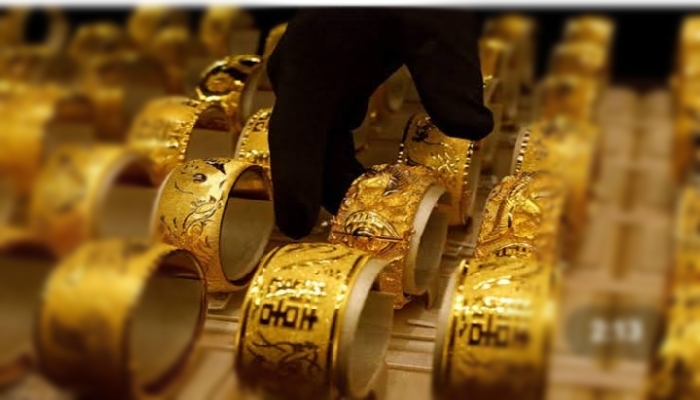
New Delhi, Jul 30: India's gold demand in 2020 is expected to fall to the lowest level in 26 years with domestic bullion prices hitting a record high and as falling disposable incomes could curtail retail purchases, the World Gold Council (WGC) said on Thursday.

Lower demand by the world's second-biggest bullion consumer could limit a rally in global prices, which hit a record high earlier this month, although it could also reduce India's trade deficit and support the ailing rupee.

"Fast rising gold prices could act as headwinds," said Somasundaram PR, the managing director of WGC's Indian operations.

Local gold futures have jumped 35% so far this year after rising a quarter in 2019.

India's gold consumption in the first half of 2020 plunged 56% on-year to 165.6 tonnes. Meanwhile, the coronavirus-triggered lockdown also slashed demand by 70% in the June quarter to 63.7 tonnes, the lowest in more than a decade, the WGC said in a report published on Thursday.

Millions of Indians have lost their jobs or taken a pay cut after the country imposed a lockdown on its 1.3 billion people to curb the spread of the virus that has infected more than 1.5 million Indians.

Consumption is generally high during the June quarter due to weddings and key festivals such as Akshaya Tritiya, but lockdown restrictions kept shoppers indoors this year.

The weak demand in the first half could drag down India's gold consumption in 2020 to the lowest since 1994, when demand stood at 415 tonnes, Somasundaram said, adding that it is still difficult to provide an estimate for full-year demand as the coronavirus crisis is still unfolding.

"Indian demand has previously jumped as much as 300 tonnes in a quarter. Latent demand could come out in the second half," Somasundaram said.

Comments

Add new comment

  • Coastaldigest.com reserves the right to delete or block any comments.
  • Coastaldigset.com is not responsible for its readers’ comments.
  • Comments that are abusive, incendiary or irrelevant are strictly prohibited.
  • Please use a genuine email ID and provide your name to avoid reject.
News Network
May 27,2020

Muzaffarpur, May 27: A toddler's vain attempt to wake up his dead mother from eternal sleep on a railway platform in Bihar's Muzaffarpur on Wednesday presented the most poignant picture of the massive migrant tragedy unfolding across several states.

A video tweeted by Sanjay Yadav, an aide to RJD leader Tejashwi Yadav, shows the child walking unsteadily up to his mother's body, tugging at the blanket placed over her, and when failing to wake her up, covering his own head with it.

As the mother still lay still, he wobbles away from her, announcements continuing in the background about the arrival and departure of trains that would bring in tens of thousands of people in a rush to get away from hunger and hardship they face in large cities that could sustain them no more.

"This small child doesn't know that the bedsheet with which he is playing is the shroud of his mother who has gone into eternal sleep. This mother died of hunger and thirst after being on a train for four days. Who is responsible for these deaths on trains? Shouldn't the opposition ask uncomfortable questions?" tweeted Yadav.

However, police had a different story to tell.

Ramakant Upadhyay, the Dy SP of the Government Railway Police in Muzaffarpur, said the incident occurred on May 25 when the migrant woman was on way to Muzaffarpur from Ahmedabad by a Shramik Special train.

He told reporters the woman, who was accompanied by her sister and brother-in-law, had died on the Madhubani bound train.

"My sister-in-law died suddenly on the train. We did not face any problem getting food or water," the officer said, quoting the deceased's brother-in-law who he did not name.

He said on getting information, poice brought down the body and sent it for postmortem.

Citing the brother-in-law of the deceased, Upadhyay said she was aged 35 years and was undergoing treatment for "some disease" for the last one year in Ahmedabad. "She was also mentally unstable," he said.

When persistently queried about the cause of death, he said,"Only doctors can tell".

A massive exodus of migrant workers is on in several parts of the country, unprecedented in magnitude since Partition.

The humanitarian crisis still unfolding on highways and railway platforms has shone light on disturbing tales of entire families walking hundreds of kilometres with little children on foot in a seemingly endless march to escape hunger.

People have been found travelling on trucks and in the hollow of concrete mixing plants, and in many cases, dying from hunger and exhaustion before reaching their destinations.

Comments

Add new comment

  • Coastaldigest.com reserves the right to delete or block any comments.
  • Coastaldigset.com is not responsible for its readers’ comments.
  • Comments that are abusive, incendiary or irrelevant are strictly prohibited.
  • Please use a genuine email ID and provide your name to avoid reject.