


Multiple exposures to anaesthesia may affect your child’s memory

Agencies
June 1, 2017

Jun 1: A recent study has found that repeated exposure to a common anaesthesia drug early in life results in visual recognition memory impairment, which emerges after the first year of life and may persist long-term.child
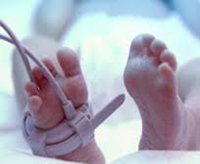
The research from the Icahn School of Medicine at Mount Sinai is among the first to address the question of whether repeated postnatal anaesthesia exposure, in and of itself, results in memory impairment in a highly translationally relevant rhesus monkey model.

Rhesus monkeys at birth are at a stage of neurodevelopment that is more similar to that of human infants than are neonatal rodents; with respect to brain growth, a six-week-old rhesus monkey corresponds to a human 6 to 12 months of age.

Because these kinds of controlled studies cannot be carried out in humans, it is essential to use a comparable animal model to discover if anaesthesia is affecting the brain. Unlike previous research, the study was conducted in the absence of a surgical procedure, co-morbidities that may necessitate surgical intervention, or the psychological stress associated with illness.

“The major strength of this study is its ability to separate anaesthesia exposure from surgical procedures, which is a potential complication in the studies conducted in children,” said researcher Mark Baxter. “Our results confirm that multiple anaesthesia exposures alone result in memory impairment in a highly translational animal model. Interestingly, the anaesthesia-exposed group had normal visual memory at six months of age. Visual memory impairment didn’t emerge until the second year of life, corresponding roughly to the age of three to six years old in humans.”

Specifically, the study team exposed 10 non-human primate subjects to a common paediatric aesthetic called sevoflurane for four hours, the length of time required for a significant surgical procedure in humans. They were exposed to the aesthetic at postnatal day 7 and then again two and four weeks later, because human data indicate that repeated anaesthesia results in a greater risk of cognitive disability relative to a single aesthetic exposure.

They found the anaesthesia-exposed infants displayed no memory impairment when tested at 6-10 months, but demonstrated significant memory impairment (reduced time looking at the novel image) after the first year of life compared with the control group.

This primate model may be used by researchers for future studies to develop a new aesthetic agent or prophylactic treatment to counteract the impact of anaesthesia on behaviour in children. The findings also suggest that additional work is required to identify the mechanisms by which anaesthetics may cause long-term changes in central nervous system function that impact behaviour.

The study is published in The British Journal of Anaesthesia.

Comments

Add new comment

  • Coastaldigest.com reserves the right to delete or block any comments.
  • Coastaldigset.com is not responsible for its readers’ comments.
  • Comments that are abusive, incendiary or irrelevant are strictly prohibited.
  • Please use a genuine email ID and provide your name to avoid reject.
Agencies
July 8,2020

Probiotics that broaden the mix of helpful bacteria in the gut may help to ease depression, say researchers.

Foods that broaden the profile of helpful bacteria in the gut are collectively known as probiotics. These "good bacteria" can be taken as supplements, or found naturally in yoghurts or fermented foods.

For the findings, the research team from the University of Brighton in the UK searched for relevant studies published in English between 2003 and 2019, which looked at the potential therapeutic contribution of pre-and probiotics in adults with depression and/or anxiety disorders.

Out of an initial haul of 71 studies, just seven met all the criteria for inclusion. All 7 investigated at least one probiotic strain; four looked at the effect of combinations of multiple strains.In all, 12 probiotic strains featured in the selected studies, primarily Lactobacillus acidophilus, Lactobacillus casei, and Bifidobacterium bifidium.

One study looked at combined pre-probiotic treatment, while one looked at prebiotic therapy by itself. The studies varied considerably in their design, methods used, and clinical considerations, but all of them concluded that probiotic supplements either alone or in combination with prebiotics may be linked to measurable reductions in depression.

And every study showed a significant fall or improvement in anxiety symptoms and clinically relevant changes in biochemical measures of anxiety or depression with probiotic or combined pre-probiotic use.

Of the 12 different probiotics investigated, 11 were potentially useful, the findings showed.'Probiotics may help reduce the production of inflammatory chemicals, such as cytokines, as is the case in inflammatory bowel disease, the researchers suggested.

"They may help direct the action of tryptophan, a chemical thought to be important in the gut-brain axis in psychiatric disorders," they added.

In this way, with a better understanding of the mechanisms, probiotics may prove to be a useful tool across a wide range of conditions," the authors wrote.

Comments

Add new comment

  • Coastaldigest.com reserves the right to delete or block any comments.
  • Coastaldigset.com is not responsible for its readers’ comments.
  • Comments that are abusive, incendiary or irrelevant are strictly prohibited.
  • Please use a genuine email ID and provide your name to avoid reject.
Agencies
June 28,2020

As the COVID-19 wave sweeps strongly across the country, including in Tamil Nadu, mental health experts say the pandemic has triggered panic attacks among those who tested positive for the virus, causing bouts of depression and even driving some to the brink of suicide.

According to experts, nervousness, fear of contamination, panic attacks, constant reassurance seeking behaviour, sleep disturbance, excessive worry, feelings of helplessness and probability of an economic slowdown are the major factors leading to depression and anxiety among the people.

Potential job losses, financial burden, uncertainty about the future and fears of running out of food and necessities add to the worries.

Online platforms too have seen a growing number of people seeking help for mental health issues, ranging from anxiety and loneliness to concerns over productivity and job loss since the outbreak of COVID-19.

Director of Institute of Mental Health here, Dr R Purna Chandrika said towards April end about 3,632 calls were received and psychiatric counselling was provided to 2,603 callers.

"We have dedicated services at our centres in the districts and the calls meant for government medical college hospitals are routed to the respective institutions," she said.

Due to heavy virus caseloads, making this city the major contributor to the state's tally, the Greater Chennai Corporation too started a free helpline to help residents cope up with stress during the pandemic.

"From the psychological perspective, we don't find a single human being who is not feeling some degree of stress or anxiety due to coronavirus. The intensity and impact varies from person to person," said Lt Col N T Rajan, director of Chennai-based Mastermind Foundation.

The organisation is involved in free counselling throughout India ever since the first case of the deadly virus was reported in the country.

The foundation's recommendation on not to deploy the vulnerable in the police force, especially those above 50 years and women personnel with children below five years for COVID-19 related duty, was accepted and implemented by the Punjab government.

Psychiatrists feel that further worsening situations could lead to severe mental health issues, even triggering suicidal tendencies.

"Further worsening depression may lead to severe mental health issues and suicidal tendencies," said Dr S Senthil Kumar, a psychiatrist.

However, not all of them require medicines, he added.

"The situation is serious. There should be counselling at three stages--on coping with the virus, how to face it if tested positive and how to face life once treated and discharged from the hospital," Rajan said.

Awareness was of paramount importance, he said and warned the pandemic could cause panic attacks while in hospital or drive them to the brink of suicide.

Tamil Nadu, one of the worst affected states with a virus count in excess of 74,000 as of Friday, has witnessed a few instances of suicides allegedly related to COVID-19.

Hari Singh, owner of popular 'Iruttu Kadai' halwa shop in Tirunelveli, allegedly died by committing suicide on Thursday after being tested positive for COVID-19. He was 80.

Earlier in May, two COVID-19 patients in their 50s allegedly committed suicide in separate instances, at the government hospitals they were admitted to for treatment.

In the city corporation limits, a three-member team comprising a psychiatrist, counsellor and a social worker work for the respective zones.

"We direct certain sections of people like those with withdrawal symptoms and people requiring pills, to visit the doctor at their corporation zonal at a specific time, for medicines," a health worker of the civic body said.

Health platform, Lybrate reported an increase of 180 per cent in online patient consultations related to mental health on its platform between March 1 and June 20 across the country.

The largest increase came from Mumbai and Delhi, followed by Pune, Ahmedabad, Chennai and Bengaluru.

The biggest jump was witnessed in the age group of 25 and 45 years.

Comments

Add new comment

  • Coastaldigest.com reserves the right to delete or block any comments.
  • Coastaldigset.com is not responsible for its readers’ comments.
  • Comments that are abusive, incendiary or irrelevant are strictly prohibited.
  • Please use a genuine email ID and provide your name to avoid reject.
Agencies
April 28,2020

As the world grapples with the impact of the novel coronavirus, daily interaction with the outside world --- public and retail spaces, restaurants, educational institutions, and even with each other has been and will continue to be reoriented prioritising personal hygiene and public health.

The sensibilities are building towards and leading to major changes in how the country's food service industry is expected to operate.

Based on a recent consumer survey by restaurant tech platform, Dineout, Indian diners are now ranking safety assurances and premier hygiene as top factors when it comes to choosing a restaurant to dine in.

The survey by Dineout conducted across 20 cities revealed that in a post-COVID-19 era, 81 per cent diners will prefer digital menus at restaurants, while 77 per cent of people will continue to want to dine out.

The survey found that 23 per cent people would prefer continuing with delivery/takeaway and online payment becomes the most preferred option with 60 per cent votes.
 
Diner's response to Contactless Dining:


Over 96 per cent demand better waitlist management
 
81 per cent consumers would rather scan a QR on their phone to place an order instead of handling physical menus or tablet-based digital menus.
 
After a dining experience, 60 per cent prefer seamless wallet-based digital payments over cash/cards 85 per cent would choose a digital valet over waiting in possibly contaminated public spaces and 84 per cent would prefer offering digital feedback over physical feedback collection.


What do people want to eat?
 
The report also revealed that most of India has been craving Pizza since the lockdown, except in Chennai, Hyderabad and Kolkata where their popular and indigenous Biryani recipes reign supreme. 
 
Which restaurants are diners waiting to go to?
 
77 per cent respondents claimed that they are waiting to dine out with friends and family once the lockdown is lifted.
 
Big Chill, Barbeque Nation and Social emerged as favourites in Delhi, while Mumbaikars picked Global Fusion, Poptates and Asia Kitchen. Bangaloreans miss going to pubs like Toit, Vapour and Barbeque Nation.
 
Aminia, Arsalan and Momo I Am emerge as the top picks in Kolkata.
 
Contrary to popular belief, Delhitties picked vegetarian over non-vegetarian food.
 
Bangaloreans and Lucknowis would rather have their drinks over food.
 
Besides the new parameters for restaurant selection, the factors deciding consumer delight have also seen a major overhaul as hygiene takes precedence. Consumers would prefer that the total number of reservations in a certain period be limited with the option to pre-select the seating, ample amounts of sanitisers at tables along with UV sanitised utensils whenever possible.
 
Hygiene ratings with detailed hygiene information, regular hygiene checks & usage of mask and disposable gloves by waiters are likely to be the new standard, with diners expecting service personnel to sanitise tables & chairs after every use.
 
Dineout recently unveiled the �contactless dining suite' to help restaurants survive and thrive in a post-COVID-19 world. The brand will also provide PPE Safety Kits to Restaurants to help ensure hygiene measures and is facilitating COVID free certification for restaurants through a licensed lab to ensure all microbiological tests are in place before restaurants restart post the lockdown.

Comments

Add new comment

  • Coastaldigest.com reserves the right to delete or block any comments.
  • Coastaldigset.com is not responsible for its readers’ comments.
  • Comments that are abusive, incendiary or irrelevant are strictly prohibited.
  • Please use a genuine email ID and provide your name to avoid reject.