


Multiple exposures to anaesthesia may affect your child’s memory

Agencies
June 1, 2017

Jun 1: A recent study has found that repeated exposure to a common anaesthesia drug early in life results in visual recognition memory impairment, which emerges after the first year of life and may persist long-term.child
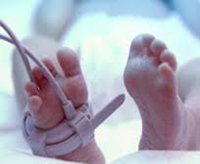
The research from the Icahn School of Medicine at Mount Sinai is among the first to address the question of whether repeated postnatal anaesthesia exposure, in and of itself, results in memory impairment in a highly translationally relevant rhesus monkey model.

Rhesus monkeys at birth are at a stage of neurodevelopment that is more similar to that of human infants than are neonatal rodents; with respect to brain growth, a six-week-old rhesus monkey corresponds to a human 6 to 12 months of age.

Because these kinds of controlled studies cannot be carried out in humans, it is essential to use a comparable animal model to discover if anaesthesia is affecting the brain. Unlike previous research, the study was conducted in the absence of a surgical procedure, co-morbidities that may necessitate surgical intervention, or the psychological stress associated with illness.

“The major strength of this study is its ability to separate anaesthesia exposure from surgical procedures, which is a potential complication in the studies conducted in children,” said researcher Mark Baxter. “Our results confirm that multiple anaesthesia exposures alone result in memory impairment in a highly translational animal model. Interestingly, the anaesthesia-exposed group had normal visual memory at six months of age. Visual memory impairment didn’t emerge until the second year of life, corresponding roughly to the age of three to six years old in humans.”

Specifically, the study team exposed 10 non-human primate subjects to a common paediatric aesthetic called sevoflurane for four hours, the length of time required for a significant surgical procedure in humans. They were exposed to the aesthetic at postnatal day 7 and then again two and four weeks later, because human data indicate that repeated anaesthesia results in a greater risk of cognitive disability relative to a single aesthetic exposure.

They found the anaesthesia-exposed infants displayed no memory impairment when tested at 6-10 months, but demonstrated significant memory impairment (reduced time looking at the novel image) after the first year of life compared with the control group.

This primate model may be used by researchers for future studies to develop a new aesthetic agent or prophylactic treatment to counteract the impact of anaesthesia on behaviour in children. The findings also suggest that additional work is required to identify the mechanisms by which anaesthetics may cause long-term changes in central nervous system function that impact behaviour.

The study is published in The British Journal of Anaesthesia.

Comments

Add new comment

  • Coastaldigest.com reserves the right to delete or block any comments.
  • Coastaldigset.com is not responsible for its readers’ comments.
  • Comments that are abusive, incendiary or irrelevant are strictly prohibited.
  • Please use a genuine email ID and provide your name to avoid reject.
Agencies
June 24,2020

New Delhi, Jun 24: Expanding the testing criterion for coronavirus, the Indian Council of Medical Research has said it should be made widely available to all symptomatic individuals across the country.

"Since test, track and treat' is the only way to prevent spread of infection and save lives, it is imperative that testing should be made widely available to all symptomatic individuals in every part of the country and contact tracing mechanisms for containment of infection are further strengthened," it said in an advisory on 'Newer Additional Strategies for COVID-19 Testing' on Tuesday.

In its revised testing strategy for COVID-19 issued on May 18, the Indian Council of Medical Research (ICMR) had advised testing for all symptomatic Influenza-like illness (ILI) among returnees and migrants within seven days of illness.

All hospitalised patients who develop ILI symptoms, symptomatic individuals living within hotspots or containment zones and healthcare and frontline workers involved in containment and mitigation of coronavirus were also advised testing.

The apex health research body has also advised authorities to enable all government and private hospitals, offices and public sector units to perform antibody-based COVID-19 testing for surveillance to help allay fears and anxiety of healthcare workers and office employees.

The earlier advisories on rapid antibody testing advisories had focused on areas reporting clusters (containment zones), large migration gatherings/evacuees centers and testing of symptomatic ILI individuals at facility level.

Besides, the ICMR on Tuesday also recommended deployment of rapid antigen detection tests for COVID-19 in combination with RT-PCR tests in all containment zones, all central and state government medical colleges and government hospitals, all private hospitals approved by the National Accreditation Board for Hospitals and Healthcare (NABH), all NABL-accredited and ICMR approved private labs, for COVID-19 testing.

All hospitals, laboratories and state governments intending to perform the point-of-care antigen tests need to register with ICMR to obtain the login credentials for data entry.

"ICMR advises all state governments, public and private institutions concerned to take required steps to scale up testing for COVID-19 by deploying combination of various tests as advised," the advisory added.

Comments

Add new comment

  • Coastaldigest.com reserves the right to delete or block any comments.
  • Coastaldigset.com is not responsible for its readers’ comments.
  • Comments that are abusive, incendiary or irrelevant are strictly prohibited.
  • Please use a genuine email ID and provide your name to avoid reject.
Agencies
July 7,2020

The World Health Organization (WHO) is reviewing a report that suggested its advice on the novel coronavirus needs updating after some scientists told the New York Times there was evidence the virus could be spread by tiny particles in the air.

The WHO says the Covid-19 disease spreads primarily through small droplets, which are expelled from the nose and mouth when an infected person breaths them out in coughs, sneezes, speech or laughter and quickly sink to the ground.

In an open letter to the Geneva-based agency, 239 scientists in 32 countries outlined the evidence they say shows that smaller exhaled particles can infect people who inhale them, the newspaper said on Saturday.

Because those smaller particles can linger in the air longer, the scientists - who plan to publish their findings in a scientific journal this week - are urging WHO to update its guidance, the Times said.

"We are aware of the article and are reviewing its contents with our technical experts," WHO spokesman Tarik Jasarevic said in an email reply on Monday to a Reuters request for comment.

The extent to which the coronavirus can be spread by the so-called airborne or aerosol route - as opposed to by larger droplets in coughs and sneezes - remains disputed.

Any change in the WHO's assessment of the risk of transmission could affect its current advice on keeping one-metre physical distancing. Governments, which also rely on the agency for guidance policy, may also have to adjust public health measures aimed at curbing the spread of the virus.

"Especially in the last couple of months, we have been stating several times that we consider airborne transmission as possible but certainly not supported by solid or even clear evidence," Benedetta Allegranzi, the WHO's technical lead for infection prevention and control, was quoted as saying in the New York Times.

WHO guidance to health workers, dated June 29, says that SARS-CoV-2, the virus that causes Covid-19, is primarily transmitted between people through respiratory droplets and on surfaces.

But airborne transmission via smaller particles is possible in some circumstances, such as when performing intubation and aerosol-generating procedures, it says.

Medical workers performing such procedures should wear heavy-duty N95 respiratory masks and other protective equipment in an adequately ventilated room, the WHO says.

Officials at South Korea's Centers for Disease Control said on Monday they were continuing to discuss various issues about Covid-19, including the possible airborne transmission. They said more investigations and evidence were needed.

Comments

Add new comment

  • Coastaldigest.com reserves the right to delete or block any comments.
  • Coastaldigset.com is not responsible for its readers’ comments.
  • Comments that are abusive, incendiary or irrelevant are strictly prohibited.
  • Please use a genuine email ID and provide your name to avoid reject.
Agencies
April 17,2020

Washington DC, Apr 17: In recent research, scientists have linked the emotional, social and psychiatric problems in children and adolescents with higher levels of genetic vulnerability for adult depression. The study implies that the genetics passed from parents may be linked with psychiatric problems in children and adolescents and may also leading to depression in adults.

University of Queensland scientists made the finding while analysing the genetic data of more than 42,000 children and adolescents from seven cohorts across Finland, the Netherlands, Norway, Sweden and the UK.

Professor Christel Middeldorp said that researchers have also found a link with a higher genetic vulnerability for insomnia, neuroticism and body mass index.

"By contrast, study participants with higher genetic scores for educational attainment and emotional well-being were found to have reduced childhood problems," Professor Middeldorp said.

"We calculated a person's level of genetic vulnerability by adding up the number of risk genes they had for a specific disorder or trait and then made adjustments based on the level of importance of each gene We found the relationship was mostly similar across ages," Middeldorp added.

The results indicate there are shared genetic factors that affect a range of psychiatric and related traits across a person's lifespan.

Middeldorp said that around 50 per cent of children and adolescents with psychiatric problems, such as attention deficit hyperactivity disorder (ADHD), continue to experience mental disorders as adults, and are at risk of disengaging with their school community among other social and emotional problems.

"Our findings are important as they suggest this continuity between childhood and adult traits is partly explained by genetic risk," the Professor said.

"Individuals at risk of being affected should be the focus of attention and targeted treatment," Middeldorp continued.

"Although the genetic vulnerability is not accurate enough at this stage to make individual predictions about how a person's symptoms will develop over time, it may become so in the future, in combination with other risk factors. And, this may support precision medicine by providing targeted treatments to children at the highest risk of persistent emotional and social problems," Middeldorp added.

Comments

Add new comment

  • Coastaldigest.com reserves the right to delete or block any comments.
  • Coastaldigset.com is not responsible for its readers’ comments.
  • Comments that are abusive, incendiary or irrelevant are strictly prohibited.
  • Please use a genuine email ID and provide your name to avoid reject.