


Multiple exposures to anaesthesia may affect your child’s memory

Agencies
June 1, 2017

Jun 1: A recent study has found that repeated exposure to a common anaesthesia drug early in life results in visual recognition memory impairment, which emerges after the first year of life and may persist long-term.child
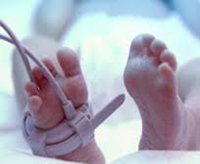
The research from the Icahn School of Medicine at Mount Sinai is among the first to address the question of whether repeated postnatal anaesthesia exposure, in and of itself, results in memory impairment in a highly translationally relevant rhesus monkey model.

Rhesus monkeys at birth are at a stage of neurodevelopment that is more similar to that of human infants than are neonatal rodents; with respect to brain growth, a six-week-old rhesus monkey corresponds to a human 6 to 12 months of age.

Because these kinds of controlled studies cannot be carried out in humans, it is essential to use a comparable animal model to discover if anaesthesia is affecting the brain. Unlike previous research, the study was conducted in the absence of a surgical procedure, co-morbidities that may necessitate surgical intervention, or the psychological stress associated with illness.

“The major strength of this study is its ability to separate anaesthesia exposure from surgical procedures, which is a potential complication in the studies conducted in children,” said researcher Mark Baxter. “Our results confirm that multiple anaesthesia exposures alone result in memory impairment in a highly translational animal model. Interestingly, the anaesthesia-exposed group had normal visual memory at six months of age. Visual memory impairment didn’t emerge until the second year of life, corresponding roughly to the age of three to six years old in humans.”

Specifically, the study team exposed 10 non-human primate subjects to a common paediatric aesthetic called sevoflurane for four hours, the length of time required for a significant surgical procedure in humans. They were exposed to the aesthetic at postnatal day 7 and then again two and four weeks later, because human data indicate that repeated anaesthesia results in a greater risk of cognitive disability relative to a single aesthetic exposure.

They found the anaesthesia-exposed infants displayed no memory impairment when tested at 6-10 months, but demonstrated significant memory impairment (reduced time looking at the novel image) after the first year of life compared with the control group.

This primate model may be used by researchers for future studies to develop a new aesthetic agent or prophylactic treatment to counteract the impact of anaesthesia on behaviour in children. The findings also suggest that additional work is required to identify the mechanisms by which anaesthetics may cause long-term changes in central nervous system function that impact behaviour.

The study is published in The British Journal of Anaesthesia.

Comments

Add new comment

  • Coastaldigest.com reserves the right to delete or block any comments.
  • Coastaldigset.com is not responsible for its readers’ comments.
  • Comments that are abusive, incendiary or irrelevant are strictly prohibited.
  • Please use a genuine email ID and provide your name to avoid reject.
Agencies
June 4,2020

The World Health Organisation on Wednesday said that anti-malarial drug hydroxychloroquine (HCQ) will return to the solidarity trial for the potential treatment of coronavirus disease.

At a press conference in the WHO headquarters in Geneva, Director General Tedros Adhanom Ghebreyesus said: "On the basis of the available mortality data, the members of the committee recommended that there are no reasons to modify the trial protocol. The Executive Group received this recommendation and endorsed continuation of all arms of the solidarity trial, including hydroxychloroquine."

The world health body had temporarily suspended the usage of HCQ from the solidarity trial for coronavirus treatment on May 25 soon after a study published in one of the most reliable medical journals, which had suggested that the drug could cause more fatalities among COVID-19 patients.

However, the WHO chief said that the decision was taken as a precaution while the safety data was reviewed.

Ghebreyesus also said that the Data Safety and Monitoring Committee will continue to closely monitor the safety of all therapeutics being tested in the solidarity trial.

"So far, more than 3,500 patients have been recruited in 35 countries. WHO is committed to accelerating the development of effective therapeutics, vaccines and diagnostics as part of our commitment to serving the world with science, solutions and solidarity," he said.

Soon after HCQ was suspended from the trial, the Indian government had said that the antimalarial drug has been known for its benefits for a long time and its usage will be continued on the frontline workers, including police and healthcare professionals, as prophylaxis. The government had also said that studies were being conducted and the drug would be included in the clinical trial also for the treatment of coronavirus disease.

US President Donald Trump also had strongly advocated the use of HCQ and called it a "game-changer". He went to the extent of saying that he had taken the medicine.

Launched by WHO and partners, solidarity trial is an international clinical trial to find an effective treatment for COVID-19, including drugs to slow the progression of the disease or improve survival. The trial, which enrols patients from different countries, "will compare four treatment options against standard of care to assess their relative effectiveness against COVID-19", said WHO. 

Comments

Add new comment

  • Coastaldigest.com reserves the right to delete or block any comments.
  • Coastaldigset.com is not responsible for its readers’ comments.
  • Comments that are abusive, incendiary or irrelevant are strictly prohibited.
  • Please use a genuine email ID and provide your name to avoid reject.
Agencies
June 23,2020

The record levels of new daily COVID-19 cases are due to the fact that the pandemic is peaking in a number of big countries at the same time and reflect a change in the virus' global activity, the World Health Organisation said.

At a media briefing on Monday, WHO's emergencies chief Dr Michael Ryan said that the numbers are increasing because the epidemic is developing in a number of populous countries at the same time.

Some countries have attributed their increased caseload to more testing, including India and the US But Ryan dismissed that explanation.

We do not believe this is a testing phenomenon, he said, noting that numerous countries have also noted marked increases in hospital admissions and deaths neither of which cannot be explained by increased testing.

There definitely is a shift in that the virus is now very well established, Ryan said. The epidemic is now peaking or moving towards a peak in a number of large countries.

He added the situation was definitely accelerating in a number of countries, including the US and others in South Asia, the Middle East and Africa.

Comments

Add new comment

  • Coastaldigest.com reserves the right to delete or block any comments.
  • Coastaldigset.com is not responsible for its readers’ comments.
  • Comments that are abusive, incendiary or irrelevant are strictly prohibited.
  • Please use a genuine email ID and provide your name to avoid reject.
Agencies
March 11,2020

With the sales of chicken and mutton going down due to the coronavirus scare, it is the humble 'Kathal' (jackfruit) is emerging as an acceptable alternative.

'Kathal' is now selling at ₹120 per kilogram -- an increase of more than 120 per cent over the normal ₹50 per kilogram.

The jackfruit, in fact, is now priced higher than chicken which is selling at ₹80 per kilogram due to poor demand.

"It is better having a 'Kathal' biryani instead of a mutton biryani. It tastes reasonably good. The only problem is that 'Kathal' has been sold out in the vegetable market and is difficult to find," said Purnima Srivastava whose family savours non-vegetarian food on a regular basis.

The corona scare has hit poultry business so hard and the Poultry Farm Association recently organized a Chicken Mela in Gorakhpur to dispel the misconception that birds are carriers of the deadly virus.

"In fact, we gave away plateful of chicken dishes for Rs 30 to encourage people to savour the delicacies. We cooked one thousand kilograms of chicken for the Mela and the entire stock was sold out," said Vineet Singh, head of the Poultry Farm Association.

However, the Mela did not do much to dispel the fears about chicken, mutton or fish consumption amid the virus outbreak.

Comments

Add new comment

  • Coastaldigest.com reserves the right to delete or block any comments.
  • Coastaldigset.com is not responsible for its readers’ comments.
  • Comments that are abusive, incendiary or irrelevant are strictly prohibited.
  • Please use a genuine email ID and provide your name to avoid reject.