



Multiple exposures to anaesthesia may affect your child’s memory

Agencies
June 1, 2017

Jun 1: A recent study has found that repeated exposure to a common anaesthesia drug early in life results in visual recognition memory impairment, which emerges after the first year of life and may persist long-term.child
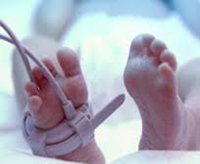
The research from the Icahn School of Medicine at Mount Sinai is among the first to address the question of whether repeated postnatal anaesthesia exposure, in and of itself, results in memory impairment in a highly translationally relevant rhesus monkey model.

Rhesus monkeys at birth are at a stage of neurodevelopment that is more similar to that of human infants than are neonatal rodents; with respect to brain growth, a six-week-old rhesus monkey corresponds to a human 6 to 12 months of age.

Because these kinds of controlled studies cannot be carried out in humans, it is essential to use a comparable animal model to discover if anaesthesia is affecting the brain. Unlike previous research, the study was conducted in the absence of a surgical procedure, co-morbidities that may necessitate surgical intervention, or the psychological stress associated with illness.

“The major strength of this study is its ability to separate anaesthesia exposure from surgical procedures, which is a potential complication in the studies conducted in children,” said researcher Mark Baxter. “Our results confirm that multiple anaesthesia exposures alone result in memory impairment in a highly translational animal model. Interestingly, the anaesthesia-exposed group had normal visual memory at six months of age. Visual memory impairment didn’t emerge until the second year of life, corresponding roughly to the age of three to six years old in humans.”

Specifically, the study team exposed 10 non-human primate subjects to a common paediatric aesthetic called sevoflurane for four hours, the length of time required for a significant surgical procedure in humans. They were exposed to the aesthetic at postnatal day 7 and then again two and four weeks later, because human data indicate that repeated anaesthesia results in a greater risk of cognitive disability relative to a single aesthetic exposure.

They found the anaesthesia-exposed infants displayed no memory impairment when tested at 6-10 months, but demonstrated significant memory impairment (reduced time looking at the novel image) after the first year of life compared with the control group.

This primate model may be used by researchers for future studies to develop a new aesthetic agent or prophylactic treatment to counteract the impact of anaesthesia on behaviour in children. The findings also suggest that additional work is required to identify the mechanisms by which anaesthetics may cause long-term changes in central nervous system function that impact behaviour.

The study is published in The British Journal of Anaesthesia.

Comments

Add new comment

  • Coastaldigest.com reserves the right to delete or block any comments.
  • Coastaldigset.com is not responsible for its readers’ comments.
  • Comments that are abusive, incendiary or irrelevant are strictly prohibited.
  • Please use a genuine email ID and provide your name to avoid reject.
Agencies
April 21,2020

The Lockdown is not a cure but a critical strategy to prevent the geographical spread of COVID-19.

While pandemics at this level involves actual life threatening situations for individual's or significant others in one's immediate circle, it envisages a marked disruption in routine life. Even after the pandemic has been contained and will come to pass; it's aftermath will leave a trailblazer which demands planning and implementation of a post pandemic reconstruction of society with potentially traumatic experiences varying in intensity, multiplicity and duration.

Degree of Trauma

It would do well for each one of us to realise that the pandemic is "potentially traumatic", since not everyone will experience COVID -19 as a traumatic event in their lives. Yet, there will be those who may develop post pandemic stress reactions, depression and related dysfunction and pathological reactions while still other exhibit healthy reactions to the same set of circumstances.

"Psychological reactions to the pandemic can be distilled into four distinct prototypical patterns, namely, Resilience, Recovery, Chronic and Delayed patterns which may vary in intensity, multiplicity, and duration. Resilient individual have an ability to bounce back from adversity and experience modest or little disruption in normal functioning and are able to maintain a relatively stable, healthy levels of psychological functioning even after enduring the pandemic. Recovery pattern is characterised by relatively rapid reduction in symptoms and return to normal functioning whereas chronic pattern is characterised by symptoms and dysfunction of a long duration," says Pune-based military psychologist Lt Col Dr Samir Rawat.

Challenges at the Individual and Community Levels

From a psychological perspective, post pandemic reconstruction would entail catering to the problems, concerns and needs of those adversely impacted by the COVID -19 with stress symptoms typically characterised by individual's experiencing an overwhelming trauma of the pandemic (for example, recurring nightmares/ breaking into a cold sweat, flashback of stressful events, increasing irritability, low frustration tolerance or emotional numbing).

It could also manifest in depressive symptoms which may result in lack of interest or diminished pleasure in activities and things which you earlier liked to do, feelings of worthlessness or even survivor guilt in case of a loss of a loved one due to COVID-19, fleeting thoughts of death and suicidal ideation. Physical symptoms, on the other hand could be a decrease in appetite, weight and sleep problems, inability to focus and lack of concentration.

Undoubtedly, the pandemic will cause a financial loss of varying magnitude to many, especially the marginalised and economically disadvantaged strata of daily wage earners; it will also lead to loss of jobs (already beginning to show), homelessness, occupational difficulties and new challenges in interpersonal relations at work and on the home front, besides physical health problems and psychological barriers with new norms of accepted social behaviour (social distancing, handshakes, an obsession for cleanliness to name a few).

Emotional battles

Many factors may influence whether individuals come out stronger and more resilient or surrender to the pandemic. Emotion Regulation is one such long term critical factor that can play an important role in contributing to varying degrees of adaptation with negative or positive outcomes. While we know that primary emotions are fear, anger, disgust, joy, anticipation, acceptance, sadness and surprise, other basic emotions include wonder, love, desire, joy, hatred, sadness, attachment, disgust, rage and even expectancy .

To be able to regulate these emotions and avoid negativity , especially on social media platforms is likely to increase efforts in emotion regulation which involves initiating, increasing or maintaining an emotional response.

This means by regulating or on the other hand by stopping, decreasing or avoiding an emotional response, that is, by down-regulating, depending on the individual's objectives and goals or his /her ability to regulate emotions in the valued and given direction.

"One of the best ways to regulate emotions is through cognitive restructuring wherein we change the way we think; after all it is not the event but the interpretation of the event which is perceived as stressful and finding meaning promotes resilience and reduces risk and vulnerability to stress," advises Dr Rawat.

Adding, "Clearly, we need to have a psychological plan to prevent, mitigate and minimise negative outcomes by post pandemic reconstruction of society at an individual and community level all over the country; this has to be integrated by all leaders across verticals in diverse domains."

Comments

Add new comment

  • Coastaldigest.com reserves the right to delete or block any comments.
  • Coastaldigset.com is not responsible for its readers’ comments.
  • Comments that are abusive, incendiary or irrelevant are strictly prohibited.
  • Please use a genuine email ID and provide your name to avoid reject.
Agencies
July 7,2020

The World Health Organization (WHO) is reviewing a report that suggested its advice on the novel coronavirus needs updating after some scientists told the New York Times there was evidence the virus could be spread by tiny particles in the air.

The WHO says the Covid-19 disease spreads primarily through small droplets, which are expelled from the nose and mouth when an infected person breaths them out in coughs, sneezes, speech or laughter and quickly sink to the ground.

In an open letter to the Geneva-based agency, 239 scientists in 32 countries outlined the evidence they say shows that smaller exhaled particles can infect people who inhale them, the newspaper said on Saturday.

Because those smaller particles can linger in the air longer, the scientists - who plan to publish their findings in a scientific journal this week - are urging WHO to update its guidance, the Times said.

"We are aware of the article and are reviewing its contents with our technical experts," WHO spokesman Tarik Jasarevic said in an email reply on Monday to a Reuters request for comment.

The extent to which the coronavirus can be spread by the so-called airborne or aerosol route - as opposed to by larger droplets in coughs and sneezes - remains disputed.

Any change in the WHO's assessment of the risk of transmission could affect its current advice on keeping one-metre physical distancing. Governments, which also rely on the agency for guidance policy, may also have to adjust public health measures aimed at curbing the spread of the virus.

"Especially in the last couple of months, we have been stating several times that we consider airborne transmission as possible but certainly not supported by solid or even clear evidence," Benedetta Allegranzi, the WHO's technical lead for infection prevention and control, was quoted as saying in the New York Times.

WHO guidance to health workers, dated June 29, says that SARS-CoV-2, the virus that causes Covid-19, is primarily transmitted between people through respiratory droplets and on surfaces.

But airborne transmission via smaller particles is possible in some circumstances, such as when performing intubation and aerosol-generating procedures, it says.

Medical workers performing such procedures should wear heavy-duty N95 respiratory masks and other protective equipment in an adequately ventilated room, the WHO says.

Officials at South Korea's Centers for Disease Control said on Monday they were continuing to discuss various issues about Covid-19, including the possible airborne transmission. They said more investigations and evidence were needed.

Comments

Add new comment

  • Coastaldigest.com reserves the right to delete or block any comments.
  • Coastaldigset.com is not responsible for its readers’ comments.
  • Comments that are abusive, incendiary or irrelevant are strictly prohibited.
  • Please use a genuine email ID and provide your name to avoid reject.
Agencies
April 17,2020

Washington DC, Apr 17: In recent research, scientists have linked the emotional, social and psychiatric problems in children and adolescents with higher levels of genetic vulnerability for adult depression. The study implies that the genetics passed from parents may be linked with psychiatric problems in children and adolescents and may also leading to depression in adults.

University of Queensland scientists made the finding while analysing the genetic data of more than 42,000 children and adolescents from seven cohorts across Finland, the Netherlands, Norway, Sweden and the UK.

Professor Christel Middeldorp said that researchers have also found a link with a higher genetic vulnerability for insomnia, neuroticism and body mass index.

"By contrast, study participants with higher genetic scores for educational attainment and emotional well-being were found to have reduced childhood problems," Professor Middeldorp said.

"We calculated a person's level of genetic vulnerability by adding up the number of risk genes they had for a specific disorder or trait and then made adjustments based on the level of importance of each gene We found the relationship was mostly similar across ages," Middeldorp added.

The results indicate there are shared genetic factors that affect a range of psychiatric and related traits across a person's lifespan.

Middeldorp said that around 50 per cent of children and adolescents with psychiatric problems, such as attention deficit hyperactivity disorder (ADHD), continue to experience mental disorders as adults, and are at risk of disengaging with their school community among other social and emotional problems.

"Our findings are important as they suggest this continuity between childhood and adult traits is partly explained by genetic risk," the Professor said.

"Individuals at risk of being affected should be the focus of attention and targeted treatment," Middeldorp continued.

"Although the genetic vulnerability is not accurate enough at this stage to make individual predictions about how a person's symptoms will develop over time, it may become so in the future, in combination with other risk factors. And, this may support precision medicine by providing targeted treatments to children at the highest risk of persistent emotional and social problems," Middeldorp added.

Comments

Add new comment

  • Coastaldigest.com reserves the right to delete or block any comments.
  • Coastaldigset.com is not responsible for its readers’ comments.
  • Comments that are abusive, incendiary or irrelevant are strictly prohibited.
  • Please use a genuine email ID and provide your name to avoid reject.