


Mumbai dance bars to reopen amid fears of sex trafficking

March 16, 2016

Mumbai, Mar 16: After a 10-year hiatus, dance bars are set to reopen in Mumbai and Maharashtra state with activists warning women and girls could be trafficked and abused in these venues but bar owners arguing this is legitimate, needed work.
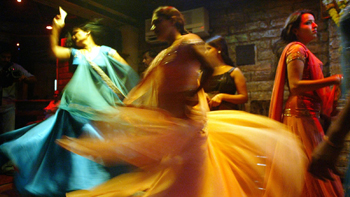
dancebarMaharashtra in 2005 suspended the licences of hundreds of bars and hotels that featured skimpily dressed women dancing to Bollywood tunes on a small stage for male customers.

But after several appeals over the years against the ban, the Supreme Court ordered the state to issue licences from 15 March on condition that certain rules are adhered to.

When the bars were shut in 2005, about 75,000 women were estimated to be working there and bar owners said the women were earning a legitimate living.

But activists and charities feared the women were victims of trafficking and the bars were fronts for brothels.

“It's not as if shutting them down stopped trafficking, but reopening them would legitimise it and give traffickers another reason to dupe and abuse women and girls,” said Suparna Gupta, founder of Aangan Trust which works with victims of trafficking.

“A majority of dance bars were doubling up as brothels, and we established a clear link between many rescued minor girls and these establishments.”

State chief minister Devendra Fadnavis last week said the government was not in favour of reopening dance bars and will draft legislation to find a way around the Supreme Court ruling.

About 150 bars and hotels in Mumbai and about 1,200 in the state are applying for licences, according to an industry lobby.

South Asia, with India at its centre, is the world's fastest-growing and second-biggest region for human trafficking after Southeast Asia, according to the United Nations Office for Drugs and Crime.

Mumbai, India's financial hub, is one of the biggest destinations for trafficked women and children.

Most of them are brought from other states and neighbouring countries, including Nepal and Bangladesh, under the guise of securing a well-paid job in a home or shop but are sold into sex work or forced into manual labour.

The Maharashtra government, which opposes dance bars on the grounds of obscenity, had proposed more than two dozen conditions for new licences but the Supreme Court rejected some of them, including requiring a live stream to police stations.

Instead, closed-circuit televisions will be installed at the entrance, with a limit of four dancers per bar, a railing around the performance area, and a distance of at least 5 feet between the stage and customers.

Women won't be permitted to dance in an obscene manner and customers cannot fling money at the dancers, the rules state.

Hotel and bar owners have lobbied against some of these conditions, calling them unreasonable.

“What has the state done in the last 10 years for the rehabilitation of the thousands of women who lost their livelihood overnight?” said Adarsh Shetty, head of the Indian Hotel and Restaurant Association in Mumbai.

Many women who found themselves without a job then were forced into prostitution or trafficked to Gulf nations, said Bharat Thakur, president of the Dance Bars' Association in Mumbai, which has criticised the state's “moral policing”.

Comments

IBRAHIM.HUSSAIN
 - 
Thursday, 17 Mar 2016

This would be good news for Dance Bar Owners, mostly from costal Karantaka, specially DK, and Udipi Districts. It was alleged that Dance Bar Association paid 35 Lakhs cheque to the BJP party fund for shutting their mouth against opening of Dance Bars. Dance Bars are nothing but a red light homes.

Dance Bar is another name of Cabaret Dance or Strip Dances. The day is not far every city of the India will have Strip Dance Bars which will destroy the peace of society and heritage of India.

As far as livelihood of the Dance Bars females and other workers concerned government of Maharastra should have made alternate arrangement for them for their livelihood. But they did not.

Very sad news of opening Dance Bars.

Suleman
 - 
Wednesday, 16 Mar 2016

BJP promoting \Cultural events\". Situation changed after 10 years of ban."

WellWisher
 - 
Wednesday, 16 Mar 2016

Dear Bros from The Rightwing of all religions,

It is time to show the universal brotherhood.

Please step forward and stop our mothers, sisters and daughters from falling into the hands of the pimps who are involved in such a heinous business called Dance bar who eventually end up trading them to the brothels.

PLZ ALL POLITICALLY POWERFULL PEOPLE OF INDIA PUT YOUR HANDS TOGETHER TO SAVE UR MOTHER,SISTERS and DAUGHTERS.

JAI HIND

Fair talker
 - 
Wednesday, 16 Mar 2016

Ladies are not safe in modesty if working in such exploiting atmosphere. their respect dignity are damaged.

If these 75,000 lady workers are required to work in a very sensitive situation to support their family, then it is the responsibility of the society to arrange them a job or support.

For such a state these 75,000 number is a not a matter.
Give jobs to their male members as much as possible and the rest of the ladies can be given even good gov't jobs.

Whoever showing pity are not genuinely concerned. Bar and Hotel owners are not expressing real pity.

Kumaraswamy
 - 
Wednesday, 16 Mar 2016

next trip to mumbai :P

Add new comment

  • Coastaldigest.com reserves the right to delete or block any comments.
  • Coastaldigset.com is not responsible for its readers’ comments.
  • Comments that are abusive, incendiary or irrelevant are strictly prohibited.
  • Please use a genuine email ID and provide your name to avoid reject.
News Network
July 22,2020

Bengaluru, July 22: Complete lockdown on Sundays and daily night curfew would continue across Karnataka to contain the coronavirus spread, a top officia.

"Though lockdown will be lifted from 5 am on Wednesday across the state, night curfew will continue daily from 9 pm to 5 am to restrict movement of people and vehicles. Total lockdown on Sundays will also continue on July 26 and August 2," said state Chief Secretary T.M. Vijaya Bhaskar in an order here.

The order to unlock Bengaluru and four other districts - Dakshina Kannada, Dharwad, Kalaburagi and Kodagu, which have been under 7-9 day lockdown since March 14 night came after Chief Minister B.S. Yediyurappa declared that lockdowns would not be re-imposed across the state hereafter.

Besides restrictions in containment areas to control the virus spread, the order banned reopening of gyms and prevented use of benches in parks by walkers or joggers.

"All vegetable and fruit markets in cities and towns across the state will be shifted to the suburbs or outskirts to decongest them and prevent crowding," said the order in Kannada.

Wearing mask, sanitising hands and maintaining social distancing will be strictly enforced and violators will be fined.

Suburban train and metro services will continue to remain shut till further orders.

Select long-distance express trains will continue to operate as per the standard operating procedure given by the Union Ministry of Home Affairs on May 30.

"State-run and private buses in cities and on intra-state and inter-state routes will operate with limited number of passengers to ensure physical distancing. All buses will be sanitized and fumigated after every trip," said the order.

Schools, colleges, cinema theatres, multiplexes will remain shut to prevent crowding and violation of social distancing.

Ban on religious functions and mass gatherings will also continue.

Comments

Add new comment

  • Coastaldigest.com reserves the right to delete or block any comments.
  • Coastaldigset.com is not responsible for its readers’ comments.
  • Comments that are abusive, incendiary or irrelevant are strictly prohibited.
  • Please use a genuine email ID and provide your name to avoid reject.
News Network
July 10,2020

Bengaluru, Jul 10: The Karnataka cabinet gave its approval for "The Karnataka Contingency Fund (Amendment) Bill, 2020" to enhance the contingency fund limit to Rs 500 crore in the wake of the COVID-19 pandemic.

This will be an ordinance making one time enhancement in the limit as the government needs money to make payments immediately, Law and Parliamentary Affairs Minister JC Madhuswamy told reporters after a cabinet meeting.

Under the contingency fund, the government had room to spend up to Rs 80 crore without budget provision.

"...but this time due to COVID-19 as we had to give money to some sections that were in distress like barbers, flower and vegetable growers, taxi drivers, among others, we have decided to increase the limit to Rs 500 crore," Mr Madhuswamy said.

"As assembly was not in session and as we had to make payments to those in distress immediately, this decision has been taken," he added.

The cabinet today ratified the administrative approval given to carry out civil and electrical works to install medical gas pipeline with high flow oxygen system at district hospitals, taluk and community health centres coming under Health and Family welfare department in view of COVID-19.

The minister said about Rs 207 crore is being approved for this purpose.

It also ratified procurement of medical equipment and furniture for public healthcare institutions of the health and family welfare department worth Rs 81.99 crore.

According to the minister, the cabinet has decided to bring in an amendment to section 9 of the Lokayukta act, which mandates that the preliminary inquiry contemplated by Lokayukta or Upalokayuta should be completed in 90 days and charge sheeting should be completed within six months.

Noting that at the Agricultural Produce Market Committee (APMC) cess was being collected, he said as the government had brought in an amendment to the APMC act, there was demand to reduce the market cess. "So we have reduced it from 1.5 per cent to one per cent."

Approval has also been given by the cabinet to bring Karnataka Vidyuth Kharkane (KAVIKA) and Mysore Electrical Industries (MEI), which are presently under the control of Commerce and Industries department, under administrative control of the energy department.

Other decisions taken by the cabibinet include deployment and implementation of "e-procurement 2.0" project on PPP at a cost of Rs 184.37 crore and ratification of the action taken to issue orders on March 24 to release interest free loan of Rs 2,500 crore to ESCOMs for payment of outstanding power purchase dues to generating companies.

The cabinet also gave administrative approval for setting up of an Indian Institute of Information technology at Raichur.

"Under this, we are committed to provide Rs 44.8 crore in four years for infrastructure," the minister added.

Comments

Add new comment

  • Coastaldigest.com reserves the right to delete or block any comments.
  • Coastaldigset.com is not responsible for its readers’ comments.
  • Comments that are abusive, incendiary or irrelevant are strictly prohibited.
  • Please use a genuine email ID and provide your name to avoid reject.
coastaldigest.com news network
February 14,2020

Bengaluru, Feb 14: In a major embarrassment to the police, the Karnataka High Court has termed as illegal the prohibitory orders imposed under Section 144 of CrPC by the City Police Commissioner in December 2019 in the light of the anti-Citizenship Amendment Act (CAA) protests in Bengaluru.

The orders were passed “without application of mind” and without following due procedures, the court noted. Giving reasons for upholding the arguments of the petitioners that there was no application of mind by the Police Commissioner (Bhaskar Rao) before imposing restrictions, a division bench of the High Court said he had not recorded the reasons, except reproducing the contents of letters addressed to him by the Deputy Commissioners of Police (DCPs). 

The state government had contended that prohibitory orders were passed based on reports submitted by the DCPs who expressed apprehension about anti-social elements creating law and order problems and damaging public property by taking advantage of the anti-CAA protests.  

The High Court bench said the Police Commissioner should have conducted inquiry as stated by the Supreme Court to check the reasons cited by the DCPs who submitted identical reports. Except for this, there were no facts laid out by the Police Commissioner, the court said.

“There is complete absence of reasons. If the order indicated that the Police Commissioner was satisfied by the apprehension of DCPs, it would have been another matter,” it said.  

“The apex court has held that it must record the reasons for imposition of restrictions and there has to be a formation of opinion by the district magistrate. Only then can  the extraordinary powers conferred on the district magistrate can be exercised. This procedure was not followed. Hence, exercise of power under Section 144 by the commissioner, as district magistrate, was not at all legal”, the bench said. 

“We hold that the order dated December 18, 2019 is illegal and cannot stand judicial scrutiny in terms of the apex court’s orders in the Ramlila Maidan case and Anuradha Bhasin case,” the HC bench said while upholding the arguments of Prof Ravivarma Kumar, who appeared for some of the petitioners.   

Partly allowing a batch of public interest petitions questioning the imposition of prohibitory orders and cancelling the permission granted for protesters in the city, the bench of Chief Justice Abhay Shreeniwas Oka and Justice Hemant Chandangoudar observed that, unfortunately, in the present case, there was no indication of application of mind in passing prohibitory orders.

The bench said the observation was confined to this order only and it cannot be applicable in general. If there is a similar situation (necessitating imposition of restrictions), the state is not helpless, the court said.

Comments

Add new comment

  • Coastaldigest.com reserves the right to delete or block any comments.
  • Coastaldigset.com is not responsible for its readers’ comments.
  • Comments that are abusive, incendiary or irrelevant are strictly prohibited.
  • Please use a genuine email ID and provide your name to avoid reject.