


Mumbai dance bars to reopen amid fears of sex trafficking

March 16, 2016

Mumbai, Mar 16: After a 10-year hiatus, dance bars are set to reopen in Mumbai and Maharashtra state with activists warning women and girls could be trafficked and abused in these venues but bar owners arguing this is legitimate, needed work.
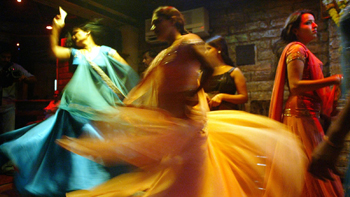
dancebarMaharashtra in 2005 suspended the licences of hundreds of bars and hotels that featured skimpily dressed women dancing to Bollywood tunes on a small stage for male customers.

But after several appeals over the years against the ban, the Supreme Court ordered the state to issue licences from 15 March on condition that certain rules are adhered to.

When the bars were shut in 2005, about 75,000 women were estimated to be working there and bar owners said the women were earning a legitimate living.

But activists and charities feared the women were victims of trafficking and the bars were fronts for brothels.

“It's not as if shutting them down stopped trafficking, but reopening them would legitimise it and give traffickers another reason to dupe and abuse women and girls,” said Suparna Gupta, founder of Aangan Trust which works with victims of trafficking.

“A majority of dance bars were doubling up as brothels, and we established a clear link between many rescued minor girls and these establishments.”

State chief minister Devendra Fadnavis last week said the government was not in favour of reopening dance bars and will draft legislation to find a way around the Supreme Court ruling.

About 150 bars and hotels in Mumbai and about 1,200 in the state are applying for licences, according to an industry lobby.

South Asia, with India at its centre, is the world's fastest-growing and second-biggest region for human trafficking after Southeast Asia, according to the United Nations Office for Drugs and Crime.

Mumbai, India's financial hub, is one of the biggest destinations for trafficked women and children.

Most of them are brought from other states and neighbouring countries, including Nepal and Bangladesh, under the guise of securing a well-paid job in a home or shop but are sold into sex work or forced into manual labour.

The Maharashtra government, which opposes dance bars on the grounds of obscenity, had proposed more than two dozen conditions for new licences but the Supreme Court rejected some of them, including requiring a live stream to police stations.

Instead, closed-circuit televisions will be installed at the entrance, with a limit of four dancers per bar, a railing around the performance area, and a distance of at least 5 feet between the stage and customers.

Women won't be permitted to dance in an obscene manner and customers cannot fling money at the dancers, the rules state.

Hotel and bar owners have lobbied against some of these conditions, calling them unreasonable.

“What has the state done in the last 10 years for the rehabilitation of the thousands of women who lost their livelihood overnight?” said Adarsh Shetty, head of the Indian Hotel and Restaurant Association in Mumbai.

Many women who found themselves without a job then were forced into prostitution or trafficked to Gulf nations, said Bharat Thakur, president of the Dance Bars' Association in Mumbai, which has criticised the state's “moral policing”.

Comments

IBRAHIM.HUSSAIN
 - 
Thursday, 17 Mar 2016

This would be good news for Dance Bar Owners, mostly from costal Karantaka, specially DK, and Udipi Districts. It was alleged that Dance Bar Association paid 35 Lakhs cheque to the BJP party fund for shutting their mouth against opening of Dance Bars. Dance Bars are nothing but a red light homes.

Dance Bar is another name of Cabaret Dance or Strip Dances. The day is not far every city of the India will have Strip Dance Bars which will destroy the peace of society and heritage of India.

As far as livelihood of the Dance Bars females and other workers concerned government of Maharastra should have made alternate arrangement for them for their livelihood. But they did not.

Very sad news of opening Dance Bars.

Suleman
 - 
Wednesday, 16 Mar 2016

BJP promoting \Cultural events\". Situation changed after 10 years of ban."

WellWisher
 - 
Wednesday, 16 Mar 2016

Dear Bros from The Rightwing of all religions,

It is time to show the universal brotherhood.

Please step forward and stop our mothers, sisters and daughters from falling into the hands of the pimps who are involved in such a heinous business called Dance bar who eventually end up trading them to the brothels.

PLZ ALL POLITICALLY POWERFULL PEOPLE OF INDIA PUT YOUR HANDS TOGETHER TO SAVE UR MOTHER,SISTERS and DAUGHTERS.

JAI HIND

Fair talker
 - 
Wednesday, 16 Mar 2016

Ladies are not safe in modesty if working in such exploiting atmosphere. their respect dignity are damaged.

If these 75,000 lady workers are required to work in a very sensitive situation to support their family, then it is the responsibility of the society to arrange them a job or support.

For such a state these 75,000 number is a not a matter.
Give jobs to their male members as much as possible and the rest of the ladies can be given even good gov't jobs.

Whoever showing pity are not genuinely concerned. Bar and Hotel owners are not expressing real pity.

Kumaraswamy
 - 
Wednesday, 16 Mar 2016

next trip to mumbai :P

Add new comment

  • Coastaldigest.com reserves the right to delete or block any comments.
  • Coastaldigset.com is not responsible for its readers’ comments.
  • Comments that are abusive, incendiary or irrelevant are strictly prohibited.
  • Please use a genuine email ID and provide your name to avoid reject.
coastaldigest.com news network
June 12,2020

Mangaluru, June 12: Juma prayers were held in dozens of mosques across coastal district of Dakshina Kannada including the city of Mangaluru for the first time in nearly three months upholding all the safety norms including physical distancing. 

For the first time in the recent history of Mangaluru, juma prayers were stalled in all the mosques for 11 consecutive weeks as part of nationwide coronavirus lockdown. 

While many mosques were reopened for the congregational prayers in the region on June 8 (Monday) after receiving approval from the government, many others are yet to be opened as Muslim religious leaders are taking additional precautionary measures to prevent the spread of covid-19 apart from following all the guidelines issued by the government.

“Around 400 people participated in the Juma prayer at Zeenat Bakhsh Juma Masjid. All the safety guidelines were followed. Sadaqatul Nadwi delivered the sermon and led the prayers,” S M Rasheed Haji, executive member of the mosque committee told coastaldigest.com.

“As per the guidelines, devotees performed Wudu (ablution) at their homes and also carried their own musalla (prayer mat) to the mosque,” said a Jalaluddin, a cleric who offered Juma prayers in Ullal.  

The guidelines issued by the government to the mosques also include disinfecting the premises at regular intervals, maintaining physical distance, wearing masks and finishing prayers in “minimum permissible time”.

Comments

Add new comment

  • Coastaldigest.com reserves the right to delete or block any comments.
  • Coastaldigset.com is not responsible for its readers’ comments.
  • Comments that are abusive, incendiary or irrelevant are strictly prohibited.
  • Please use a genuine email ID and provide your name to avoid reject.
Agencies
January 16,2020

Bengaluru, Jan 16: Amping up the online payment experience for consumers, Razorpay, the leading full-stack financial services company, today launched a new product, Instant Refunds for businesses.

This new feature activates refunds and credits the customer's source account across payment methods such as credit card, net banking, and UPI within a minute of initiation.

India is one of the fastest-growing online retail markets today. About 71 per cent of internet users in the country purchase products online. Today, the refund process has two major pain points for both the end customer and the business.

First, a delay of five-seven business days for the customer in receiving the money because of multiple intermediaries like the acquiring bank, issuing bank and the networks (VISA/MasterCard/Rupay).

Second, the lack of transparency during the entire refund process for both the customer and the business. This long cycle of processing refunds is a significant problem with every popular payment method in the industry.

By issuing refunds instantly, Razorpay will help businesses retain their customers, build trust through an improved hassle-free payment experience and provide complete transparency on refunds to both the business and the end-user.

This new feature will also reduce the dependence on manpower as every refund issue on an average leads to ten service emails or calls from customer support teams.

"Instant Refunds are the new normal and central to great customer experience. A lot of consumers fail to use online payment methods as they feel getting refunds through an online platform is a very time-consuming task; hence they prefer CoD as the best alternative. Given the technological advancements being made in the fin-tech ecosystem, its fair for customers to expect refunds as fast as possible. A solution like Instant Refunds will not only help build consumer confidence in digital payments but also reduce losses for e-commerce companies where CoD has become an expensive option with more than 50 per cent online transactions made through cash", said Shashank Kumar, CTO & Co-founder of Razorpay.

"Our Instant Refunds feature ensures that the refund is processed at a 3600x faster pace than the normal expected time of five-seven business days. The team is focused on creating new technologies designed to make the entire payment lifecycle hassle-free. We believe this new feature will make customers experience a notch higher, help brands create a competitive advantage, and even make them more profitable", he added.

Razorpay's growth has been uphill, particularly in the last two years. With a 500 per cent growth in 2019, the company has been witnessing a healthy growth rate of 35 per cent month-on-month.

The company also recently launched its corporate credit cards for its partner businesses, RazorpayX current accounts, support for freelancers and homepreneurs, and acquired Opfin, a payroll and HR management software company.

Currently powering payments for over 800,000 businesses including the likes of Indigo, BSE, Thomas Cook, Reliance, SpiceJet, Aditya Birla, Sony, and Oyo, the team plans to increase this count to 1,400,000 by this year. The full-stack financial solutions company expects a 4x growth in its revenue by the end of the next fiscal year.

This story is provided by NewsVoir. ANI will not be responsible in any way for the content of this article.

Comments

Add new comment

  • Coastaldigest.com reserves the right to delete or block any comments.
  • Coastaldigset.com is not responsible for its readers’ comments.
  • Comments that are abusive, incendiary or irrelevant are strictly prohibited.
  • Please use a genuine email ID and provide your name to avoid reject.
News Network
March 30,2020

Bengaluru, Mar 30: The nationwide lockdown has left the state on the brink of a fresh agrarian crisis.

The lack of transport facilities spells doom for ready-to-harvest grapes worth Rs 500-600 crore in Bengaluru Rural, Chikkaballapur and Kolar districts. Unable to find buyers, several farmers have begun dumping their produce into compost pits.

On Sunday, Munishamappa, a farmer in Chikkaballapur, emptied four truckloads of grapes into the pit as buyers didn’t turn up due to the lockdown. “If the grapes wither and fall to the ground, it will affect the soil’s fertility and I will be forced to dispose of them,” he said.

Venkata Krishnappa, Munishamappa’s son, said their 1.5-acre vineyard yielded 25 tonnes of grapes. “Just before the lockdown, 10 tonnes were harvested and delivered to the market. Due to lack of transport, buyers haven’t turned up for the remaining 15 tonnes which we are dumping into the pit.”

For latest updates on coronavirus outbreak, click here

Anjaneya Reddy, a farmer leader, said that in Chikkaballapur alone, they have cultivated grapes on 2,000 acres. “Even if you consider 15 tonnes per acre as yield, there are about 30,000 tonnes ready to be harvested in the district. At a market rate of Rs 50 to Rs 60 per kilogram, the net worth will be Rs 200 crore to Rs 300 crore. And if you consider the crop in Kolar and Bengaluru Rural, grapes worth Rs 500 to Rs 600 crore are at stake,” he explained.

The ‘Dilkush’ grapes is the most preferred variety of domestic consumption, according to the farmers.

This apart, farmers would have invested about Rs 3 lakh to 4 lakh per acre on fertilisers, pesticide and labour. “With markets being shut and no of the transport facilities available, farmers are forced to dump their produce into pits. It is high time the government intervened and provided us with market options so that farmers can sell at an affordable price of Rs 30 to 40,” Reddy said.

Somu, a farmer in Ganjam village of Srirangapattana, dumped two tonnes of chikku (sapota) citing market shutdown in Mandya. Reddy appealed to the government to emulate the Maharashtra model where the government is helping farmers market fruits through Hopcoms or dairy units as nutrient supplements to people.

Comments

Add new comment

  • Coastaldigest.com reserves the right to delete or block any comments.
  • Coastaldigset.com is not responsible for its readers’ comments.
  • Comments that are abusive, incendiary or irrelevant are strictly prohibited.
  • Please use a genuine email ID and provide your name to avoid reject.