


Mumbai dance bars to reopen amid fears of sex trafficking

March 16, 2016

Mumbai, Mar 16: After a 10-year hiatus, dance bars are set to reopen in Mumbai and Maharashtra state with activists warning women and girls could be trafficked and abused in these venues but bar owners arguing this is legitimate, needed work.
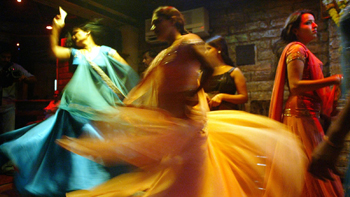
dancebarMaharashtra in 2005 suspended the licences of hundreds of bars and hotels that featured skimpily dressed women dancing to Bollywood tunes on a small stage for male customers.

But after several appeals over the years against the ban, the Supreme Court ordered the state to issue licences from 15 March on condition that certain rules are adhered to.

When the bars were shut in 2005, about 75,000 women were estimated to be working there and bar owners said the women were earning a legitimate living.

But activists and charities feared the women were victims of trafficking and the bars were fronts for brothels.

“It's not as if shutting them down stopped trafficking, but reopening them would legitimise it and give traffickers another reason to dupe and abuse women and girls,” said Suparna Gupta, founder of Aangan Trust which works with victims of trafficking.

“A majority of dance bars were doubling up as brothels, and we established a clear link between many rescued minor girls and these establishments.”

State chief minister Devendra Fadnavis last week said the government was not in favour of reopening dance bars and will draft legislation to find a way around the Supreme Court ruling.

About 150 bars and hotels in Mumbai and about 1,200 in the state are applying for licences, according to an industry lobby.

South Asia, with India at its centre, is the world's fastest-growing and second-biggest region for human trafficking after Southeast Asia, according to the United Nations Office for Drugs and Crime.

Mumbai, India's financial hub, is one of the biggest destinations for trafficked women and children.

Most of them are brought from other states and neighbouring countries, including Nepal and Bangladesh, under the guise of securing a well-paid job in a home or shop but are sold into sex work or forced into manual labour.

The Maharashtra government, which opposes dance bars on the grounds of obscenity, had proposed more than two dozen conditions for new licences but the Supreme Court rejected some of them, including requiring a live stream to police stations.

Instead, closed-circuit televisions will be installed at the entrance, with a limit of four dancers per bar, a railing around the performance area, and a distance of at least 5 feet between the stage and customers.

Women won't be permitted to dance in an obscene manner and customers cannot fling money at the dancers, the rules state.

Hotel and bar owners have lobbied against some of these conditions, calling them unreasonable.

“What has the state done in the last 10 years for the rehabilitation of the thousands of women who lost their livelihood overnight?” said Adarsh Shetty, head of the Indian Hotel and Restaurant Association in Mumbai.

Many women who found themselves without a job then were forced into prostitution or trafficked to Gulf nations, said Bharat Thakur, president of the Dance Bars' Association in Mumbai, which has criticised the state's “moral policing”.

Comments

IBRAHIM.HUSSAIN
 - 
Thursday, 17 Mar 2016

This would be good news for Dance Bar Owners, mostly from costal Karantaka, specially DK, and Udipi Districts. It was alleged that Dance Bar Association paid 35 Lakhs cheque to the BJP party fund for shutting their mouth against opening of Dance Bars. Dance Bars are nothing but a red light homes.

Dance Bar is another name of Cabaret Dance or Strip Dances. The day is not far every city of the India will have Strip Dance Bars which will destroy the peace of society and heritage of India.

As far as livelihood of the Dance Bars females and other workers concerned government of Maharastra should have made alternate arrangement for them for their livelihood. But they did not.

Very sad news of opening Dance Bars.

Suleman
 - 
Wednesday, 16 Mar 2016

BJP promoting \Cultural events\". Situation changed after 10 years of ban."

WellWisher
 - 
Wednesday, 16 Mar 2016

Dear Bros from The Rightwing of all religions,

It is time to show the universal brotherhood.

Please step forward and stop our mothers, sisters and daughters from falling into the hands of the pimps who are involved in such a heinous business called Dance bar who eventually end up trading them to the brothels.

PLZ ALL POLITICALLY POWERFULL PEOPLE OF INDIA PUT YOUR HANDS TOGETHER TO SAVE UR MOTHER,SISTERS and DAUGHTERS.

JAI HIND

Fair talker
 - 
Wednesday, 16 Mar 2016

Ladies are not safe in modesty if working in such exploiting atmosphere. their respect dignity are damaged.

If these 75,000 lady workers are required to work in a very sensitive situation to support their family, then it is the responsibility of the society to arrange them a job or support.

For such a state these 75,000 number is a not a matter.
Give jobs to their male members as much as possible and the rest of the ladies can be given even good gov't jobs.

Whoever showing pity are not genuinely concerned. Bar and Hotel owners are not expressing real pity.

Kumaraswamy
 - 
Wednesday, 16 Mar 2016

next trip to mumbai :P

Add new comment

  • Coastaldigest.com reserves the right to delete or block any comments.
  • Coastaldigset.com is not responsible for its readers’ comments.
  • Comments that are abusive, incendiary or irrelevant are strictly prohibited.
  • Please use a genuine email ID and provide your name to avoid reject.
News Network
February 25,2020

Bengaluru, Feb 25: Infosys is all set to announce a cyber defence centre in Indianapolis to complement its technology and innovation centre inaugurated early last year.

This will be Infosys' seventh global cyber defence centre. According to its recent cybersecurity report titled 'Assuring Digital Trust,' 83 per cent of executives view cybersecurity as critical, yet 67 per cent are still struggling to have security embedded.

The cyber defence centre will provide end-to-end, real-time, 24x7 cyber security monitoring and protection services to support and guide American businesses in their digital transformation journey, it said.

The facility is dedicated and organised to prevent, detect, assess and respond to cybersecurity threats and breaches.

Client environment will be monitored round the clock, adopting a follow-the-sun model to deliver services like 24x7 security monitoring, management and remediation, threat hunting, security analytics, incident discovery and response, compliance reporting and malware analysis.

Vishal Salvi, Chief Information Security Officer and Head of Cyber Security Practice at Infosys, said the cyber defence centre is staffed with expert security analysts with niche skills around threat research and intelligence gathering to deliver best-in-class services to customers.

"Additionally, advanced data analytics and machine learning models are deployed to detect zero-day threats by unknown threat actors. This supports our commitment to helping our customers build a resilient cybersecurity programme that operates at scale while increasing operational efficiency and reducing costs," he said in a statement.

Comments

Add new comment

  • Coastaldigest.com reserves the right to delete or block any comments.
  • Coastaldigset.com is not responsible for its readers’ comments.
  • Comments that are abusive, incendiary or irrelevant are strictly prohibited.
  • Please use a genuine email ID and provide your name to avoid reject.
News Network
April 19,2020

Kasaragod, Apr 19: Kasaragod, Kerala's COVID-19 hotspot, is the only district in the southern state lacking adequate health infrastructure.

In spite of treating the highest number of COVID-19 patients in the state with meagre infrastructural facilities and even without the support of a medical college in the north Kerala district, no deaths have been reported due to coronavirus.

The state health department views the performance of M Kunhiraman and his team, consisting of Janardhana Naik and Krishna Naik, at the General hospital in Kasaragod as a success story.

"Not only did they control the situation quickly with minimum infrastructure, they also started turning out a large number of negative cases within a few weeks and creditably ensured zero mortality.

This can be showcased as a best global model," Chairman of the Information Education and Communication (IEC) Committee and Project Director Kerala State Aids Control Society, R Ramesh said.

Recalling the ordeal, Janardhana Naik said his first major challenge was the physical examination of a patient with suspected COVID-19.

"Even with the PPE kit, nobody knew how effective they were and it took a whole 30 minutes to wear them properly.

But as time passed, we got accustomed to it," he said.

The traditional method of dealing with a patient involved knowing his or her history, observation and physical examination.

For hundreds of years, the hands-on body approach has been the soul of the doctor-patient relationship -- taking the pulse, tapping on and listening to the chest, feeling lumps.

With the onset of COVID-19 all that has changed.

"In fact, the whole exercise was fraught with grave risks because everything connected with COVID-19 was new.

Doctors have to keep a distance even though the physical examination wearing a Personal Protective Equipment (PPE) is difficult.

Sounds from the body are inaudible, vision is blurred through the smog-covered goggles and a stethoscope seldom has any use," Janardhana Naik said.

It was from March 15 that the hospital started receiving COVID-19 patients, primarily from Dubai.

By the time the first person came, the hospital was ready for him.

Soon, patient numbers began to swell and in a couple of weeks they reached about 91.

From then on, it was teamwork.

Committees were formed for each and every task, including the help desk, IT, treatment, medical board, training, food, waste disposal and data maintenance.

Initially, patients had many misgivings about the hospital.

"Some were disillusioned and even aggressive. Some were not happy with the facilities the hospital had to offer.

But gradually through good treatment and counselling by a psychiatrist, who visited the hospital on alternate days, the confidence and mood of the patients changed and they became friendly with the staff," Naik elaborated.

Counselling was also given to the concerned family members of the patients.

Besides treatment, the medical staff had to spend a considerable amount of time clearing the doubts of patients.

When they got discharged some patients insisted on seeing the faces of the medical staff, who till then were anonymous entities covered from head to toe.

Some even wanted to take selfies with them.

However, the medical team politely turned down their requests and preferred to remain hidden in their work attires.

The mood of the patients also rubbed off on the doctors and hospital staff.

All the physicians and hospital staff are now more confident of dealing with contagious diseases after treating COVID-19 patients.

"Our previous experience of treating H1N1, Chikungunya and Dengue cases helped us a lot.

Words of encouragement from the Health Minister K K Shailaja, Health Principal Secretary Dr Rajan N Khobragade and Health Services Director Dr Sarita R L gave us the impetus to build up confidence.

Moreover, the field health workers did a wonderful job in containing the viral spread," Naik added.

As the number of coronavirus cases rose, the state government on April 5 deputed a 26-member medical team from Thiruvananthapuram to set up a COVID-19 hospital in the district.

They turned a block of the under construction Government Medical College as a hospital-like facility, setting up a 200 bed facility to treat coronavirus patients.

Comments

Add new comment

  • Coastaldigest.com reserves the right to delete or block any comments.
  • Coastaldigset.com is not responsible for its readers’ comments.
  • Comments that are abusive, incendiary or irrelevant are strictly prohibited.
  • Please use a genuine email ID and provide your name to avoid reject.
News Network
July 22,2020

Bengaluru, Jul 22: Karnataka's Covid-19 task force on Tuesday decided that the state government will regulate the supply of Remdesivir, the drug used in the treatment of coronavirus infected patients, to private hospitals to check black marketing and hoarding.

"Remdesivir which is currently available in the government hospitals will be supplied to private hospitals through the government.

This will help curb black marketing of this drug," Medical Education Minister K Sudhakar's office said in a release.

Along with Sudhakar, other task force members, including Health Minister Sriramulu, Deputy Chief Minister C N Ashwath Narayan and Chief Secretary T M Vijay Bhaskar attended the meeting. However, Home Minister Basavaraj Bommai was not part of it as he was out of Bengaluru.

At the meeting, the government has also fixed the rate for Covid-19 tests in private labs- Rs 2,000 for government referred cases and 3,000 for self-reporting cases.

It was also decided to purchase 4 lakh antigen test kits and 5 lakh swab test kits to ramp up testing, the release said, adding that approvals have also been given for additional drugs for the treatment of Covid-19 patients.

The decisions also included increasing monthly salary for Ayush doctors to 48,000, MBBS doctors to 80,000 and nurses to get 30,000 for next 6 months.

The task force also made it clear that private hospitals have to reserve 50 percent beds for the government for Covid-19 treatment. The remaining 50 percent can be used by the private hospitals for Covid-19 and non-Covid-19 treatment.

Private hospitals provide treatment under Ayushman Bharat scheme (ABARK) for Covid-19 patients.

Those cases in which treatment does not cover under the scheme can be charged as per the user charges, the release said.

A committee will be formed to supervise and recommend the purchase of equipment and medicines for Covid-19 treatment, which will be headed by ACS, ITBT Department.

Approval has been given for the procurement of N-95 masks and lakh PPE kits for the safety of healthcare workers. The decision also has been taken to connect oxygen pipeline to 4,736 beds in 17 government medical colleges, which will enable high flow oxygen for these beds besides being beneficial for future use as well.

According to the release, 16 RTPCR and 15 Automated RNA extraction units will be established to ramp up testing and this will help achieve the target of 50,000 tests per day. "On the whole approvals given for purchase of equipment and upgradation of existing facilities at government hospitals is estimated to be about Rs 500 Crore," it added.

Comments

Add new comment

  • Coastaldigest.com reserves the right to delete or block any comments.
  • Coastaldigset.com is not responsible for its readers’ comments.
  • Comments that are abusive, incendiary or irrelevant are strictly prohibited.
  • Please use a genuine email ID and provide your name to avoid reject.