


Mumbai dance bars to reopen amid fears of sex trafficking

March 16, 2016

Mumbai, Mar 16: After a 10-year hiatus, dance bars are set to reopen in Mumbai and Maharashtra state with activists warning women and girls could be trafficked and abused in these venues but bar owners arguing this is legitimate, needed work.
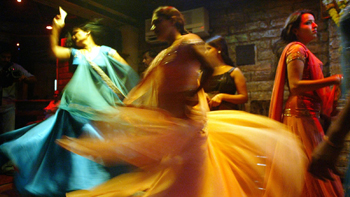
dancebarMaharashtra in 2005 suspended the licences of hundreds of bars and hotels that featured skimpily dressed women dancing to Bollywood tunes on a small stage for male customers.

But after several appeals over the years against the ban, the Supreme Court ordered the state to issue licences from 15 March on condition that certain rules are adhered to.

When the bars were shut in 2005, about 75,000 women were estimated to be working there and bar owners said the women were earning a legitimate living.

But activists and charities feared the women were victims of trafficking and the bars were fronts for brothels.

“It's not as if shutting them down stopped trafficking, but reopening them would legitimise it and give traffickers another reason to dupe and abuse women and girls,” said Suparna Gupta, founder of Aangan Trust which works with victims of trafficking.

“A majority of dance bars were doubling up as brothels, and we established a clear link between many rescued minor girls and these establishments.”

State chief minister Devendra Fadnavis last week said the government was not in favour of reopening dance bars and will draft legislation to find a way around the Supreme Court ruling.

About 150 bars and hotels in Mumbai and about 1,200 in the state are applying for licences, according to an industry lobby.

South Asia, with India at its centre, is the world's fastest-growing and second-biggest region for human trafficking after Southeast Asia, according to the United Nations Office for Drugs and Crime.

Mumbai, India's financial hub, is one of the biggest destinations for trafficked women and children.

Most of them are brought from other states and neighbouring countries, including Nepal and Bangladesh, under the guise of securing a well-paid job in a home or shop but are sold into sex work or forced into manual labour.

The Maharashtra government, which opposes dance bars on the grounds of obscenity, had proposed more than two dozen conditions for new licences but the Supreme Court rejected some of them, including requiring a live stream to police stations.

Instead, closed-circuit televisions will be installed at the entrance, with a limit of four dancers per bar, a railing around the performance area, and a distance of at least 5 feet between the stage and customers.

Women won't be permitted to dance in an obscene manner and customers cannot fling money at the dancers, the rules state.

Hotel and bar owners have lobbied against some of these conditions, calling them unreasonable.

“What has the state done in the last 10 years for the rehabilitation of the thousands of women who lost their livelihood overnight?” said Adarsh Shetty, head of the Indian Hotel and Restaurant Association in Mumbai.

Many women who found themselves without a job then were forced into prostitution or trafficked to Gulf nations, said Bharat Thakur, president of the Dance Bars' Association in Mumbai, which has criticised the state's “moral policing”.

Comments

IBRAHIM.HUSSAIN
 - 
Thursday, 17 Mar 2016

This would be good news for Dance Bar Owners, mostly from costal Karantaka, specially DK, and Udipi Districts. It was alleged that Dance Bar Association paid 35 Lakhs cheque to the BJP party fund for shutting their mouth against opening of Dance Bars. Dance Bars are nothing but a red light homes.

Dance Bar is another name of Cabaret Dance or Strip Dances. The day is not far every city of the India will have Strip Dance Bars which will destroy the peace of society and heritage of India.

As far as livelihood of the Dance Bars females and other workers concerned government of Maharastra should have made alternate arrangement for them for their livelihood. But they did not.

Very sad news of opening Dance Bars.

Suleman
 - 
Wednesday, 16 Mar 2016

BJP promoting \Cultural events\". Situation changed after 10 years of ban."

WellWisher
 - 
Wednesday, 16 Mar 2016

Dear Bros from The Rightwing of all religions,

It is time to show the universal brotherhood.

Please step forward and stop our mothers, sisters and daughters from falling into the hands of the pimps who are involved in such a heinous business called Dance bar who eventually end up trading them to the brothels.

PLZ ALL POLITICALLY POWERFULL PEOPLE OF INDIA PUT YOUR HANDS TOGETHER TO SAVE UR MOTHER,SISTERS and DAUGHTERS.

JAI HIND

Fair talker
 - 
Wednesday, 16 Mar 2016

Ladies are not safe in modesty if working in such exploiting atmosphere. their respect dignity are damaged.

If these 75,000 lady workers are required to work in a very sensitive situation to support their family, then it is the responsibility of the society to arrange them a job or support.

For such a state these 75,000 number is a not a matter.
Give jobs to their male members as much as possible and the rest of the ladies can be given even good gov't jobs.

Whoever showing pity are not genuinely concerned. Bar and Hotel owners are not expressing real pity.

Kumaraswamy
 - 
Wednesday, 16 Mar 2016

next trip to mumbai :P

Add new comment

  • Coastaldigest.com reserves the right to delete or block any comments.
  • Coastaldigset.com is not responsible for its readers’ comments.
  • Comments that are abusive, incendiary or irrelevant are strictly prohibited.
  • Please use a genuine email ID and provide your name to avoid reject.
News Network
April 5,2020

New Delhi, April 5: Former Karnataka chief minister HD Kumaraswamy on Sunday challenged Prime Minister Narendra Modi to offer a "credible scientific and rational" explanation for his candle-lighting call and said he is giving "meaningless tasks" to an already exhausted population.

The JD(S) leader questioned if the Prime Minister asked the nation to observe a candle-light vigil on the eve of foundation day of BJP.

"Has the PM slyly asked the nation to observe a candle light vigil on the eve of foundation day of BJP? April 6 being its foundation day, what else can explain the choice of date & time for this event? I challenge the PM to offer a credible scientific and rational explanation," Kumaraswamy tweeted.

"The government is yet to provide PPEs for doctors and make test kits affordable for the common man. Without telling the nation what concrete steps are being taken to combat COVID-19 menace, the prime minister is giving meaningless tasks to an already exhausted population," he tweeted.

"It is shameful to convert the national crisis into an event of self aggrandizement & it is beyond shameful to push the hidden agenda of his party in the face of global calamity. May sense prevail upon the PM," the JDS leader said in another tweet.

Amid a nationwide COVID-19 lockdown, Prime Minister Modi on Friday appealed to countrymen to light diyas and candles on April 5 at 9 pm to fight the darkness spread by the pandemic. He asked the people to turn off all the lights in their homes and stand at doors or balconies and light candles or diyas, torches or mobile flashlights for 9 minutes on April 5.

Last month, PM Modi had asked the people to come out in their balconies and clap and beat utensils to show appreciation for doctors, nurses and others helping fight coronavirus on 'Janata Curfew'.

Comments

Add new comment

  • Coastaldigest.com reserves the right to delete or block any comments.
  • Coastaldigset.com is not responsible for its readers’ comments.
  • Comments that are abusive, incendiary or irrelevant are strictly prohibited.
  • Please use a genuine email ID and provide your name to avoid reject.
Ram Puniyani
February 10,2020

Noam Chomsky is one of the leading peace workers in the world. In the wake of America’s attack on Vietnam, he brought out his classic formulation, ‘manufacturing consent’. The phrase explains the state manipulating public opinion to have the public approve of it policies—in this case, the attack of the American state on Vietnam, which was then struggling to free itself from French colonial rule.

In India, we are witness to manufactured hate against religious minorities. This hatred serves to enhance polarisation in society, which undermines India’s democracy and Constitution and promotes support for a Hindu nation. Hate is being manufactured through multiple mechanisms. For example, it manifests in violence against religious minorities. Some recent ghastly expressions of this manufactured hate was the massive communal violence witnessed in Mumbai (1992-93), Gujarat (2002), Kandhamal (2008) and Muzaffarnagar (2013). Its other manifestation was in the form of lynching of those accused of having killed a cow or consumed beef. A parallel phenomenon is the brutal flogging, often to death, of Dalits who deal with animal carcasses or leather.

Yet another form of this was seen when Shambhulal Regar, indoctrinated by the propaganda of Hindu nationalists, burned alive Afrazul Khan and shot the video of the heinous act. For his brutality, he was praised by many. Regar was incited into the act by the propaganda around love jihad. Lately, we have the same phenomenon of manufactured hate taking on even more dastardly proportions as youth related to Hindu nationalist organisations have been caught using pistols, while police authorities look on.

Anurag Thakur, a BJP minster in the central government recently incited a crowd in Delhi to complete his chant of what should happen to ‘traitors of the country...” with a “they should be shot”. Just two days later, a youth brought a pistol to the site of a protest at Jamia Millia Islamia university and shouted “take Azaadi!” and fired it. One bullet hit a student of Jamia. This happened on 30 January, the day Nathuram Godse had shot Mahatma Gandhi in 1948. A few days later, another youth fired near the site of protests against the CAA and NRC at Shaheen Bagh. Soon after, he said that in India, “only Hindus will rule”.

What is very obvious is that the shootings by those associated with Hindu nationalist organisations are the culmination of a long campaign of spreading hate against religious minorities in India in general and against Muslims in particular. The present phase is the outcome of a long and sustained hate campaign, the beginning of which lies in nationalism in the name of religion; Muslim nationalism and Hindu nationalism. This sectarian nationalism picked up the communal view of history and the communal historiography which the British introduced in order to pursue their ‘divide and rule’ policy.

In India what became part of “social common sense” was that Muslim kings had destroyed Hindu temples, that Islam was spread by force, and that it is a foreign religion, and so on. Campaigns, such as the one for a temple dedicated to the Hindu god Rama to be built at the site where the Babri masjid once stood, further deepened the idea of a Muslim as a “temple-destroyer”. Aurangzeb, Tipu Sultan and other Muslim kings were tarnished as the ones who spread Islam by force in the subcontinent. The tragic Partition, which was primarily due to British policies, and was well-supported by communal streams also, was entirely attributed to Muslims. The Kashmir conflict, which is the outcome of regional, ethnic and other historical issues, coupled with the American policy of supporting Pakistan’s ambitions of regional hegemony, (which also fostered the birth of Al-Qaeda), was also attributed to the Muslims.

With recurring incidents of communal violence, these falsehoods went on going deeper into the social thinking. Violence itself led to ghettoisation of Muslims and further broke inter-community social bonds. On the one hand, a ghettoised community is cut off from others and on the other hand the victims come to be presented as culprits. The percolation of this hate through word-of-mouth propaganda, media and re-writing of school curricula, had a strong impact on social attitudes towards the minorities.

In the last couple of decades, the process of manufacturing hate has been intensified by the social media platforms which are being cleverly used by the communal forces. Swati Chaturvedi’s book, I Am a Troll: Inside the Secret World of the BJP’s Digital Army, tells us how the BJP used social media to spread hate. Whatapp University became the source of understanding for large sections of society and hate for the ‘Other’, went up by leaps and bounds. To add on to this process, the phenomenon of fake news was shrewdly deployed to intensify divisiveness.

Currently, the Shaheen Bagh movement is a big uniting force for the country; but it is being demonised as a gathering of ‘anti-nationals’. Another BJP leader has said that these protesters will indulge in crimes like rape. This has intensified the prevalent hate.

While there is a general dominance of hate, the likes of Shambhulal Regar and the Jamia shooter do get taken in by the incitement and act out the violence that is constantly hinted at. The deeper issue involved is the prevalence of hate, misconceptions and biases, which have become the part of social thinking.

These misconceptions are undoing the amity between different religious communities which was built during the freedom movement. They are undoing the fraternity which emerged with the process of India as a nation in the making. The processes which brought these communities together broadly drew from Gandhi, Bhagat Singh and Ambedkar. It is these values which need to be rooted again in the society. The communal forces have resorted to false propaganda against the minorities, and that needs to be undone with sincerity.

Combating those foundational misconceptions which create hatred is a massive task which needs to be taken up by the social organisations and political parties which have faith in the Indian Constitution and values of freedom movement. It needs to be done right away as a priority issue in with a focus on cultivating Indian fraternity yet again.

Comments

Add new comment

  • Coastaldigest.com reserves the right to delete or block any comments.
  • Coastaldigset.com is not responsible for its readers’ comments.
  • Comments that are abusive, incendiary or irrelevant are strictly prohibited.
  • Please use a genuine email ID and provide your name to avoid reject.
News Network
April 26,2020

Davanagere, Apr 26: Amid the national lockdown imposed by the Centre to check the spread of coronavirus, social distancing norms were flouted as BJP MLA from Honnali -- MP Renukacharya -- held a meeting of ASHA workers on Thursday.

The workers were present in large numbers and no distance of at least one metre between the workers was maintained during the meeting.

However, the workers were seen wearing masks at the meeting but violating the norms of social distancing.

Social distancing is one of the measures that can help people avoid contracting the highly contagious coronavirus.

According to the Union Ministry of Health and Family Welfare, Karnataka has a total of 489 positive COVID-19 cases of which, 153 patients have recovered and 18 patients have died due to the deadly virus.

Comments

Add new comment

  • Coastaldigest.com reserves the right to delete or block any comments.
  • Coastaldigset.com is not responsible for its readers’ comments.
  • Comments that are abusive, incendiary or irrelevant are strictly prohibited.
  • Please use a genuine email ID and provide your name to avoid reject.