



Murder of 17-year-old Muslim girl in US sparks outrage

Agencies
June 20, 2017

Washinton, Jun 20: The brutal murder of a teenage Muslim girl in the US state of Virginia has sparked outrage among Muslim communities across the country.US
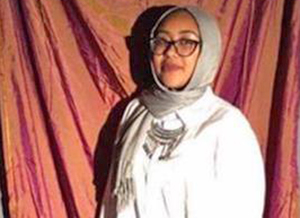
Nabra Hassanen, 17, was kidnapped from near a mosque in northern Virginia and repeatedly hit with a baseball bat by a man named Darwin Martinez Torres, 22, on Sunday. Nabra died from blunt force trauma to the upper body.

The girl was walking with friends when she was attacked and beaten to death. Her body was later found in Sterling area, outside Washington with signs of beating. Torres has been charged with the killing.

Police say the killing is being investigated as a road rage incident. But Nabra's father has rejected the police theory and said his daughter was attacked because she was Muslim.

“There is nothing at this point to indicate that this tragic case was a hate crime. No evidence has been recovered that showed this was a hate crime. Nothing indicates it was motivated by race or religion,” claimed Julie Parker, a spokeswoman for Fairfax County police.

She added that if evidence surfaces that does point to a hate crime, “at that point detectives would obviously take the investigation in that direction.”

‘My daughter was killed because she was Muslim’

In a phone interview with The Guardian on Monday afternoon, Nabra’s father, Mohmoud Hassanen, rejected the police claim. “I don’t believe this story. I tell the detective the same thing.”

“He killed my daughter because she is Muslim. That’s what I believe. That’s what I told him,” the 60-year-old father said.

According to a statement by the Fairfax County Police Department, the girl was with her friends when they engaged in a dispute with a motorist, who left his car and assaulted them.

Nabra's friends, who had scattered around during the brawl, could not find her at the scene afterwards, the statement added.

‘Why did you do this to my daughter?’

Struggling to keep his emotions in check, the father recounted the version of events they were given. “My daughter fell down. When she fell down, the guy hit her with a baseball stick. He went and drove his car and came back, and picked her up and threw her in a lake a mile from the mosque,” he said.

“He followed the girls, and all of them had head cloths, meaning they are Muslim, and he had a baseball stick,” said Egyptian-born Hassanen who moved to the US in 1987.

“I told the detective: ‘I want to ask him one question. Why did he do that? Because he doesn’t like Muslims, or what?’ He tells me he has no answer for that. This answer is going to be in the court.”

“When I go to court I’m going to look him in the eye: why did you do this to my daughter? Then I’m going to forgive him and leave him to God’s face. The lord is going to judge him. He took my daughter’s life,” he said.

Social media have been flooded with shock and resentment, with Muslims calling on authorities to investigate the murder as a hate crime.

Comments

Add new comment

  • Coastaldigest.com reserves the right to delete or block any comments.
  • Coastaldigset.com is not responsible for its readers’ comments.
  • Comments that are abusive, incendiary or irrelevant are strictly prohibited.
  • Please use a genuine email ID and provide your name to avoid reject.
News Network
April 19,2020

Washington, Apr 19: President Donald Trump has expressed his doubts over the official Chinese figures on the number of deaths in their country due to the novel coronavirus pandemic, claiming that the fatalities were way ahead of the US.

Trump's comments come two days after another 1,300 fatalities were added to the official count in the city of Wuhan, where the outbreak started. The revision puts China's overall death toll to more than 4,600.

"We are not number one; China is number one just so you understand," Trump told reporters at a White House news conference on Saturday. "They are way ahead of us in terms of death. It's not even close."

According to Trump, when highly-developed healthcare systems of the UK, France, Belgium, Italy and Spain had high fatality rates, it was O.33 in China.

The president asserted that the actual number was much more than the official Chinese death toll figures, which he said were "unrealistic".

"You know it, I know it and they know it, but you don't want to report it. Why?" he asked. "You will have to explain that. Someday I will explain it."

He also highlighted that on a per-capita basis, the mortality rate in the US was far lower than other nations of Western Europe.

Comments

Add new comment

  • Coastaldigest.com reserves the right to delete or block any comments.
  • Coastaldigset.com is not responsible for its readers’ comments.
  • Comments that are abusive, incendiary or irrelevant are strictly prohibited.
  • Please use a genuine email ID and provide your name to avoid reject.
News Network
May 7,2020

United Nations, May 7: An average of 80,000 COVID-19 cases were reported each day in April to the World Health Organization, the top UN health agency has said, noting that South Asian nations like India and Bangladesh are seeing a spike in the infections while the numbers are declining in regions such as Western Europe.

WHO Director-General Tedros Adhanom Ghebreyesus said on Wednesday that countries must also be able to manage any risk of the disease being imported into their territories, and communities should be fully educated to adjust to what will be a "new norm".

He said as the countries press forward in the common fight against COVID-19, they should also lay the groundwork for resilient health systems globally.

"More than 3.5 million cases of COVID-19 and almost 250,000 deaths have now been reported to the WHO. Since the beginning of April, an average of around 80,000 new cases have been reported to the WHO every day," Ghebreyesus said in Geneva yesterday.

Asserting that the virus cases were not just numbers, he said: "every single case is a mother, a father, a son, a daughter, a brother, sister or friend".

He said while the numbers are declining in Western Europe, more cases are being reported every day from Eastern Europe, Africa, South-East Asia, the Eastern Mediterranean and the Americas. Even within regions and within countries, there are divergent trends, the agency added.

While some countries are reporting an increase in COVID-19 cases over time, many have seen caseloads rise because they have ramped up testing, the WHO official said.

"We've also seen in Europe and Western Europe a fundamental decrease in the number of cases, but we have seen an associated increase in the number of cases reported in places like the Russian Federation. Southeast, the Western Pacific areas are relatively on the downward trend like Korea and others, but then we do see in South Asia, in places like Bangladesh, in India, some trends towards increase.

"So it's very difficult to say that any particular region is improving or (not improving). There are individual countries within each region that are having difficulties getting on top of this disease and I am particularly concerned about those countries that have (an) ongoing humanitarian crisis," WHO's Executive Director Michael Ryan said.

The death toll due to COVID-19 in India rose to 1,783 while the number of cases climbed to 52,952 on Thursday, registering an increase of 89 deaths and 3,561 cases in the last 24 hours, the Union Health Ministry said.

The number of active COVID-19 cases stood at 35,902 while 15,266 people have recovered, it said.

Noting that while seeing an increase in the number of cases is not good in terms of transmission, WHO's Emerging Diseases and Zoonoses Unit head Maria Van Kerkhove said: "but I don't want to equate that with something (being) wrong".

"I want to equate that with countries are working very hard to increase their ability to find the virus, to find people with the virus, to have testing in place to identify who has COVID-19, and putting into place what they need to do to care for those patients," Kerkhove said.

With more countries considering easing restrictions implemented to curb the spread of the coronavirus, the WHO has again reminded the authorities of the need to maintain vigilance.

"The risk of returning to lockdown remains very real if countries do not manage the transition extremely carefully, and in a phased approach," Ghebreyesus said.

He urged countries to consider the UN agency's six criteria for lifting stay-at-home measures.

That advice includes ensuring surveillance is strong, cases are declining and transmission is controlled. Health systems also must be able to detect, isolate, test and treat cases, and to trace all contacts.

Additionally, the risk of outbreak in settings such as health facilities and nursing homes needs to be minimised, while schools, workplaces and other public locations should have preventive measures in place.

"The COVID-19 pandemic will eventually recede, but there can be no going back to business as usual. We cannot continue to rush to fund panic but let preparedness go by the wayside," he said.

He said the crisis has highlighted the importance of strong national health systems as the foundation of global health security: not only against pandemics but also against the multitude of health threats that people across the world face every day.

"If we learn anything from COVID-19, it must be that investing in health now will save lives later," Ghebreyesus said.

While the world currently spends around USD 7.5 trillion on health annually, the WHO believes the best investments are in promoting health and preventing disease.

"Prevention is not only better than cure, it's cheaper, and the smartest thing to do," he said.

The deadly coronavirus, which originated from the Chinese city of Wuhan in December last year, has infected over 3.7 million people and killed 263,831 people globally, according to a tally by Johns Hopkins University.

Comments

Add new comment

  • Coastaldigest.com reserves the right to delete or block any comments.
  • Coastaldigset.com is not responsible for its readers’ comments.
  • Comments that are abusive, incendiary or irrelevant are strictly prohibited.
  • Please use a genuine email ID and provide your name to avoid reject.
News Network
January 6,2020

Sydney, Jan 6: Reserve troops fanned out across fire-ravaged regions in three Australian states on Monday after a horror weekend, as the government pledged $1.4 billion over two years to help recover from the devastating months-long crisis.

Catastrophic bushfires have turned swathes of land into smouldering, blackened hellscapes and destroyed an area about the size of the island of Ireland, according to official figures, with authorities warning the disaster still has weeks or months to run.

Prime Minister Scott Morrison, whose government has been criticised for its slow response to the emergency, pledged Australian $2 billion ($1.4 billion) of taxpayer money for a national recovery fund.

"It's a long road ahead and we will be with these communities every step of the way as they rebuild," Morrison said.

Firefighters joined by fresh teams from the US and Canada were taking advantage of rainy and cooler conditions to tackle out-of-control blazes ahead of rising temperatures forecast later this week.

In the biggest-ever call up of reserves, military teams were deployed across eastern Australia to help emergency services assess the damage, restore power and deliver supplies of food, water and fuel to cut-off communities.

For the first time in Australian history the government also deployed its medical assistance team, normally sent to other nations to lend support in the aftermath of their disasters to help evacuees.

"There is no room for complacency, especially as we have over 130 fires burning across (New South Wales) state still," Premier of New South Wales state Gladys Berejiklian said on Monday.

New normal

Almost five million hectares (50,000 square kilometres) have been razed across New South Wales and more than 1.2 million hectares in Victoria since late September, officials said.

That took the total amount of land burnt close to eight million hectares, around the size of the island of Ireland or South Carolina.

Twenty-four people have lost their lives so far, with over 1,800 homes damaged.

Two people are missing in New South Wales, the nation's most populous state.

In Victoria, Premier Daniel Andrews established a bushfire recovery agency to help devastated towns. It will be a permanent body, he said, as intense fires will become commonplace.

"We should just be honest about the fact that we're going to see more and more fires, more and more damage as each fire season comes... this is the new normal," Andrews told reporters.

The chair of the newly established Victoria state's bushfire appeal fund, Pat McNamara, added that this year's summer bushfire season was a "creeping disaster".

"We're still not even into what we would regard as the peak of the fire season," McNamara told national broadcaster ABC.

In the usually picturesque southeastern town of Eden, Holly Spence said she spent more than 12 hours defending her family's farm on Saturday, less than a week after saving it on New Year's Eve.

"We don't want to go through this for a third time," the 28-year-old told AFP.

Fiona Kennelly, 50, who evacuated with 24 members of her extended family to a motel outside Eden, said she was relieved the easing conditions allowed them to get some respite from the crisis.

"It's good to see daylight at the right time again," she told AFP, adding that the skies had been turning pitch-black in the afternoons.

Public anger

The impact of the bushfires has spread beyond affected communities, with heavy smoke engulfing the country's second-largest city Melbourne and the national capital Canberra.

Some government departments were shut in Canberra as the city's air quality was once-again ranked the world's poorest, according to independent online air-quality index monitor Air Visual.

The disaster has sparked growing public anger with Morrison. Rallies are planned on Friday to call on his government to step up efforts to tackle climate change, which experts say have helped fuel the fires.

In Los Angeles, Hollywood superstar Russell Crowe said he was back home fighting the fires and that the disaster was "climate change-based".

"We need to act on science, move our global workforce to renewable energy and respect our planet for the unique and amazing place it is. That way, we all have a future," he said in a message read out by Jennifer Aniston.

Australian actress Cate Blanchett praised the volunteer firefighters battling the blazes, adding: "When one country faces a climate disaster, we all face a climate disaster. We're in it together."

Comments

Add new comment

  • Coastaldigest.com reserves the right to delete or block any comments.
  • Coastaldigset.com is not responsible for its readers’ comments.
  • Comments that are abusive, incendiary or irrelevant are strictly prohibited.
  • Please use a genuine email ID and provide your name to avoid reject.