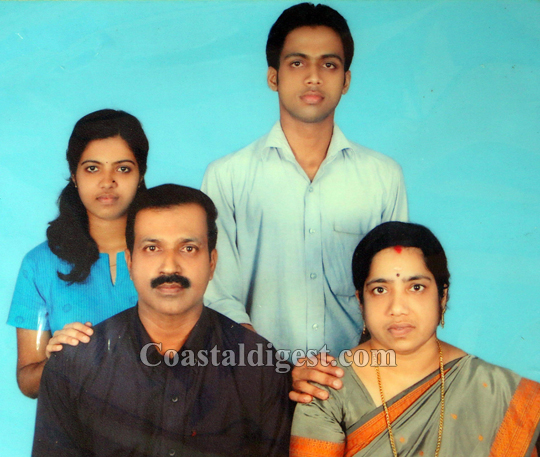
Murdered techie laid to rest; Infosys promises Rs 1 cr, job for her family

February 1, 2017

Kozhikode, Feb 1: The body of slain software engineer Rasila Raju, 25, was cremated on the premises of her house at Payimbra, near Kuruvattoor, Kozhikode, on Tuesday.

Rasila3

She was found murdered at the Infosys office in Pune on Sunday and the police had arrested security guard Bhaben Saikia from Assam for the crime.

Infosys offered the Rasila family a compensation of Rs 1 crore and a job for one of her relatives.

"In the tragic event of the demise of any employee under unfortunate circumstances, as happened in this instance with our employee, OP Rasila, in Pune, Infosys ensures that the next of kin of the deceased employee does not suffer financially in any way," Infosys said in a statement issued tonight.

The statement said that towards ensuring financial stability for the family, Infosys takes into account the statutory payments to be made as per the company policy.

"The company also considers ex-gratia payments based on the circumstances. Infosys also endeavours to make every effort at a suitable employment opportunity for the next of kin who qualify its recruitment criteria," it said.

Meanwhile, a senior office-bearer of the 'Pune Kerala Samaj' has claimed Infosys has issued a letter to the family of Rasila, agreeing to pay "Rs one crore as ex-gratia" to her nominee.

Repeated calls to Infosys officials for reaction on the claims regarding issuance of the letter remained unanswered.

Rasila's father Raju OP along with Malyali community members had visited Infosys officials on Pune campus on Monday night.

Her mortal remains were cremated today at her village in Kozhikode district in presence of a large number of people.

Meanwhile, Congress in Kerala on Tuesday demanded a comprehensive probe into the techie's murder.

In a letter to Maharashtra Chief Minister Devandra Fadnavis, Leader of the Opposition in the Kerala assembly, Ramesh Chennithala, said he had visited the relatives of Rasila at Kozhikode this morning.

"There is some mystery in the murder and some others had a role in her death, Rasila's relatives informed me. Besides, the family also complained that there was a serious lapse on the part of the company," he said.

Police had on Monday arrested Bhaben Saikia, a security guard from a private security services firm deployed at the Infosys campus, in connection with the murder.

According to police, Rasila had chided Saikia for "staring" at her and threatened to complain against him.

Comments

Rikaz
 - 
Wednesday, 1 Feb 2017

Money cannot bring back that soul....but still it was Infosys did not provide security for that lone employee...disgusting...need to take care while working for this type of big companies...they just don't care.....

Skazi
 - 
Wednesday, 1 Feb 2017

RIP..... Condolences to the family ..... well done Infosys... May Allah shower his blessings on the company for such noble acts .....

Add new comment

  • Coastaldigest.com reserves the right to delete or block any comments.
  • Coastaldigset.com is not responsible for its readers’ comments.
  • Comments that are abusive, incendiary or irrelevant are strictly prohibited.
  • Please use a genuine email ID and provide your name to avoid reject.
Anusha Bhat | coastaldigest.com
July 24,2020

Mangaluru, Jul 24: Parents in Dakshina Kannada are urging the educational institutions to reduce fees at least by 75% as most of the infrastructure and resources are not being utilized due to online classes. 

“School campuses are now closed. Why we have to pay such a heavy fee when our children are not availing the facilities offered on campus?” asks a Sapna (name changed), a parent, whose two daughters study at a prestigious private school in Mangaluru.  

Even though some schools considered as small players have reduced fees, most of the “prestigious” institutions in the Mangaluru have so far refused to give any discount.

“Apart from paying school fees, now we have to invest in gadgets, internet connections and accessories required for online classes. School administration can use their infrastructure and facilities for other purposes as students are not utilizing them. Hence, they must give us maximum discount during this pandemic,” said another parent.  
 
On the other hand, many parents are facing a dire financial situation due to covid-19 lockdown – while some have suffered losses in their business some have lost their jobs.

Many parents have even approached the education department to ensure that they get a discount in fees from educational institutions, said Dakshina Kannada DDPI Malleswamy.

“We cannot do anything since a government circular has asked educational institutions not to hike fees, which they have not done, and reduce fees if possible, which will never happen. The department is acting against only those schools that forcefully collect fees,” the DDPI said.

Comments

Add new comment

  • Coastaldigest.com reserves the right to delete or block any comments.
  • Coastaldigset.com is not responsible for its readers’ comments.
  • Comments that are abusive, incendiary or irrelevant are strictly prohibited.
  • Please use a genuine email ID and provide your name to avoid reject.
Agencies
February 20,2020

India ranked 77th on a sustainability index that takes into account per capita carbon emissions and ability of children in a nation to live healthy lives and secures 131st spot on a flourishing ranking that measures the best chance at survival and well-being for children, according to a UN-backed report.

The report was released on Wednesday by a commission of over 40 child and adolescent health experts from around the world. It was commissioned by the World Health Organization (WHO), UN Children's Fund (UNICEF) and The Lancet medical journal.

In the report assessing the capacity of 180 countries to ensure that their youngsters can survive and thrive, India ranks 77th on the Sustainability Index and 131 on the Flourishing Index, it said.

Flourishing is the geometric mean of Surviving and Thriving. For Surviving, the authors selected maternal survival, survival in children younger than 5 years old, suicide, access to maternal and child health services, basic hygiene and sanitation, and lack of extreme poverty.

For Thriving, the domains were educational achievement, growth and nutrition, reproductive freedom, and protection from violence.

Under the Sustainability Index, the authors noted that promoting today's national conditions for children to survive and thrive must not come at the cost of eroding future global conditions for children's ability to flourish.

The Sustainability Index ranks countries on excess carbon emissions compared with the 2030 target. This provides a convenient and available proxy for a country's contribution to sustainability in future.

The report noted that under realistic assumptions about possible trajectories towards sustainable greenhouse gas emissions, models predict that global carbon emissions need to be reduced from 39·7 giga­ tonnes to 22·8 gigatonnes per year by 2030 to maintain even a 66 per cent chance of keeping global warming below 1·5°C.

It said that the world's survival depended on children being able to flourish, but no country is doing enough to give them a sustainable future.

"No country in the world is currently providing the conditions we need to support every child to grow up and have a healthy future," said Anthony Costello, Professor of Global Health and Sustainability at University College London, one of the lead authors of the report.

"Especially, they're under immediate threat from climate change and from commercial marketing, which has grown hugely in the last decade," said Costello – former WHO Director of Mother, Child and Adolescent health.

Norway leads the table for survival, health, education and nutrition rates - followed by South Korea and the Netherlands. Central African Republic, Chad and Somalia come at the bottom.

However, when taking into account per capita CO2 emissions, these top countries trail behind, with Norway 156th, the Republic of Korea 166th and the Netherlands 160th.

Each of the three emits 210 per cent more CO2 per capita than their 2030 target, the data shows, while the US, Australia, and Saudi Arabia are among the 10 worst emitters. The lowest emitters are Burundi, Chad and Somalia.

According to the report, the only countries on track to beat CO2 emission per capita targets by 2030, while also performing fairly – within the top 70 – on child flourishing measures are: Albania, Armenia, Grenada, Jordan, Moldova, Sri Lanka, Tunisia, Uruguay and Vietnam.

"More than 2 billion people live in countries where development is hampered by humanitarian crises, conflicts, and natural disasters, problems increasingly linked with climate change," said Minister Awa Coll-Seck from Senegal, Co-Chair of the commission.

The report also highlights the distinct threat posed to children from harmful marketing.

Evidence suggests that children in some countries see as many as 30,000 advertisements on television alone in a single year, while youth exposure to vaping (e-cigarettes) advertisements increased by more than 250 per cent in the US over two years, reaching more than 24 million young people.

Studies in Australia, Canada, Mexico, New Zealand and the US – among many others – have shown that self-regulation has not hampered commercial ability to advertise to children.

Children's exposure to commercial marketing of junk food and sugary beverages is associated with purchase of unhealthy foods and overweight and obesity, linking predatory marketing to the alarming rise in childhood obesity, it said.

The number of obese children and adolescents increased from 11 million in 1975 to 124 million in 2016 – an 11-fold increase, with dire individual and societal costs, the report said.

To protect children, the authors call for a new global movement driven by and for children.

Specific recommendations include stopping CO2 emissions with the utmost urgency, to ensure children have a future on this planet; placing children and adolescents at the centre of global efforts to achieve sustainable development, the report said.

New policies and investment in all sectors to work towards child health and rights; incorporating children's voices into policy decisions and tightening national regulation of harmful commercial marketing, supported by a new Optional Protocol to the UN Convention on the Rights of the Child, it said.


Comments

Add new comment

  • Coastaldigest.com reserves the right to delete or block any comments.
  • Coastaldigset.com is not responsible for its readers’ comments.
  • Comments that are abusive, incendiary or irrelevant are strictly prohibited.
  • Please use a genuine email ID and provide your name to avoid reject.
May 9,2020

Mangaluru, May 9: A team of doctors at Mangaluru's Mangala Hospital has developed a 'bubble helmet' that will provide an alternative to patients who need an oxygen mask.

The team was led by Dr Ganapathi, medical director of Mangala Hospital and Mangala Kidney Foundation in the city.

The bubble helmet, which has a special collar attached to it, helps the patients with breathing issues, and to avoid using ventilator facility.

Dr Ganapathi said, "When a patient needs intubation we will be providing them oxygen bubble helmets and we will first give it a trial before we intubate a patient."

"I have converted an ordinary snorkelling mask into a ventilator assist device, this mask can be used as a personal protection device by connecting it to a bacterial viral filter," he added.

Dr Ganapathi said that the connector has been made available in India and a snorkelling mask can be easily converted into a ventilator assist device. And it will make the management of coronavirus patients easy.

Comments

Add new comment

  • Coastaldigest.com reserves the right to delete or block any comments.
  • Coastaldigset.com is not responsible for its readers’ comments.
  • Comments that are abusive, incendiary or irrelevant are strictly prohibited.
  • Please use a genuine email ID and provide your name to avoid reject.