Muslim empowerment: Justice Sachar urges Karnataka govt to form EOC

[email protected] (CD Network)
November 28, 2016

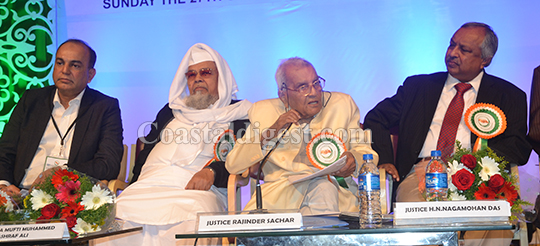
Bengaluru, Nov 27: “All state governments should set up the Equal Opportunity Commission and public sector also should come under the preview of this commission. Then only, the Other Backward Classes including Muslims can get equal opportunities in education and employment,” said Justice Rajinder Sachar.
empormnt 6

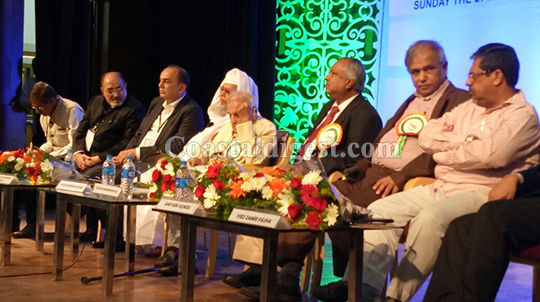
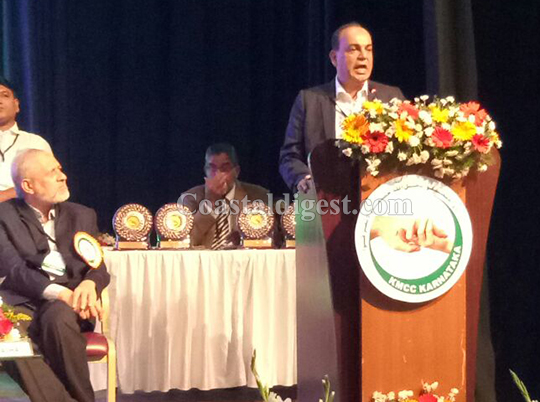
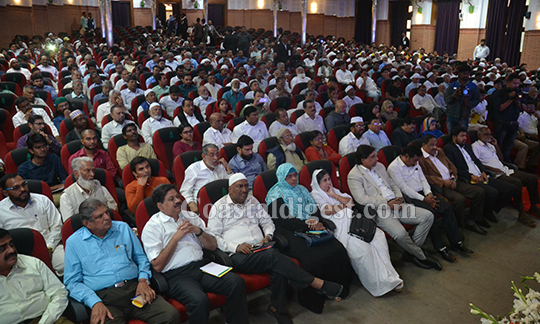
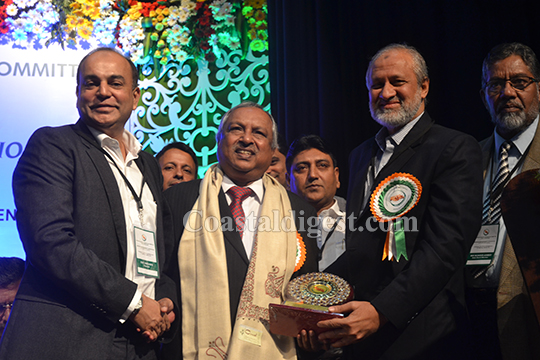
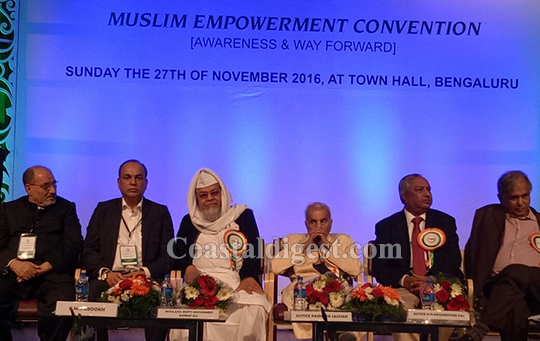
He was delivering a talk on Muslim Empowerment at the launching ceremony of Karnataka Muslim Coordination Committee (KMCC), a social organisation intended to work for communal harmony and empowerment of Muslim community through democratic means, at Town Hall, here on Sunday.

He said that if Karnataka government has real commitment toward OBCs then it should form Equal Opportunity Commission immediately in the state.

“The Sachar committee report is not just related to Muslims, It is related to all other communities. In a democratic country all communities should get equal opportunities. But Muslims in India are deprived from equal opportunities in education, employment and political appointments. Muslims are undivided part of India and any kind of apathy against them is against constitutional aspires,” he said adding that if a government fails to protect the interest of any minorities it will lose the moral right to rule the state.

Stating that Muslims are part of Indian culture and have contributed immensely to attain freedom, Justice Sachar endorsed the Karnataka government's decision to honour Tipu Sultan, who sacrificed his life fighting against British imperialists.

He emphasized that his report on the social, economical and educational status of the minorities was based on facts and it was the collective responsibility of all the people to see that the report is implemented to strike a balance in rendering social justice. He made it clear that there is nothing wrong to fight for right and lamented that even Karnataka government ruled by Conges has not implemented his suggestions to constitute an 'equal opportunity commission' to look into discrimination among different sections of people in employment other fields even at private sector.

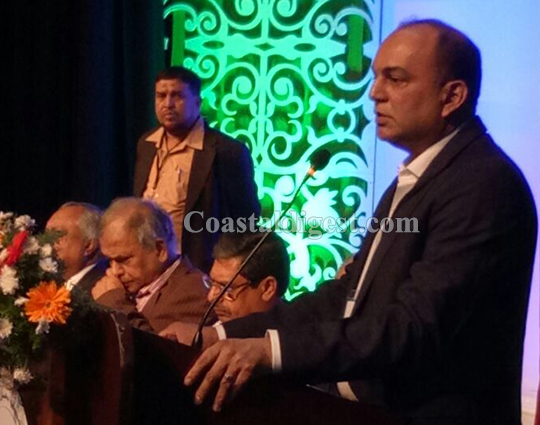
B M Farooq, CMD of Fiza group of industries, and treasurer KMCC, in his key note address explained the objectives of the newly formed NGO and the need to coordinate the minority communities and other marginalized section of people for a common cause in the face of various threats faced by it.

He pointed out that state governments in India have failed to implement the recommendations of Sachar Committee report. “Many argue that implementation of the recommendations of the Sachar Committee Report would virtually divide the society. The plight of Muslims in India remains to be pathetic while many other communities with political and administrative influence snatch away all liberties to the detriment of the community. Muslims were accused of being not loyal to the Indian state, of being terrorists, and politicians who tried to help them risked being accused of "appeasing" them,” he lamented.

The launch of Karnataka Muslim Coordination Committee (KMCC) is an earnest endeavor to unite all sections of the underprivileged and oppressed in the society for a collective bargain for the rights and liberties they are entitled to, he said.

The Muslims, Dalits and other minorities should be united and there should be a social awareness created to fight for their rights in a democratic manner. The political parties have treated the minority community, especially the Muslim community as a vote bank and the community is ill treated and neglected. Poverty, illiteracy and backwardness are rampant and the government does nothing to improve the standard of the community, he complained.

The members of the Muslim community are targeted by the police and false cases are filed against them without affording them any opportunity to even get the legal assistance. Those who take up the cause have been branded astraitors'. Though Muslims are staunch patriots and are ready to sacrifice anything for the nation, they are very often described as anti national. The situation should be changed. Launch of KMCC is only a small step in the right direction.

Muslim community does not have a constructive leadership to enable it to achieve the rights, liberties and privileges to which the community is entitled to and the first and foremost objective of KMCC will be to achieve a constructive leadership and platform for the community from which, the community may be guided in the right direction.

Muslim Community is deprived of education, jobs and government services for want of proper guidance. Our endeavor will be held the youth in the community to acquire knowledge, education in the best school and colleges so that they would be able to stand on their own leg to achieve the goal of securing positions in the legislative, executive and judicial appointments with dignity.

Muslim community is targeted falsely accused of terrorism and other disruptive activities for no fault of them for political gains. KMCC would like to form a squad of professionals to act as awatchdog' against such atrocities against the members of the community and also to alleviate any such tendencies shown by any group of the community by properly educating and creating awareness amongst them.

To protect the interest of the community against the atrocities committed by the administrative or law enforcing agencies without any cogent evidence and to provide legal and financial assistance to them if they are falsely implicated or targeted in the opinion of the expert level committee of the Organization.

“We are for a strong India. We condemn any form of cross border terrorism targeting our nation and we are ready to sacrifice our lives for the sake of this great nation. At the same time, we demand a decent living and equal opportunity to serve the nation with dignity. Let us fight for our right. Let might be not right,” he said.

Mr. Amithabh Khundu, the Chairman of the Sachar Commission Evaluation Committee, presented the statistics and stressed the need to act on the report submitted showing the backwardness of the minorities in many fronts on account of discrimination of the community. He hoped that central govt would take appropriate step to alleviate the disparities. Justice H N Nagmohan Das also spoke.

The function was inaugurated by Moulana Mufti Muhammed Ashraf Ali, Amir-e-Shariat, Karnataka. Syed Zameer Pasha, IAS (retired) welcomed the gatherings. Haris and Hanif Mohammed compered the programme. Mirza Mehadi proposed vote of thanks.
empormnt 2

empormnt 1

empormnt 3

empormnt 4

empormnt 5

empormnt 7

Comments

Mr ABDULGAFFAR GHORI
 - 
Saturday, 17 Dec 2016

Free training of different courses for OBC under the aegis of Min of Minorities, Govt of India. Free hostel, boarding and with stipend. The duration is for 3-4 months. . There is placement assistance given after successful completion of the courses. NTTF has undertaken to train people from our community.. For more details pl visit www.nttftrg.com. Pl help to spread this message among the needy thro' email, phone, whatsup etc. Similar vocational courses under the same/similar schemes, all over the country, different agencies are doing this.

yaseer arfath
 - 
Monday, 28 Nov 2016

Great committee nd superb speech I agreed about your all rules it's awesome sir I hope so you became greatest nd big name full committee in future

yaseer arfath
 - 
Monday, 28 Nov 2016

Great committee nd superb speech i agreed about your all committee's rules it's awesome sir i hope your committee become more then name full in future .....

yaseer arfath
 - 
Monday, 28 Nov 2016

Great function nd speech was superb awesome..... i hope this committee make big name in future..... thank you....

Add new comment

  • Coastaldigest.com reserves the right to delete or block any comments.
  • Coastaldigset.com is not responsible for its readers’ comments.
  • Comments that are abusive, incendiary or irrelevant are strictly prohibited.
  • Please use a genuine email ID and provide your name to avoid reject.
Ram Puniyani
January 14,2020

In the beginning of January 2020 two very disturbing events were reported from Pakistan. One was the attack on Nankana Sahib, the holy shrine where Sant Guru Nanak was born. While one report said that the place has been desecrated, the other stated that it was a fight between two Muslim groups. Prime Minister of Pakistan Imran Khan condemned the incident and the main accused Imran Chisti was arrested. The matter related to abduction and conversion of a Sikh girl Jagjit Kaur, daughter of Pathi (One who reads Holy Guru Granth Sahib in Gurudwara) of the Gurudwara. In another incident one Sikh youth Ravinder Singh, who was out on shopping for his marriage, was shot dead in Peshawar.

While these condemnable attacks took place on the Sikh minority in Pakistan, BJP was quick enough to jump to state that it is events like this which justify the Citizenship Amendment Act (CAA). Incidentally CAA is the Act which is discriminatory and relates to citizenship with Religion, which is not as per the norms of Indian constitution. There are constant debates and propaganda that population of Hindus has come down drastically in Pakistan and Bangla Desh. Amit Shah, the Home minister stated that in Pakistan the population of Hindus has come down from 23% at the time of partition to 3.7% at present. And in Bangla Desh it has come down from 22% to present 8%.

While not denying the fact that the religious minorities are getting a rough deal in both these countries, the figures which are presented are totally off the mark. These figures don’t take into consideration the painful migrations, which took place at the time of partition and formation of Bangla Desh later. Pakistan census figures tell a different tale. Their first census was held in 1951. As per this census the overall percentage of Non Muslim in Pakistan (East and West together) was 14.2%, of this in West Pakistan (Now Pakistan) it was 3.44 and in Eat Pakistan it was 23.2. In the census held in Pakistan 1998 it became 3.72%. As far as Bangla Desh is concerned the share of Non Muslims has gone down from 23.2 (1951) to 9.6% in 2011.

The largest minority of Pakistan is Ahmadis, (https://minorityrights.org/country/pakistan/) who are close to 4 Million and are not recognised as Muslims in Pakistan. In Bangla Desh the major migrations of Hindus from Bangla Desh took place in the backdrop of Pakistan army’s atrocities in the then East Pakistan.

As far as UN data on refugees in India it went up by 17% between 2016-2019 and largest numbers were from Tibet and Sri Lanka.  (https://www.un.org/en/development/desa/population/migration/publication…)

The state of minorities is in a way the index of strength of democracy. Most South Asian Countries have not been able to sustain democratic values properly. In Pakistan, the Republic began with Jinnah’s classic speech where secularism was to be central credo of Pakistan. This 11th August speech was in a way what the state policy should be, as per which people of all faiths are free to practice their religion. Soon enough the logic of ‘Two Nation theory” and formation of Pakistan, a separate state for Muslim took over. Army stepped in and dictatorship was to reign there intermittently. Democratic elements were suppressed and the worst came when Zia Ul Haq Islamized the state in collusion with Maulanas. The army was already a strong presence in Pakistan. The popular formulation for Pakistan was that it is ruled by three A’s, Army, America and Allah (Mullah).

Bangla Desh had a different trajectory. Its very formation was a nail in the coffin of ‘two nation theory’; that religion can be the basis of a state. Bangla Desh did begin as a secular republic but communal forces and secular forces kept struggling for their dominance and in 1988 it also became Islamic republic. At another level Myanmar, in the grip of military dictatorship, with democratic elements trying to retain their presence is also seeing a hard battle. Democracy or not, the army and Sanghas (Buddhist Sang has) are strong, in Myanmar as well. The most visible result is persecution of Rohingya Muslims.

Similar phenomenon is dominating in Sri Lanka also where Budhhist Sanghas and army have strong say in the political affairs, irrespective of which Government is ruling. Muslim and Christian minorities are a big victim there, while Tamils (Hindus, Christians etc.) suffered the biggest damage as ethnic and religious minorities. India had the best prospect of democracy, pluralism and secularism flourishing here. The secular constitution, the outcome of India’s freedom struggle, the leadership of Gandhi and Nehru did ensure the rooting of democracy and secularism in a strong way.

India so far had best democratic credentials amongst all the south Asian countries. Despite that though the population of minorities rose mainly due to poverty and illiteracy, their overall marginalisation was order of the day, it went on worsening with the rise of communal forces, with communal forces resorting to identity issues, and indulging in propaganda against minorities.

While other South Asian countries should had followed India to focus more on infrastructure and political culture of liberalism, today India is following the footsteps of Pakistan. The retrograde march of India is most visible in the issues which have dominated the political space during last few years. Issues like Ram Temple, Ghar Wapasi, Love Jihad, Beef-Cow are now finding their peak in CAA.

India’s reversal towards a polity with religion’s identity dominating the political scene was nicely presented by the late Pakistani poetess Fahmida Riaz in her poem, Tum bhi Hum Jaise Nikle (You also turned out to be like us). While trying to resist communal forces has been an arduous task, it is becoming more difficult by the day. This phenomenon has been variously called, Fundamentalism, Communalism or religious nationalism among others. Surely it has nothing to do with the religion as practiced by the great Saint and Sufi traditions of India; it resorts mainly to political mobilization by using religion as a tool.

Comments

Ashi
 - 
Tuesday, 14 Jan 2020

If Malaysia implement similar NRC/CAA, India and China are the loser.

Add new comment

  • Coastaldigest.com reserves the right to delete or block any comments.
  • Coastaldigset.com is not responsible for its readers’ comments.
  • Comments that are abusive, incendiary or irrelevant are strictly prohibited.
  • Please use a genuine email ID and provide your name to avoid reject.
News Network
July 3,2020

Bengaluru, Jul 3: Karnataka Health Department on Thursday permitted District Health Departments to appoint doctors with MBBS, on a contractual basis with permission of concerned District Health Officers and Commissioners, a statement said.

The state government has also hiked the salary of contractual doctors from Rs 45000 to Rs 60000 per month.

Earlier in the day, Karnataka Health Minister B Sriramulu urged contract doctors to continue offering their services amid their demand for regularisation of services.

"I request the contract doctors with folded hands to continue offering their services. With regard to their two demands, one of salary hike and the other being permanency, I assure all of them that I stand with them and their requests will definitely be fulfilled," said Mr Sriramulu.

The Chief Minister had also discussed about the two issues yesterday and agreed to facilitate the pay hike, he added.

Comments

Add new comment

  • Coastaldigest.com reserves the right to delete or block any comments.
  • Coastaldigset.com is not responsible for its readers’ comments.
  • Comments that are abusive, incendiary or irrelevant are strictly prohibited.
  • Please use a genuine email ID and provide your name to avoid reject.
News Network
March 6,2020

Bengaluru, Mar 6: In the face of unprecedented economic difficulties, Chief Minister B S Yediyurappa has chosen to hike the prices of fuel and liquor to fund development in his 2020-21 Budget, which tries to offer something for everybody with the available resources.

Yediyurappa announced a 3% hike in the rate of tax on petrol and diesel. This will result in the prices of petrol going up by Rs 1.60 per litre and diesel by Rs 1.59 per litre. This is expected to fetch the government Rs 1,500 crore.

By hiking additional excise duty on Indian Made Liquor (IML) by 6%, the government hopes to mop up Rs 1,200 crore.

In essence, Yediyurappa, the finance minister, pointed fingers at the Centre for the state’s fiscal woes. He said Karnataka’s share in Central taxes has come down this fiscal by Rs 8,887 crore. Plus, Rs 3,000 crore GST compensation will also be reduced as collections from the GST cess are not on expected lines, he said in his Budget speech. 

“It has become difficult to reach the 2019-20 Budget targets due to these reasons. To manage this situation within the bounds of the Karnataka Fiscal Responsibility Act, it has become inevitable this year to cut down the expenditure of many departments,” he said.

Under the 15th Finance Commission, Karnataka will see a reduction of Rs 11,215 crore in the state’s share of central taxes in 2020-21, Yediyurappa said. He also pointed out that expenditure on salaries, pensions and loan interest payments had risen by Rs 10,000 crore. “Serious difficulties are being faced in resource mobilisation efforts of the state. The state never faced economic difficulties of this magnitude in the previous years,” he said.

But in an attempt to please all, Yediyurappa made announcements across sectors and communities. Instead of the usual department-wise announcements, the CM chose to divide the Budget into six sectors: agriculture & allied activities; welfare & inclusive growth; stimulating economic growth; Bengaluru development; culture, heritage & natural resources and administrative reforms & public service delivery.

Farmers will get additional incentives under PM-KISAN costing Rs 2,600 crore and a waiver of interest on loans they have borrowed from cooperative banks worth Rs 466 crore.

The CM has earmarked Rs 500 crore to start work on the Kalasa-Banduri canals under the Mahadayi project. Also, Yediyurappa has given Rs 1,500 crore to commission the Yettinahole drinking water project.

This project will cater to the districts of Hassan, Chikkamagaluru, Tumakuru, Bengaluru Rural, Ramanagara, Chikkaballapur and Kolar.

For Bengaluru, the CM has made an allocation of Rs 8,772 crore. This includes Rs 500 crore for the suburban rail project, an electric bike taxi project and bus priority lanes.

Significantly, Yediyurappa has not made any allocation to mutts. However, the government will spend Rs 100 crore on the Anubhava Mantapa at Basavakalyan, Rs 66 crore for a 100 ft Kempegowda statue in Bengaluru and Rs 20 crore on a 325 ft statue of Basavanna at the Murugha Mutt in Chitradurga.

The CM has given Rs 305 crore for the development of various communities — Christians (Rs 200 crore), Upparas (Rs 10 crore), Vishwakarma (Rs 25 crore), Ambigara Chaudaiah (Rs 50 crore), Arya Vysya (Rs 10 crore) and Kumbara (Rs 10 crore).

Also, nearly 22.5 lakh government employees and their dependents will get cashless treatment facility for surgical treatment procedures at an estimated annual cost of Rs 50 crore under the Jyothi Sanjini scheme, the CM said.

Comments

Add new comment

  • Coastaldigest.com reserves the right to delete or block any comments.
  • Coastaldigset.com is not responsible for its readers’ comments.
  • Comments that are abusive, incendiary or irrelevant are strictly prohibited.
  • Please use a genuine email ID and provide your name to avoid reject.