Muslim empowerment: Justice Sachar urges Karnataka govt to form EOC

[email protected] (CD Network)
November 28, 2016

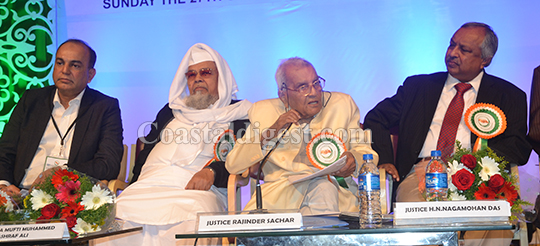
Bengaluru, Nov 27: “All state governments should set up the Equal Opportunity Commission and public sector also should come under the preview of this commission. Then only, the Other Backward Classes including Muslims can get equal opportunities in education and employment,” said Justice Rajinder Sachar.
empormnt 6

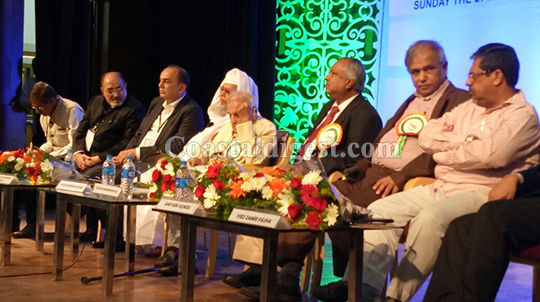
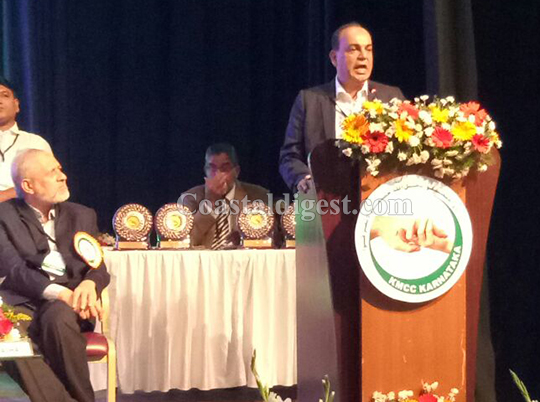
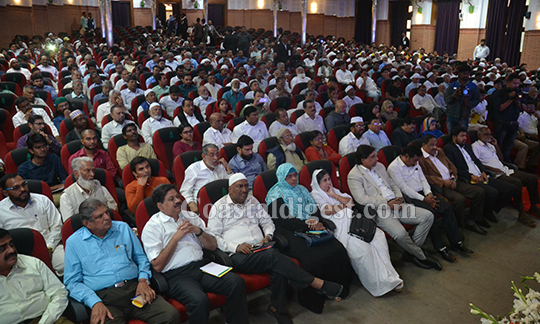
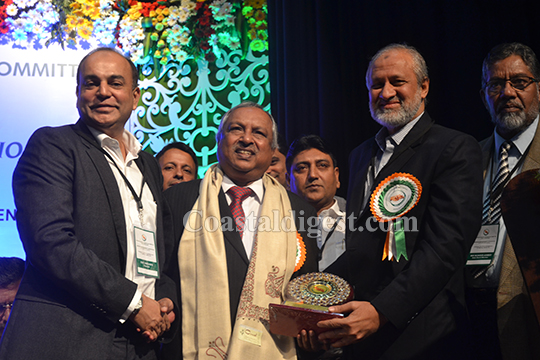
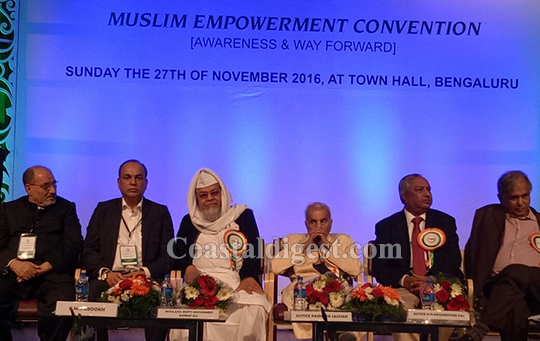
He was delivering a talk on Muslim Empowerment at the launching ceremony of Karnataka Muslim Coordination Committee (KMCC), a social organisation intended to work for communal harmony and empowerment of Muslim community through democratic means, at Town Hall, here on Sunday.

He said that if Karnataka government has real commitment toward OBCs then it should form Equal Opportunity Commission immediately in the state.

“The Sachar committee report is not just related to Muslims, It is related to all other communities. In a democratic country all communities should get equal opportunities. But Muslims in India are deprived from equal opportunities in education, employment and political appointments. Muslims are undivided part of India and any kind of apathy against them is against constitutional aspires,” he said adding that if a government fails to protect the interest of any minorities it will lose the moral right to rule the state.

Stating that Muslims are part of Indian culture and have contributed immensely to attain freedom, Justice Sachar endorsed the Karnataka government's decision to honour Tipu Sultan, who sacrificed his life fighting against British imperialists.

He emphasized that his report on the social, economical and educational status of the minorities was based on facts and it was the collective responsibility of all the people to see that the report is implemented to strike a balance in rendering social justice. He made it clear that there is nothing wrong to fight for right and lamented that even Karnataka government ruled by Conges has not implemented his suggestions to constitute an 'equal opportunity commission' to look into discrimination among different sections of people in employment other fields even at private sector.

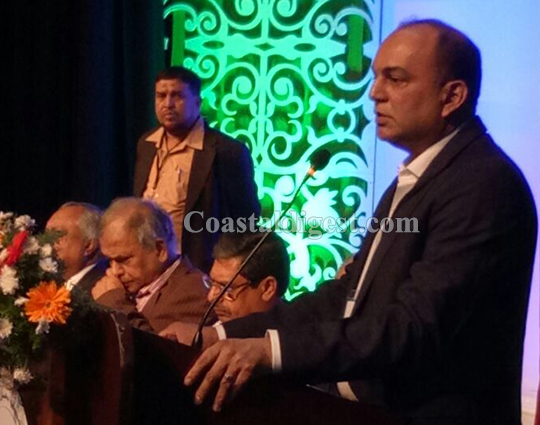
B M Farooq, CMD of Fiza group of industries, and treasurer KMCC, in his key note address explained the objectives of the newly formed NGO and the need to coordinate the minority communities and other marginalized section of people for a common cause in the face of various threats faced by it.

He pointed out that state governments in India have failed to implement the recommendations of Sachar Committee report. “Many argue that implementation of the recommendations of the Sachar Committee Report would virtually divide the society. The plight of Muslims in India remains to be pathetic while many other communities with political and administrative influence snatch away all liberties to the detriment of the community. Muslims were accused of being not loyal to the Indian state, of being terrorists, and politicians who tried to help them risked being accused of "appeasing" them,” he lamented.

The launch of Karnataka Muslim Coordination Committee (KMCC) is an earnest endeavor to unite all sections of the underprivileged and oppressed in the society for a collective bargain for the rights and liberties they are entitled to, he said.

The Muslims, Dalits and other minorities should be united and there should be a social awareness created to fight for their rights in a democratic manner. The political parties have treated the minority community, especially the Muslim community as a vote bank and the community is ill treated and neglected. Poverty, illiteracy and backwardness are rampant and the government does nothing to improve the standard of the community, he complained.

The members of the Muslim community are targeted by the police and false cases are filed against them without affording them any opportunity to even get the legal assistance. Those who take up the cause have been branded astraitors'. Though Muslims are staunch patriots and are ready to sacrifice anything for the nation, they are very often described as anti national. The situation should be changed. Launch of KMCC is only a small step in the right direction.

Muslim community does not have a constructive leadership to enable it to achieve the rights, liberties and privileges to which the community is entitled to and the first and foremost objective of KMCC will be to achieve a constructive leadership and platform for the community from which, the community may be guided in the right direction.

Muslim Community is deprived of education, jobs and government services for want of proper guidance. Our endeavor will be held the youth in the community to acquire knowledge, education in the best school and colleges so that they would be able to stand on their own leg to achieve the goal of securing positions in the legislative, executive and judicial appointments with dignity.

Muslim community is targeted falsely accused of terrorism and other disruptive activities for no fault of them for political gains. KMCC would like to form a squad of professionals to act as awatchdog' against such atrocities against the members of the community and also to alleviate any such tendencies shown by any group of the community by properly educating and creating awareness amongst them.

To protect the interest of the community against the atrocities committed by the administrative or law enforcing agencies without any cogent evidence and to provide legal and financial assistance to them if they are falsely implicated or targeted in the opinion of the expert level committee of the Organization.

“We are for a strong India. We condemn any form of cross border terrorism targeting our nation and we are ready to sacrifice our lives for the sake of this great nation. At the same time, we demand a decent living and equal opportunity to serve the nation with dignity. Let us fight for our right. Let might be not right,” he said.

Mr. Amithabh Khundu, the Chairman of the Sachar Commission Evaluation Committee, presented the statistics and stressed the need to act on the report submitted showing the backwardness of the minorities in many fronts on account of discrimination of the community. He hoped that central govt would take appropriate step to alleviate the disparities. Justice H N Nagmohan Das also spoke.

The function was inaugurated by Moulana Mufti Muhammed Ashraf Ali, Amir-e-Shariat, Karnataka. Syed Zameer Pasha, IAS (retired) welcomed the gatherings. Haris and Hanif Mohammed compered the programme. Mirza Mehadi proposed vote of thanks.
empormnt 2

empormnt 1

empormnt 3

empormnt 4

empormnt 5

empormnt 7

Comments

Mr ABDULGAFFAR GHORI
 - 
Saturday, 17 Dec 2016

Free training of different courses for OBC under the aegis of Min of Minorities, Govt of India. Free hostel, boarding and with stipend. The duration is for 3-4 months. . There is placement assistance given after successful completion of the courses. NTTF has undertaken to train people from our community.. For more details pl visit www.nttftrg.com. Pl help to spread this message among the needy thro' email, phone, whatsup etc. Similar vocational courses under the same/similar schemes, all over the country, different agencies are doing this.

yaseer arfath
 - 
Monday, 28 Nov 2016

Great committee nd superb speech I agreed about your all rules it's awesome sir I hope so you became greatest nd big name full committee in future

yaseer arfath
 - 
Monday, 28 Nov 2016

Great committee nd superb speech i agreed about your all committee's rules it's awesome sir i hope your committee become more then name full in future .....

yaseer arfath
 - 
Monday, 28 Nov 2016

Great function nd speech was superb awesome..... i hope this committee make big name in future..... thank you....

Add new comment

  • Coastaldigest.com reserves the right to delete or block any comments.
  • Coastaldigset.com is not responsible for its readers’ comments.
  • Comments that are abusive, incendiary or irrelevant are strictly prohibited.
  • Please use a genuine email ID and provide your name to avoid reject.
News Network
July 4,2020

Bengaluru, Jul 4: Amid the rising COVID-19 cases in the state, the Karnataka COVID-19 Task Force has decided to set up booth-level committees across the state including 8,800 here for effective monitoring and surveillance.

The task force also released detailed guidelines for home isolation for asymptomatic cases including 17 days ''home isolation'' for patients below 50 years of age. It also warned of legal action against those health workers for disrespect to the bodies.

Briefing reporters after the meeting on Friday, Medical Education Minister Dr K Sudhakar said the local management will be strengthened for effective monitoring and surveillance of COVID-19 cases. "There will be booth-level task force committees throughout the state right from the village to Bengaluru.

These task force committees will act at the ultra local level. The task force will act as a structural and functional unit of COVID-19 dealing with monitoring, surveillance, checking of all the ILI cases, ambulances and hospitals," he added.

He also said the committees will comprise one member each from the Health department, police department, municipalities or Panchayat, volunteers, valveman. The committee will have five to six members.

The principal secretary in the Village Development and Panchayat Raj department L K Ateeq has been appointed as the nodal officer to manage the task force in the rural areas whereas in the urban areas, the Urban Development secretary, the municipal administration directors and the municipal commissioner will form the local task force.

"In Bengaluru alone 8,800 teams will be formed, which will be coterminous with the 8,800 booths in the city. They will provide the real-time data. They will be imparted training," the minister added. Noting that there were about 8,800 electoral booths in Bengaluru city and each booth will have a task force committee, he said a nodal officer has been appointed to oversee this.

The state level task force also came out with a slew of conditions. As far as home isolation is concerned, it would apply for patients who are below 50 years and have no symptoms of any other disease, and their homes should have a toilet and have an attendant.

He also said home isolation duration has been increased from 14 to 17 days. "People should not get fever in the next three days after completing 14 days, else they will be quarantined for another seven days. If they don''t get fever then they will be freed to perform their personal activities," Sudhakar said.

Those who are above 50 years and have comorbidities, will be treated at the COVID care centres only and they will be under medical supervision and be subjected to regular tests. The state is also making arrangements for telecommunication for those who are asymptomatic but wish to speak to a doctor.

It was also decided to have at least two ambulances in each of the 198 wards of Bengaluru. The minister said the additional commissioner of police (traffic) will be the nodal officer to coordinate the movement of ambulances. The task force has also appointed a nodal officer to manage the hospitals based on the availability of beds and ventilators. The officer will provide real time information about beds.

"We want to make sure that no one has to run from one hospital to another," Sudhakar said. On the cremation of the bodies, Sudhakar said guidelines have been issued on how to handle bodies at mortuaries, taking them in the ambulances, human treatment to the deceased while performing the last rites and fumigation of the bed. "Legal action will be taken against those who treat bodies in an inhuman way," Sudhakar said.

The state-level task force has also decided to arrange for test reports within 24 hours. It has also been decided to increase the testing capacity from the existing 15,000 a day to 25,000. In view of the spurt in COVID-19 cases, the task force also recommended antigen tests in crowded areas to check whether there was community spread.

To a question on closing down the border, the minister said there is no question of lockdown. "We cannot hide from this disease. It is not a solution. We have to live with it now, yet maintain a distance from it," he added. Sudhakar, who is a doctor himself, said COVID-19 is not as deadly a virus as those he had seen in the past and asked people not to be scared of it.

Comments

Add new comment

  • Coastaldigest.com reserves the right to delete or block any comments.
  • Coastaldigset.com is not responsible for its readers’ comments.
  • Comments that are abusive, incendiary or irrelevant are strictly prohibited.
  • Please use a genuine email ID and provide your name to avoid reject.
Agencies
February 20,2020

India ranked 77th on a sustainability index that takes into account per capita carbon emissions and ability of children in a nation to live healthy lives and secures 131st spot on a flourishing ranking that measures the best chance at survival and well-being for children, according to a UN-backed report.

The report was released on Wednesday by a commission of over 40 child and adolescent health experts from around the world. It was commissioned by the World Health Organization (WHO), UN Children's Fund (UNICEF) and The Lancet medical journal.

In the report assessing the capacity of 180 countries to ensure that their youngsters can survive and thrive, India ranks 77th on the Sustainability Index and 131 on the Flourishing Index, it said.

Flourishing is the geometric mean of Surviving and Thriving. For Surviving, the authors selected maternal survival, survival in children younger than 5 years old, suicide, access to maternal and child health services, basic hygiene and sanitation, and lack of extreme poverty.

For Thriving, the domains were educational achievement, growth and nutrition, reproductive freedom, and protection from violence.

Under the Sustainability Index, the authors noted that promoting today's national conditions for children to survive and thrive must not come at the cost of eroding future global conditions for children's ability to flourish.

The Sustainability Index ranks countries on excess carbon emissions compared with the 2030 target. This provides a convenient and available proxy for a country's contribution to sustainability in future.

The report noted that under realistic assumptions about possible trajectories towards sustainable greenhouse gas emissions, models predict that global carbon emissions need to be reduced from 39·7 giga­ tonnes to 22·8 gigatonnes per year by 2030 to maintain even a 66 per cent chance of keeping global warming below 1·5°C.

It said that the world's survival depended on children being able to flourish, but no country is doing enough to give them a sustainable future.

"No country in the world is currently providing the conditions we need to support every child to grow up and have a healthy future," said Anthony Costello, Professor of Global Health and Sustainability at University College London, one of the lead authors of the report.

"Especially, they're under immediate threat from climate change and from commercial marketing, which has grown hugely in the last decade," said Costello – former WHO Director of Mother, Child and Adolescent health.

Norway leads the table for survival, health, education and nutrition rates - followed by South Korea and the Netherlands. Central African Republic, Chad and Somalia come at the bottom.

However, when taking into account per capita CO2 emissions, these top countries trail behind, with Norway 156th, the Republic of Korea 166th and the Netherlands 160th.

Each of the three emits 210 per cent more CO2 per capita than their 2030 target, the data shows, while the US, Australia, and Saudi Arabia are among the 10 worst emitters. The lowest emitters are Burundi, Chad and Somalia.

According to the report, the only countries on track to beat CO2 emission per capita targets by 2030, while also performing fairly – within the top 70 – on child flourishing measures are: Albania, Armenia, Grenada, Jordan, Moldova, Sri Lanka, Tunisia, Uruguay and Vietnam.

"More than 2 billion people live in countries where development is hampered by humanitarian crises, conflicts, and natural disasters, problems increasingly linked with climate change," said Minister Awa Coll-Seck from Senegal, Co-Chair of the commission.

The report also highlights the distinct threat posed to children from harmful marketing.

Evidence suggests that children in some countries see as many as 30,000 advertisements on television alone in a single year, while youth exposure to vaping (e-cigarettes) advertisements increased by more than 250 per cent in the US over two years, reaching more than 24 million young people.

Studies in Australia, Canada, Mexico, New Zealand and the US – among many others – have shown that self-regulation has not hampered commercial ability to advertise to children.

Children's exposure to commercial marketing of junk food and sugary beverages is associated with purchase of unhealthy foods and overweight and obesity, linking predatory marketing to the alarming rise in childhood obesity, it said.

The number of obese children and adolescents increased from 11 million in 1975 to 124 million in 2016 – an 11-fold increase, with dire individual and societal costs, the report said.

To protect children, the authors call for a new global movement driven by and for children.

Specific recommendations include stopping CO2 emissions with the utmost urgency, to ensure children have a future on this planet; placing children and adolescents at the centre of global efforts to achieve sustainable development, the report said.

New policies and investment in all sectors to work towards child health and rights; incorporating children's voices into policy decisions and tightening national regulation of harmful commercial marketing, supported by a new Optional Protocol to the UN Convention on the Rights of the Child, it said.

Comments

Add new comment

  • Coastaldigest.com reserves the right to delete or block any comments.
  • Coastaldigset.com is not responsible for its readers’ comments.
  • Comments that are abusive, incendiary or irrelevant are strictly prohibited.
  • Please use a genuine email ID and provide your name to avoid reject.
coastaldigest.com news network
February 14,2020

Bengaluru, Feb 14: In a major embarrassment to the police, the Karnataka High Court has termed as illegal the prohibitory orders imposed under Section 144 of CrPC by the City Police Commissioner in December 2019 in the light of the anti-Citizenship Amendment Act (CAA) protests in Bengaluru.

The orders were passed “without application of mind” and without following due procedures, the court noted. Giving reasons for upholding the arguments of the petitioners that there was no application of mind by the Police Commissioner (Bhaskar Rao) before imposing restrictions, a division bench of the High Court said he had not recorded the reasons, except reproducing the contents of letters addressed to him by the Deputy Commissioners of Police (DCPs). 

The state government had contended that prohibitory orders were passed based on reports submitted by the DCPs who expressed apprehension about anti-social elements creating law and order problems and damaging public property by taking advantage of the anti-CAA protests.  

The High Court bench said the Police Commissioner should have conducted inquiry as stated by the Supreme Court to check the reasons cited by the DCPs who submitted identical reports. Except for this, there were no facts laid out by the Police Commissioner, the court said.

“There is complete absence of reasons. If the order indicated that the Police Commissioner was satisfied by the apprehension of DCPs, it would have been another matter,” it said.  

“The apex court has held that it must record the reasons for imposition of restrictions and there has to be a formation of opinion by the district magistrate. Only then can  the extraordinary powers conferred on the district magistrate can be exercised. This procedure was not followed. Hence, exercise of power under Section 144 by the commissioner, as district magistrate, was not at all legal”, the bench said. 

“We hold that the order dated December 18, 2019 is illegal and cannot stand judicial scrutiny in terms of the apex court’s orders in the Ramlila Maidan case and Anuradha Bhasin case,” the HC bench said while upholding the arguments of Prof Ravivarma Kumar, who appeared for some of the petitioners.   

Partly allowing a batch of public interest petitions questioning the imposition of prohibitory orders and cancelling the permission granted for protesters in the city, the bench of Chief Justice Abhay Shreeniwas Oka and Justice Hemant Chandangoudar observed that, unfortunately, in the present case, there was no indication of application of mind in passing prohibitory orders.

The bench said the observation was confined to this order only and it cannot be applicable in general. If there is a similar situation (necessitating imposition of restrictions), the state is not helpless, the court said.

Comments

Add new comment

  • Coastaldigest.com reserves the right to delete or block any comments.
  • Coastaldigset.com is not responsible for its readers’ comments.
  • Comments that are abusive, incendiary or irrelevant are strictly prohibited.
  • Please use a genuine email ID and provide your name to avoid reject.