


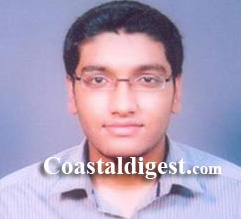
Nabeel Musthafa creates history in VTU, gets first rank with 12 gold medals

[email protected] (CD Network)
April 24, 2014
Bhatkal, Apr 24: Nabeel Musthafa of Anjuman Engineering College, Bhatkal, has secured 12 gold medals. He is the first rank holder in B.E. (Civil Engineering) and has also got the highest aggregate marks in all eight semester examinations conducted by Visvesvaraya Technological University (VTU). With this he created a new record by bagging maximum number of gold medals in the history of VTU.

nabeelAnnouncing this at a press meet in Bangalore, VTU Vice-Chancellor H Maheshappa said Mr Musthafa has scored 91.98 percent, securing the first place, among a total of 12,000 students who had appeared in the civil engineering examinations at the University, which is considered the top most university of Karnataka and under which a total 190 colleges are running.

Anjuman Hami-e-Muslimeen (AHM) General Secretary Abdur Raheem Jukaku said in a press release, this was the third time a student of AITM had secured a university rank.

“Our students have secured ranks in the years 2000 and 2007 previously. It is a matter of great pride for our institution,” he said.

“In 2007, one of students in the civil engineering department, Prasanna Kumar had secured the first rank and he was awarded with four gold medals,' said AITM vice principal professor Mushtaque Ahmed Bhavikatte.

AHM president S M Syed Khalil ur Rahman, Additional Secretary Siddique Ismail, college secretary S M Syed Saleem, Javid Hussain Armar and management members have congratulated Mustafa Nabeel for his achievement.

Other rank holders

Anushree R. of B.N.M. Institute of Technology, Bangalore, has got eight gold medals. She has got first rank in B.E. (Electrical & Electronics Engineering). Waseem Ahmad Ahanger of Vidyavardhaka College of Engineering, Mysore, secured six gold medals. He has got first rank in B.E. (Electronics & Communication Engineering).

Dayanand Sagar College of Engineering, Bangalore, has got 51 ranks, PG Studies at VTU campus 28 and M.V.J College of Engineering got 21 ranks.

Sam Pitroda to address VTU convocation on May 3

The Vice Chancellor also said that Sam Pitroda, advisor to Prime Minister, Public Information Infrastructure and Innovations, would deliver the convocation address. He will also receive honorary degree of D.Sc. Minister for Higher Education and VTU Pro-Chancellor R.V. Deshpande would be present.

Ved Prakash, chairman, University Grants Commission; H.K. Mittal, adviser and member secretary, National Science & Technology Entrepreneurship Development Board; and Secretary, Technology Development; and Vikram Kirloskar, industrialist, have been selected for the honorary degree of Doctor of Science (D.Sc.) of Visvesvaraya Technological University (VTU).

Governor H.R. Bhardwaj will confer the honour upon them at the annual convocation of VTU on its Jnana Sangama campus here on May 3.
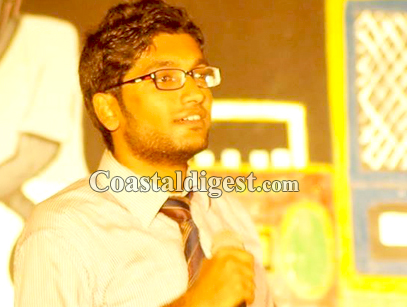

Nabeel_mustafa

Comments

sabrina cheng
 - 
Friday, 15 Jul 2016

Timely piece - I appreciate the facts . Does someone know where my company might obtain a fillable a form example to work with ?

Add new comment

  • Coastaldigest.com reserves the right to delete or block any comments.
  • Coastaldigset.com is not responsible for its readers’ comments.
  • Comments that are abusive, incendiary or irrelevant are strictly prohibited.
  • Please use a genuine email ID and provide your name to avoid reject.
coastaldigest.com web desk
June 25,2020

Bengaluru, Jun 25: In the wake of unexpected surge in the coronavirus positive cases in Bengaluru, the special task force team assigned with the task of creating Covid Care Centres (CCC) has made elaborate arrangements the Haj Bhavan.

Civic authorities have already shifted around 50 Covid-19 patients to Haj Bhavan. 

BBMP Commissioner B H Anil Kumar said on Thursday that due to an increase in the number of cases and due to shortage of beds in hospitals, the Haj Bhavan has been converted into CCC.

Headed by Rajendar Kumar Kataria, Secretary, Horticulture and Sericulture department, the CCC task force has arranged 400 beds at Haj Bhavan. 

“The facility at Haj Bhavan has already been made operational. Doctors, nurses, paramedical and house-keeping staff from BBMP have been deployed as per SOPs. All essential equipment, medicines and other facilities have been made available in adequate numbers at the Haj Bhavan,” Kataria explained.

In the second phase, the task force team has identified hostel rooms of seven engineering colleges, which would fetch about 3,200 beds to house asymptomatic Covid-19 patients. 

If need arises, the task team in the third and final phase, will consider the facilities such as Palace Grounds, Bengaluru International Exhibition Centre, Indoor Stadiums at Kanteerava and Koramangala to be converted as CCC.

Comments

Add new comment

  • Coastaldigest.com reserves the right to delete or block any comments.
  • Coastaldigset.com is not responsible for its readers’ comments.
  • Comments that are abusive, incendiary or irrelevant are strictly prohibited.
  • Please use a genuine email ID and provide your name to avoid reject.
News Network
April 20,2020

Bengluru, Apr 20: Lockdown restrictions have been extended by a day by the Karnataka government, in an order issued by chief secretary TM Vijay Bhaskar on Sunday.

The order directed all heads of departments, district deputy commissioners and superintendent of policies to "continue to implement the measures presently in force" as per Ministry of Home Affairs guidelines dated April 14, "till the midnight of April 21, 2020."

The MHA guidelines had earlier allowed the state government to relax lockdown norms post-April 20.

Comments

Add new comment

  • Coastaldigest.com reserves the right to delete or block any comments.
  • Coastaldigset.com is not responsible for its readers’ comments.
  • Comments that are abusive, incendiary or irrelevant are strictly prohibited.
  • Please use a genuine email ID and provide your name to avoid reject.
Media Release
February 14,2020

Veteran journalist P. Sainath has said that the nation is in a crisis. And this crisis is not limited to just the rural area. It has become a national crisis at various areas such as agriculture, education, economy, job creation etc.

He was delivering the endowment lecture on the topic ‘Indian democracy at the post-liberalization and post-truth era’ at Media Manthan 2020 organized by the PG department of journalism and mass communication at St Aloysius College (Autonomous). 

Mr Sainath said that the many policies adopted in the 90s led to India becoming unusually unequal. Referring to the speech Ambedkar had made at the Constituent Assembly while handing over the draft of the Constitution, Mr Sainath said, “Ambedkar had warned about the weakness of Indian democracy that liberty without equality allows the supremacy of a few over the multitude. Liberty, equality and fraternity must be kept together as we cannot have one without the other.” 

Mr Sainath stated that the agrarian crisis was no longer about the loss of productivity, employment or about farmer suicide; it was a societal, civilizational crisis. Commenting on the lopsided policies such as cow-slaughter ban, he explained how cow slaughter ban had adversely affected many industries due to their interdependency. While Muslims who slaughtered cows were rendered helpless, the cattle traders who were mostly OBCs lost their earnings as the cattle prices crashed. An important industry like Kolhapur sandals industry in Maharashtra went bankrupt as a result of the cow slaughter ban in Maharashtra. He said the policymakers had no idea how the rural industries were interconnected. Demonetisation too devastated the rural economy as 98 percent of rural transactions happen through cash. 

Mr Sainath also spoke about the crisis of inequality which affects the Dalits and the Adivasis far more than anyone else as 90 percent of the rural households take home less than Rs 10,000/- per month. “Women are yet another group whose labour is never counted in the gross domestic product. Women and girls globally do unpaid work which amounts to about 12.5 billion working hours per year. Monetarily speaking, this is worth 10.8 trillion dollars,” Mr Sainath added. 

Speaking about the crisis of jobs Mr Sainath said that major companies were laying off employees just to create more profits for the investors and the adoption of artificial intelligence in the industry would further destroy millions of jobs.

Rector of St Aloysius College Institutions Fr Dionysius Vaz SJ, Principal Dr (Fr) Praveen Martis SJ, HOD of Journalism and Mass Communication department Dr (Fr) Melwyn Pinto SJ were present.

‘Veerappan and Vijay Mallya’s business models are interesting!’

Addressing the gathering during his endowment lecture on Friday, Mr Sainath made an interesting comment on the so called ‘revenue model’. “Whenever I visit IIMs and IITs for lectures on my PARI project, the students there ask me what my revenue model for my project is. I tell them that I do not have a revenue model. In fact, journalism does not begin with a revenue model. Gandhiji, Ambedkar, Bhagat Singh were all great journalists. But they did not have a revenue model,” Mr Sainath said.

On a lighter note, he said that the best revenue model that he liked was that of forest brigand Veerappan and liquor baron Vijay Mallya. “Veerappan ruled the forest for forty years and from the top ministers to the villagers he could dictate terms and liver royally. Similarly, Mallya’s revenue model was to steal the banks and run away abroad and live like a king,” Mr Sainath added.

Journalism is not and can never be a business. It is a calling, he opined. While newspaper can be a business, television can be a business, journalism per se cannot be reduced to a business. “Unfortunately today, journalists are recruited on a contract basis and they have no bargaining power; and there are no unions to fight for their cause. Hence, they are at the mercy of the corporate media houses for their survival and are made to write stories that cannot be called journalism,” Mr Sainath said.

Answering a question as to the pressures he faced as a journalist, he said that external pressures from the government or others could be very well handled. It is the internal pressures from once own media house that journalists find it difficult to manage.


Comments

Add new comment

  • Coastaldigest.com reserves the right to delete or block any comments.
  • Coastaldigset.com is not responsible for its readers’ comments.
  • Comments that are abusive, incendiary or irrelevant are strictly prohibited.
  • Please use a genuine email ID and provide your name to avoid reject.