Namaz should be offered in mosques, not on roads: Haryana CM on Gurugram incident

Agencies
May 6, 2018

May 6: Haryana Chief Minister Manohar Lal Khattar has said that Namaz should be read in mosques and Idgahs and not in public spaces. Responding to questions on increase in number of incidents of disrupting Namaz in Gurgaon, Khattar said that it was the duty of the state to maintain law and order.

“It is our duty to maintain law and order. There has been an increase in offering Namaz in open. Namaz should be read in Mosques or Idgahs rather than public spaces,” said Khattar.

The statement by the Bharatiya Janata Party (BJP) leader came just days after some right-wing organisations disrupted Friday Namaz at several places in Gurugram in Haryana. However, police presence at the spots prevented any violence from taking place.

Hindutva organisations have been trying to stop Friday prayers in Gurgaon over the last two weeks alleging that some people were trying to grab land in a bid to merge it with a mosque. There were disruptions to namaz at Wazirabad, Atul Kataria Chowk, Cyber Park, Bakhtawar Chowk and at South City, on Friday last.

Members of the Vishwa Hindu Parishad, Bajrang Dal, Hindu Kranti Dal, Gau Rakshak Dal and Shiv Sena arrived at the spots where people had assembled to offer Friday prayers.

Ritu Raj, a member of a Hindutva organisation, claimed that they organised a havan at Wazirabad to stop the Namaz.

They allegedly shouted slogans like Jai Shri Ram and Radhe Radhe to disrupt the Namaz.

Comments

angle of Life
 - 
Sunday, 6 May 2018

Allah, shiva, crist etc all name for one GOD...when any human being want to worship, love god why some people object..offering namaz will harm any one in that ground..this is really very bad in india..i think these people are born to devil so they act againts the GOD...you can love GOD any where and any place with action but without harming any human being...GOD save them from hell fire

Imran
 - 
Sunday, 6 May 2018

Agreed Mr. CM, Namaz Should be offered in mosques, not on roads. So built as much as mosques in Haryana states so that Muslims brothers will not pray on roads.

Add new comment

  • Coastaldigest.com reserves the right to delete or block any comments.
  • Coastaldigset.com is not responsible for its readers’ comments.
  • Comments that are abusive, incendiary or irrelevant are strictly prohibited.
  • Please use a genuine email ID and provide your name to avoid reject.
News Network
April 7,2020

New Delhi, April 7: The government continued to take steps to contain the spread of coronavirus including a strategy of cluster containment as the cases continued to rise and Tuesday saw single-day largest jump of 722 positive cases.

The total number of positive cases reached 4,789 on Tuesday, the 14th day of lockdown.

According to the latest update of the Health Ministry, there are 4,312 active cases, 352 persons have been cured or discharged (one migrated) and 124 have died.

Maharashtra has the largest number of positive cases at 868 and also accounts for the largest number of deaths at 48. Tamil Nadu has 621 confirmed cases.

Thirteen persons have died in Madhya Pradesh and the same number in Gujarat.
The 21-day lockdown was announced on March 24 by Prime Minister Narendra Modi.

At the regular media briefing at 4 pm, Lav Aggarwal, Joint Secretary in the Health Ministry, said that the government is adopting a strategy for cluster containment.

"This strategy is producing positive results, especially in Agra, Gautam Buddh Nagar, Pathanamthitta, Bhilwara and East Delhi," he said.

Aggarwal said that a recent study by the Indian Council of Medical Research (ICMR) has shown that a person infected with coronavirus can infect 406 others in just 30 days if he does not follow the lockdown and social distancing norms.

He said no decision has been taken on extending the lockdown and urged against any speculation.

He said latest technology was being used for management of COVID-19 and there was real-time tracking of ambulances.

The official said the dedicated facilities for COVID-19 are divided into three parts -- COVID Care Centre, Dedicated COVID Health Centre and Dedicated COVID Hospitals.

He said that COVID Care Centres were for treating mild, very mild and likely to be COVID-19 patients. Hostels, hotels, school, and stadium can be used for this. "We have asked states to map it with COVID Care Hospitals and COVID Health Centre so that patients can be shifted if needed," he said.

The official said that COVID Health Centres were for treating COVID-19 patients of clinically moderate level of seriousness. "For this, fully functional hospitals will be used. A dedicated block of a fully functional hospital can also be used for this. The hospitals must have beds with oxygen support," he said.

Aggarwal said that dedicated COVID Hospitals were meant for severe and critical cases and these must be fully-equipped with ICUs and ventilators.
New coronavirus cases were reported on Tuesday from several states including Maharashtra, Madhya Pradesh, West Bengal, and Tamil Nadu.

The Ministry of Environment, Forest and Climate Change has issued an advisory about containing coronavirus in national parks, sanctuaries and tiger reserves in view of the spread of COVID-19 and a report about tiger being infected in New York. The Central Zoo Authority has also advised zoos in India to remain on high alert.

Here's a quick read on the COVID-19 related updates

1. The Indian Railways has prepared 40,000 isolation beds in 2,500 coaches and this work is ongoing in 133 locations across the country.

2. Madhya Pradesh Chief Minister Shivraj Singh Chouhan said he was willing to extend the lockdown in the state after the completion of 21-day period to save lives.

3. The government is monitoring the movement of pharmaceuticals closely and the movement of pharmaceuticals through trucks has stabilised in the country.

4. Under the 'Lifeline Udan' initiative, 152 flights have transported over 200 tonnes of cargo till April 6.

5. According to ICMR, testing of 1,07,006 people has been carried out till date and 136 government labs and 59 private labs are conducting tests in the country.

6. The Home Ministry said that the status of essential goods and services was by and large satisfactory in the country. Home Minister Amit Shah has issued directives to the states to ensure there is no hoarding or black marketing in any corner of the country.

7. The number of corona positive cases in Uttar Pradesh has reached 314. Of these, 168 patients are connected to Tablighi Jamaat, state Chief Minister Yogi Adityanath said on Tuesday.

8. The government has lifted restrictions on export of 24 pharmaceutical ingredients and medicines made from them.

9. Union Defence Minister Rajnath Singh said the Group of Ministers had "an extensive discussion on the prevailing situation post the lockdown" in the country. They also appreciated the Cabinet's decision to cut MP's salary for a year.

10. Central Zoo Authority has advised zoos in the country to remain on highest alertness, watch animals on 24X7 basis, using CCTV for any abnormal behavior or symptoms.


Comments

Add new comment

  • Coastaldigest.com reserves the right to delete or block any comments.
  • Coastaldigset.com is not responsible for its readers’ comments.
  • Comments that are abusive, incendiary or irrelevant are strictly prohibited.
  • Please use a genuine email ID and provide your name to avoid reject.
Agencies
June 29,2020

New Delhi, Jun 29: The Supreme Court on Monday asked the Central government to find out the facts related to blacklisting and canceling of visas of foreign nationals who attended the congregation of Tablighi Jamaat in Nizamuddin area here.

A three-judge bench headed by Justice AM Khanwilkar and also comprising Justices Dinesh Maheshwari and Sanjiv Khanna asked the Centre to find out the facts related to the matter and fixed it for further hearing on July 2.

The apex court asked Solicitor General Tushar Mehta "if visas of these foreigners are canceled, then why are they still in India?"

"You (Centre) can deport them. If visas are not canceled, then, it is a different situation," the court said. The top court was hearing a number of petitions challenging blacklisting and cancellation of visas filed by few foreigners.

Mehta sought more time to file a reply on the matter, after which the court posted the matter for further hearing on July 2.

The petitions, filed by the foreign nationals from 35 countries, have sought directions to the Ministry of Home Affairs (MHA) to remove their names from the blacklist, reinstate their visas and facilitate their return to their respective countries.

The petitions sought to declare the decision of the MHA of blacklisting the foreign nationals who attended the Tablighi Jamaat congregation as "arbitrary".

"Unilateral blacklisting of 960 foreigners by the Home Ministry vide press release dated April 2, 2020, and the subsequent blacklisting of around 2500 foreigners as reported on June 4, 2020, is in violation of Article 21. Therefore, it is void and unconstitutional as the petitioners have neither been provided any hearing nor notice or intimation in this regard," the plea said.

One of the petitioners named Fareedah Cheema, a Thai national in the seventh month of her pregnancy, said she was quarantined in March, like other foreign nationals but was released from quarantine only in late May and is still at a facility under restricted movements, without the avenue to go back to her home nation and experience the birth of her child with security and dignity, with her loved ones.

These foreign nationals presently in India were blacklisted for a period of 10 years from traveling to India for their alleged involvement in Tablighi Jamaat activities.

The Home Ministry had said that foreign Tablighi Jamaat members, who were staying in India in violation of visa rules during the nationwide lockdown implemented to combat the COVID-19 spread, have been blacklisted.
A large congregation organised by Tablighi Jamaat in the national capital in March had emerged as a major COVID-19 hotspot in the country.

The government had said the decision of banning the foreign Tablighi Jamaat members was taken after details of foreigners found illegally living in mosques and religious places emerged from various states across the country.

Comments

Add new comment

  • Coastaldigest.com reserves the right to delete or block any comments.
  • Coastaldigset.com is not responsible for its readers’ comments.
  • Comments that are abusive, incendiary or irrelevant are strictly prohibited.
  • Please use a genuine email ID and provide your name to avoid reject.
Agencies
August 3,2020

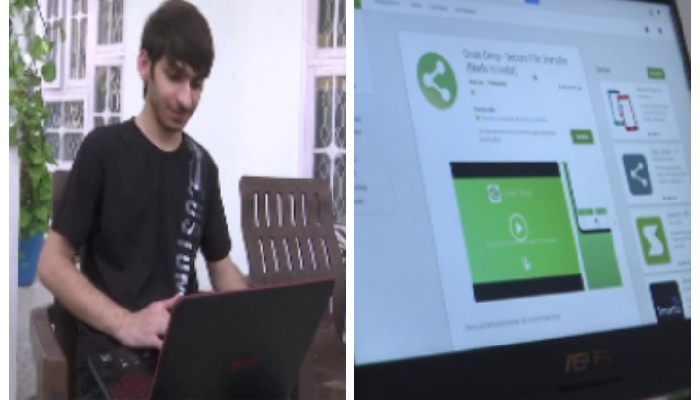
Rajouri, Aug 3: Ashfaq Mehmood Choudhary, a 17-year-old boy from Chattyear of Jammu and Kashmir's Rajouri district, has developed a file-sharing app 'Dodo Drop' which would enable users to share audios, videos, images, and texts between two devices without Internet access.

While speaking to media persons, Ashfaq Mehmood said that the 'Dodo Drop' application is an alternative to the Chinese 'SHAREit' app. "The Indian government has banned several Chinese apps due to data breaching, and among those apps was SHAREit which was used for sharing files.

Users faced a lot of problems due to the ban, and so I decided to make this file-sharing app. With 'Dodo Drop', users can share audios, videos, images, and even texts," he said.

Ashfaq said that it took him four weeks to develop the application, and it was launched on August 1 this year. The 'Dodo Drop' application has a transfer rate of up to 480 mbps, which is faster than the SHAREit app and is "quite easy" to use.

"Users can transfer data comprising photos, videos, audios, apps, texts, etc. between two devices with no Internet access. The transfers are fully encrypted and secure," he added.

"Our Prime Minister has always asserted the need for decreasing the dependency on foreign products and apps and to focus on the development of India-based apps. I tried to be part of the initiative of 'Aatmanirbhar Bharat' by developing an India-based file-sharing app. I want to develop global-standard apps for India," he added.

"We support and cooperate with him. He generates his own income by working on some projects and utilises it. We will continue to support him," said Parvez Ahmed Choudhary, Ashfaq's father.

In July, the Ministry of Electronics and Information Technology (MEITY) banned 47 apps, which were variants and cloned copies of the 59 apps banned earlier in June. These banned clones included SHAREit Lite, Tiktok Lite, Helo Lite, BIGO LIVE Lite, and VFY Lite.

The 59 apps had been banned by the Centre in June in view of the information available that they were engaged in activities which were "prejudicial to sovereignty and integrity and defence" of the country.

Almost all the apps banned had some preferential Chinese interest and the majority had parent Chinese companies.

The ban came amid border tensions with China in the Eastern Ladakh region.

Comments

Add new comment

  • Coastaldigest.com reserves the right to delete or block any comments.
  • Coastaldigset.com is not responsible for its readers’ comments.
  • Comments that are abusive, incendiary or irrelevant are strictly prohibited.
  • Please use a genuine email ID and provide your name to avoid reject.