Nearly 14% Indians are mentally ill, reveals Nimhans study

[email protected] (CD Network)
October 12, 2016

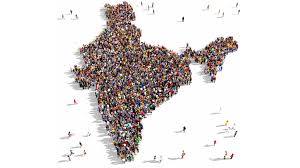
Bengaluru, Oct 12: A nationwide study conducted by National Institute of Mental Health & Neurosciences (Nimhans) has revealed a shocking prevalence of mental illness in India. At least 13.7 per cent of India's general population has been projected to be suffering from a variety of mental illnesses; and 10.6 per cent of this requires immediate intervention.

indiaIn all, nearly 150 million Indians are in a need of active medical intervention, according to the study, submitted by Nimhans to the Union ministry of health and family welfare on Monday.

Concerned over the growing problem of mental health in India, the ministry had appointed Nimhans to study the mental health status in the country in 2014 to come up with stronger mental health policies.

The aim of the survey was to study the magnitude of the problem in the country when Dr P Satish Chandra was the director of Nimhans.

India was one of the first countries to develop a national mental health programme in the early 1980s, but there was no proper study to understand the spread and estimate of mental illness in the state.

Although a mental health survey was conducted almost a decade ago, there were several fallacies in that report. The report stated that the estimates at the national and state levels were not possible due to methodological limitations.

The current study, starting from data collection, was initiated in 2014. Through computer-generated random selection, primary data was collected from 12 states with a sample size of 34,802 people.

A pilot study was done in Kolar in Karnataka. It covered all important aspects of mental illness that included substance abuse, alcohol use disorder, tobacco use disorder, severe mental illness, depression, anxiety, phobia, post-traumatic stress disorder, among others.

The prevalence of mental morbidity was found to be very high in the Indian urban centres with higher prevalence of schizophrenia, mood disorders and neurotic- or stress-related disorders.

Researchers have attributed the disturbing scenario to fast-paced lifestyles, stress, complexities of loving, breakdown of support systems and challenges of economic instability.

One of the biggest concerns emerging from the study is that despite three out of four persons experiencing severe mental disorders, huge treatment gaps exist.

Apart from epilepsy, the treatment gap for all mental health disorders is more than sixty per cent. In fact, the economic burden of mental disorders is so huge that affected families had to spend nearly Rs 1,000-1,500 a month mainly for treatment and to access care.

Due to the stigma attached with mental disorders, nearly 80 per cent of people suffering from mental disorders had not received any treatment despite being afflicted by the illness for over 12 months.

Poor implementation of programmes under the national mental health programme has been found to be the main culprit for this scenario.

They not only have a low priority in the public health agenda but the health information system itself does not prioritise mental health.

Not only is there a paucity of mental health specialists, the institutional care in India, too, has been found to be limited.

The researchers suggest that mental health financing needs to be streamlined. The other problems also include interrupted drug supply to treat mental illness.

Comments

Ahmed USA
 - 
Thursday, 13 Oct 2016

Sam ,u proved urself to be a student of madrasa .message board itself clearly says many have become mentally retards becoz of many reason ..one is triple talaq ..now they cannot escape from marriage after raping woman. Second ..surgical strike hit them most becoz many of them thought their relatives can do anything in Pakistan .but now their dreams are shattered .third point arrest of salafist linked Isis elements .4th point losing grip on central govt as iron man is ruling the central .mr sam .1.25 billion population yaar .have commonsense .max voters 65crores .in that Muslims didn't vote for bjp and 31% they have received .FYI how much your siddu got do u know ? .send ur kids at least to schools instead of salafist madrasas..at least they don't become like you .

Rikaz
 - 
Wednesday, 12 Oct 2016

Modi promised 15 lakhs and ache din and may be he is also one of them....

Ashwin
 - 
Wednesday, 12 Oct 2016

SAM, UAE
You are wrong, 14% of the people are those who voted for the Looters party inspite of their pro Pak, non stop looting, minority appeasing policy. This list includes Puppu, Mani, Khurshid, Diggy etc

Go Moothra
 - 
Wednesday, 12 Oct 2016

Those who changed clothes (Chaddi to trouser) .....recently ...but could not change their Minds.....

Shaad
 - 
Wednesday, 12 Oct 2016

We know 31% Indians who elected present Govt. are mentally ill, how come it reduced to 14%? May after 2 years some realised their mistakes..!

SAM
 - 
Wednesday, 12 Oct 2016

Don't understand why the NIMHANS spent so much to reveal that the number of people voted for NDA are mentally ill.

17 Cr out of 1.25 Billion voted for NDA which is 14%.

Surely Arnab Go & Swami are the on the top list who needs to be admitted to ICU.

Abdul Narayan Dsouza
 - 
Wednesday, 12 Oct 2016

Arnab Gobar swami and Naren Kothi will be in the list

Abbu Beary
 - 
Wednesday, 12 Oct 2016

Some saffron group activists all of a sudden become mentally ill if they were caught in terror case. I want to know whether they also included in this 14 per cent ?

Add new comment

  • Coastaldigest.com reserves the right to delete or block any comments.
  • Coastaldigset.com is not responsible for its readers’ comments.
  • Comments that are abusive, incendiary or irrelevant are strictly prohibited.
  • Please use a genuine email ID and provide your name to avoid reject.
Agencies
June 26,2020

New Delhi, Jun 26: With looming uncertainty and no likelihood of an early economic recovery in sight, the bull run in gold prices is here to stay. Analysts expect domestic futures to touch ₹ 52,000 per 10 grams in the next few months, till Diwali.

Experts also predict that with the current trend, gold may reach historic levels around ₹ 65,000 per 10 grams in two years time.

Futures of the yellow metal have touched new highs in India off late. On Wednesday, the August contract of gold futures on the Multi-Commodity Exchange (MCX) touched an all-time high of Rs 48,589 per 10 grams.

It has, however corrected since and is currently trading at ₹ 48,057 on the MCX, higher by ₹ 116 or 0.24 per cent from its previous close.

Market experts are of the view that both domestic and international gold prices are yet not done breaching records and will touch new highs in days to come.

The resurgence in the number of new cases of coronavirus infection across the globe has added to the uncertainty and fears.

Speaking to media persons, Anuj Gupta, DVP for Commodities and Currencies Research at Angel Broking, noted: "In short term we are expecting it to reach ₹ 48,800-49,000 and for long term, we are expecting ₹ 51,000-Rs 52,000 till Diwali."

On the prices in the international market, he said that it may reach around $1,790 per ounce in the near term from the current levels of $1,762 and the long term, it is likely to be around $1,820-1,850 per ounce.

Gupta noted that with International Monetary Fund's (IMF) latest downward revision of economic outlook, both global and of India, and the rising number of cases and high demand by gold exchange traded funds (ETF) have led to this record breaking rise in gold prices.

Covid-19 battered India's economy is projected to contract by 4.5 per cent this fiscal, according to the IMF and the global output is projected to decline by 4.9 per cent in 2020, 1.9 percentage points below the IMF's April forecast.

Hareesh V, Head of Commodity Research at Geojit Financial Services, said that gold's safe haven appeal will remain on the higher side as there is little hope of a quick global economic recovery amid rising virus cases across the world.

"Increased geopolitical instability and an under-performing dollar also lift the metal's sentiments," he added.

According to Prathamesh Mallya, AVP Research, Non-Agro Commodities & Currencies at Angel Broking, said that with the global output to contract and the economies in a deeper recession than most anticipate, gold as an asset class is a safe bet for investors across the globe.

"Although, the physical demand has declined drastically due to the restrictions and lockdowns, the activity of global central banks and their net purchases of gold signal that uncertainty will continue for most of 2020," he said.

He was also of the view that in the international market price of the metal may move towards $1,850 per ounce and in the domestic market it is likely to move higher towards Rs 50,000 per 10 grams.

"The investment demand as seen in the net additions of ETF holdings also signals that gold will shine for a much longer time even if the pandemic is under control. Till then, keep buying gold, if not in physical form, but in digital form," Mallya added.

Industry insiders like Aditya Pethe, Director, WHP Jewellers said: "I basically feel that the current trend for the gold is bullish and for the coming next 2 years, it is likely to move upwards. No one can predict the exact price as currently the trend is on rise but it might change after 6 months. In general for the coming 6 months to one year, the gold prices are likely to cross $2,000 which comes to roughly Rs 55,000. For a temporary moment it may reduce, basically fluctuate as well but overall trend of gold is going to be bullish."

On his part, Ishu Datwani, Founder, Anmol Jewellers said: "Yes - it's very likely that the gold price could easily go up to Rs 60,000-Rs 65,000 in the next two years. There is also a possibility of it going up even more."

"A lot of banks have been buying gold and there is also a possibility that the Indian rupee will depreciate against the dollar. This and geopolitical reasons will cause bullishness in gold."

Comments

Add new comment

  • Coastaldigest.com reserves the right to delete or block any comments.
  • Coastaldigset.com is not responsible for its readers’ comments.
  • Comments that are abusive, incendiary or irrelevant are strictly prohibited.
  • Please use a genuine email ID and provide your name to avoid reject.
News Network
June 1,2020

Bengaluru, Jun 1: Karnataka's Department of Health and Family Welfare on Sunday released the protocol for inter-state travellers to the State during phased reopening --#Unlock1.

Five points protocol in this regard are: 1. Mandatory Self- Registration on Seva Sindhu Portal by all travellers before entering Karnataka:

a. Name, Address and Mobile Number to be provided

b. No approval required

c. Use of same Mobile number for multiple registrations not allowed except in the case of a family.

d. Business visitors to give details (name, mobile and address of persons in Karnataka they intend to meet).

e. Transit travellers to provide an address in destination state and indicate exit check post from Karnataka.

2. Health Screening of all incoming persons at entry points.

a. Border Check-posts, Airports, Railway stations and Bus stand

b. Home Quarantine hand-stamping on hand for 14-days period as per quarantine norms

3. Quarantine norms are based on three parameters

I. Symptomatic on arrival from any State: 7 days of Hospital isolation at COVID Care Centre(CCC)/Dedicated COVID Health Centre (DCHC) followed by 7 days of home quarantine or manage as per symptoms.

II. Test immediately on arrival: If positive, shift to Dedicated COVID-19 Hospital (DCH). If negative, no further test required

III. Asymptomatic on arrival:

* For persons coming from Maharashtra

a) 7 days of institutional quarantine followed by 7 days of home quarantine

b) Test if they develop symptoms during the quarantine period

c) Exceptions for Special Category Asymptomatic persons--14-days home quarantine (one attendant to be permitted) and Special category passengers--Death in the family, Pregnant Women, Children aged below 10 years, Elderly aged above 60 years, Serious illness, Human Distress

d) Business travellers from Maharashtra: To establish that one is a business traveller, a person should show confirmed return flight/train ticket which should not be more than 7 days later from the date of arrival.

In case one is coming by road, he/she should provide the address proof of person in Karnataka he intends to meet. In addition, the person should produce -- one having COVID-19 negative test certificate, which is not more than two days old -- exempted from quarantine.

One does not have a COVID-19 negative test certificate, such a person should go for institutional quarantine of two days within which COVID-19 test should be conducted at his/her own cost. After the test result is negative, the person is exempted from quarantine. No hand stamping of the business visitor is required.

e) All travellers from Maharashtra who come with COVID-19 negative test certificate from an ICMR approved lab, which is not more than two days old from the date of arrival, are exempted from seven days of institution quarantine. They can be asked to go for 14 days of home quarantine.

f) Transit traveller from Maharashtra: To establish that one is a transit traveller, a person should show flight/ train ticket for the onward journey which should not be more than 1 day later from the date of arrival. In case one is travelling by road, he/she should provide the identity proof and address proof in the destination state. Such traveller should be hand stamped if travelling by road as "Transit Traveller."

*For persons coming from other States

a) 14 days of home quarantine

b) Test if they develop symptoms during the home quarantine period

c) For persons where home quarantine is not possible, then institutional quarantine should be done, especially when we have a large family or no separate room for home quarantine, slum or overcrowded areas where home quarantine can not be followed.

d) Business visitors from the Other States: To establish that one is a business traveller, a person should show confirmed return flight/train ticket which should not be more than 7 days later from the date of arrival. In case one is coming by road, he/she should provide the address proof of the native State. No quarantine, and no hand stamping for business visitors from other states.

e) Transit traveller from the other States: To establish that one is a transit traveller, the person should show flight/train ticket for the onward journey which should not be more than one day later from the date of arrival. In case one is travelling by road, he/she should provide the identity proof and address proof in the destination state. Such traveller should be hand stamped if travelling by road as "Transit Traveller."

4. Home Quarantine: Home quarantine follow-up for all incoming persons except business visitors and transit travellers

A. For Rural Areas--

* Home quarantine poster on the home door.

* Information to two neighbours

* Gram Panchayat Task Force to carry an overall responsibility of Home Quarantine

* 3-Member team in every village to monitor

* Flying Squad: FIR against violation of home quarantine and shift to institutional quarantine

* IVRS Call-centre outbound calls

* Quarantine watch App-daily self-monitoring upload-Temperature, Finger-tip pulse-oximetry for elderly and persons with co-morbidity

B. For BBMP and other Urban Areas--

* Home Quarantine Poster on the home door.

* Information to two neighbours and resident welfare/apartment owner's association.

* Ward level team to carry an overall responsibility of home quarantine

* 3-member team at booth level to monitor along with the involvement of Resident Welfare/Apartment Owners' Associations

* Flying Squad: FIR against violation of home quarantine and shift to institutional quarantine

* IVRS Call-centre outbound calls

* Quarantine watch App: Daily self-monitoring upload- temperature, finger-tip pulse-oximetry for elderly and persons with co-morbidity

Karnataka government on Sunday issued guidelines, which will come into force from June 1 and continue till June 30.

According to the new guidelines, religious places and places of worship for the public, hotels, restaurants and other hospitality services, and shopping malls will be permitted to open from June 8.

Union Ministry of Home Affairs (MHA) on Saturday announced new guidelines for phased re-opening of "all activities outside containment zones for the next one month beginning June 1.

In an order, Karnataka government said that phased re-opening of areas outside the containment zones, all activities will be permitted, except the following, which will be allowed, with the stipulation of following Standard Operating Procedures (SOPs) to be prescribed by the Ministry of Health and Family Welfare (MoHFW).

According to the Union Health Ministry, there are 2,922 confirmed COVID-19 cases in the State including 1,877 active cases, 997 recovered and 48 deaths.


Comments

Add new comment

  • Coastaldigest.com reserves the right to delete or block any comments.
  • Coastaldigset.com is not responsible for its readers’ comments.
  • Comments that are abusive, incendiary or irrelevant are strictly prohibited.
  • Please use a genuine email ID and provide your name to avoid reject.
News Network
April 8,2020

Bengaluru, Apr 8: Till date 181 COVID-19 positive cases have been confirmed in Karnataka including five deaths and 28 discharges, said State Government on Wednesday.

Six new positive cases have been reported from April 7, 5:00 PM to April 8, 12:00 noon, informed Karnataka Government in a bulletin.

Out of the six fresh cases one has been reported from Uttarakannada, two from Kalburgi, one from Mandya, one from Chikkaballapur and one from BBMP Bengaluru.

"In view of breaking the chain and containment of COVID-19, Karnataka State Board of Auqaf, Bengaluru has directed to all the managements not to allow any congregational prayers in the Masajid and the managements of the Qabrasthans (Muslim graveyards) / Darghas throughout the state and to suspend the visit of public on the occasion of SHAB-EBARAT on thursday, April 9," said State Government in its bulletin.

No public shall be allowed to perform religious rituals in the Qabrasthans/Darghas and all the gates of Qabrasthans/Darghas shall be kept closed.

All managements of Qabrasthans/Darghas shall take necessary action on the above directions and all Waqf officers, District Waqf Advisory Committee in state shall adhere to the orders and directed to circulate the same and to ensure the order is followed scrupulously, the State Government added.

India's tally of positive COVID-19 cases stands at 5,194, said the Ministry of Health and Family Welfare on Wednesday.

Out of the 5194 cases, 4,643 are reported to be active while 401 people have recovered or have been discharged and one has migrated. The death toll stands at 149.

Comments

Add new comment

  • Coastaldigest.com reserves the right to delete or block any comments.
  • Coastaldigset.com is not responsible for its readers’ comments.
  • Comments that are abusive, incendiary or irrelevant are strictly prohibited.
  • Please use a genuine email ID and provide your name to avoid reject.