


Nearly 14% Indians are mentally ill, reveals Nimhans study

[email protected] (CD Network)
October 12, 2016

Bengaluru, Oct 12: A nationwide study conducted by National Institute of Mental Health & Neurosciences (Nimhans) has revealed a shocking prevalence of mental illness in India. At least 13.7 per cent of India's general population has been projected to be suffering from a variety of mental illnesses; and 10.6 per cent of this requires immediate intervention.
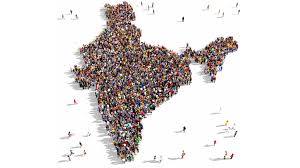
indiaIn all, nearly 150 million Indians are in a need of active medical intervention, according to the study, submitted by Nimhans to the Union ministry of health and family welfare on Monday.

Concerned over the growing problem of mental health in India, the ministry had appointed Nimhans to study the mental health status in the country in 2014 to come up with stronger mental health policies.

The aim of the survey was to study the magnitude of the problem in the country when Dr P Satish Chandra was the director of Nimhans.

India was one of the first countries to develop a national mental health programme in the early 1980s, but there was no proper study to understand the spread and estimate of mental illness in the state.

Although a mental health survey was conducted almost a decade ago, there were several fallacies in that report. The report stated that the estimates at the national and state levels were not possible due to methodological limitations.

The current study, starting from data collection, was initiated in 2014. Through computer-generated random selection, primary data was collected from 12 states with a sample size of 34,802 people.

A pilot study was done in Kolar in Karnataka. It covered all important aspects of mental illness that included substance abuse, alcohol use disorder, tobacco use disorder, severe mental illness, depression, anxiety, phobia, post-traumatic stress disorder, among others.

The prevalence of mental morbidity was found to be very high in the Indian urban centres with higher prevalence of schizophrenia, mood disorders and neurotic- or stress-related disorders.

Researchers have attributed the disturbing scenario to fast-paced lifestyles, stress, complexities of loving, breakdown of support systems and challenges of economic instability.

One of the biggest concerns emerging from the study is that despite three out of four persons experiencing severe mental disorders, huge treatment gaps exist.

Apart from epilepsy, the treatment gap for all mental health disorders is more than sixty per cent. In fact, the economic burden of mental disorders is so huge that affected families had to spend nearly Rs 1,000-1,500 a month mainly for treatment and to access care.

Due to the stigma attached with mental disorders, nearly 80 per cent of people suffering from mental disorders had not received any treatment despite being afflicted by the illness for over 12 months.

Poor implementation of programmes under the national mental health programme has been found to be the main culprit for this scenario.

They not only have a low priority in the public health agenda but the health information system itself does not prioritise mental health.

Not only is there a paucity of mental health specialists, the institutional care in India, too, has been found to be limited.

The researchers suggest that mental health financing needs to be streamlined. The other problems also include interrupted drug supply to treat mental illness.

Comments

Ahmed USA
 - 
Thursday, 13 Oct 2016

Sam ,u proved urself to be a student of madrasa .message board itself clearly says many have become mentally retards becoz of many reason ..one is triple talaq ..now they cannot escape from marriage after raping woman. Second ..surgical strike hit them most becoz many of them thought their relatives can do anything in Pakistan .but now their dreams are shattered .third point arrest of salafist linked Isis elements .4th point losing grip on central govt as iron man is ruling the central .mr sam .1.25 billion population yaar .have commonsense .max voters 65crores .in that Muslims didn't vote for bjp and 31% they have received .FYI how much your siddu got do u know ? .send ur kids at least to schools instead of salafist madrasas..at least they don't become like you .

Rikaz
 - 
Wednesday, 12 Oct 2016

Modi promised 15 lakhs and ache din and may be he is also one of them....

Ashwin
 - 
Wednesday, 12 Oct 2016

SAM, UAE
You are wrong, 14% of the people are those who voted for the Looters party inspite of their pro Pak, non stop looting, minority appeasing policy. This list includes Puppu, Mani, Khurshid, Diggy etc

Go Moothra
 - 
Wednesday, 12 Oct 2016

Those who changed clothes (Chaddi to trouser) .....recently ...but could not change their Minds.....

Shaad
 - 
Wednesday, 12 Oct 2016

We know 31% Indians who elected present Govt. are mentally ill, how come it reduced to 14%? May after 2 years some realised their mistakes..!

SAM
 - 
Wednesday, 12 Oct 2016

Don't understand why the NIMHANS spent so much to reveal that the number of people voted for NDA are mentally ill.

17 Cr out of 1.25 Billion voted for NDA which is 14%.

Surely Arnab Go & Swami are the on the top list who needs to be admitted to ICU.

Abdul Narayan Dsouza
 - 
Wednesday, 12 Oct 2016

Arnab Gobar swami and Naren Kothi will be in the list

Abbu Beary
 - 
Wednesday, 12 Oct 2016

Some saffron group activists all of a sudden become mentally ill if they were caught in terror case. I want to know whether they also included in this 14 per cent ?

Add new comment

  • Coastaldigest.com reserves the right to delete or block any comments.
  • Coastaldigset.com is not responsible for its readers’ comments.
  • Comments that are abusive, incendiary or irrelevant are strictly prohibited.
  • Please use a genuine email ID and provide your name to avoid reject.
coastaldigest.com news network
May 20,2020

Mangaluru, May 20: The local unit of Bharatiya Janata Party has defended the delay in repatriation of coastal Kannadigas from Middle Eastern countries saying that it is impossible to bring all expatriate together at a time when covid-19 cases are continuing to spike in the region. 

Addressing a press conference, Sudarshan M, president of Dakshina Kannada unit of BJP said that the entire district administration was working as a team under the leadership local MP Nalin Kumar Kateel and district minister Kota Shrinivas Poojary and seven BJP MLAs in this critical juncture.

“Without any bias, we also have reached out to the needs of people of Mangaluru assembly constituency represented by former minister and Congress MLA U T Khader,” he said, adding that his party will not forget Indian expatriates in the Gulf too. 

Replying to the charge of not catering to the interests of Kannadigas stranded in the Middle East by way of arranging special flights, Sudarshan said this is part of a well-thought-out move to bring them in batches.

“It is impossible to bring back all Kannadigas stranded in Middle East all of a sudden. Their repatriation will be in phased manner based on facilities available in the district,” he said.

“The district authorities have created healthcare and quarantine facilities for a limited number, be it at Covid-19 hospital or institutional quarantine, and bringing them together will create logistical problems,” he said.

Comments

Add new comment

  • Coastaldigest.com reserves the right to delete or block any comments.
  • Coastaldigset.com is not responsible for its readers’ comments.
  • Comments that are abusive, incendiary or irrelevant are strictly prohibited.
  • Please use a genuine email ID and provide your name to avoid reject.
News Network
January 10,2020

Bengaluru, Jan 10: Education technology company Byju’s is learnt to have raised $200 million in a funding round from Tiger Global Management, which has valued the Bengaluru-based start-up at around $8 billion, making it the third-largest unicorn (start-up valued over $1 billion) in the country.

With this, the Byju Raveendran-founded company has seen over 50 per cent jump in its valuation in just around nine months. In March 2019, Byju’s was valued $5.4 billion, when it raised around $31 million from General Atlantic, and Chinese investment giant Tencent.

At the current valuation, Byju’s has now replaced home-grown cab-hailing major Ola as the third-largest unicorn, next only to Paytm and OYO, which are valued around $16 billion and $10 billion, respectively.

Byju’s confirmed the transaction through a press statement, though the company declined to share any specific details of the deal. Tiger Global could not be immediately reached for its comments.

“We are happy to partner with a strong investor like Tiger Global Management. They share our sense of purpose and this partnership will advance our long-term vision of creating an impact by changing the way students learn,” said Raveendran. “This partnership is both a validation of the impact created by us so far and a vote of confidence for our long-term vision.”

This is Tiger Global’s first investment in the edutech space in India after Vendantu, an online tutoring platform, where it, along with WestBridge Capital, led a $42-million round in August.

An early backer of India’s internet growth story, the New York-headquartered Tiger Global has been a prolific investor in the Indian start-up space. Its portfolio in the country ranges from consumer focused e-commerce companies that are vital for the growth of the sector, such as Flipkart, Delhivery, Grofers, Quikr and PolicyBazaar, to mention a few.

After tasting success with Flipkart, one of its earliest investments, where it had pumped in around $1 billion, the PE major is now doubling down its focus on the Indian start-up space, under its new investment head Scott Shleifer.

Shleifer, who set up international private equity practice for Tiger Global, is said to be as aggressive deal maker like his predecessor Lee Fixel, who left the investment firm in March. Since then, Tiger has also invested in a host of technology-focused companies in diverse sectors including Ninjacart, CRED, NoBroker and Facilio to mention a few.

“Byju’s has emerged as the leader in the Indian education-tech sector. They are pioneering technology shaping the future of learning for millions of school students in India,” Shleifer was quoted in the press statement issued by the edutech firm.

Comments

Add new comment

  • Coastaldigest.com reserves the right to delete or block any comments.
  • Coastaldigset.com is not responsible for its readers’ comments.
  • Comments that are abusive, incendiary or irrelevant are strictly prohibited.
  • Please use a genuine email ID and provide your name to avoid reject.
News Network
April 2,2020

The current physical distancing guidelines provided by the World Health Organisation (WHO) and by the US Centers for Disease Control and Prevention (CDC) may not be adequate to curb the coronavirus spread, according to a research which says the gas cloud from a cough or sneeze may help virus particles travel up to 8 metres. The research, published in the Journal of the American Medical Association, noted that the the current guidelines issued by the WHO and CDC are based on outdated models from the 1930s of how gas clouds from a cough, sneeze, or exhalation spread.

Study author, MIT associate professor Lydia Bourouiba, warned that droplets of all sizes can travel 23 to 27 feet, or 7-8 metres, carrying the pathogen.

According to Bourouiba, the current guidelines are based on "arbitrary" assumptions of droplet size, "overly simplified", and "may limit the effectiveness of the proposed interventions" against the deadly pandemic.

 She explained that the old guidelines assume droplets to be one of two categories, small or large, taking short-range semi-ballistic trajectories when a person exhales, coughs, or sneezes.

However based on more recent discoveries, the MIT scientist said, sneezes and coughs are made of a puff cloud that carries ambient air, transporting within it clusters of droplets of a wide range of sizes.

Bourouiba warned that this puff cloud, with ambient air entrapped in it, can offer the droplets moisture and warmth that can prevent it from evaporation in the outer environment.

"The locally moist and warm atmosphere within the turbulent gas cloud allows the contained droplets to evade evaporation for much longer than occurs with isolated droplets," she said.

"Under these conditions, the lifetime of a droplet could be considerably extended by a factor of up to 1000, from a fraction of a second to minutes," the researcher explained in the study.

The MIT scientist, who has researched the dynamics of coughs and sneezes for years, added that these droplets settle along the trajectory of a cough or sneeze contaminating surfaces, with their residues staying suspended in the air for hours.

"Even when maximum containment policies were enforced, the rapid international spread of COVID-19 suggests that using arbitrary droplet size cutoffs may not accurately reflect what actually occurs with respiratory emissions, possibly contributing to the ineffectiveness of some procedures used to limit the spread of respiratory disease," Bourouiba wrote in the study

Comments

Add new comment

  • Coastaldigest.com reserves the right to delete or block any comments.
  • Coastaldigset.com is not responsible for its readers’ comments.
  • Comments that are abusive, incendiary or irrelevant are strictly prohibited.
  • Please use a genuine email ID and provide your name to avoid reject.