



Nelson Mandela: a hero who battled apartheid

December 6, 2013

Pretoria, Dec 6: South Africa's first black president Nelson Mandela, who died Thursday, was an icon for ending the much-reviled apartheid system, a colossus who strode over world politics and a staunch Gandhian.
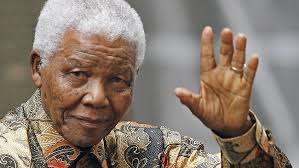
mandela

Mandela, who spent three decades in jail and went on to lead a life that was an inspiration, died at his home in a suburb of Johannesburg, at the age of 95.

He was a believer in principles of Mahatma Gandhi, who served in South Africa and later went on to lead India to freedom.

"The enemies that (Mahatma) Gandhi fought ignorance, disease, unemployment, poverty and violence are today common place in a country that had the potential to lead and uplift Africa. Today we are faced with the formidable task of reconstructing our country anew.

"Now more than ever is the time when we have to pay heed to the lessons of Mahatma Gandhi," said Mandela in Pietermaritzburg in June 1993.

Mandela became the first black president of South Africa in 1994.

Known as the Father of South Africa, he had led a massive movement to end the apartheid system of segregation.

Madiba, the clan name by which Mandela was lovingly called by South Africans, was born Rolihlala Dalibhunga Mandela July 18, 1918, in the village of Mvezo on the banks of river Mbashe in Transkei, South Africa, to Nonqaphi Nosekeni and Nkosi Mphakanyiswa Gadla Mandela, principal counsellor to the acting king of the Thembu people, Jongintaba Dalindyebo.

After his father's death when he was still a child, he became a ward of Jongintaba in the Great Place in Mqhekezweni.

He attended primary school at Qunu, a small village in what is today's Eastern Cape province in South Africa.

It was here that one of his teachers, Mdingane, gave him the name Nelson in accordance with the school's tradition of giving Christian names to its pupils.

He completed his BA from the University of South Africa and arrived in Johannesburg in 1941 and met Walter Sisulu, then an estate agent, who introduced him to Lazar Sidelsky, a white Jewish South African lawyer.

Sidelsky went on to become the mentor of young Mandela.

Mandela joined the African National Congress (ANC) in 1944 and helped form the ANC Youth League.

In 1952, he was among 20 people who were arrested for their role in the Defiance Campaign, a joint civil disobedience movement by the ANC and the South African Indian Congress.

In August the same year, after acquiring a two-year diploma in law, he and Oliver Tambo formed the first black law firm in South Africa, Mandela and Tambo.

It was also in 1952 that Mandela was banned for the first time.

Mandela was among 156 people who were arrested in a police swoop-down Dec 5, 1955, that led to the 1956 Treason Trial, which ended only March 29, 1961, when the last of the detainees, including Mandela, were acquitted.

After the Treason Trial, Mandela formed the The Spear of the Nation, the armed wing of the ANC and in January 1962, he left South Africa under an assumed name to travel around Africa and England to garner support for his armed struggle and underwent military training in Morocco and Ethiopia.

He returned to South Africa in July, 1962, and was arrested on charges of illegally leaving the country and inciting people to strike and was later sentenced to five years in prison.

In 1963, Mandela and nine others were put on the dock in the famous Rivonia Trial for sabotage.

On June 12, 1964, Mandela and seven others - Sisulu, Ahamed Kathra, Govan Mbeki, Raymond Mhlaba, Denis Goldberg, Elias Motsoaledi and Andrew Mlangeni - were sentenced to life imprisonment.

While Goldberg was sent to Pretoria Prison as he was a white, the others were transferred to Robben Island.

In March 1982, Mandela was transferred to the Pollsmoor Prison in Cape Town.

He was transferred to the Victor Verster Prison in Paarl in 1988 from where he was released Feb 11, 1990, nine days after the ban on the ANC and the PAC was lifted.

He was elected the first black president in the first open election in South Africa April 29, 1994, and assumed office May 10 that year.

In 1999 he stepped down from the office after serving one term.

He married his present wife, Graca Mandela, in 1998, after his first two marriages to Evelyn and Winnie had ended in divorce in 1958 and 1996 respectively.

In January 2011 he was treated for an acute respiratory infection and in February 2012 he underwent surgery for an abdominal hernia. He was again admitted to a Pretoria hospital June 8 this year for a recurring lung infection.

Comments

Add new comment

  • Coastaldigest.com reserves the right to delete or block any comments.
  • Coastaldigset.com is not responsible for its readers’ comments.
  • Comments that are abusive, incendiary or irrelevant are strictly prohibited.
  • Please use a genuine email ID and provide your name to avoid reject.
Agencies
February 29,2020

Ahmedabad, Feb 29: The presence of two feral pigeons onboard a GoAir flight at the airport in Ahmedabad in Gujarat created a flutter among the amused passengers, even though the avian surprise did not lead to any untoward incident or delay in the flight.

The incident took place on Friday when the passengers were boarding the Ahmedabad-Jaipur flight.

"Two pigeons had found their way inside the flight G8 702 while the passengers were boarding," an airline statement said on Saturday.

"The crew immediately shooed away the birds. The flight took off at its scheduled time at 5 p.m.," it added.

Comments

Add new comment

  • Coastaldigest.com reserves the right to delete or block any comments.
  • Coastaldigset.com is not responsible for its readers’ comments.
  • Comments that are abusive, incendiary or irrelevant are strictly prohibited.
  • Please use a genuine email ID and provide your name to avoid reject.
Agencies
April 4,2020

Kozhikode, Apr 4: In a bid to maintain the lockdown amid COVID-19 outbreak, Police in Kozhikode is monitoring the situation using drone cameras and making sure that people are not breaking the law.

The police have so far arrested 41 persons who were out on a morning walk on Saturday during the lockdown in the backdrop of coronavirus outbreak.

The SHO of Town South Police Station informed that the accused were later released on bail.
At least 295 cases have been reported in the state so far.

Talking about COVID-19 testing, State Health Minister KK Shailaja told media: "Nine labs are conducting polymerase chain reaction (PCR) tests in Kerala. We've received 2000 rapid test kits and will start rapid tests from tomorrow. If a person tests positive in rapid test, we need to confirm it with PCR test."

The total number of COVID-19 positive cases in India climbed to 3072 on Saturday, according to Ministry of Health and Family Welfare.

Comments

Add new comment

  • Coastaldigest.com reserves the right to delete or block any comments.
  • Coastaldigset.com is not responsible for its readers’ comments.
  • Comments that are abusive, incendiary or irrelevant are strictly prohibited.
  • Please use a genuine email ID and provide your name to avoid reject.
Agencies
May 10,2020

In the wake of the gas leak at a factory in Visakhapatnam, the National Disaster Management Authority (NDMA) has issued detailed guidelines for restarting industries after the lockdown and the precautions to be taken for the safety of the plants as well as the workers.

In a communication to all states and union territories, the NDMA said due to several weeks of lockdown and the closure of industrial units, it is possible that some of the operators might not have followed the established standard operating procedures.

As a result, some of the manufacturing facilities, pipelines, valves may have residual chemicals, which may pose risk. The same is true for the storage facilities with hazardous chemicals and flammable materials, it said.

The NDMA guidelines said while restarting a unit, the first week should be considered as the trial or test run period after ensuring all safety protocols.

Companies should not try to achieve high production targets. There should be 24-hour sanitisation of the factory premises, it said.

The factories need to maintain a sanitisation routine every two-three hours especially in the common areas that include lunch rooms and common tables which will have to be wiped clean with disinfectants after every single use, it added.

For accommodation, the NDMA said, sanitisation needs to be performed regularly to ensure worker safety and reduce the spread of contamination.

To minimise the risk, it is important that employees who work on specific equipment are sensitised and made aware of the need to identify abnormalities like strange sounds or smell, exposed wires, vibrations, leaks, smoke, abnormal wobbling, irregular grinding or other potentially hazardous signs which indicate the need for immediate maintenance or if required shutdown, it said.

At least 11 people lost their lives and about 1,000 others were exposed to a gas leak at a factory in Andhra Pradesh''s Visakhapatnam on May 7.

The incident took place after it restarted operations when the government allowed industrial activities in certain sectors following several weeks of lockdown.

The lockdown was first announced by Prime Minister Narendra Modi on March 24 for 21 days in a bid to combat the coronavirus threat. The lockdown was then extended till May 3 and again till May 17.

Comments

Add new comment

  • Coastaldigest.com reserves the right to delete or block any comments.
  • Coastaldigset.com is not responsible for its readers’ comments.
  • Comments that are abusive, incendiary or irrelevant are strictly prohibited.
  • Please use a genuine email ID and provide your name to avoid reject.