


Net neutrality: Facebook shuts Free Basics programme in India

February 11, 2016

New Delhi, Feb 11: In a boost to net neutrality, Facebook has decided to shut down its controversial 'Free Basics' programme in India, following telecom regulator Trai's move to bar operators from charging different rates for Internet access based on content.free
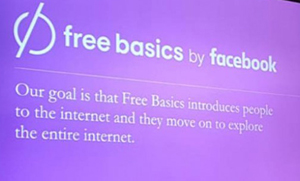
Facebook had met with severe criticism for its programme, which aimed at providing basic Internet access to people in partnership with telecom operators.

Critics saw this as violation of the principle of net neutrality that states that entire Internet should be available to everyone on equal terms as Free Basics allowed access to selected websites.

"Free Basics is no longer available to people in India," a Facebook spokesperson said in an emailed response. The service was available in India with Reliance Communications. In December, RCom put the service on hold following a Telecom Regulator Authority of India's directive to that effect.

Ruling in favour of net neutrality, Trai has barred all telecom operators from offering discriminatory tariffs for data services on the basis of content, impying that operators will have to charge the same price for data used, irrespective of website or app accessed by the consumer.

This puts an end to Facebook's Free Basics and Airtel's zero rating plans in India. Yesterday, Facebook board member Marc Andreessen had set off another controversy by terming Trai's decision as an 'anti-colonialist' idea and said the country would have been better off if it had remained under British rule.

Facebook founder and head Mark Zuckerberg distanced himself from the comments saying the remarks were "deeply upsetting" and did not represent the company's thinking.

"India has been personally important to me and Facebook. Early on in my thinking about our mission, I traveled to India and was inspired by the humanity, spirit and values of the people," he wrote in a post on the social networking site.

"It solidified my understanding that when all people have the power to share their experiences, the entire world will make progress," he added. Andreessen deleted the tweet and apologised through a series of tweets yesterday.

"Last night on Twitter, I made an ill-informed and ill-advised comment about Indian politics and economics. To be clear, I am 100 per cent opposed to colonialism, and 100 per cent in favor of independence and freedom, in any country, including India," he said later in a series of tweets.

Zuckerberg has come out in defence of the programme time and again, saying it did not block or throttle other services and is not in conflict with net neutrality. Launched in 2014, Facebook is running the Internet.org programme across over 17 countries providing basic Internet access to over one billion people.

Following allegations of violation of net neutrality, Facebook rebranded the programme as 'Free Basics'. It had said the rebranding will help Facebook distinguish the free basic Internet offering from the large number of activities the US-based company is pursuing to help get new users online across the globe. Recently, it ran a big media campaign in support of the programme.

Comments

VOX POPULI
 - 
Saturday, 13 Feb 2016

KUDO'S & HATS OFF TO TRAI. ATLAST ATLEAST YOU COULD SMELL & UNDERSTAND THE HIDDEN AGENDA OF THESE ZIONIST MASTERMINDS.FACE BOOK & FREE BASICS = FB (READ BETWEEN THE LINES) BOTH ARE SAME AND AGENDA IS CLEARLY HIDDEN. FB GUY IS USING OUR INDIAN CROOKED CORPORATES AS HIS AGENTS TO SPREAD HIS HIDDEN AGENDA AND FOOL THE MASSES OF INDIA IN THE NAME OF NET NEUTRALITY. AS TRUE INDIANS LET US STAND UNITED & HAVE THE COURAGE OF QUESTIONING THE SO CALLED SHAMELESS & USELESS CREATURE \ZUCKERBERG' & HIS AGENT., SO CALLED 'MARC ANDREESSEN'., HOW DARE THEY HAVE THE RIGHT & COURAGE TO INSULT GOVT OF INDIA., ITS TRAI POLICIES & FOOL THE MASSES OF INDIA. MY DEAR FELLOW INDIANS WHATEVER THE POLITICAL DIFFERENCES MAY BE, END OF THE DAY WE ARE ALL ONE PEACE LOVING & PRESTIGIOUS CITIZENS OF INDIA. UNITED WE STAND ., BUT DIVIDED WE FALL. LONG LIVE INDIA & INDIANS. JAI HO."

S.M. Nawaz Kuk…
 - 
Thursday, 11 Feb 2016

Good Dicision taken by TRAI

IBRAHIM.HUSSAIN
 - 
Thursday, 11 Feb 2016

Modi spread red carpet to Zackerberg, hugged tightly. Zackerberg was knocked down by TRAI for his hidden bad intensions and thoughts.

TRAI done good job roping noses of telecom operators of India taught good lesson to them.

Thanks to TRAI

Add new comment

  • Coastaldigest.com reserves the right to delete or block any comments.
  • Coastaldigset.com is not responsible for its readers’ comments.
  • Comments that are abusive, incendiary or irrelevant are strictly prohibited.
  • Please use a genuine email ID and provide your name to avoid reject.
News Network
March 27,2020

Mangaluru, Mar 27: Nine throat swab samples that were sent for testing of the coronavirus, have been declared as negative while samples of four more persons are currently being tested, official sources said on Friday.

Dakshina Kannada Deputy Commissioner Sindhu B. Rupesh said that 2,902 people are under home quarantine in the district as of today while three were admitted to hospitals for observation.

Around 38,051 people have been inspected, so far, here in this district.

Comments

Add new comment

  • Coastaldigest.com reserves the right to delete or block any comments.
  • Coastaldigset.com is not responsible for its readers’ comments.
  • Comments that are abusive, incendiary or irrelevant are strictly prohibited.
  • Please use a genuine email ID and provide your name to avoid reject.
News Network
March 31,2020

Bengaluru, Mar 31: Ten persons who were under home quarantine in Bengaluru and had escaped to their native places, were arrested on Monday.
A case has been registered against them at Gurmitkal Police Station, said BH Anil Kumar, Bruhat Bengaluru Mahanagar Palike (BBMP) Commissioner.

Seven new COVID-19 cases were confirmed in Karnataka between Saturday 5 pm and Sunday 2 pm.

The total number of positive cases in the state stands at 83, out of which five have been cured and three have lost their lives, according to the Karnataka Health Department.

Comments

Add new comment

  • Coastaldigest.com reserves the right to delete or block any comments.
  • Coastaldigset.com is not responsible for its readers’ comments.
  • Comments that are abusive, incendiary or irrelevant are strictly prohibited.
  • Please use a genuine email ID and provide your name to avoid reject.
Media Release
February 14,2020

Veteran journalist P. Sainath has said that the nation is in a crisis. And this crisis is not limited to just the rural area. It has become a national crisis at various areas such as agriculture, education, economy, job creation etc.

He was delivering the endowment lecture on the topic ‘Indian democracy at the post-liberalization and post-truth era’ at Media Manthan 2020 organized by the PG department of journalism and mass communication at St Aloysius College (Autonomous). 

Mr Sainath said that the many policies adopted in the 90s led to India becoming unusually unequal. Referring to the speech Ambedkar had made at the Constituent Assembly while handing over the draft of the Constitution, Mr Sainath said, “Ambedkar had warned about the weakness of Indian democracy that liberty without equality allows the supremacy of a few over the multitude. Liberty, equality and fraternity must be kept together as we cannot have one without the other.” 

Mr Sainath stated that the agrarian crisis was no longer about the loss of productivity, employment or about farmer suicide; it was a societal, civilizational crisis. Commenting on the lopsided policies such as cow-slaughter ban, he explained how cow slaughter ban had adversely affected many industries due to their interdependency. While Muslims who slaughtered cows were rendered helpless, the cattle traders who were mostly OBCs lost their earnings as the cattle prices crashed. An important industry like Kolhapur sandals industry in Maharashtra went bankrupt as a result of the cow slaughter ban in Maharashtra. He said the policymakers had no idea how the rural industries were interconnected. Demonetisation too devastated the rural economy as 98 percent of rural transactions happen through cash. 

Mr Sainath also spoke about the crisis of inequality which affects the Dalits and the Adivasis far more than anyone else as 90 percent of the rural households take home less than Rs 10,000/- per month. “Women are yet another group whose labour is never counted in the gross domestic product. Women and girls globally do unpaid work which amounts to about 12.5 billion working hours per year. Monetarily speaking, this is worth 10.8 trillion dollars,” Mr Sainath added. 

Speaking about the crisis of jobs Mr Sainath said that major companies were laying off employees just to create more profits for the investors and the adoption of artificial intelligence in the industry would further destroy millions of jobs.

Rector of St Aloysius College Institutions Fr Dionysius Vaz SJ, Principal Dr (Fr) Praveen Martis SJ, HOD of Journalism and Mass Communication department Dr (Fr) Melwyn Pinto SJ were present.

‘Veerappan and Vijay Mallya’s business models are interesting!’

Addressing the gathering during his endowment lecture on Friday, Mr Sainath made an interesting comment on the so called ‘revenue model’. “Whenever I visit IIMs and IITs for lectures on my PARI project, the students there ask me what my revenue model for my project is. I tell them that I do not have a revenue model. In fact, journalism does not begin with a revenue model. Gandhiji, Ambedkar, Bhagat Singh were all great journalists. But they did not have a revenue model,” Mr Sainath said.

On a lighter note, he said that the best revenue model that he liked was that of forest brigand Veerappan and liquor baron Vijay Mallya. “Veerappan ruled the forest for forty years and from the top ministers to the villagers he could dictate terms and liver royally. Similarly, Mallya’s revenue model was to steal the banks and run away abroad and live like a king,” Mr Sainath added.

Journalism is not and can never be a business. It is a calling, he opined. While newspaper can be a business, television can be a business, journalism per se cannot be reduced to a business. “Unfortunately today, journalists are recruited on a contract basis and they have no bargaining power; and there are no unions to fight for their cause. Hence, they are at the mercy of the corporate media houses for their survival and are made to write stories that cannot be called journalism,” Mr Sainath said.

Answering a question as to the pressures he faced as a journalist, he said that external pressures from the government or others could be very well handled. It is the internal pressures from once own media house that journalists find it difficult to manage.


Comments

Add new comment

  • Coastaldigest.com reserves the right to delete or block any comments.
  • Coastaldigset.com is not responsible for its readers’ comments.
  • Comments that are abusive, incendiary or irrelevant are strictly prohibited.
  • Please use a genuine email ID and provide your name to avoid reject.