


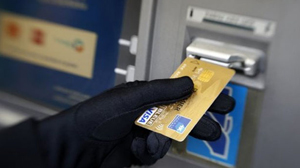
New virus attacks when you swipe your debit card

January 19, 2014

Virus_attacks_debit_cardNew Delhi, Jan 19: Cyber security sleuths have detected a "black" private information stealing virus in the Indian online banking transactions space and have alerted consumers who swipe debit or credit cards at shopping counters to make payments.

The "severely" spreading virus of the Trojan family has been detected conducting its clandestine operations at the Point of Sale (POS) counters placed at retail terminals after the RBI made it mandatory in December last year for debit cards holders to punch in their PIN every time they make a purchase.

The virus named "Dexter, black POS, memory dump and grabber" can acquire seven aliases when infecting a system and once it is successful in breaching the security protocols of a POS terminal, it steals confidential data like card holder's name, account number, expiration date, CVV code and other discretionary information which could lead to financially compromising and phishing attacks on the card at a later stage.

"It has been reported that malware campaigns targeting payment card processing, point-of-sale (POS), check out systems or equipment are on the rise.

"The common infection vectors for POS system malwares includes phishing emails or social engineering techniques to deliver the malware, use of default or weak credentials, unauthorised access, open wireless networks along with the methods of installing malware as a part of service," a latest advisory issued to the public by the Computer Emergency Response Team (CERT-India) said.

The CERT-In is the nodal department to protect Indian cyberspace and software base infrastructure against any destructive and hacking activities.

Comments

Add new comment

  • Coastaldigest.com reserves the right to delete or block any comments.
  • Coastaldigset.com is not responsible for its readers’ comments.
  • Comments that are abusive, incendiary or irrelevant are strictly prohibited.
  • Please use a genuine email ID and provide your name to avoid reject.
News Network
May 9,2020

Mangaluru, May 9: Dakshina Kannada District Collector Sindhu B Roopesh on Friday held a meeting to discuss the precautionary measures to be taken to prevent the spread of COVID-19 and the current situation in the district.

The meeting was attended by Member of Parliament and Karnakata BJP unit chief Nalin Kumar Kateel, Minister-in-charge of Dakshina Kannada Kota Srinivasa Poojary, MLA Vedavas Kamath and District Medical Officer Dr Ramachandra Bauri among others were present there.

Top officials of the police department, labour department officials and other concerned persons were also present in the meeting.

Comments

Add new comment

  • Coastaldigest.com reserves the right to delete or block any comments.
  • Coastaldigset.com is not responsible for its readers’ comments.
  • Comments that are abusive, incendiary or irrelevant are strictly prohibited.
  • Please use a genuine email ID and provide your name to avoid reject.
News Network
January 20,2020

Mysuru, Jan 20: As the Karnataka state Congress is still awaiting the appointment of Karnataka Pradesh Congress Committee (KPCC) President, MLA Satish Jarkiholi has said that in order to balance the caste and regional equations, All India Congress Committee (AICC) was planning to create four working presidents posts for KPCC.

Talking to media personnel here on Sunday, Mr Jarkiholi, who is considered to be in the race for the post, said that a clear picture about the constitution of additional posts of the working president in the KPCC would emerge in a week.

He added that it has been delayed due to the Assembly elections in Delhi.

Comments

Add new comment

  • Coastaldigest.com reserves the right to delete or block any comments.
  • Coastaldigset.com is not responsible for its readers’ comments.
  • Comments that are abusive, incendiary or irrelevant are strictly prohibited.
  • Please use a genuine email ID and provide your name to avoid reject.
News Network
February 23,2020

The euphoria over the claim that around 3,000 tonnes of gold reserves, worth Rs 12 trillion, have been discovered in Uttar Pradesh’s Sonbhadra district could not last even 24 hours, with the Geological Survey of India (GSI) clarifying on Saturday there had been no such discovery.

The GSI, headquartered in Kolkata, rebutted the claims of the Uttar Pradesh Directorate of Geology and Mining (UPDGM), and said “miscommunication” must have led to the wrong reporting of facts.

M Sridhar, director general of the GSI, said nobody in the agency gave any such data. He said 52,806 tonnes of gold ore was found in Sonbhadra district during the exploration work in 1998-2000. From this reserve, only 160 kg of gold can be extracted.

“There must have been some miscommunication of facts because of which the gold ore deposits have been overestimated. We have written a letter to Uttar Pradesh (UPDGM), stating the facts. The GSI has not estimated such kind of vast resource of gold deposits in Sonbhadra,” Sridhar said.

ALSO READ: 2,900-tonne gold mine found in Sonbhadra, 4 times that of India's reserves

The UPDGM had said on Friday that gold deposits were found in Son Pahadi and Hardi areas of the district. Sridhar said while gold ore was found in the area during the GSI’s exploration work in 1998-2000, it had told the state government about the discovery in November last year.

Under the new regulation, which came into effect from 2015, the GSI has to inform the state government when ore deposits are discovered. Earlier, no such action was mandatory. In its report, the GSI estimated that only 3.03 gm of gold can be extracted from a tonne of ore. It also clarified that even the extraction amount was tentative and could not be established for certain.

Moreover, Sridhar said the deposits were spread across only 0.5 sq km in forest land, which made the mining of ore economically unviable. “When there are several mines nearby, we can club it into a block and then it makes sense to mine the ore. But in this case, the deposits are too small to make it viable for any company to mine it,” he said. The GSI usually prioritises its exploration work based on the needs of the Centre. While strategic minerals like tin, cobalt, lithium, beryllium, germanium, gallium, indium, tantalum, niobium, selenium, and bismuth are atop the list in GSI exploration, gold is another commodity on its priority list.

According to the World Gold Council, India has reserves of 630 tonnes of gold.

Comments

Add new comment

  • Coastaldigest.com reserves the right to delete or block any comments.
  • Coastaldigset.com is not responsible for its readers’ comments.
  • Comments that are abusive, incendiary or irrelevant are strictly prohibited.
  • Please use a genuine email ID and provide your name to avoid reject.