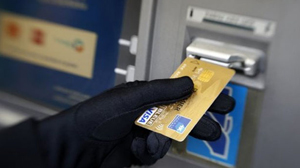
New virus attacks when you swipe your debit card

January 19, 2014

Virus_attacks_debit_cardNew Delhi, Jan 19: Cyber security sleuths have detected a "black" private information stealing virus in the Indian online banking transactions space and have alerted consumers who swipe debit or credit cards at shopping counters to make payments.

The "severely" spreading virus of the Trojan family has been detected conducting its clandestine operations at the Point of Sale (POS) counters placed at retail terminals after the RBI made it mandatory in December last year for debit cards holders to punch in their PIN every time they make a purchase.

The virus named "Dexter, black POS, memory dump and grabber" can acquire seven aliases when infecting a system and once it is successful in breaching the security protocols of a POS terminal, it steals confidential data like card holder's name, account number, expiration date, CVV code and other discretionary information which could lead to financially compromising and phishing attacks on the card at a later stage.

"It has been reported that malware campaigns targeting payment card processing, point-of-sale (POS), check out systems or equipment are on the rise.

"The common infection vectors for POS system malwares includes phishing emails or social engineering techniques to deliver the malware, use of default or weak credentials, unauthorised access, open wireless networks along with the methods of installing malware as a part of service," a latest advisory issued to the public by the Computer Emergency Response Team (CERT-India) said.

The CERT-In is the nodal department to protect Indian cyberspace and software base infrastructure against any destructive and hacking activities.

Comments

Add new comment

  • Coastaldigest.com reserves the right to delete or block any comments.
  • Coastaldigset.com is not responsible for its readers’ comments.
  • Comments that are abusive, incendiary or irrelevant are strictly prohibited.
  • Please use a genuine email ID and provide your name to avoid reject.
News Network
March 9,2020

Bengaluru, Mar 9: The BJP government in Karnataka on Monday scrapped the Shaadi Bhagya Scheme that was launched by Congress government in the state in 2013.

Under the scheme, Rs 50,000 was given to Muslim brides for marriage expenses after they submitted their Aadhar and BPL cards.

While the previous coalition government had allocated Rs 60 crore budget for the scheme, the BJP government decided to discontinue the scheme. Congress called the move by the state government as "anti-minority".

"They have launched a scheme for the majority community. I welcome that. But why are you discontinuing one scheme? It is a small scheme where marginalized people get a little help from the government," Congress MLA Rizwan Arshad told reporters.

"He (Karnataka Chief Minister) has wilfully reduced the money allotted to all the schemes," he added.

BJP MLA Basavana Gowda Patil Yantal welcomed the decision of the Karnataka Government to scrap the scheme.

"The minority does not need appeasement because equal citizenship needs to apply to all in this country. I wholeheartedly welcome this move by the Karnataka Government," Yantal told reporters.

"Should we not give the majority people anything in India? India not giving anything to the majority, is that secular? We have already given them Pakistan," he said.

The MLAs from the minority community in the state have demanded a meeting with the Karnataka Chief Minister B S Yeddyurappa.

Comments

Add new comment

  • Coastaldigest.com reserves the right to delete or block any comments.
  • Coastaldigset.com is not responsible for its readers’ comments.
  • Comments that are abusive, incendiary or irrelevant are strictly prohibited.
  • Please use a genuine email ID and provide your name to avoid reject.
News Network
June 26,2020

Bengaluru, Jun 26: The National Restaurant Association of India (NRAI) on Thursday came up with a Standard Operating Procedure (SOP) for restaurants whereby among other physical distancing norms, it has suggested a 2-metre gap between tables.

Formulated in partnership with Releski, a Bengaluru based skill-tech company, the SoP suggests that in case of back-to-back seating, people sitting with their backs towards each other will have their seats divided by 'Plexiglass' divider raised up to 2 meters from the ground.

"In a typical restaurant, the improvised seating plan should have a minimum distance of 2 metres between tables. The distance of 2 metres (6 feet) between tables should measure from one edge of the table to the other table's edge," it said.

In case of loose or free seating such as in banquet style or food court style seating, a minimum 2 meters of distance should be maintained between tables.

The guidelines noted that, to encourage physical distancing, restaurants have to sacrifice their seating capacity, to promote health and safety, and also to gain trust from their patrons.

"In order to perform this, divide your restaurants under different sectors. Pull out your restaurant's floor plan and colour code different sections red and yellow. Red sections are potential areas where maximum footfall or traffic is observed. Yellow sections are areas where the footfalls are average," it said.

All the red sections are encircled or bordered by placing barricades or Q manager and will open at specific points to access the yellow section and all the opening points will have hand sanitisers and sprays, and every guest who walks from red zones to yellow zones will sanitise himself/herself to reduce the chances of contamination.

For air conditioning, the guidelines of CPWD shall be followed which inter alia emphasises that the temperature setting of all air conditioning devices should be in the range of 24-30 degree Celsius, relative humidity should be in the range of 40- 65 per cent, intake of fresh air should be as much as possible and cross ventilation should be adequate, the guidelines suggested.

The industry body has also suggested appointment of a COVID-free Ambassador who would operate as the Chief Health Officer within the restaurant team, preferably from the management team in each shift.

The ambassador's would put the new daily work routines into practice, to monitor compliance with good practice and to lead the preventative measures, adapt to health & safety recommendations and requirements of the restaurant and oversee the implementation of the norms.

Anurag Katriar, President of NRAI and CEO & Executive Director of deGustibus Hospitality, said: "Every restaurant cutting across formats is facing the harsh reality of subdued to shut business volumes in the present and the uncertainty of business environment in the future. One thing is certain that hygiene and safety will be a key differentiator in the post-pandemic restaurant operations."

Comments

Add new comment

  • Coastaldigest.com reserves the right to delete or block any comments.
  • Coastaldigset.com is not responsible for its readers’ comments.
  • Comments that are abusive, incendiary or irrelevant are strictly prohibited.
  • Please use a genuine email ID and provide your name to avoid reject.
News Network
June 5,2020

Newsroom, June 5: The union health ministry has announced new rules for shopping malls which have been permitted to open from June 8, except those falling in containment zones.

The guidelines will come into effect from Monday and cinema halls, gaming arcades and children play areas in these establishments will remain closed.

Here is the complete list of standard operating procedures issued by the ministry to be followed in shopping malls to contain the spread of COVID-19.

•   Thermal screening of all visitors mandatory at entry point, along with compulsory hand hygiene. Only asymptomatic visitors will be allowed to enter the shopping mall .

•  It will be mandatory for all visitors as well as workers to wear face masks at all times inside the mall. 

•  Posters and audio-visual media on preventive measures about COVID-19 should be displayed prominently.

•  Visitor entry to shopping malls should be allowed in a staggered manner and adequate manpower be deployed by mall management for ensuring social distancing norms.

•  All employees who are at higher risk like elderly, pregnant women and those having underlying medical conditions should take extra precautions. They should preferably not be exposed to any front-line work requiring direct contact with the public.

•   Proper crowd management in the parking lots and outside the premises – duly following social distancing norms shall be ensured. Preferably, separate entry and exits for visitors, workers and goods/supplies shall be organised.

•   The staff for home deliveries should be screened thermally by the shopping mall authorities prior to allowing home deliveries and required precautions while handling supplies, inventories and goods in the shopping mall must be ensured.

•   Physical distancing of a minimum of 6 feet, when queuing up for entry and inside the shopping mall should be maintained as far as feasible while the number of customers inside the shop should be kept at a minimum, so as to maintain the physical distancing norms.

•   The number of people in the elevators should be restricted and use of escalators with one person on alternate steps should be encouraged.

•   Number of people in the elevators shall be restricted, duly maintaining social distancing norms. Use of escalators with one person on alternate steps may be encouraged.

•   Effective and frequent sanitation within the premises shall be maintained with particular focus on lavatories, drinking and hand washing stations/areas

•   Cleaning and regular disinfection of frequently touched surfaces  to be made mandatory in all malls in common areas as well as inside shops, elevators, escalators etc.

•   In the food-courts, adequate crowd and queue management is to be ensured and not more than 50 per cent of seating capacity should be permitted.

•   Food court staff should wear mask and hand gloves and take other required precautionary measures, the seating arrangement should ensure adequate social distancing between patrons as far as feasible and tables should be sanitized each time a customer leaves.

•   Gaming arcades, children play areas and cinema halls inside shopping malls shall remain closed.

•   Spitting should be strictly prohibited and installation and use of Aarogya Setu App shall be advised to all.

•   The ministry advised persons aged above 65, those having comorbidities, pregnant women and children below the age of 10  to stay at home, except for essential and health purposes.

Comments

Add new comment

  • Coastaldigest.com reserves the right to delete or block any comments.
  • Coastaldigset.com is not responsible for its readers’ comments.
  • Comments that are abusive, incendiary or irrelevant are strictly prohibited.
  • Please use a genuine email ID and provide your name to avoid reject.