


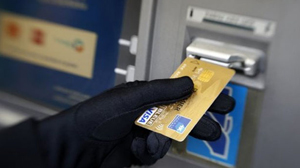
New virus attacks when you swipe your debit card

January 19, 2014

Virus_attacks_debit_cardNew Delhi, Jan 19: Cyber security sleuths have detected a "black" private information stealing virus in the Indian online banking transactions space and have alerted consumers who swipe debit or credit cards at shopping counters to make payments.

The "severely" spreading virus of the Trojan family has been detected conducting its clandestine operations at the Point of Sale (POS) counters placed at retail terminals after the RBI made it mandatory in December last year for debit cards holders to punch in their PIN every time they make a purchase.

The virus named "Dexter, black POS, memory dump and grabber" can acquire seven aliases when infecting a system and once it is successful in breaching the security protocols of a POS terminal, it steals confidential data like card holder's name, account number, expiration date, CVV code and other discretionary information which could lead to financially compromising and phishing attacks on the card at a later stage.

"It has been reported that malware campaigns targeting payment card processing, point-of-sale (POS), check out systems or equipment are on the rise.

"The common infection vectors for POS system malwares includes phishing emails or social engineering techniques to deliver the malware, use of default or weak credentials, unauthorised access, open wireless networks along with the methods of installing malware as a part of service," a latest advisory issued to the public by the Computer Emergency Response Team (CERT-India) said.

The CERT-In is the nodal department to protect Indian cyberspace and software base infrastructure against any destructive and hacking activities.

Comments

Add new comment

  • Coastaldigest.com reserves the right to delete or block any comments.
  • Coastaldigset.com is not responsible for its readers’ comments.
  • Comments that are abusive, incendiary or irrelevant are strictly prohibited.
  • Please use a genuine email ID and provide your name to avoid reject.
News Network
February 24,2020

Bengaluru, Feb 24: Census authorities in Karnataka have requested deputy commissioners in the state’s districts to hold outreach and awareness campaigns about the National Population Register (NPR), as they fear misgivings about the exercise could hurt the forthcoming enumeration of population.

The house-listing phase of the Census and updating of NPR will be rolled out simultaneously by mid-April in the BJP-ruled state.

About 1,50,000 enumerators will handle the massive exercise.

Officials believe widespread awareness will help address concerns about the NPR data-gathering process and make people cooperate with enumerators when they visit houses for both NPR and census work.

“Sensing the kind of questions that enumerators may face when they do house visits, in all video conferences with deputy commissioners of districts, we have requested to establish contact with local representatives,” SB Vijay Kumar, director of Census Operations in Karnataka told news agency. “We have asked them to organise outreach programmes to ensure that people’s doubts are resolved before the information gathering work begins,” he added.

Census operations are handled by the Union home ministry. Several district officials are said to have raised concerns about the possibility of people refusing to share information when the work on the census and NPR begins in two months. This would affect the quality of the census work, making the exercise incomplete.

news channel earlier reported that people in parts of Karnataka had declined to share personal information with officials visiting households in connection with government programmes, suspecting them of gathering data for the yet-to-be unveiled National Register of Citizens, following enactment of the Citizenship Amendment Act (CAA) recently.

Kumar said district authorities will train and sensitise enumerators to tread carefully while gathering information. Enumerators will be told not to demand information but seek it gently.

“We will tell enumerators to proactively engage with people. For instance, if an old man in a village does not know his exact date or place of birth, the enumerator may engage in a conversation with the person that may elicit some anecdotes and roughly establish the year and the place of birth,” the census director said.

As of now, the NPR questionnaire has 21queries, but officials say it has not yet been finalised.

With most of the census and NPR data gathering and storage happening digitally this time, the challenge before census officials is to convince people that the data would remain safe.

“Individual data is sealed and all that we can see is collective data. The information is consolidated and tailor-made. We are telling district officials to create awareness about data safety as well,” Kumar said.

Comments

Add new comment

  • Coastaldigest.com reserves the right to delete or block any comments.
  • Coastaldigset.com is not responsible for its readers’ comments.
  • Comments that are abusive, incendiary or irrelevant are strictly prohibited.
  • Please use a genuine email ID and provide your name to avoid reject.
News Network
April 25,2020

Kalaburagi, Apr 25: In order to make people aware about the precautionary steps required to be taken in order to contain the spread of coronavirus, Muslim clerics here are making announcements from mosques after 'Azaan' urging people to follow the government guidelines to keep infection at bay.

Speaking to news agency, Ateeq Ur Rahman Ashrafi, All India Imams Council Karnataka's state president, said, "Under our council, there are around 80 mosques and after Azaan we are spreading awareness about COVID-19. I also appeal to other mosques to make such announcements and follow government guidelines."

This year, due to the spread of the virus, Muslim clerics have requested people to offer prayers inside their homes and avoid any kind of social gathering.

The country is under lockdown till May 3. All religious places including mosques have been closed to stop the transmission of the highly contagious virus.

Comments

Add new comment

  • Coastaldigest.com reserves the right to delete or block any comments.
  • Coastaldigset.com is not responsible for its readers’ comments.
  • Comments that are abusive, incendiary or irrelevant are strictly prohibited.
  • Please use a genuine email ID and provide your name to avoid reject.
News Network
June 14,2020

Kozhikode, Jun 14: A mosque in Kuttichira of Kozhikode has found a unique way to avoid crowding amid the COVID-19 pandemic. The committee that runs the mosque has started issuing smart cards to people for offering prayers and simultaneously encouraging social distancing.

"The committee has given smart cards with numbers to the people in the surroundings of the Masjid. One who enters the mosque premises has to rub their hands with sanitizers. They also have to tell their identity on camera. The automatic system has been put in place to save the address and phone number. Next time onwards they have to say their smart card number only so that other details will be automatically filled," said Muhammad Sajjad, who is part of the Mosque committee.

"The door of the mosque will open automatically after swiping the card. We have fit in a sensor on the doors. We have also made marks inside the mosque area so that people can abide by social distancing norm," he added.

A couple of days back the Kerala government has rolled out an order allowing the opening of places of worship, malls and restaurants from June 9 in strict accordance with guidelines and social distancing norms. As per the guidelines, pregnant women and those with co-morbidities should not visit any places of worship. Those with symptoms should not be allowed.

Comments

Add new comment

  • Coastaldigest.com reserves the right to delete or block any comments.
  • Coastaldigset.com is not responsible for its readers’ comments.
  • Comments that are abusive, incendiary or irrelevant are strictly prohibited.
  • Please use a genuine email ID and provide your name to avoid reject.