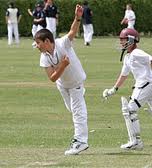
Under-19 and Under-16 cricketers selected for KSCA Academy coaching

[email protected] (News Network)
April 6, 2012

Mangalore, April 6: Karnataka State Cricket Association Mangalore Zone has announced the list of Under-19 and Under-16 players selected for the KSCA Academy coaching camps.

The camps are scheduled to be held simultaneously in Mangalore, Manipal, Madikeri and Gonikoppa from April 9.

In Madikeri and Gonikoppa, more players will be selected before the start of the camp, a KSCA spokesperson said.

Many players could not attend the selection trials due to examinations in these areas.

For details, players may contact Srikanth Rai (ph: 9845202879) or KSCA Mangalore Zone office, stated a press release.

coaching

Comments

Balakrishna.p
 - 
Friday, 5 Feb 2016

Hi sir I am 19years old . Pleas inform Me when is The U19 Selections in Banglore Mobile:-9611343907

yogeshwaran
 - 
Thursday, 28 Jan 2016

sir i am a right hand batsman i m a local hero in my locality pls give me a chance to show my talent sir i m good fielder pls any selection reply me sir

yogeshwaran
 - 
Thursday, 28 Jan 2016

sir i am an right hand batsman i m a local hero in my locality pls give me a chance to show my talent sir i m good fielder pls any selection reply me sir

Kishan
 - 
Tuesday, 5 Jan 2016

Hi Sir,

My Name : Kihsan 18 Year Old My Date of Birth 29-07-1997 I Want To Play Under 19 State Team Am Right hand Batsman & Wicket Keeper I Am Not Best Batsman But I Practice EveryDay in KIOC Academy Bangalore, Contact Number :26509171,2650778,2650776,26620022 My Gmail: [email protected]

Thank u Sir,

Add new comment

  • Coastaldigest.com reserves the right to delete or block any comments.
  • Coastaldigset.com is not responsible for its readers’ comments.
  • Comments that are abusive, incendiary or irrelevant are strictly prohibited.
  • Please use a genuine email ID and provide your name to avoid reject.
News Network
April 26,2020

Dubai, Apr 26: Families were shattered as the three dead bodies of UAE-based Indian expats were returned to the country from New Delhi, India.

Family members waited outside the Indira Gandhi International Airport for hours, but they were later told to go back home as the remains of expats Jagsir Singh, Sanjeev Kumar and Kamlesh Bhatt were flown back to Abu Dhabi, following a new order implemented by India's Ministry of Home Affairs.

Inderjeet, brother-in-law of Sanjeev based in Al Ain, said their family in Punjab was devastated.

"This is a non-coronavirus death. We had a death certificate as proof and all necessary documents from Indian Embassy. But the body was returned while our family members waited outside the airport. This is very shocking," Inderjeet said.

"The body shouldn't have been returned. It's difficult to travel across states due to Covid-19 restrictions and also to arrange the ambulance," he added.

"Now the embassy has told me to come on Sunday. They said hopefully things will be sorted out in a day or two."

Meanwhile, the family of Kamlesh resides in the Indian state of Uttarakhand. This means, with existing travel restrictions, they had to secure permits from different states to reach New Delhi.

Dubai-based social worker Girish Pant, who is in touch with the family, said they are all depressed with the unfortunate turn of events.

"His brother Vimlesh had to return home without the remains. They are all clueless and in pain. With the new order from the Ministry of Home Affairs, I have informed the family that the body will reach them within 48 hours. I am also coordinating with the Indian Embassy," Pant said.

Comments

Ahmed A.K.
 - 
Monday, 27 Apr 2020

Now support BJP


Indian origins dont have place to cremate in their own land while our HM is planning to give nationality to minorities of other countries.


what a joke man!!!

Add new comment

  • Coastaldigest.com reserves the right to delete or block any comments.
  • Coastaldigset.com is not responsible for its readers’ comments.
  • Comments that are abusive, incendiary or irrelevant are strictly prohibited.
  • Please use a genuine email ID and provide your name to avoid reject.
News Network
March 22,2020

Mangaluru, Mar 22: A 22-year-old man from Bhatkal who had returned from Dubai on March 19 has tested positive for coronavirus.

Sindhu B Rupesh, Deputy Commissioner of Dakshina Kannada confrimed this today.

The youth, after landing at Mangaluru International Airport had got admitted to Govt Wenlock Hospital.

The total number of coronavirus positive patients in India rose to 342 on Sunday, as per the Indian Council of Medical Research (ICMR).

A total of 16,999 samples from 16,109 individuals have been tested for COVID-19 as of 10:00 am on March 22, as per ICMR data.

India reported two deaths today from the highly contagious virus - one each in Maharashtra and Bihar - taking the tally to six, as per state authorities.

Comments

Add new comment

  • Coastaldigest.com reserves the right to delete or block any comments.
  • Coastaldigset.com is not responsible for its readers’ comments.
  • Comments that are abusive, incendiary or irrelevant are strictly prohibited.
  • Please use a genuine email ID and provide your name to avoid reject.
Agencies
May 8,2020

Washington D.C., May 8: The prime time for brain development in a child's life is the first year, where the infant spends most of the time asleep. It is the time when neural connections form and sensory memories are encoded.

However, when sleep is disrupted, as occurs more often among children with autism, brain development may be affected, too.

New research led by the University of Washington finds that sleep problems in a baby's first 12 months may not only precede an autism diagnosis but also may be associated with altered growth trajectory in a key part of the brain, the hippocampus.

The study, which was published in the American Journal of Psychiatry, researchers report that in a sample of more than 400 taken of 6- to 12-month-old infants, those who were later diagnosed with autism were more likely to have had difficulty falling asleep.

It also states that this sleep difficulty was associated with altered growth trajectories in the hippocampus.

"The hippocampus is critical for learning and memory, and changes in the size of the hippocampus have been associated with poor sleep in adults and older children.

As many as 80 per cent of the children with autism spectrum disorder have sleep problems," said Annette Estes, director of the UW Autism Center and senior author of the study.

"In our clinical experience, parents have a lot of concerns about their children's sleep, and in our work on early autism intervention, we observed that sleep problems were holding children and families back," added Estes, who is also a UW professor of speech and hearing sciences.

"It could be that altered sleep is part-and-parcel of autism for some children. One clue is that behavioural interventions to improve sleep don't work for all children with autism, even when their parents are doing everything just right. This suggests that there may be a biological component to sleep problems for some children with autism," said Estes.

To consider links among sleep, brain development, and autism, researchers at the IBIS Network looked at MRI scans of 432 infants, surveyed parents about sleep patterns, and measured cognitive functioning using a standardized assessment.

At the outset of the study, infants were classified according to their risk for developing autism: Those who were at higher risk of developing autism -- about two-thirds of the study sample -- had an older sibling who had already been diagnosed.

Infant siblings of children with autism have a 20 per cent chance of developing autism spectrum disorder -- a much higher risk than children in the general population.

In the current study, 127 of the 432 infants were identified as "low risk" at the time the MRI scans were taken because they had no family history of autism.

They later evaluated all the participants at 24 months of age to determine whether they had developed autism. Of the roughly 300 children originally considered "high familial risk," 71 were diagnosed with autism spectrum disorder at that age.

Problems with sleep were more common among the infants later diagnosed with an autism spectrum disorder, as were larger hippocampi. No other subcortical brain structures were affected, including the amygdala, which is responsible for certain emotions and aspects of memory, or the thalamus, a signal transmitter from the spinal cord to the cerebral cortex.

The authors note that while parents reported more sleep difficulties among infants who developed autism compared to those who did not, the differences were very subtle and only observed when looking at group averages across hundreds of infants.

Sleep patterns in the first years of life change rapidly as infants transition from sleeping around the clock to a more adult-like sleep/wake cycle. Until further research is completed, Estes said, it is not possible to interpret challenges with sleep as an early sign of increased risk for autism.


Comments

Add new comment

  • Coastaldigest.com reserves the right to delete or block any comments.
  • Coastaldigset.com is not responsible for its readers’ comments.
  • Comments that are abusive, incendiary or irrelevant are strictly prohibited.
  • Please use a genuine email ID and provide your name to avoid reject.