Special kids' art and craft vision astonishes onlookers

April 8, 2012

Sanidhya_9

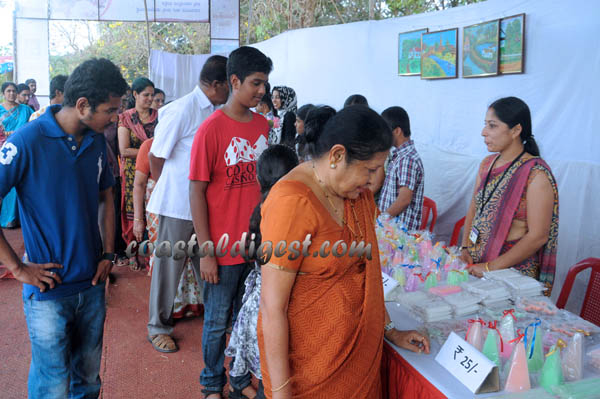
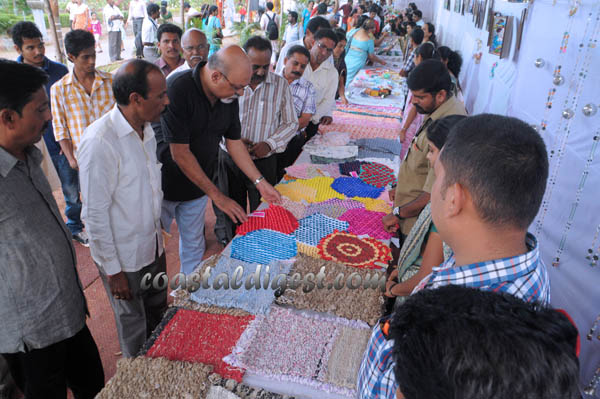
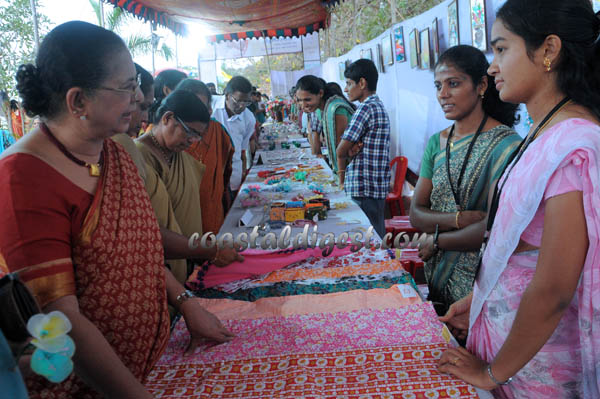
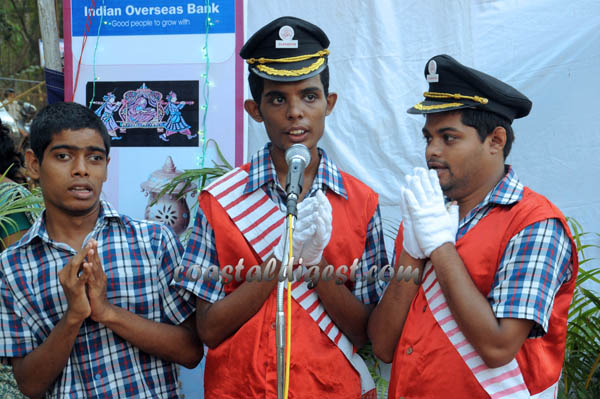
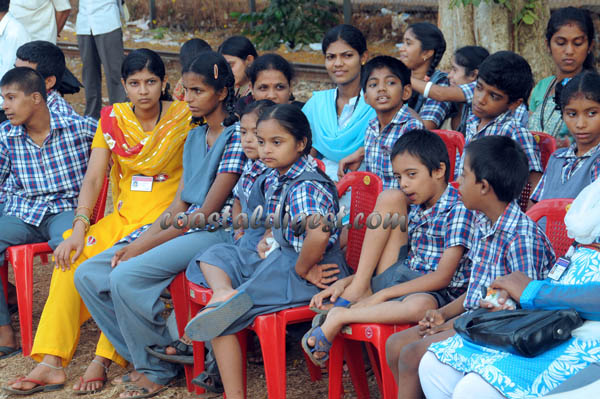
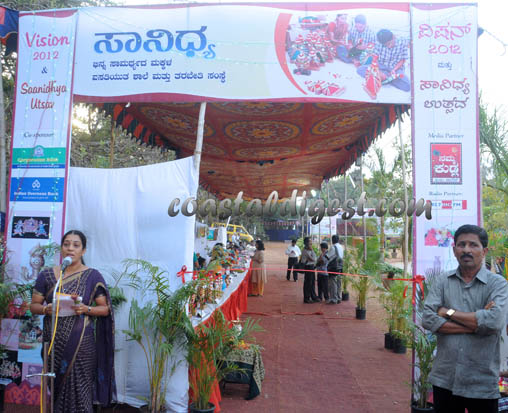
Mangalore, April 8: The special students of Saanidhya Residential School and training centre exhibited their talent at 'Vision 2012' that kicked off on Saturday at Kadri Park in the city.

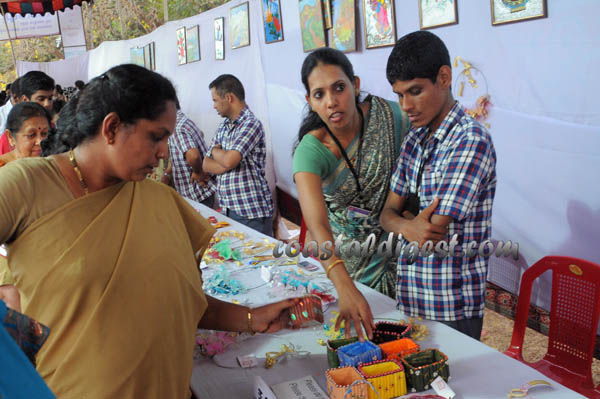
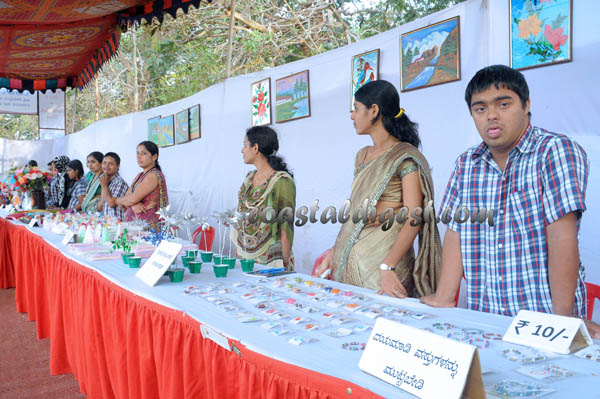
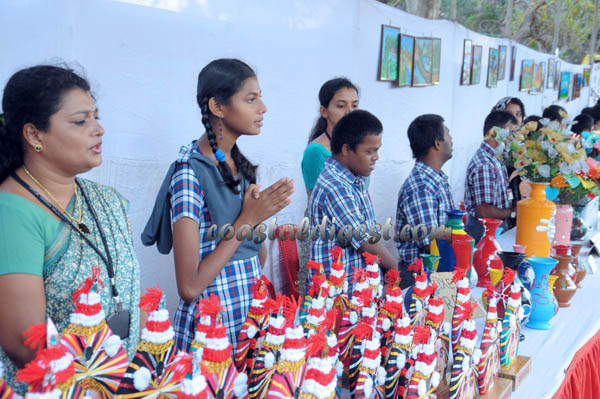
Wide range of products designed by students were kept for sale and display at the art and craft expo. The students had artistically prepared Yakshagana mementos, which cost Rs 400 a piece, pillow covers, cushions, wall hangings, vases, candles, mobile pouches, cloth bags and many such items.

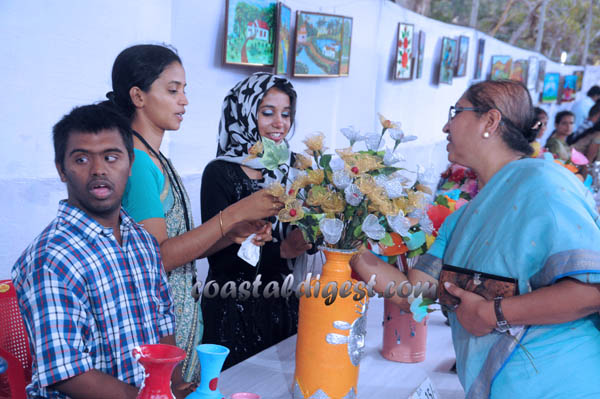
The decorative flowers were quiet a hit as many bought flowers made from netted and stocking materials.

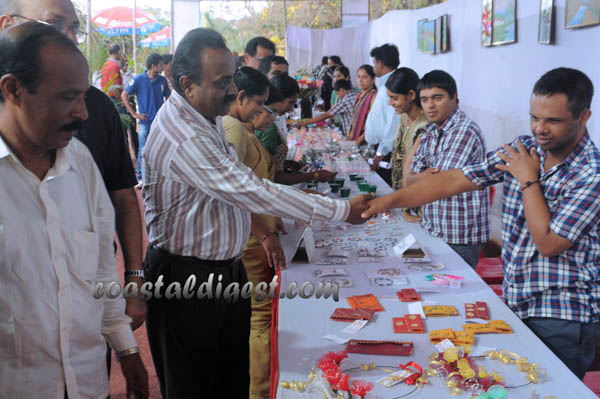
The students had also designed jewellery such as earrings, chains and bracelets. The artistic designs and affordable rates made this stall instantly popular with buyers selecting the artistic jewellery, which started from Rs 10. The paintings too had many buyers. The students had painted beautiful sceneries, flowers, birds and the work looked as if professional artists created it. Phenoyl prepared by the students in the school was also kept on sale.

The unique thing about the expo was that the students who created the artistic items, themselves sold their products. They beamed wide smiles when customers brought their products and appreciated their work. Speaking to Deccan Herald, Ashitha, a student of the school said that she has now become an expert in embroidery work. “My teachers started to teach me embroidery two years back and now I can do it on my own,” she said. Rajini who teaches craft at Saanidhya said that craft classes are held almost every day at school and children show great interest in preparing items.

“There are around 95 students in Saanidhya of which 36 are enrolled in Pre Vocational and Vocational classes. In pre vocational classes, we teach students various crafts depending on their ability. When the students reach the vocational classes, they are able to do things on their own,” said Saanidhya Residential School Honorary Secretary Vasanth Kumar and added that the school has four craft teachers.

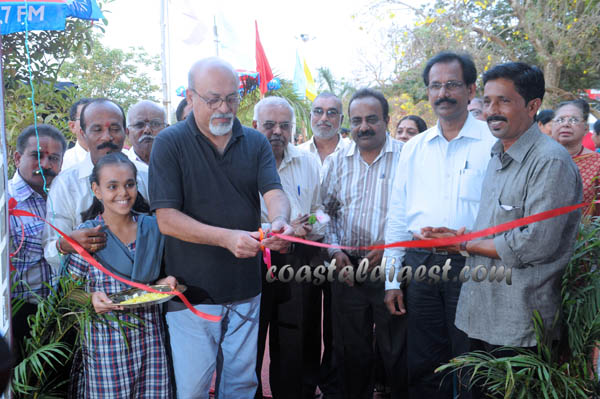
“Painting and flowers done by the students are quite popular. All the paintings were sold out in the last year's expo,” he said.The main reason for holding this expo is to motivate these students and expose their talents to people. A cultural programme will be held on Sunday. The programme was inaugurated by Software Engineer Rajgopal Karnad. “There is a need to recognise the talents of these truly gifted children. By motivating them we can bring them to the main stream,” he said.

Women and Child Development Programme Officer Chandrika, said that the special children only expect support. They are more skilled than normal children and with good guidance, they can create wonders.
Sanidhya_1

Sanidhya_2

Sanidhya_3

Sanidhya_4

Sanidhya_5

Sanidhya_6

Sanidhya_7

Sanidhya_8

Sanidhya_10

Sanidhya_11

Sanidhya_12

Comments

Add new comment

  • Coastaldigest.com reserves the right to delete or block any comments.
  • Coastaldigset.com is not responsible for its readers’ comments.
  • Comments that are abusive, incendiary or irrelevant are strictly prohibited.
  • Please use a genuine email ID and provide your name to avoid reject.
News Network
April 23,2020

Bengaluru, Apr 23: The Karnataka government on Wednesday promulgated 'The Karnataka Epidemic Diseases Ordinance 2020' that provides the state with a power to seal borders, restrict essential services and punish those attacking public servants and damaging public property.

The Ordinance comes after violence in Padarayanapura when the police and BBMP officials were attacked while they tried to take some secondary contacts of a deceased COVID-19 patient into quarantine on April 19.

The Ordinance, which was promulgated after the Centre's guidelines in this regard, said, "The offender shall be liable for a penalty of twice the value of public or private property damaged as determined by the Deputy Commissioner after an inquiry."

It further said that if the penalty is not paid by the offender, then the amount shall be recovered under provisions of the Karnataka Land Revenue Act, 1964. The Deputy Commissioner can even attach the property of such offender in due course.

Also, abetment of offence would attract imprisonment of up to two years and a penalty of Rs 10,000 or both.

"No person shall commit or attempt to commit or instigate, incite or otherwise abet the commission of offence to cause loss or damage to any public or private property in any area when restrictions and regulations are in force to contain any epidemic disease," the Ordinance said.

Whoever contravenes such provision shall be punished with imprisonment for a term which shall not be less than six months, but may extend to three years and with fine which may extend to Rs 50,000, it added.

On Wednesday, the Centre brought an Ordinance to end violence against health workers, making it a cognisable and non-bailable offence with imprisonment up to seven years for those found guilty.

"We have brought an Ordinance under which any attack on health workers will be a cognisable and non-bailable offence. In the case of grievous injuries, the accused can be sentenced from six months to seven years. They can be penalised from Rs 1 lakh to Rs 5 lakhs," Union Minister Prakash Javadekar briefed media after Cabinet meeting.

Javadekar said that an amendment will be made to the Epidemic Diseases Act, 1897 and ordinance will be implemented.
This comes amid nationwide lockdown in the wake of COVID-19.

Comments

Add new comment

  • Coastaldigest.com reserves the right to delete or block any comments.
  • Coastaldigset.com is not responsible for its readers’ comments.
  • Comments that are abusive, incendiary or irrelevant are strictly prohibited.
  • Please use a genuine email ID and provide your name to avoid reject.
coastaldigest.com news network
February 5,2020

Bengaluru, Jan 5: B S Yediyurappa-led Karnataka cabinet has finally decided to resume supply of subsidised rice and wheat to students of welfare institutions and hostels including those run by religious mutts under the Dasoha Scheme’s welfare programme. The supply was stopped over two months ago.

“Cabinet has decided to continue supply of subsidised foodgrains (rice and wheat) for the benefit of 37,700 children under the Dasoha scheme in 351 welfare institutions for the next one year at the cost of Rs 18 crore,” said J C Madhuswamy, Law and Parliamentary Affairs Minister. Under this scheme, institutions that provide free accommodation and food for students are entitled to avail 10 kg rice and 5 kg wheat per student every month at subsidised rates. But following a central government directive in November, the state government had stopped supply to private institutions since December.

Hours before the cabinet meeting, Khader addressed a press conference and said, “This government is snatching away food from children by stalling the supply of foodgrains. Institutions like Suttur Mutt, Siddaganga Mutt that have worldwide fame for their service are being inconvenienced by this,” Khader said.

Finding itself in a fix, especially in a matter that involves mutts, the cabinet was quick to restore the supply. “Foodgrains were being supplied to 183 government-run institutions and 281 institutions run by private entities. As per a central government directive, supply to private institutions was stopped but the decision was made by the previous government,” Shashikala Jolle, Women and Child Development Minister, said.

Comments

Add new comment

  • Coastaldigest.com reserves the right to delete or block any comments.
  • Coastaldigset.com is not responsible for its readers’ comments.
  • Comments that are abusive, incendiary or irrelevant are strictly prohibited.
  • Please use a genuine email ID and provide your name to avoid reject.
Media Release
March 12,2020

Manipal, Mar 12: Team WGSHA is proud to announce that the culinary museum in WGSHA has been listed in Limca Book of Records as India's First Living Culinary Arts Museum.

Limca Book of Records (LBR) is a catalogue of achievements made by Indians, at home and abroad in diverse fields of human endeavour. LBR is a celebration of exemplary exploits and recognizes accomplishments such as firsts, inventions, discoveries, honours, awards and the truly extraordinary.

Chef Thirugnanasambantham, Principal of WGSHA, while thanking MAHE and ITC Leadership for extending all support towards instituting this museum in Manipal and WGSHA, also appreciated and thanked all those who have directly or indirectly helped towards setting up this museum in Manipal.

"The process for WGSHA's culinary museum to make an entry into the popular Limca Book of Records started almost six months back and after validation by LBR recently, has been listed in the book of records. We are glad that we could be the first of its kind in such endeavour and we also hope to be in Guinness World Records soon", said Chef Thiru.

"We are indeed grateful to Michelin-starred Indian celebrity Chef Vikas Khanna, the founder and curator of this museum, who had this idea of establishing a culinary museum and donated thousands of kitchen tools and equipment worth millions of dollars to this museum for preserving the history of India's rich tradition of culinary arts and to educate the future generations. Chef Vikas Khanna, 'Distinguished Alumnus' of WGSHA, being very desirous of making such a museum in India, what better place it would be than in his own Alma Mater!", he said on the background of having the museum.

Chef Thiru mentioned that Udupi, popular for the famous 'Udupi Cuisine', and being a temple town, is adjacent to International University Town of Manipal Academy of Higher Education (MAHE).

MAHE is home to thousands of international students and visitors. With a great heritage of Udupi, combined with the large number of Indian and International students residing in and around Manipal, it was very apt for the college to create a museum for today's Indian youth and the International visitors to understand the rich culinary heritage of India, through the priceless kitchen tools and equipment donated by Chef Vikas Khanna.

"Has placed WGSHA in the global culinary map and we are proud to have joined all such efforts to preserve the history of cuisines and cultures across the world", said Chef Thiru.

The culinary art academic block housing the museum was opened in April 2018, spread approximately over 25,000 sq ft and is shaped in the form of a giant pot very similar to the ones found in Harappa.

There are historical as well as regular household items such as plates made by the Portuguese in India, a 100-year-old ladle used to dole out food at temples and bowls dating to the Harappan era, an old seed sprinkler, an ancient Kashmiri tea brewer known as 'samovar', vessels from the Konkan, Udupi and Chettinad regions, apart from a large collection of rolling pins, utensils of all shapes and sizes, tea strainers of different types etc.

Comments

Add new comment

  • Coastaldigest.com reserves the right to delete or block any comments.
  • Coastaldigset.com is not responsible for its readers’ comments.
  • Comments that are abusive, incendiary or irrelevant are strictly prohibited.
  • Please use a genuine email ID and provide your name to avoid reject.