Hearing Wellness Clinic

[email protected] (Business Desk)
October 9, 2012

HWC3


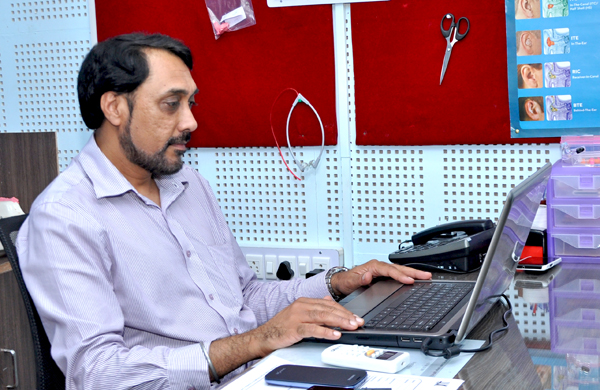
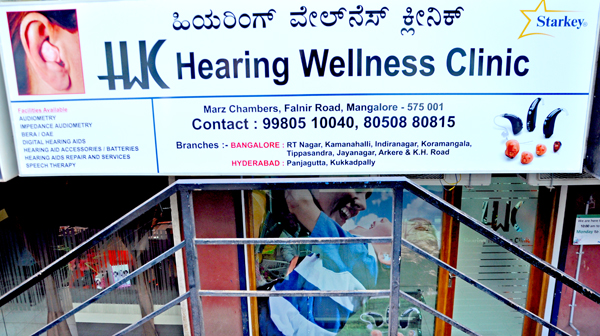
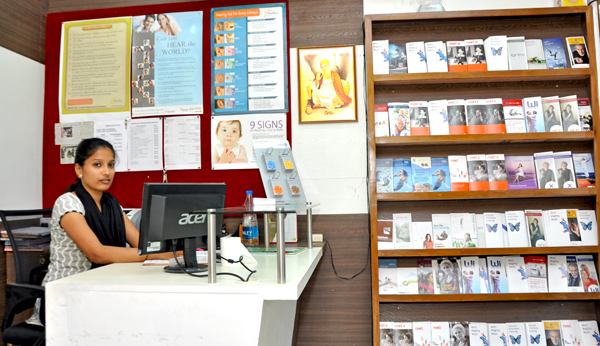
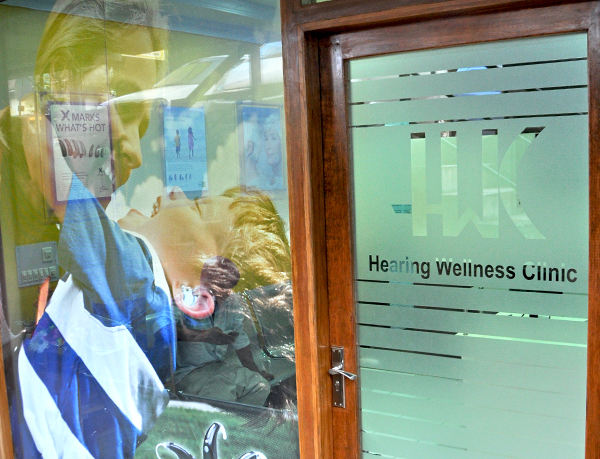
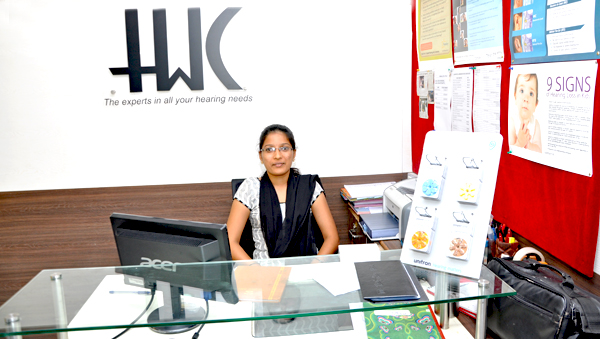
Established by Dr Kamaljeet Singh, 'Hearing Wellness Clinic' is a one-stop clinic for hearing assistance for partial or complete loss of hearing.

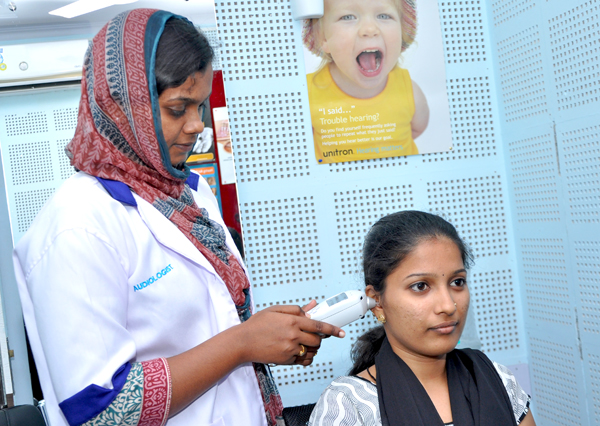
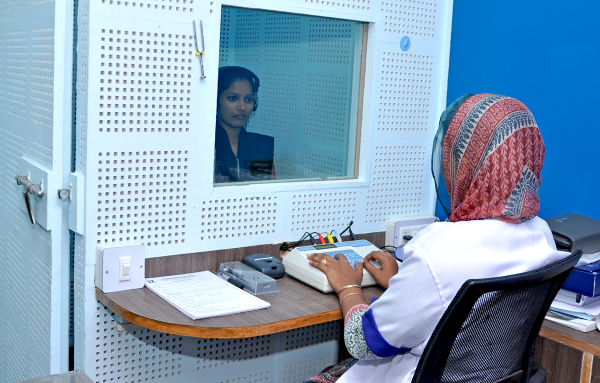
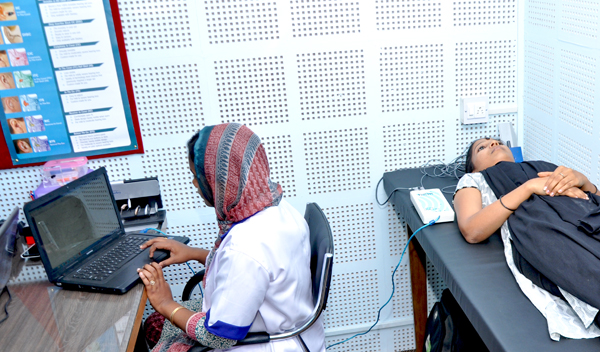
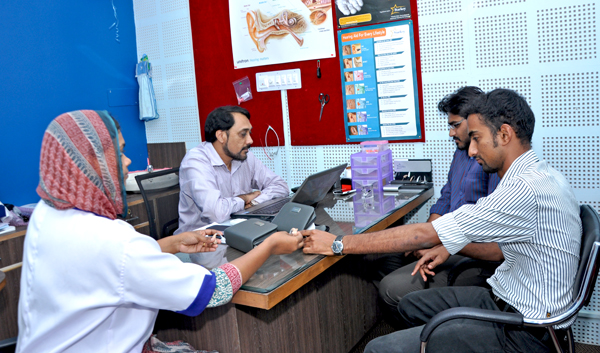
Recently inaugurated in the city, the hearing centre offers customised solutions to meet individual hearing problems, right from diagnosis to solution for hearing conducting hearing tests and providing hearing aids best suited to individual needs and requirements.

With the opening of the centre in Mangalore, HWC has 11 centres in India, including nine in the state and two in Hyderabad. HWC provides a wide range of products to mitigate an individual's suffering due to loss of hearing, says Mr Singh. He says that the hearing care clinic provides professional consultation and end-to-end solution to patients of hearing loss at every step.

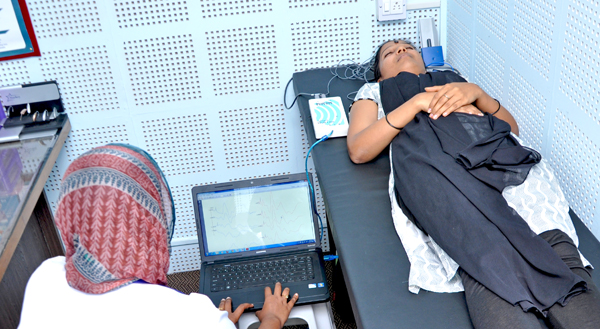
"We deal with those kinds of hearing losses that cannot be treated with medicines or surgery. We assist patients both paediatric and adults with all hearing tests like Pure Tone Audiometry and Impedance Audiometry, BSERA Test, OAE Test, Special Test and provide the best hearing aids and accessories those are available in the market today," says Rishu, partner and audiologist at HWC, Mangalore.

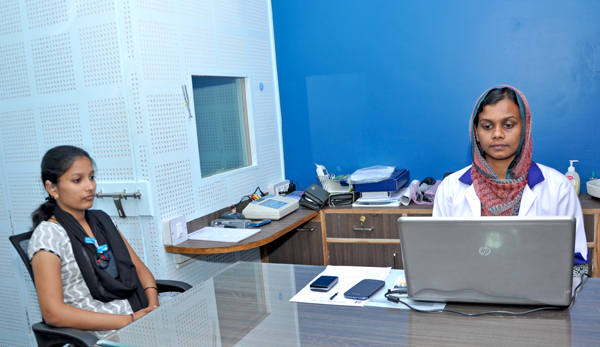
There are currently two audiologists at the centre, which is well-equipped with a sound-proof testing room. The centre also has tie-ups with major hospitals and ENTs in the city.

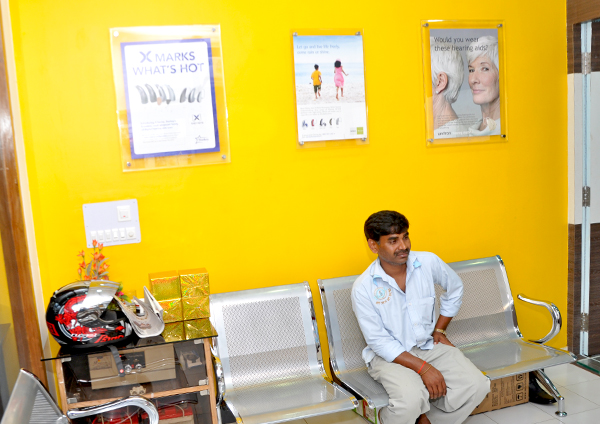
Hearing Wellness Clinic is located at Marz Chambers in Falnir Road, Mangalore. It is open for consultancy and testing from 9.30 am till 8 pm.

For more information on its facilities and services, log in to www.hearingwellness.in
 

HWC1

HWC4

HWC6

HWC5

HWC2

HWC8

HWC7

HWC9

HWC12

HWC11

HWC13


Comments

Add new comment

  • Coastaldigest.com reserves the right to delete or block any comments.
  • Coastaldigset.com is not responsible for its readers’ comments.
  • Comments that are abusive, incendiary or irrelevant are strictly prohibited.
  • Please use a genuine email ID and provide your name to avoid reject.
News Network
March 15,2020

Bengaluru, Mar 15: The Karnataka government has intensified screening all international passengers at airports by classifying them into three risk categories.

Passengers, who are symptomatic on arrival fall under risk category 1, those aged above 60 and have Symptoms fall under category 2. Those who fall in both these categories are being quarantined at designated facilities for 14 days from arrival.

Asymptomatic passengers arriving from any of the COVID-19 affected countries will fall under category 3 and will be advised to be under strict home quarantine for 14 days, Medical Education Minister Dr K Sudhakar said here on Sunday.

Comments

Add new comment

  • Coastaldigest.com reserves the right to delete or block any comments.
  • Coastaldigset.com is not responsible for its readers’ comments.
  • Comments that are abusive, incendiary or irrelevant are strictly prohibited.
  • Please use a genuine email ID and provide your name to avoid reject.
DHNS
January 2,2020

Jan 2: A year after 12,000 acres of forests in Bandipur went up in smoke, the Karnataka Forest Department is gearing up for the summer even as the Forest Survey of India (FSI) has cautioned that 22.78 lakh acres (9,222 sq km) or about 20% of the green cover spread across three districts in the central part of the state is fire-prone.

The FSI studied forest fire incidents across the country between 2004-05 and 2017 before coming up with state-specific inputs.

According to the 13-year observation, Karnataka has 7,352 “fire points” or areas measuring 5 km X 5 km with frequent fire incidents.

Though the number is lower compared to states like Maharashtra, Madhya Pradesh and Odisha with over 20,000 points, the sheer spread of the fire-prone area itself is a challenge for the Karnataka Forest Department.

According to data, about three lakh acres (1,199.9 sq km) of forest area is very highly fire prone with 26 to 52 fire incidents in 13 years. This is followed by 7.6 lakh acres (3,067 sq km) of “highly fire prone” areas with an average of one to two incidents every year.

Almost all of the “red alert” areas are concentrated in Uttara Kannada, Chikkmagaluru, Shivamogga and Chamarajanagar districts. As temperature rises at the end of January, so does the risk of forest fires, requiring officials to be on vigil till the end of summer.

After an investigation into the Bandipur blaze revealed that faulty fire lines and poor supervision were the reason for the spread of the fire, the department has come up with a multi-pronged approach to prevent similar incidents this year.

“After the Bandipur incident, we have created a fire cell and a standard operating procedure (SOP) which everyone has to follow. Firstly, a fire management plan is prepared and approved by a competent authority.

The SOP has well defined firelines which have to be executed by December-end and burning must be completed by January 15,”  Principal Chief Conservator of Forests (Head of Forest Force) Punati Sridhar told DH.

He said that to ensure its strict implementation, GPS readings of firelines are to be submitted for random verification.

“All the required equipment from fire jackets to shoes, gloves, backpack sprayers and tractors mounted with 2,000-5,000 litre tanks with high pressure pumps will be deployed at vantage points,” he said.

In addition, the department’s fire cell works in collaboration with the Karnataka State Remote Sensing Applications Centre (KSRSAC) to give fire alerts within half and hour of an area catching fire and detected by satellites.

“Earlier, the gap used to be four hours by when the fire would have spread beyond control. Now, with reduced time gap, it would be easier to control fire early,” he added.

Comments

Add new comment

  • Coastaldigest.com reserves the right to delete or block any comments.
  • Coastaldigset.com is not responsible for its readers’ comments.
  • Comments that are abusive, incendiary or irrelevant are strictly prohibited.
  • Please use a genuine email ID and provide your name to avoid reject.
News Network
January 21,2020

Bengaluru, Jan 21: A private hospital in Bengaluru, the capital of Karnataka, on Tuesday claimed that it has successfully performed a live liver transplant on a Jehovah's Witness from Nigeria, by not using blood or blood products, in order to protect the patient's religious beliefs.

It is said that Jehovah's Witnesses are followers of a Christian faith that prohibits the use of blood or blood products during their treatment. Gehojadak (37), a Jehovah's Witness follower, had developed decompensated liver disease and visited more than three countries seeking treatment over the last four years but was turned away by most doctors due to the highly risky nature of surgery, Aster CMI Hospital said.

The surgery was challenging compared to a normal liver transplant because in order to protect the patient's religious beliefs, the medical team could not use blood or blood products (Fresh frozen plasma, Cryoprecipitate, Platelets etc), it said in a release, adding that very few such surgeries have been successfully conducted worldwide.

The patient's brother was the donor, the hospital said, adding, without a liver transplant, Gehojadak's chances of survival were less than 10 per cent over the next two years. A team of liver specialists from the Hospital thoroughly reviewed the patient's medical history before recommending a bloodless liver transplant and charted out a feasible pathway to make the surgery a success.

"This transplant was especially challenging as we did not have the safety net (of using blood) even if the patient's life was at risk due to their advance directive. We have performed other non-transplant liver surgeries in Jehovah's Witnesses and this gave us the confidence to take on Gehojadak's transplant," Dr Rajiv Lochan, Consultant Liver Transplant Surgeon, said.

The critical surgery took a 12-hour period to complete where two teams of specialists with close to 25 doctors including anaesthetists, intensivists worked in absolute sync with each other and Gehojadak finally received a life-saving liver transplant, the Hospital said. In a period of two weeks, the patient and his brother were fit enough to go home and were discharged from the hospital.

"Even if their haemoglobin levels dropped to life-threatening levels, the patients were clear that they would not accept a blood transfusion. Keeping the limitations in mind, the most effective treatment path was planned, and we spent close to two months preparing the patients for surgery," Arun V, Consultant Anesthesiologist said. The hospital arranged customised artificial products like synthetic drug molecules, to conduct a bloodless liver transplant, he added.

Comments

Add new comment

  • Coastaldigest.com reserves the right to delete or block any comments.
  • Coastaldigset.com is not responsible for its readers’ comments.
  • Comments that are abusive, incendiary or irrelevant are strictly prohibited.
  • Please use a genuine email ID and provide your name to avoid reject.