UK based Atlantic Data Bureau opens unit in Mangalore

[email protected] (CD Network, Photos by Ahmed Anwar)
February 1, 2013
ATC_1
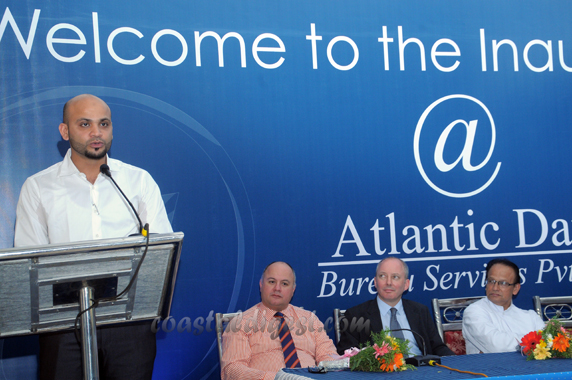
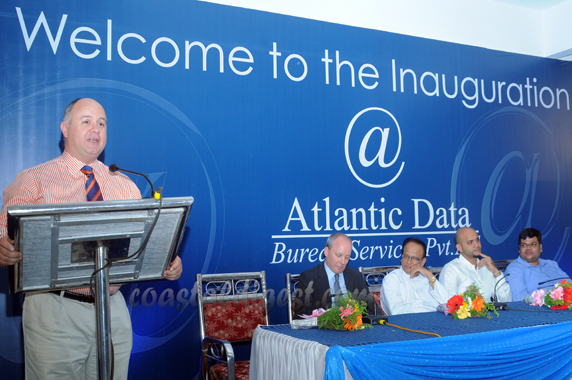
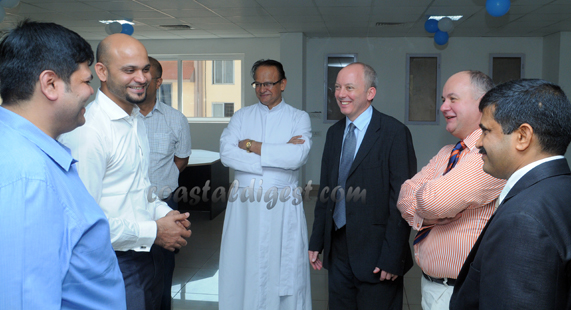
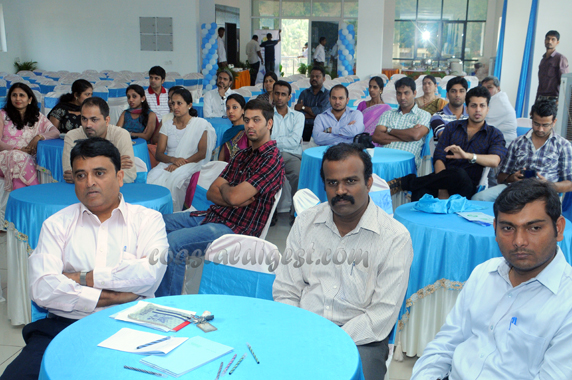
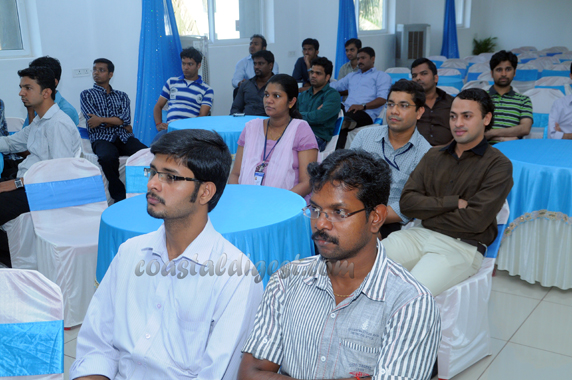
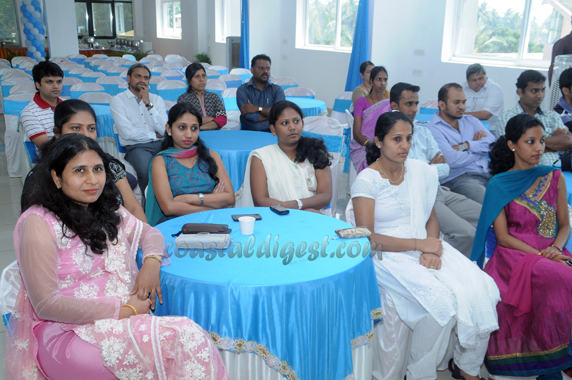
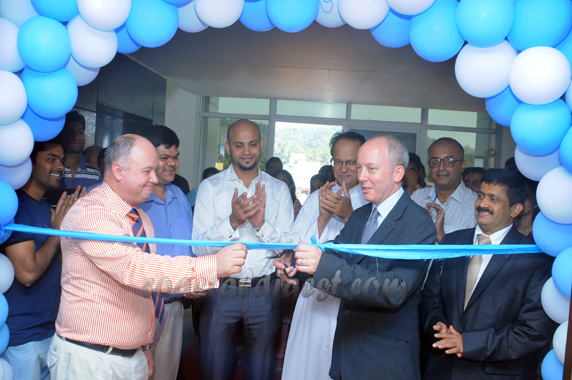
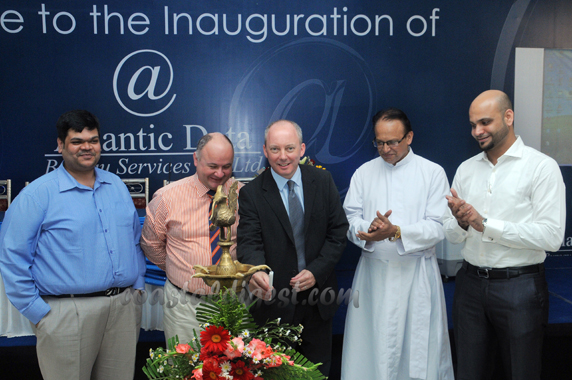
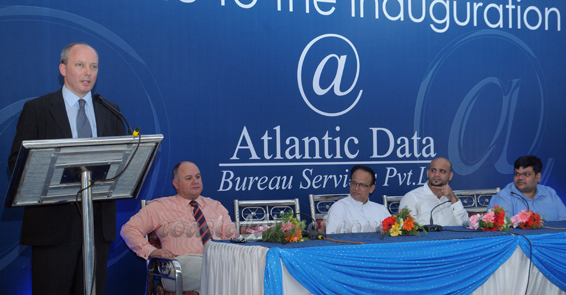
Mangalore, Feb 1: The new office of the technical wing of UK-based Atlantic Data Bureau Private Limited located at Padil in Mangalore, was inaugurated on Friday.
Speaking after inaugurating the new facility, British Deputy High Commissioner Ian Felton said that the British Government was easing VISA conditions and services to Indians especially to students who wanted to study in UK universities. The British government was looking at areas such as education and business sectors for the mutual benefit of both countries. It was also looking at encouraging educational qualifications from UK universities in professional courses, humanities, basic science streams and also in-service people with UK-based companies, especially in the IT sector. There were no limits or cap on the number of students from India going to pursue education at British universities. As much as 95 percent of business issues will be alleviated with the loosening of VISA standards, he said.
President of Kanara Chamber of Commerce and Industry (KCCI) Mohammed Ameen said that the commerce bodies aimed at the development of an IT hub in Mangalore, as people were well-educated and intelligent. “Soon, KCCI will organise an IT conclave in Mangalore. We have to retain youngsters in Mangalore in order to prevent 'brain-drain' to other countries. Talks are on-going with the National Association of Software and Services Companies (NASSCOM) on a programme to give leverage in technology in business mode,” he said.
Speaking on the occasion, Director of Aloysius Institute of Management and IT (AIMIT) Fr Denzil Lobo said that the educational facilities created in Mangalore by various organisations and institutions were of world-class standard. To further facilitate good education, we need an upgradaded syllabus and curriculum from time to time. Foreign collaboration in this regard would provide valuable assistance, he said.
Managing Director of UK Atlantic Data Services Mark Follett and director of Atlantic Data Bureau Services Mangalore Deepak Sharma were present on the occasion.
ATC_2

ATC_3

ATC_4

ATC_5

ATC_6

ATC_7

ATC_8

ATC_9

Comments

Add new comment

  • Coastaldigest.com reserves the right to delete or block any comments.
  • Coastaldigset.com is not responsible for its readers’ comments.
  • Comments that are abusive, incendiary or irrelevant are strictly prohibited.
  • Please use a genuine email ID and provide your name to avoid reject.
Media Release
February 14,2020

Veteran journalist P. Sainath has said that the nation is in a crisis. And this crisis is not limited to just the rural area. It has become a national crisis at various areas such as agriculture, education, economy, job creation etc.

He was delivering the endowment lecture on the topic ‘Indian democracy at the post-liberalization and post-truth era’ at Media Manthan 2020 organized by the PG department of journalism and mass communication at St Aloysius College (Autonomous). 

Mr Sainath said that the many policies adopted in the 90s led to India becoming unusually unequal. Referring to the speech Ambedkar had made at the Constituent Assembly while handing over the draft of the Constitution, Mr Sainath said, “Ambedkar had warned about the weakness of Indian democracy that liberty without equality allows the supremacy of a few over the multitude. Liberty, equality and fraternity must be kept together as we cannot have one without the other.” 

Mr Sainath stated that the agrarian crisis was no longer about the loss of productivity, employment or about farmer suicide; it was a societal, civilizational crisis. Commenting on the lopsided policies such as cow-slaughter ban, he explained how cow slaughter ban had adversely affected many industries due to their interdependency. While Muslims who slaughtered cows were rendered helpless, the cattle traders who were mostly OBCs lost their earnings as the cattle prices crashed. An important industry like Kolhapur sandals industry in Maharashtra went bankrupt as a result of the cow slaughter ban in Maharashtra. He said the policymakers had no idea how the rural industries were interconnected. Demonetisation too devastated the rural economy as 98 percent of rural transactions happen through cash. 

Mr Sainath also spoke about the crisis of inequality which affects the Dalits and the Adivasis far more than anyone else as 90 percent of the rural households take home less than Rs 10,000/- per month. “Women are yet another group whose labour is never counted in the gross domestic product. Women and girls globally do unpaid work which amounts to about 12.5 billion working hours per year. Monetarily speaking, this is worth 10.8 trillion dollars,” Mr Sainath added. 

Speaking about the crisis of jobs Mr Sainath said that major companies were laying off employees just to create more profits for the investors and the adoption of artificial intelligence in the industry would further destroy millions of jobs.

Rector of St Aloysius College Institutions Fr Dionysius Vaz SJ, Principal Dr (Fr) Praveen Martis SJ, HOD of Journalism and Mass Communication department Dr (Fr) Melwyn Pinto SJ were present.

‘Veerappan and Vijay Mallya’s business models are interesting!’

Addressing the gathering during his endowment lecture on Friday, Mr Sainath made an interesting comment on the so called ‘revenue model’. “Whenever I visit IIMs and IITs for lectures on my PARI project, the students there ask me what my revenue model for my project is. I tell them that I do not have a revenue model. In fact, journalism does not begin with a revenue model. Gandhiji, Ambedkar, Bhagat Singh were all great journalists. But they did not have a revenue model,” Mr Sainath said.

On a lighter note, he said that the best revenue model that he liked was that of forest brigand Veerappan and liquor baron Vijay Mallya. “Veerappan ruled the forest for forty years and from the top ministers to the villagers he could dictate terms and liver royally. Similarly, Mallya’s revenue model was to steal the banks and run away abroad and live like a king,” Mr Sainath added.

Journalism is not and can never be a business. It is a calling, he opined. While newspaper can be a business, television can be a business, journalism per se cannot be reduced to a business. “Unfortunately today, journalists are recruited on a contract basis and they have no bargaining power; and there are no unions to fight for their cause. Hence, they are at the mercy of the corporate media houses for their survival and are made to write stories that cannot be called journalism,” Mr Sainath said.

Answering a question as to the pressures he faced as a journalist, he said that external pressures from the government or others could be very well handled. It is the internal pressures from once own media house that journalists find it difficult to manage.


Comments

Add new comment

  • Coastaldigest.com reserves the right to delete or block any comments.
  • Coastaldigset.com is not responsible for its readers’ comments.
  • Comments that are abusive, incendiary or irrelevant are strictly prohibited.
  • Please use a genuine email ID and provide your name to avoid reject.
coastaldigst.com news network
May 31,2020

Mangaluru, May 31: Karnataka BJP president MP Nalin Kumar Kateel has claimed that there has been no differences of opinion within the state BJP.

"The BJP-led government will complete its term under the leadership of B S Yediyurappa," Kateel told media persons in the city on Saturday.

“A few MLAs had met and discussed the developments in North Karnataka. There is nothing wrong in discussing development keeping in mind the party's interests.”

Indiscipline within the party will not be tolerated. Strict action will be initiated against those who indulge in such activities by the party High Command, he warned.

The government, led by Yediyurappa, has carried out good works in the state. All the MLAs are supporting the chief minister. All the MLAs are in contact with me, claimed Kateel.

Comments

Add new comment

  • Coastaldigest.com reserves the right to delete or block any comments.
  • Coastaldigset.com is not responsible for its readers’ comments.
  • Comments that are abusive, incendiary or irrelevant are strictly prohibited.
  • Please use a genuine email ID and provide your name to avoid reject.
News Network
April 18,2020

Kochi, Apr 18: The Centre on Friday informed the Kerala High Court that there was no immediate plan to bring back the Indian citizens stranded in the Gulf countries due to the novel coronavirus outbreak and that the expatriates had been granted visa extension.

The counsel for the central government made the submission before a division bench comprising justices Rajavijayaraghavan and T R Ravi during the hearing of a plea seeking a direction to bring back Indians stranded in the UAE.

Permission of the Gulf countries was required to send medical teams there to carry out medical examination of the stranded Indians, the counsel said when the court sought to know the Centre's view on Kerala government sending medical teams to the Gulf countries to deal with the issue of COVID-19 disease among Malayalees there.

The court posted the plea for April 21 for consideration after the Central government informed that a similar petition is under consideration of the Supreme Court.

In its plea, Kerala Muslim Cultural Centre (KMCC) in Dubai, the organisation for non-resident Indians from Kerala, sought directions to the Ministries of External Affairs and Civil Aviation to provide exemptions in the international air travel ban to bring back Indians stranded in the UAE.

The petitioners noted that those who return could be kept in quarantine as per the protocol of the World Health Organisation (WHO).

Comments

Add new comment

  • Coastaldigest.com reserves the right to delete or block any comments.
  • Coastaldigset.com is not responsible for its readers’ comments.
  • Comments that are abusive, incendiary or irrelevant are strictly prohibited.
  • Please use a genuine email ID and provide your name to avoid reject.