UK based Atlantic Data Bureau opens unit in Mangalore

[email protected] (CD Network, Photos by Ahmed Anwar)
February 1, 2013
ATC_1
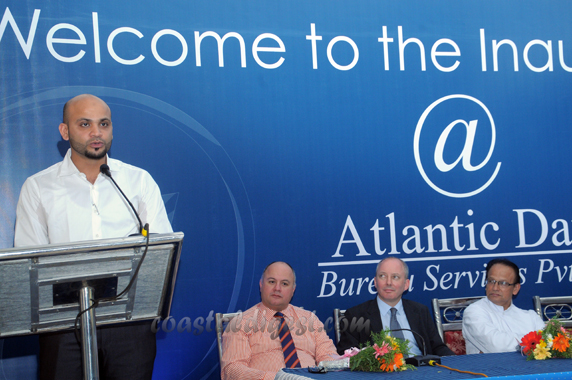
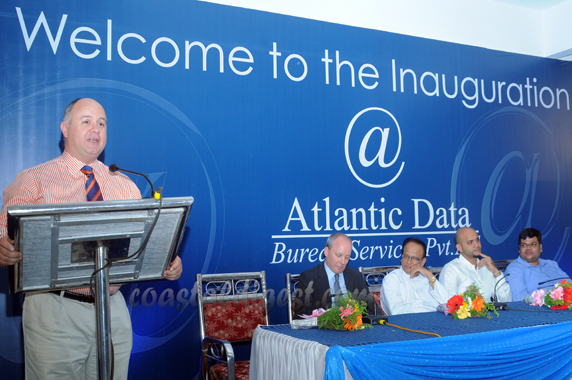
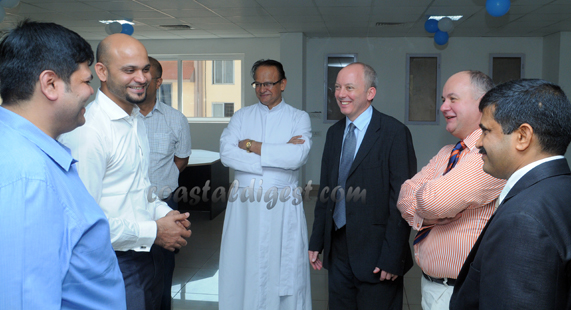
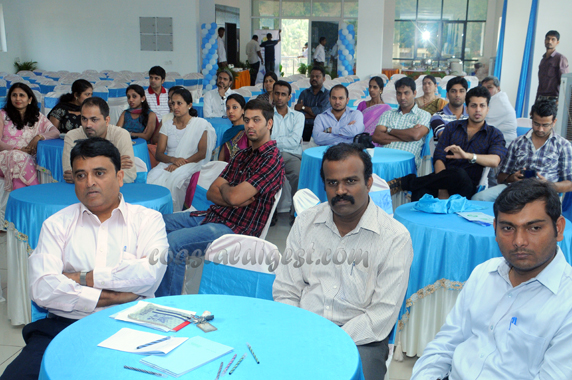
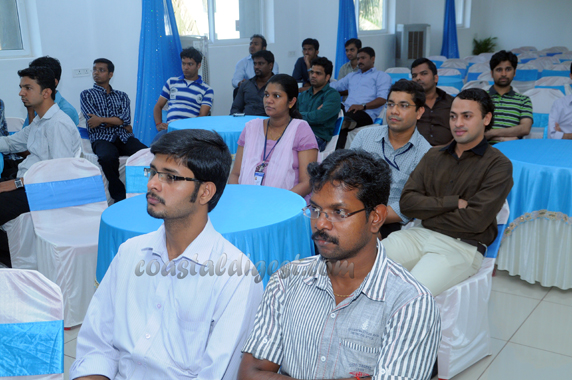
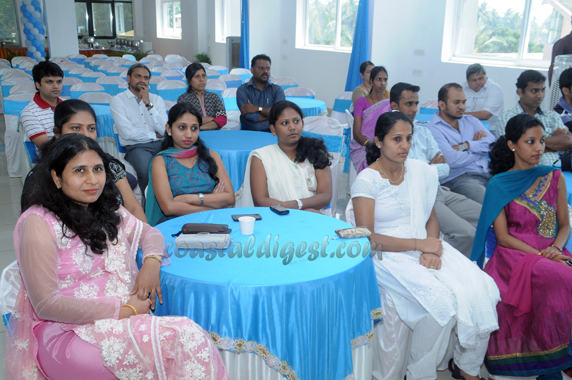
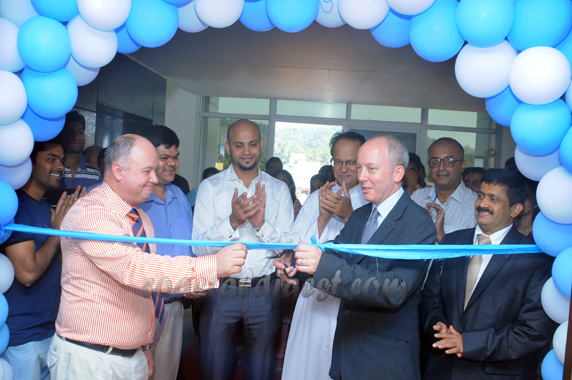
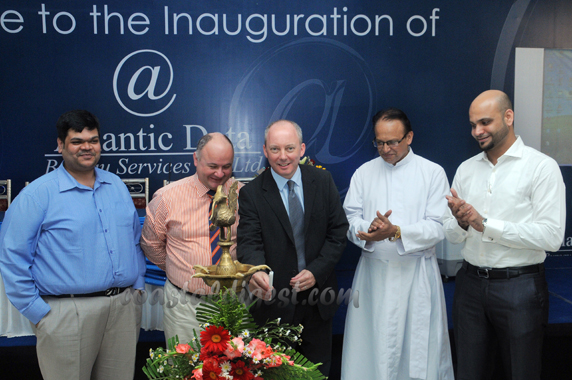
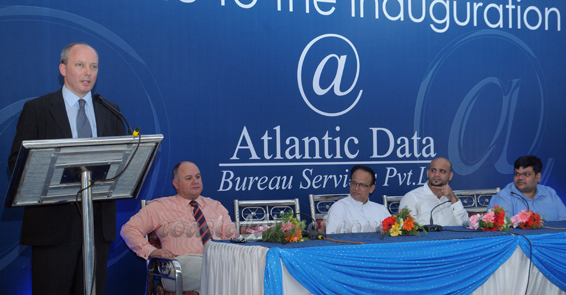
Mangalore, Feb 1: The new office of the technical wing of UK-based Atlantic Data Bureau Private Limited located at Padil in Mangalore, was inaugurated on Friday.
Speaking after inaugurating the new facility, British Deputy High Commissioner Ian Felton said that the British Government was easing VISA conditions and services to Indians especially to students who wanted to study in UK universities. The British government was looking at areas such as education and business sectors for the mutual benefit of both countries. It was also looking at encouraging educational qualifications from UK universities in professional courses, humanities, basic science streams and also in-service people with UK-based companies, especially in the IT sector. There were no limits or cap on the number of students from India going to pursue education at British universities. As much as 95 percent of business issues will be alleviated with the loosening of VISA standards, he said.
President of Kanara Chamber of Commerce and Industry (KCCI) Mohammed Ameen said that the commerce bodies aimed at the development of an IT hub in Mangalore, as people were well-educated and intelligent. “Soon, KCCI will organise an IT conclave in Mangalore. We have to retain youngsters in Mangalore in order to prevent 'brain-drain' to other countries. Talks are on-going with the National Association of Software and Services Companies (NASSCOM) on a programme to give leverage in technology in business mode,” he said.
Speaking on the occasion, Director of Aloysius Institute of Management and IT (AIMIT) Fr Denzil Lobo said that the educational facilities created in Mangalore by various organisations and institutions were of world-class standard. To further facilitate good education, we need an upgradaded syllabus and curriculum from time to time. Foreign collaboration in this regard would provide valuable assistance, he said.
Managing Director of UK Atlantic Data Services Mark Follett and director of Atlantic Data Bureau Services Mangalore Deepak Sharma were present on the occasion.
ATC_2

ATC_3

ATC_4

ATC_5

ATC_6

ATC_7

ATC_8

ATC_9

Comments

Add new comment

  • Coastaldigest.com reserves the right to delete or block any comments.
  • Coastaldigset.com is not responsible for its readers’ comments.
  • Comments that are abusive, incendiary or irrelevant are strictly prohibited.
  • Please use a genuine email ID and provide your name to avoid reject.
News Network
May 19,2020

Bengaluru, May 19: Containment zones in Karnataka will be much smaller in size under the latest lockdown norms. However, rules and loopholes will be tightened and action against violators will be stringent in order to check the spread of the disease.

Revised guidelines issued by the Centre to the state, reveal containment zones are delineated based on mapping of cases and contacts. Intensive action will be carried out in these areas with the aim of breaking the chain of transmission. Therefore, the area of a containment zone should be appropriately defined by the district administration/local urban bodies with technical inputs at local level.

The health department is considering shrinking the size of containment zones from the existing 100 metres to open up more space for economic activities. Medical education minister K Sudhakar, also a member of the Covid taskforce, said additional chief secretary (health department) Javed Akthar will issue a new definition of a containment zone after the Covid-19 taskforce holds its next meeting.

“We are planning to further shrink it and restrict containment zones to an apartment complex, independent house or even a lane where the Covid-19 patient resides,” Sudhakar said. He went on to say bigger containment zones will impede businesses and normal activities in the vicinity, something which the government wants to avoid.

The minister said Karnataka will also do away with colour-coding districts. “With restrictions being relaxed for almost all activities, it does not make sense to pursue with colour codes. It is either containment zone or outside containment zone,” he said.

In rural areas, the minister said containment zones will be identified by the taluk heads. Government sources say it is difficult to restrict activities to certain areas or smaller location in rural areas as farmers and people will have to travel to the outskirts of their villages for their livelihood.

An official said, a containment operation (large outbreak or cluster) is deemed successful when no case is reported in 28 days from the containment zone.

Comments

Add new comment

  • Coastaldigest.com reserves the right to delete or block any comments.
  • Coastaldigset.com is not responsible for its readers’ comments.
  • Comments that are abusive, incendiary or irrelevant are strictly prohibited.
  • Please use a genuine email ID and provide your name to avoid reject.
Agencies
July 8,2020

The Central Board of Secondary Education (CBSE) has rationalised by up to 30 per cent the syllabus for classes 9 to 12 for the academic year 2020-21 to reduce course load on students amid the COVID-19 crisis, Union HRD Minister Ramesh Pokhriyal 'Nishank' announced on Tuesday.

The curriculum has been rationalised while retaining the core elements, the Human Resource Development said.

Among the chapters dropped after the rationalisation exercise are lessons on democracy and diversity, demonetisation, nationalism, secularism, India's relations with its neighbours and growth of local governments in India, among others.

"Looking at the extraordinary situation prevailing in the country and the world, CBSE was advised to revise the curriculum and reduce course load for the students of classes 9 to 12.

"To aid the decision, a few weeks back I also invited suggestions from all educationists on the reduction of syllabus for students and I am glad to share that we received more than 1.5K suggestions. Thank you, everyone, for the overwhelming response," Nishank tweeted.

"Considering the importance of learning achievement, it has been decided to rationalise syllabus up to 30 per cent by retaining the core concepts," he added.

The Union minister said the changes made in the syllabi have been finalised by the respective course committees with the approval of the curriculum committee and the Governing Body of the Board.

"The heads of schools and teachers have been advised by the board to ensure that the topics that have been reduced are also explained to the students to the extent required to connect different topics. However, the reduced syllabus will not be part of the topics for internal assessment and year-end board examination.

"Alternative academic calendar and inputs from the NCERT on transacting the curriculum using different strategies shall also be part of the teaching pedagogy in the affiliated schools," a senior official of the HRD ministry said.

For classes 1 to 8, the National Council of Education Research and Training (NCERT) has already notified an alternative calendar and learning outcomes.

According to the updated curriculum, among the chapters deleted from class 10 syllabus are-- democracy and diversity, gender, religion and caste, popular struggles and movement, challenges to democracy

For class 11, the deleted portions included chapters on federalism, citizenship, nationalism, secularism, growth of local governments in India.

Similarly, class 12 students will not be required to study chapters on India's relations with its neighbours, changing nature of India's economic development, social movements in India and demonetisation, among others.

Universities and schools across the country have been closed since March 16 when the central government announced a nationwide classroom shutdown as one of the measures to contain the COVID-19 outbreak.

A nationwide lockdown was announced on March 24, which came into effect the next day. While the government has eased several restrictions, schools and colleges continue to remain closed.

Comments

Add new comment

  • Coastaldigest.com reserves the right to delete or block any comments.
  • Coastaldigset.com is not responsible for its readers’ comments.
  • Comments that are abusive, incendiary or irrelevant are strictly prohibited.
  • Please use a genuine email ID and provide your name to avoid reject.
News Network
March 27,2020

Bengaluru, Mar 27: Oncologist Dr. Vishal Rao, HCG Hospital Bengaluru on Friday said that human body cells release interferon chemical to kill viruses but it cannot be released by cells in the case of COVID-19 cases, leading to weak immune system. However, a therapy of specific concoction could be useful in treating COVID-19 patients.

"We got hold of some preprint suggesting that interferon is effective in COVID19," said Rao.

Speaking to news agency, he continued saying "When we withdraw blood for regular check-ups, we get buffy coat which can be used to take out cells and form interferon. These two chemicals and some other cytokines, in a specific concoction, could be potentially very useful in treating COVID-19 patients."

Rao said that they have built a concoction of cytokines which can be injected to reactivate immune system in COVID-19 patients.

"We are in a very initial stage and hope to be ready with its first set by this weekend. We have applied to the governement for an expedited review. We have also presented this before the state government" said Rao.

"We have a team of infection specialist, ICU team and other...all of us have worked together to build something that we believe. We want to serve the society at this hour of need," he added.

Dr Rao clarified that this is not a vaccine and this particular interferon therapy does not help to prevent the infection of COVID-19. However, this is focused and targeted towards COVID-19 positive patients or those who have just incubated the virus.

"We believe that in early stages as well as the patients who have just incubated, this particular therapy of interferon gama and other concoction of cytokines could be an effective method. In the late stages we are looking at specific dosage of the cells which are our own body cells which can actually be affective and could also be of use for the ventilator patients," he added.

Meanwhile, Dr Gururaj, Immunologist and Scientist told ANI that they are trying to cover two aspects, one is the early stage patients where they are trying to improve their immune systems.

"As Dr Vishal said, we are trying to see whether we can use the cytokines from our own immune cells which is a natural process but it is hampered in infected patients," said Dr Gururaj.

"In the last phase we are using cells which are used from the bone marrow of the patient or donors. We can use those cells to reduce the inflation and so called cytokines release syndrome which is basically the inflammatory response of the body," he added.

Comments

Add new comment

  • Coastaldigest.com reserves the right to delete or block any comments.
  • Coastaldigset.com is not responsible for its readers’ comments.
  • Comments that are abusive, incendiary or irrelevant are strictly prohibited.
  • Please use a genuine email ID and provide your name to avoid reject.