


Father Muller Hospital gets advanced MRI scanner

[email protected] (CD Network)
July 3, 2013

Father_Muller_Hospital1

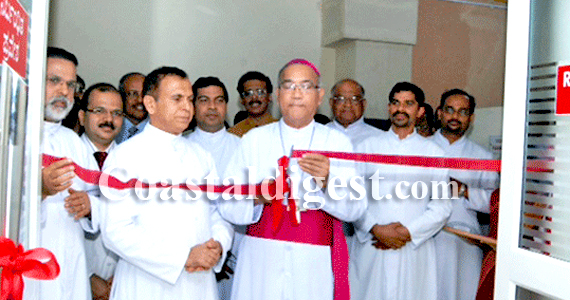
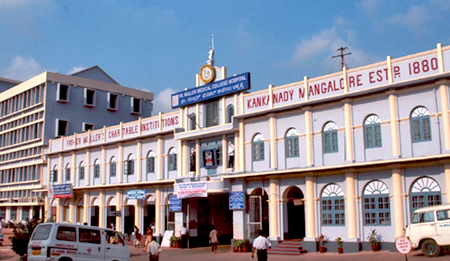
Father_Muller_HospitalMangalore, Jul 2: A new acquired advanced high-field Magnetic Resonance Imaging (MRI) scanner was inaugurated by Bishop of Mangalore Dr Aloysius Paul D'Souza in the premises of Father Muller Medical College Hospital, here on Tuesday.

Speaking at the inaugural programme, Bishop Aloysius Paul D'Souza said that with advanced technology and new equipment in medical science, the doctors could serve patients better by protecting their health and prolonging their lives.

Head of Department of Radio Diagnosis and Imaging Dr H B Suresh said that acquiring another MRI scanner was inevitable when the waiting period for the existing scanner extended over few days.

Detailing the specifications of the advanced machine, Dr Ram said that the scanner was best for imaging organs with high water content.

It enables faster and better quality imaging, and can be used to perform imaging even for patients under anaesthesia. It can be used for magnetic resonance spectroscopy for calculation of brain tumours, magnetic resonance perfusion, imaging in oncology for head and neck tumours, of abdominal organs, whole spine and joints. It has the largest field of view and a wide bore to accommodate obese patients. However, there is also a risk of injuries, hence knowledge of the machine is necessary, he said.

Unable to attend the programme, Minister for Health and Family Welfare U T Khader sent a message lauding the services of the institution, which was read out in his absence.

Director of Father Muller Charitable Institutions Fr Patrick Rodrigues welcomed the gathering.

Dr B Sanjeev Rai and Dr J P Alva were present during the programme.

Father_Muller_Hospital1

Comments

Add new comment

  • Coastaldigest.com reserves the right to delete or block any comments.
  • Coastaldigset.com is not responsible for its readers’ comments.
  • Comments that are abusive, incendiary or irrelevant are strictly prohibited.
  • Please use a genuine email ID and provide your name to avoid reject.
coastaldigest.com web desk
July 2,2020

When the black and white photos of the ‘London to Calcutta (Kolkata) bus service’ went viral on social media recently, the response of some of the netizens was “stop spreading fake news!” But, it isn’t a fake news. The late 1950s indeed offered people a lavish bus trip from London to Kolkata. 

While one of the viral images shows passengers at the Victoria Coach Station, London, boarding 'Albert', the other image show the same bus travelling through a valley. In another image the bus is stationed at a tourist spot. All these photos were captured during the bus’ maiden international journey in 1957.  

An image of the bus ticket is also making rounds on social media, that shows the route of the bus — London, Belgium, West Germany, Austria,Yugoslavia, Bulgaria, Turkey, Iran, Afghanistan, West Pakistan, India. The route in India followed Delhi, Agra, Allahabad, Banaras and finally Calcutta.

The ticket shows that a one side travel cost 145 pounds (13,644 Rupees at the present day) back then, and it was inclusive of all the luxury provided during the run.

The luxurious bus provided the facilities of reading, individual sleeping bunks, radio/taped music for parties and pleasure and fan heaters, among other things. The brochure reads, "Your complete home while you travel."

Some of the tour highlights included Banaras on the Ganges, The Taj Mahal, The Raj Path, The Rhine Valley and The Peacock Throne. Passengers reportedly got free shopping days in New Delhi, Tehran, Salzburg, Kabul, Istanbul and Vienna.

Comments

Add new comment

  • Coastaldigest.com reserves the right to delete or block any comments.
  • Coastaldigset.com is not responsible for its readers’ comments.
  • Comments that are abusive, incendiary or irrelevant are strictly prohibited.
  • Please use a genuine email ID and provide your name to avoid reject.
News Network
March 4,2020

New Delhi, Mar 4: Tech giant Intel has said one of its employees in Bengaluru has "potentially been exposed" to coronavirus and is currently under quarantine.

The company also said it has implemented precautionary measures like travel restrictions, increased frequency of office sanitisation, and work-from-home provisions in India.

"An Intel employee in Bangalore has potentially been exposed and is currently under quarantine in accordance with government requirements," Intel said in a late night statement on Tuesday.

The company said it is monitoring the coronavirus situation closely and working to ensure that its employees have the information and resources they need to stay safe and informed.

In India, we have implemented precautionary measures such as travel and event restrictions, visitor screenings at all our offices, increased frequency of office sanitisation, and work-from-home provisions," it said.

The virus outbreak, which has seen cases being registered across the world including South Korea, Iran, Italy and Japan, has had a significant impact on businesses across industries.

Microblogging platform Twitter has asked its employees to work from home while other tech giants like Tata Consultancy Services and HCL Technologies instructed staff to avoid non-essential travel as IT firms put in place measures to safeguard workers against the deadly coronavirus.

The coronavirus outbreak claimed over 3,000 lives globally, and fresh cases being reported in India.

The government has stepped up its efforts to detect and check the virus outbreak whose epicentre was in China.

Comments

Add new comment

  • Coastaldigest.com reserves the right to delete or block any comments.
  • Coastaldigset.com is not responsible for its readers’ comments.
  • Comments that are abusive, incendiary or irrelevant are strictly prohibited.
  • Please use a genuine email ID and provide your name to avoid reject.
News Network
January 29,2020

Newsroom, Jan 29: Karnataka’s capital has earned the unwelcome distinction of global capital of traffic congestion. According to a report by TomTom, the Netherlands-based global provider of navigation, traffic and map products, Bengaluru beat 415 other cities across 57 countries to earn the title of world's most traffic congested city in 2019.

“Bengaluru takes the top spot this year with drivers in the southern Indian city expecting to spend an average of 71% extra travel time stuck in traffic," TomTom said in the ninth edition of its annual Traffic Index.

Three other Indian cities, namely, Mumbai, Pune and New Delhi are also ranked in the 2019 edition of TomTom’s Traffic Index of the world’s most traffic-congested cities. 

The report released on Tuesday ranks cities by the average time added to a trip. TomTom index also includes details on when congestion is heaviest and lightest, how highways compare with surface streets, and how much time drivers wasted waiting for other drivers to get out of their way.

Following closely on the heels of Bengaluru is Manila, Philippines, with the similar 71% traffic congestion. Among the top five worst traffic affected cities are Mumbai and Pune from India at the fourth and fifth place respectively, while Bogota, Colombia is on third spot.

Delhi, the national capital of India is on the 8th spot, while Moscow (Russia), Lima (Peru), Istanbul (Turkey) and Jakarta (Indonesia) are on 6th, 7th, 9th and 10th spot respectively.

Mumbai recorded a 65% traffic congestion with 9th September, 2019 being the worst day. On an average, a Mumbaikar lost 209 hours in traffic congestion. Pune has 59% traffic congestion with 2nd August, 2019 being the worst day. 193 hours are lost due to congestion. Delhi, on the other hand, has 56% traffic congestion. 23rd October, 2019 was the worst day, while 190 hours are lost in traffic congestion.

Interestingly, among all the four Indian cities, Delhi has the most number of cars. Previous studies have concluded that Delhi has the best road conditions among the Metro cities of India.

If you are wondering what exactly the percentages mean, a 53% congestion level in Bangkok, for example, means that a trip will take 53% more time than it would during Bangkok’s baseline uncongested conditions.

TomTom calculates the baseline per city by analyzing free-flow travel times of all vehicles on the entire road network – recorded 24/7, 365 days a year. The report by Dutch navigation and mapping company ranks cities by the average time added to a trip. It also includes details on when congestion is heaviest and lightest, and how much time drivers wasted waiting for other drivers to get out of their way.

Comments

Add new comment

  • Coastaldigest.com reserves the right to delete or block any comments.
  • Coastaldigset.com is not responsible for its readers’ comments.
  • Comments that are abusive, incendiary or irrelevant are strictly prohibited.
  • Please use a genuine email ID and provide your name to avoid reject.