Father Muller Hospital gets advanced MRI scanner

[email protected] (CD Network)
July 3, 2013

Father_Muller_Hospital1

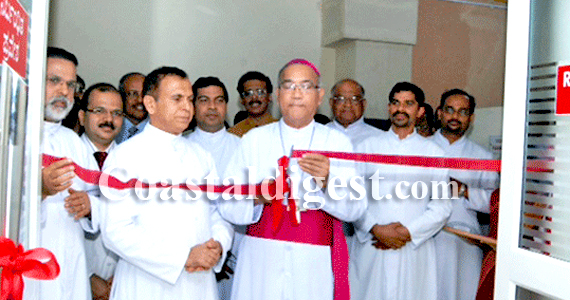
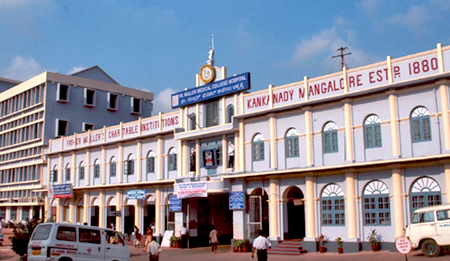
Father_Muller_HospitalMangalore, Jul 2: A new acquired advanced high-field Magnetic Resonance Imaging (MRI) scanner was inaugurated by Bishop of Mangalore Dr Aloysius Paul D'Souza in the premises of Father Muller Medical College Hospital, here on Tuesday.

Speaking at the inaugural programme, Bishop Aloysius Paul D'Souza said that with advanced technology and new equipment in medical science, the doctors could serve patients better by protecting their health and prolonging their lives.

Head of Department of Radio Diagnosis and Imaging Dr H B Suresh said that acquiring another MRI scanner was inevitable when the waiting period for the existing scanner extended over few days.

Detailing the specifications of the advanced machine, Dr Ram said that the scanner was best for imaging organs with high water content.

It enables faster and better quality imaging, and can be used to perform imaging even for patients under anaesthesia. It can be used for magnetic resonance spectroscopy for calculation of brain tumours, magnetic resonance perfusion, imaging in oncology for head and neck tumours, of abdominal organs, whole spine and joints. It has the largest field of view and a wide bore to accommodate obese patients. However, there is also a risk of injuries, hence knowledge of the machine is necessary, he said.

Unable to attend the programme, Minister for Health and Family Welfare U T Khader sent a message lauding the services of the institution, which was read out in his absence.

Director of Father Muller Charitable Institutions Fr Patrick Rodrigues welcomed the gathering.

Dr B Sanjeev Rai and Dr J P Alva were present during the programme.

Father_Muller_Hospital1

Comments

Add new comment

  • Coastaldigest.com reserves the right to delete or block any comments.
  • Coastaldigset.com is not responsible for its readers’ comments.
  • Comments that are abusive, incendiary or irrelevant are strictly prohibited.
  • Please use a genuine email ID and provide your name to avoid reject.
News Network
January 12,2020

Bengaluru, Jan 12: Chief Justice of India, Sharad Arvind Bobde on Saturday hinted at the possibility of Artificial Intelligence being developed for the court system while making it clear that it will never replace human discretion.

Speaking at an event here, Bobde said, "We have a possibility of developing Artificial Intelligence for the court system. Only for the purpose of ensuring that the undue delay in justice is prevented."

"I must make it clear at the outset as there are times when even judges have asked this. AI is not going to replace human judges or human discretion", he added.

Sharing more details of his vision, he stated, "It is only the repetitive, mathematical and mechanical parts of the judgments for which help can be taken from the system...we are exploring the possibility of implementing it."

Bobde stressed on the requirement of developing AI for judiciary while outlining the number of pending cases in different courts.

"Some people are in jail for 10-15 years and we are not in position to deal with their appeals. The high court's and Supreme Court take so long and ultimately the courts feel that it is just to release them on bail", he said.

Bobde also endorsed employing every talent and skill to ensure delivery of justice in a reasonable time.

"We must employ every talent, every skill we possess to ensure that justice is received within reasonable time. Delay in justice can't be a reason for anybody to take law into their hands. But it's very important for us as courts to ensure there's no undue delay in justice", he said.

CJI Bobde also highlighted the need for pre-litigation mediation and said, "Pre-litigation mediation is the need of the hour especially in the backdrop of a significant pendency that the courts are tackling with. There are innumerable areas where pre-litigation mediation could solve the problem."

He also stressed that the position of a judge is very unique under the constitution and they have to deal with a variety of problems.

"The foundation of civilisation rests on the law. Judicial officers have to deal with a variety of problems...Judges without adequate knowledge, skills and experience may cause distortion, delay and miscarriage of justice", he said.

Earlier in the day, Chief Justice of India Bobde inaugurated the phase-1 of the new building of the Karnataka Judicial Academy on Crescent Road in Bengaluru.

The new building has three floors, besides, the ground floor and two basement floors.

Comments

Add new comment

  • Coastaldigest.com reserves the right to delete or block any comments.
  • Coastaldigset.com is not responsible for its readers’ comments.
  • Comments that are abusive, incendiary or irrelevant are strictly prohibited.
  • Please use a genuine email ID and provide your name to avoid reject.
News Network
June 20,2020

Bengaluru, Jun 20: The Karnataka Health Department has issued guidelines on the admission of COVID-19 patients in private hospitals after clinical assessment, mandating that the district surveillance officer (DSO) should be first informed to initiate further procedures, an official said on Friday.

"A health team sent by the DSO should visit the home or hospital where the patient is staying. The team should conduct a rapid assessment of his or her health condition," said Karnataka's Additional Chief Secretary Jawaid Akhtar.

In the rapid health condition assessment, the team should first check the patient's body temperature, followed by SpO2 (oxygen saturation) level and confirm if there are any comorbidities such as hypertension, diabetes, tuberculosis, HIV, cancer, stroke etc.

Depending on the health condition of patients, Akhtar said, two categories have been made.

"Those who have body temperature greater than 37.5 degrees Celsius, SpO2 level below 94 percent, elderly (above 60 years) and suffering from known comorbid conditions should be taken to a dedicated Covid hospital (DCH)," he said.

"All other patients, even if older but not suffering from co-morbidities, those below 60 and suffering from co-morbidities and asymptomatic cases should be taken to a dedicated Covid health centre (DCHC) or a private hospital as opted by the patient," he added.

Private hospitals have been asked to pitch in due to the rising number of cases in Karnataka. Currently, there are 2943 active cases in the state after 337 cases were reported on Friday.

"The patients are assessed clinically and evaluated at DCHCs or private hospitals with appropriate diagnostic tests. After evaluation, if the patients are asymptomatic, they are shifted to a COVID Care Centre (CCC) for further management," said Akhtar.

CCCs are expected to be equipped with ventilated rooms, pulse oximeters, handheld thermal scanners and blood pressure apparatus.

A nurse has to be present round the clock for every 50 patients and should visit each patient twice a day for assessment whereas the medical officer has to visit the CCC once a day. He should also be available on call in case of an emergency.

Staff serving food and others should wear personal protective equipment and an N-95 mask. Explaining the procedures at DCHCs, Akhtar said general examinations for medical conditions like body temperature, BP, pulse, oxygen saturation and urine output should be in place.

Investigations such as complete blood count, fasting blood sugar, random blood sugar, liver function tests, renal function tests, ECG and chest X-ray facilities should be available.

"DCHCs should ensure that above examinations are over in an orderly timeline of 24 hours and depending on the examination, the patient is continued to be lodged at the DCHC or sent to DCH or CCC," said the senior officer.

Likewise, the discharge policy should be done as per the protocols issued by the Health Department from time to time.

The Karnataka government is yet to fix an upper limit on the cost of treating COVID-19 patients in private hospitals. While reports indicated that this could be capped at Rs 5200 per day, health officials are yet to specify this is the case. Private hospitals in the state have asked the government to take a collaborative approach in deciding the fixed cap on treatment cost.


Comments

Add new comment

  • Coastaldigest.com reserves the right to delete or block any comments.
  • Coastaldigset.com is not responsible for its readers’ comments.
  • Comments that are abusive, incendiary or irrelevant are strictly prohibited.
  • Please use a genuine email ID and provide your name to avoid reject.
News Network
June 14,2020

Mumbai, Jun 14: Bollywood actor Sushant Singh Rajput committed suicide on Sunday, leaving all his fans and the industry in shock. While the reason behind him taking up the extreme step is still not clear, a look into Sushant’s social media feed suggests that things were not well for him for quite some time.

Sushant had been inactive on Twitter since months. His last tweet was on December 27, 2019. Since then, he did not even reply to any one on Twitter. Same is the case with his Facebook account as the last post on his timeline was on the same date. Interestingly, Sushant's Twitter cover picture is the popular painting - 'Starry Night', by Van Gogh, who had also reportedly committed suicide in 1890.

On Instagram, the young actor had last posted on June 3. It was a collage picture of him and his mother along with a cryptic caption that read, “Blurred past evaporating from teardrops Unending dreams carving an arc of smile And a fleeting life, negotiating between the two...#माँ”.

Was Sushant’s inactivity on Twitter, Facebook and his last cryptic post on Instagram a signal that the actor was having a tough time? Well, may be it will remain a mystery forever.

Comments

Add new comment

  • Coastaldigest.com reserves the right to delete or block any comments.
  • Coastaldigset.com is not responsible for its readers’ comments.
  • Comments that are abusive, incendiary or irrelevant are strictly prohibited.
  • Please use a genuine email ID and provide your name to avoid reject.