Khader attends workshop conference on health in Thailand

[email protected] (CD Network)
August 21, 2013
COASTAL_1
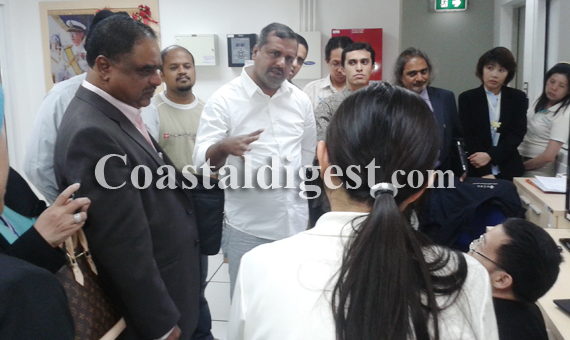
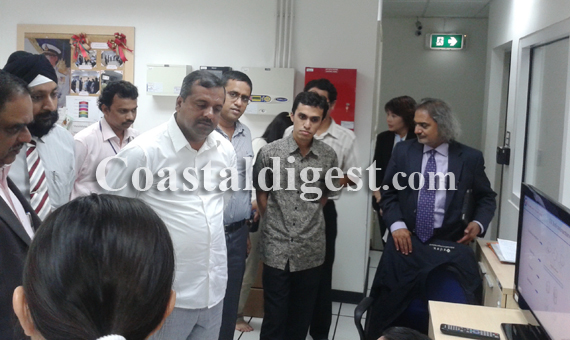
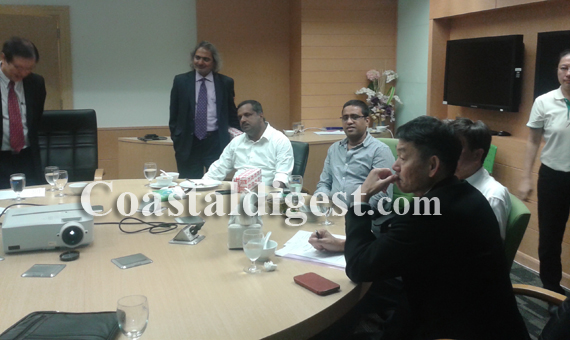
Bangkok, Aug 21: Karnataka Health Minister U T Khader visited Thailand for a workshop conference led by the Thailand National Health Security office.

The seminar is a part of the World Bank project on achieving Universal Health Coverage (VAP UHC).

The Karnataka Health Minister U T Khader is a special invitee by the World Bank Office Bangkok Thailand.

The main objective of the programs are to share experience of policy formulation, implementation, outcomes and remaining challenges of the UHC focusing on UC scheme and to develop information system to support UHC, to understand basic information systems supporting the main sources which are routine administrative dataset of health care providers, household survey and civil registration.

The seminar was facilitated Dr Winai Sawasdivon Secretary General Thailand National Health Security Thailand. Dr Suphon explained the implications of Thai UC scheme.

Dr. Phisit presented overview of UHC and experiences of Thai UHC. Dr. Samrit highlighted management of UC scheme by National Health Security Office (NHSO) focusing on governance structure, provider payment mechanisms, auditing system.

U T Khader is accompanied by the former president of Karnataka Balaga in Thailand Vincy Daniel Pinto, M Madan Gopal, IAS, principal secretary Karnataka Government and Dr P Boregowda PhD Executive Director of Suvarna Arogya Surakhsha Trust.

The Minister highlighted the recent developments in Karnataka Health Department and also explained the health schemes under process for the BPL and non-BPL category.

COASTAL_2
COSTAL_3
COSTAL_4

Comments

Tyree
 - 
Sunday, 6 Mar 2016

Podchodze Jakie sa przetworniki w podszybiu wzorem sie donich
zyskac plus jako sie zapasc do glosników na zadniej pólce Automobil biezace chrysler
stratus sedan sposród 98r Sposród góry odmawia pro gospodyni megafonów na ubocznej
pólce ,potrzebujesz wywlec aktualna pólke ,a wczesniej
oparcie partyjki ,zapewne oslabic wypada ja do muldy

Here is my blog post - glosniki szerokopasmowe: http://www.xhdzb.com/comment/html/?3251.html

Add new comment

  • Coastaldigest.com reserves the right to delete or block any comments.
  • Coastaldigset.com is not responsible for its readers’ comments.
  • Comments that are abusive, incendiary or irrelevant are strictly prohibited.
  • Please use a genuine email ID and provide your name to avoid reject.
News Network
April 30,2020

Bengaluru, Apr 30: Karnataka has decided to allow all industries located outside COVID-19 containment zones to operate from May 4, Chief Minister BS Yediyurappa said Thursday, even as he cautioned that the coronavirus crisis may last another couple of months.

“We feel that the COVID-19 menace is reducing and coming under control in the state. In Bengaluru, not many cases have been reported in the last 3-4 days. If this continues, it’ll help us open up industries in and around Bengaluru also. We’ll wait for another 2-3 days,” Yediyurappa told reporters after chairing a meeting of the Cabinet.

Yediyurappa and Industries Minister Jagadish Shettar are scheduled to meet industry captains on Thursday evening to discuss resuming operations from May 4.

"It won't be a surprise if the corona continues for another 2-3 months. However, based on Prime Minister Narendra Modi's directions, stringent lockdown measures (at red zones) and reviving economic activity will go hand in hand," Yediyurappa said.

The Cabinet decided to allow one-time inter-state or inter-district movement of people and labourers stranded due to the Covid-19 lockdown. The move will also benefit students and others who want to return to their native states or districts.

The government will also allow people from Karnataka residing in other states to return only if they are tested negative for Covid-19, Law Minister JC Madhuswamy said. An official order for this will be issued by evening today.

"Expenses should be covered by those wishing to travel. The government is willing to arrange buses for their benefit," Madhuswamy said. The government will provide a license to anyone who wishes to go, he said.

Having relaxed norms for industries outside red zones to resume operations, Madhuswamy said that inter-district passes will be issued to the top management of these units to travel from their homes to workplaces.

Liquor outlets, saloons and restaurants will remain closed till May 3, after which the government will take a call based on directions issued by the Centre.

“Opening of malls and hotels is not an option before us right now. But all hotels can give parcels,” Yediyurappa said. “I’m confident that the PM will allow the resumption of all activities.

He has already said that corona (containment) and economic activities will have to go hand in hand. So, I’m expecting the Centre to make some favourable decisions,” he added.

Comments

Add new comment

  • Coastaldigest.com reserves the right to delete or block any comments.
  • Coastaldigset.com is not responsible for its readers’ comments.
  • Comments that are abusive, incendiary or irrelevant are strictly prohibited.
  • Please use a genuine email ID and provide your name to avoid reject.
News Network
March 30,2020

Bengaluru, Mar 30: Coffee Day Enterprises Ltd (CDEL) has received the first tranche of Rs 2,000 crore following disinvestment of Global Village Techparks to repay debts following the death of its founder V G Siddhartha.
In August last year, CDEL executed definitive agreements with entities belonging to Blackstone Group and Salarpuria Sattva Group for investment in GV Techparks, a wholly-owned subsidiary of group company Tanglin Development Ltd (TDL), at an enterprise value of Rs 2,700 crore.
The balance amount is expected to be received after the receipt of few statutory approvals, CDEL said in a statement.
"Out of the money received in first tranche, the company has paid off its debts in full including principal and interest amounting to Rs 1,644 crore to the lenders despite difficult economic conditions," it said.
Post this payment, the consolidated debt of the company and its subsidiaries stands at Rs 3,200 crore as on March 27. This includes debt of Rs 1,400 crore of its subsidiary Sical Logistics Ltd where disinvestment process is in progress.
"The company and subsidiaries have repaid around Rs 4,000 crore to the lenders since the beginning of this financial year," CDEL said.
"With the continuous support of stakeholders of the company, the current management is working to ensure better liquidity and operational efficiency. The company is confident of the future ahead despite various challenges," it added.
The company has been in rough waters after its founder V G Siddhartha took his own life as debt strains began to emerge in his company. Since his death in July last year, CDEL has been trying to divest its assets to pare debts.
On July 30, 2019, CDEL informed stock exchanges about Siddhartha's disappearance. In a letter that was purportedly written by him, the Cafe Coffee Day founder said: "I could not take any more pressure from one of the private equity partners forcing me to buy back shares."

Comments

Add new comment

  • Coastaldigest.com reserves the right to delete or block any comments.
  • Coastaldigset.com is not responsible for its readers’ comments.
  • Comments that are abusive, incendiary or irrelevant are strictly prohibited.
  • Please use a genuine email ID and provide your name to avoid reject.
Agencies
July 8,2020

The Central Board of Secondary Education (CBSE) has rationalised by up to 30 per cent the syllabus for classes 9 to 12 for the academic year 2020-21 to reduce course load on students amid the COVID-19 crisis, Union HRD Minister Ramesh Pokhriyal 'Nishank' announced on Tuesday.

The curriculum has been rationalised while retaining the core elements, the Human Resource Development said.

Among the chapters dropped after the rationalisation exercise are lessons on democracy and diversity, demonetisation, nationalism, secularism, India's relations with its neighbours and growth of local governments in India, among others.

"Looking at the extraordinary situation prevailing in the country and the world, CBSE was advised to revise the curriculum and reduce course load for the students of classes 9 to 12.

"To aid the decision, a few weeks back I also invited suggestions from all educationists on the reduction of syllabus for students and I am glad to share that we received more than 1.5K suggestions. Thank you, everyone, for the overwhelming response," Nishank tweeted.

"Considering the importance of learning achievement, it has been decided to rationalise syllabus up to 30 per cent by retaining the core concepts," he added.

The Union minister said the changes made in the syllabi have been finalised by the respective course committees with the approval of the curriculum committee and the Governing Body of the Board.

"The heads of schools and teachers have been advised by the board to ensure that the topics that have been reduced are also explained to the students to the extent required to connect different topics. However, the reduced syllabus will not be part of the topics for internal assessment and year-end board examination.

"Alternative academic calendar and inputs from the NCERT on transacting the curriculum using different strategies shall also be part of the teaching pedagogy in the affiliated schools," a senior official of the HRD ministry said.

For classes 1 to 8, the National Council of Education Research and Training (NCERT) has already notified an alternative calendar and learning outcomes.

According to the updated curriculum, among the chapters deleted from class 10 syllabus are-- democracy and diversity, gender, religion and caste, popular struggles and movement, challenges to democracy

For class 11, the deleted portions included chapters on federalism, citizenship, nationalism, secularism, growth of local governments in India.

Similarly, class 12 students will not be required to study chapters on India's relations with its neighbours, changing nature of India's economic development, social movements in India and demonetisation, among others.

Universities and schools across the country have been closed since March 16 when the central government announced a nationwide classroom shutdown as one of the measures to contain the COVID-19 outbreak.

A nationwide lockdown was announced on March 24, which came into effect the next day. While the government has eased several restrictions, schools and colleges continue to remain closed.


Comments

Add new comment

  • Coastaldigest.com reserves the right to delete or block any comments.
  • Coastaldigset.com is not responsible for its readers’ comments.
  • Comments that are abusive, incendiary or irrelevant are strictly prohibited.
  • Please use a genuine email ID and provide your name to avoid reject.