Akhila Bharatha Billawa Union celebrates founder's day

[email protected] (CD Network, Photos by Suresh Vamanjoor)
September 24, 2013
narayana_guru_24_1
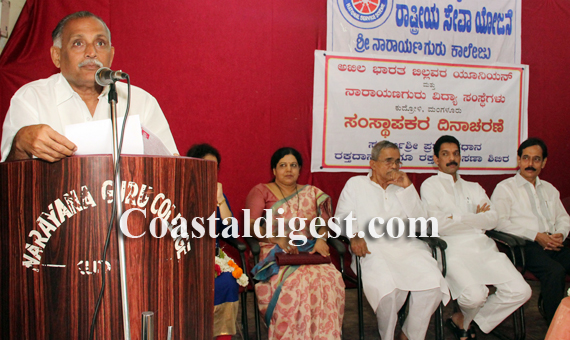
Mangalore, Sep 24: World has become more materialistic with people having very little time to ddiscuss rationalism and socialism, said M Jayanand Devadiga, Secretary, Dakshina Kannada and Udupi District Backward Classes' Union.

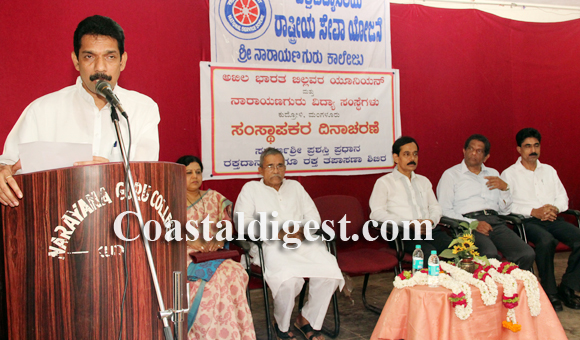
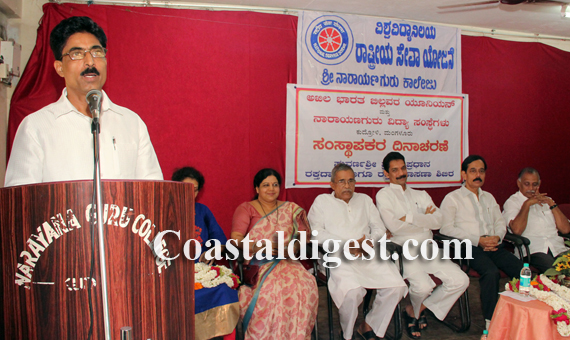
He was speaking after receiving the'Suvarnashree Award' by Akhila Bharatha Billawa Union (ABBU) and Narayana Guru Educational Institutes on founder's day celebrations at Damodhara R Suvarna Auditorium, Kudroli on Tuesday.

“In past no Dalit, Billava and backward caste member was allowed inside the temple. Dalits were more exploited by so called upper classes," he said.

Minister for Fisheries, Youth Welfare and Sports K Abhayachandra Jain inaugurating the formal function of founder's day celebrations said, “when leaders run behind politicians asking seats in polls, M Jayanand Devadiga worked restlessly for the development of backward classes and stood by his dignity and self-esteem. Only few come forward to work without any expectations in present era and make their presence by deeds”, he said.

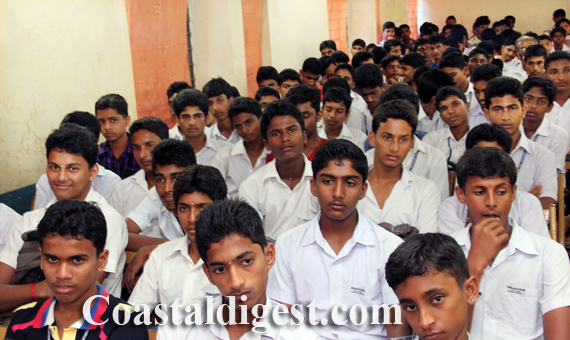
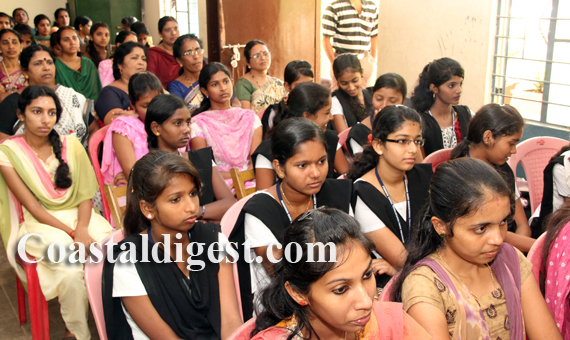
Urging youngsters to serve society K Abhaya Chandra Jain said “you need to walk on the principles of Narayana Guru and build a strong nation.”

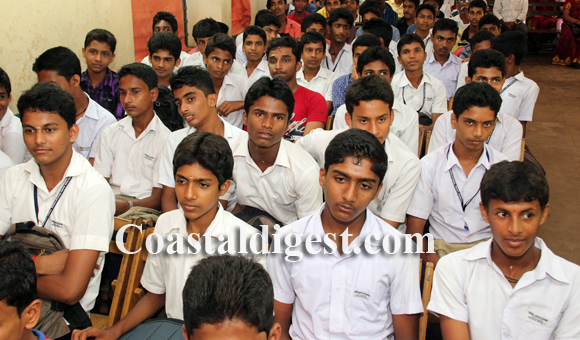
Founder's day program was followed by blood donation camp at Narayana Guru College.

Member of Parliament, Nalin Kumar Kateel, Dr Vasanth Kumar, Principal, Narayana Guru College and Navinchandra D Suvarna of ABBU were present during the occasion.

narayana_guru_24_2
narayana_guru_24_3
narayana_guru_24_4
narayana_guru_24_5
narayana_guru_24_6
narayana_guru_24_7
narayana_guru_24_8

Comments

anusha
 - 
Wednesday, 6 Sep 2017

Its very helpful to poor student for education.

Add new comment

  • Coastaldigest.com reserves the right to delete or block any comments.
  • Coastaldigset.com is not responsible for its readers’ comments.
  • Comments that are abusive, incendiary or irrelevant are strictly prohibited.
  • Please use a genuine email ID and provide your name to avoid reject.
News Network
March 27,2020

Bengaluru, Mar 27: In a preparatory measure to tackle any exigency in the backdrop of spread of coronavirus, the Karnataka government has asked district administrations to use as quarantine centres the residential schools and hostels that come the under Social Welfare department.

"Wherever necessary, these residential schools and hostels can be converted as quarantine facility without any extra cost by the district administrations," Deputy Chief Minister Govind Karjol said in a statement.

The total number of COVID-19 cases in Karnataka stood at 55, including two deaths and three discharged persons, as on Thursday.

Karjol, who is also the Minister in-charge of Social Welfare department said, in view of holidays for educational institutions, there were no students staying in the residential schools and hostels and hence they can be used for quarantine purpose.

All the residential schools at hostels in districts and taluks are spacious and have all required facilities like rooms, kitchen, toilets, bathrooms, libraries among others, the Minister said adding most of them were located away from densely populated areas.

Comments

Add new comment

  • Coastaldigest.com reserves the right to delete or block any comments.
  • Coastaldigset.com is not responsible for its readers’ comments.
  • Comments that are abusive, incendiary or irrelevant are strictly prohibited.
  • Please use a genuine email ID and provide your name to avoid reject.
Agencies
March 1,2020

Kochi, Mar 1:Adheringto a policy of "zero tolerance" towards clergy who sexually exploit minors, Pope Francis has expelled a Kerala priestconvicted of rape from all priestly duties and rights, according to church officials.

Syro-Malabar Church priest Robin Vadakkumchery is currently serving a jail term for impregnating a 16-year-old girl in Mananthavady diocese.

"Vadakkumchery has been dispensed from the exercise of priestly duties and rights. That means he has been reduced to the state of a layman", a Church official told PTI.

He was suspended from priestly duties soon after the news about his crime was reported in early 2017.

A POCSO court in Thalassery last year had sentenced Vadakkumchery to 20 years of Rigorous Imprisonment and slapped a fine of Rs three lakh on him.

The priest, 50, was the vicar of the local church in Kottiyur in Kannur district and manager at the school where the victim was studying.

He was arrested two years ago while trying to flee to Canada.

The Vatican's action came two years after Pope Francis made it clear that all bishops should adhere to a policy of "zero tolerance" for clergy who sexually exploit children.

Comments

Add new comment

  • Coastaldigest.com reserves the right to delete or block any comments.
  • Coastaldigset.com is not responsible for its readers’ comments.
  • Comments that are abusive, incendiary or irrelevant are strictly prohibited.
  • Please use a genuine email ID and provide your name to avoid reject.
Agencies
February 20,2020

India ranked 77th on a sustainability index that takes into account per capita carbon emissions and ability of children in a nation to live healthy lives and secures 131st spot on a flourishing ranking that measures the best chance at survival and well-being for children, according to a UN-backed report.

The report was released on Wednesday by a commission of over 40 child and adolescent health experts from around the world. It was commissioned by the World Health Organization (WHO), UN Children's Fund (UNICEF) and The Lancet medical journal.

In the report assessing the capacity of 180 countries to ensure that their youngsters can survive and thrive, India ranks 77th on the Sustainability Index and 131 on the Flourishing Index, it said.

Flourishing is the geometric mean of Surviving and Thriving. For Surviving, the authors selected maternal survival, survival in children younger than 5 years old, suicide, access to maternal and child health services, basic hygiene and sanitation, and lack of extreme poverty.

For Thriving, the domains were educational achievement, growth and nutrition, reproductive freedom, and protection from violence.

Under the Sustainability Index, the authors noted that promoting today's national conditions for children to survive and thrive must not come at the cost of eroding future global conditions for children's ability to flourish.

The Sustainability Index ranks countries on excess carbon emissions compared with the 2030 target. This provides a convenient and available proxy for a country's contribution to sustainability in future.

The report noted that under realistic assumptions about possible trajectories towards sustainable greenhouse gas emissions, models predict that global carbon emissions need to be reduced from 39·7 giga­ tonnes to 22·8 gigatonnes per year by 2030 to maintain even a 66 per cent chance of keeping global warming below 1·5°C.

It said that the world's survival depended on children being able to flourish, but no country is doing enough to give them a sustainable future.

"No country in the world is currently providing the conditions we need to support every child to grow up and have a healthy future," said Anthony Costello, Professor of Global Health and Sustainability at University College London, one of the lead authors of the report.

"Especially, they're under immediate threat from climate change and from commercial marketing, which has grown hugely in the last decade," said Costello – former WHO Director of Mother, Child and Adolescent health.

Norway leads the table for survival, health, education and nutrition rates - followed by South Korea and the Netherlands. Central African Republic, Chad and Somalia come at the bottom.

However, when taking into account per capita CO2 emissions, these top countries trail behind, with Norway 156th, the Republic of Korea 166th and the Netherlands 160th.

Each of the three emits 210 per cent more CO2 per capita than their 2030 target, the data shows, while the US, Australia, and Saudi Arabia are among the 10 worst emitters. The lowest emitters are Burundi, Chad and Somalia.

According to the report, the only countries on track to beat CO2 emission per capita targets by 2030, while also performing fairly – within the top 70 – on child flourishing measures are: Albania, Armenia, Grenada, Jordan, Moldova, Sri Lanka, Tunisia, Uruguay and Vietnam.

"More than 2 billion people live in countries where development is hampered by humanitarian crises, conflicts, and natural disasters, problems increasingly linked with climate change," said Minister Awa Coll-Seck from Senegal, Co-Chair of the commission.

The report also highlights the distinct threat posed to children from harmful marketing.

Evidence suggests that children in some countries see as many as 30,000 advertisements on television alone in a single year, while youth exposure to vaping (e-cigarettes) advertisements increased by more than 250 per cent in the US over two years, reaching more than 24 million young people.

Studies in Australia, Canada, Mexico, New Zealand and the US – among many others – have shown that self-regulation has not hampered commercial ability to advertise to children.

Children's exposure to commercial marketing of junk food and sugary beverages is associated with purchase of unhealthy foods and overweight and obesity, linking predatory marketing to the alarming rise in childhood obesity, it said.

The number of obese children and adolescents increased from 11 million in 1975 to 124 million in 2016 – an 11-fold increase, with dire individual and societal costs, the report said.

To protect children, the authors call for a new global movement driven by and for children.

Specific recommendations include stopping CO2 emissions with the utmost urgency, to ensure children have a future on this planet; placing children and adolescents at the centre of global efforts to achieve sustainable development, the report said.

New policies and investment in all sectors to work towards child health and rights; incorporating children's voices into policy decisions and tightening national regulation of harmful commercial marketing, supported by a new Optional Protocol to the UN Convention on the Rights of the Child, it said.


Comments

Add new comment

  • Coastaldigest.com reserves the right to delete or block any comments.
  • Coastaldigset.com is not responsible for its readers’ comments.
  • Comments that are abusive, incendiary or irrelevant are strictly prohibited.
  • Please use a genuine email ID and provide your name to avoid reject.