Akhila Bharatha Billawa Union celebrates founder's day

[email protected] (CD Network, Photos by Suresh Vamanjoor)
September 24, 2013
narayana_guru_24_1
Mangalore, Sep 24: World has become more materialistic with people having very little time to ddiscuss rationalism and socialism, said M Jayanand Devadiga, Secretary, Dakshina Kannada and Udupi District Backward Classes' Union.

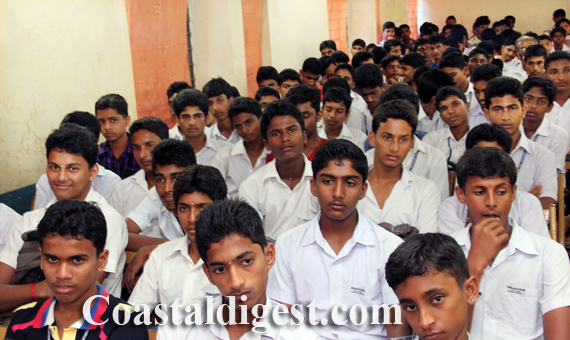
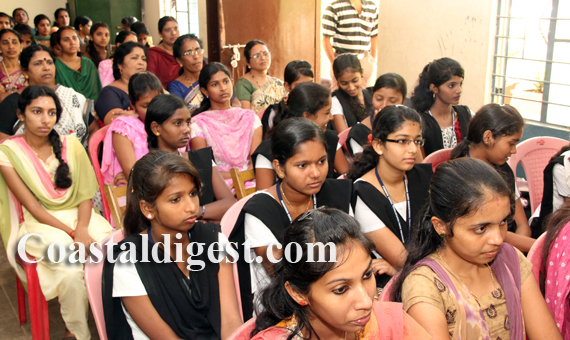
He was speaking after receiving the'Suvarnashree Award' by Akhila Bharatha Billawa Union (ABBU) and Narayana Guru Educational Institutes on founder's day celebrations at Damodhara R Suvarna Auditorium, Kudroli on Tuesday.

“In past no Dalit, Billava and backward caste member was allowed inside the temple. Dalits were more exploited by so called upper classes," he said.

Minister for Fisheries, Youth Welfare and Sports K Abhayachandra Jain inaugurating the formal function of founder's day celebrations said, “when leaders run behind politicians asking seats in polls, M Jayanand Devadiga worked restlessly for the development of backward classes and stood by his dignity and self-esteem. Only few come forward to work without any expectations in present era and make their presence by deeds”, he said.

Urging youngsters to serve society K Abhaya Chandra Jain said “you need to walk on the principles of Narayana Guru and build a strong nation.”

Founder's day program was followed by blood donation camp at Narayana Guru College.

Member of Parliament, Nalin Kumar Kateel, Dr Vasanth Kumar, Principal, Narayana Guru College and Navinchandra D Suvarna of ABBU were present during the occasion.

narayana_guru_24_2
narayana_guru_24_3
narayana_guru_24_4
narayana_guru_24_5
narayana_guru_24_6
narayana_guru_24_7
narayana_guru_24_8

Comments

anusha
 - 
Wednesday, 6 Sep 2017

Its very helpful to poor student for education.

Add new comment

  • Coastaldigest.com reserves the right to delete or block any comments.
  • Coastaldigset.com is not responsible for its readers’ comments.
  • Comments that are abusive, incendiary or irrelevant are strictly prohibited.
  • Please use a genuine email ID and provide your name to avoid reject.
News Network
July 10,2020

Bengaluru, Jul 10: Accredited Social Health Activist (ASHA) workers under the All India Trade Union Congress (AITUC) on Friday held protests in different parts of Karnataka, demanding personal protective equipment (PPE) kits and a salary of at least Rs 12,000 per month.

According to Madhu Kumari, an ASHA worker from Kalaburgi, ASHA workers currently receive a salary of Rs 3,000 per month.

"Our demand is to increase our wages to at least Rs 12,000 per month. We have been making this demand for the last six months but we have not received any response from the authorities. We will not go back to work until we are given an appropriate response. We did not want to create a difficult situation but the government has given us no choice," Kumari told ANI.

Clad in their signature pink saris, the women were holding posters in their hands and raising slogans to demand appropriate salary for their work and the necessary equipment to protect themselves from the ongoing COVID-19 pandemic.

Farhana, an ASHA worker protesting in Shivamogga, said that the women have been making demands for PPE kits since June 30. "We have been taking care of COVID patients for the last few weeks but have not received adequate PPE kits. A few of us received some in the beginning but they were not enough. We are not even given hand sanitiser or masks to protect ourselves," she added.

"We have sent letters to the District Commissioner's Office and to the Ministry of Health and Family Welfare but our pleas have gone unheard. We are protesting to get the attention of the concerned authorities," she added.

They also demanded that authorities to conduct their COVID-19 tests as they have to deal with patients infected with the virus.

Sajida, an ASHA worker in Kalaburagi said, "We are very stressed about the COVID situation. We take care of sick people day in and day out, but no one is there to take care of us. We want the government to conduct COVID tests for all ASHA workers in the state."

Comments

Angry bakth
 - 
Sunday, 12 Jul 2020

ASHA worker its better to sleep in home instead of working and risking your life, 3000 rupes is nothing...who can work home....government of indian is one of the namarad and currupt, you wont get any hike...


poor people will survive this COVID but not the rich currupt politician, let them die like dog


Add new comment

  • Coastaldigest.com reserves the right to delete or block any comments.
  • Coastaldigset.com is not responsible for its readers’ comments.
  • Comments that are abusive, incendiary or irrelevant are strictly prohibited.
  • Please use a genuine email ID and provide your name to avoid reject.
News Network
May 20,2020

Bengaluru, May 20: Ride-sharing company Ola Cabs said on Wednesday it will lay off 1,400 of its employees due to business uncertainty caused by the coronavirus pandemic while the revenue has come down by 95 per cent in the past two months.

"The COVID crisis continues to unfold all around us causing unprecedented economic and social destruction. It has also become evident that the coronavirus will not be eliminated any time soon," wrote co-founder and CEO Bhavish Aggarwal to all Ola employees.

"In these circumstances, today I write to all of you with the toughest decision I have ever taken -- the need to downsize our organisation and let go of 1,400 of our valued employees," he said.

Aggarwal said the fallout of virus has been very tough for the cab aggregating industry in particular. "The company's revenue has come down by 95 per cent over the past two months," he said.

Initially, he said, the company hoped it would be a short-lived crisis and that its impact would be temporary. "But unfortunately, it is not been a short crisis. And the prognosis ahead for our business is very unclear and uncertain. It is going to take a long time for people to go out and about like before."
With more companies preferring to have a large number of employees work from home, air travel limited to essential trips and vacations being put off for better times, the impact of this crisis is definitely going to be long-drawn, said Aggarwal.

"The world is not going to revert to the pre-COVID era anytime soon. Social distancing, anxiety and an abundance of caution will be the operating principles for everyone," he told employees.

Aggarwal said the crisis necessitates the need to conserve cash aggressively so that Ola is able to invest in opportunities in the future, adding the downsizing exercise has been a very tough and sad decision for the management team to make.

"While we restructure our organisation to the new realities of our business, we are also going to recommit ourselves to strengthening our operational excellence and leverage a lot more technology to improve efficiencies and reduce cost across all parts of our business," he said.

Comments

Add new comment

  • Coastaldigest.com reserves the right to delete or block any comments.
  • Coastaldigset.com is not responsible for its readers’ comments.
  • Comments that are abusive, incendiary or irrelevant are strictly prohibited.
  • Please use a genuine email ID and provide your name to avoid reject.
Agencies
February 20,2020

India ranked 77th on a sustainability index that takes into account per capita carbon emissions and ability of children in a nation to live healthy lives and secures 131st spot on a flourishing ranking that measures the best chance at survival and well-being for children, according to a UN-backed report.

The report was released on Wednesday by a commission of over 40 child and adolescent health experts from around the world. It was commissioned by the World Health Organization (WHO), UN Children's Fund (UNICEF) and The Lancet medical journal.

In the report assessing the capacity of 180 countries to ensure that their youngsters can survive and thrive, India ranks 77th on the Sustainability Index and 131 on the Flourishing Index, it said.

Flourishing is the geometric mean of Surviving and Thriving. For Surviving, the authors selected maternal survival, survival in children younger than 5 years old, suicide, access to maternal and child health services, basic hygiene and sanitation, and lack of extreme poverty.

For Thriving, the domains were educational achievement, growth and nutrition, reproductive freedom, and protection from violence.

Under the Sustainability Index, the authors noted that promoting today's national conditions for children to survive and thrive must not come at the cost of eroding future global conditions for children's ability to flourish.

The Sustainability Index ranks countries on excess carbon emissions compared with the 2030 target. This provides a convenient and available proxy for a country's contribution to sustainability in future.

The report noted that under realistic assumptions about possible trajectories towards sustainable greenhouse gas emissions, models predict that global carbon emissions need to be reduced from 39·7 giga­ tonnes to 22·8 gigatonnes per year by 2030 to maintain even a 66 per cent chance of keeping global warming below 1·5°C.

It said that the world's survival depended on children being able to flourish, but no country is doing enough to give them a sustainable future.

"No country in the world is currently providing the conditions we need to support every child to grow up and have a healthy future," said Anthony Costello, Professor of Global Health and Sustainability at University College London, one of the lead authors of the report.

"Especially, they're under immediate threat from climate change and from commercial marketing, which has grown hugely in the last decade," said Costello – former WHO Director of Mother, Child and Adolescent health.

Norway leads the table for survival, health, education and nutrition rates - followed by South Korea and the Netherlands. Central African Republic, Chad and Somalia come at the bottom.

However, when taking into account per capita CO2 emissions, these top countries trail behind, with Norway 156th, the Republic of Korea 166th and the Netherlands 160th.

Each of the three emits 210 per cent more CO2 per capita than their 2030 target, the data shows, while the US, Australia, and Saudi Arabia are among the 10 worst emitters. The lowest emitters are Burundi, Chad and Somalia.

According to the report, the only countries on track to beat CO2 emission per capita targets by 2030, while also performing fairly – within the top 70 – on child flourishing measures are: Albania, Armenia, Grenada, Jordan, Moldova, Sri Lanka, Tunisia, Uruguay and Vietnam.

"More than 2 billion people live in countries where development is hampered by humanitarian crises, conflicts, and natural disasters, problems increasingly linked with climate change," said Minister Awa Coll-Seck from Senegal, Co-Chair of the commission.

The report also highlights the distinct threat posed to children from harmful marketing.

Evidence suggests that children in some countries see as many as 30,000 advertisements on television alone in a single year, while youth exposure to vaping (e-cigarettes) advertisements increased by more than 250 per cent in the US over two years, reaching more than 24 million young people.

Studies in Australia, Canada, Mexico, New Zealand and the US – among many others – have shown that self-regulation has not hampered commercial ability to advertise to children.

Children's exposure to commercial marketing of junk food and sugary beverages is associated with purchase of unhealthy foods and overweight and obesity, linking predatory marketing to the alarming rise in childhood obesity, it said.

The number of obese children and adolescents increased from 11 million in 1975 to 124 million in 2016 – an 11-fold increase, with dire individual and societal costs, the report said.

To protect children, the authors call for a new global movement driven by and for children.

Specific recommendations include stopping CO2 emissions with the utmost urgency, to ensure children have a future on this planet; placing children and adolescents at the centre of global efforts to achieve sustainable development, the report said.

New policies and investment in all sectors to work towards child health and rights; incorporating children's voices into policy decisions and tightening national regulation of harmful commercial marketing, supported by a new Optional Protocol to the UN Convention on the Rights of the Child, it said.


Comments

Add new comment

  • Coastaldigest.com reserves the right to delete or block any comments.
  • Coastaldigset.com is not responsible for its readers’ comments.
  • Comments that are abusive, incendiary or irrelevant are strictly prohibited.
  • Please use a genuine email ID and provide your name to avoid reject.